Full Article
about Villaverde del Río
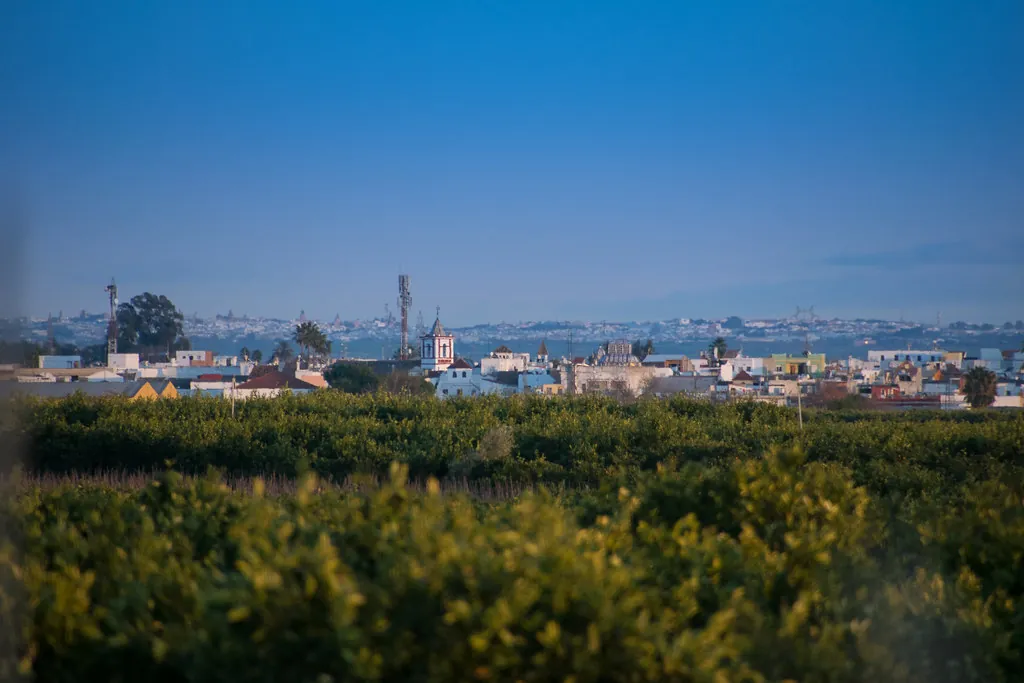
Municipality in the vega, watered by the Guadalquivir and Siete Arroyos, with pleasant natural spots.
Hide article Read full article
A village that doesn’t perform for visitors
Tourism does not drive life in Villaverde del Río. Arriving around mid-morning, the car thermometer can already be reading 34 degrees, and the clearest patch of shade in the main square belongs to the church. A raised camera tends to draw curious looks. This is not a place that sees many people who look like visitors.
That first impression says a lot. Villaverde del Río carries on at its own pace, shaped more by work in the surrounding countryside than by anyone passing through. It feels practical and lived-in rather than arranged for sightseeing.
Getting there and moving around
From Seville, the journey takes about half an hour by car. You leave the motorway and within a few minutes you are in the village.
Parking is simple: find a space near Calle Real or the square. There are no car parks or regulated parking zones. The layout is flat and compact, small enough to cover on foot in around half an hour.
In summer, water is essential. By mid-morning the heat is already strong, and shade is limited.
What you’ll find, and what you won’t
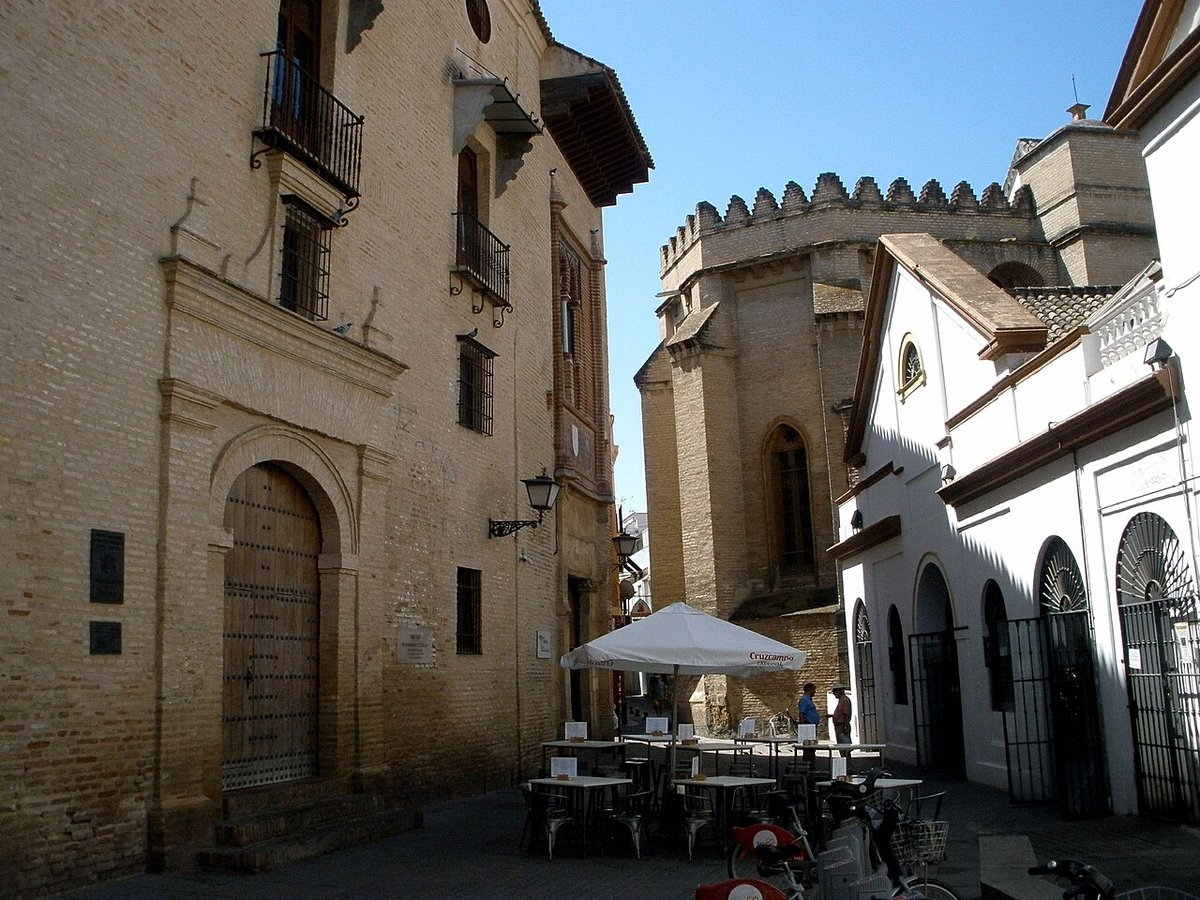
The Iglesia de Santiago Apóstol takes up a large part of the square. It dates from the 18th century, with a square tower and a plain façade. The doors are usually closed outside of Mass times.
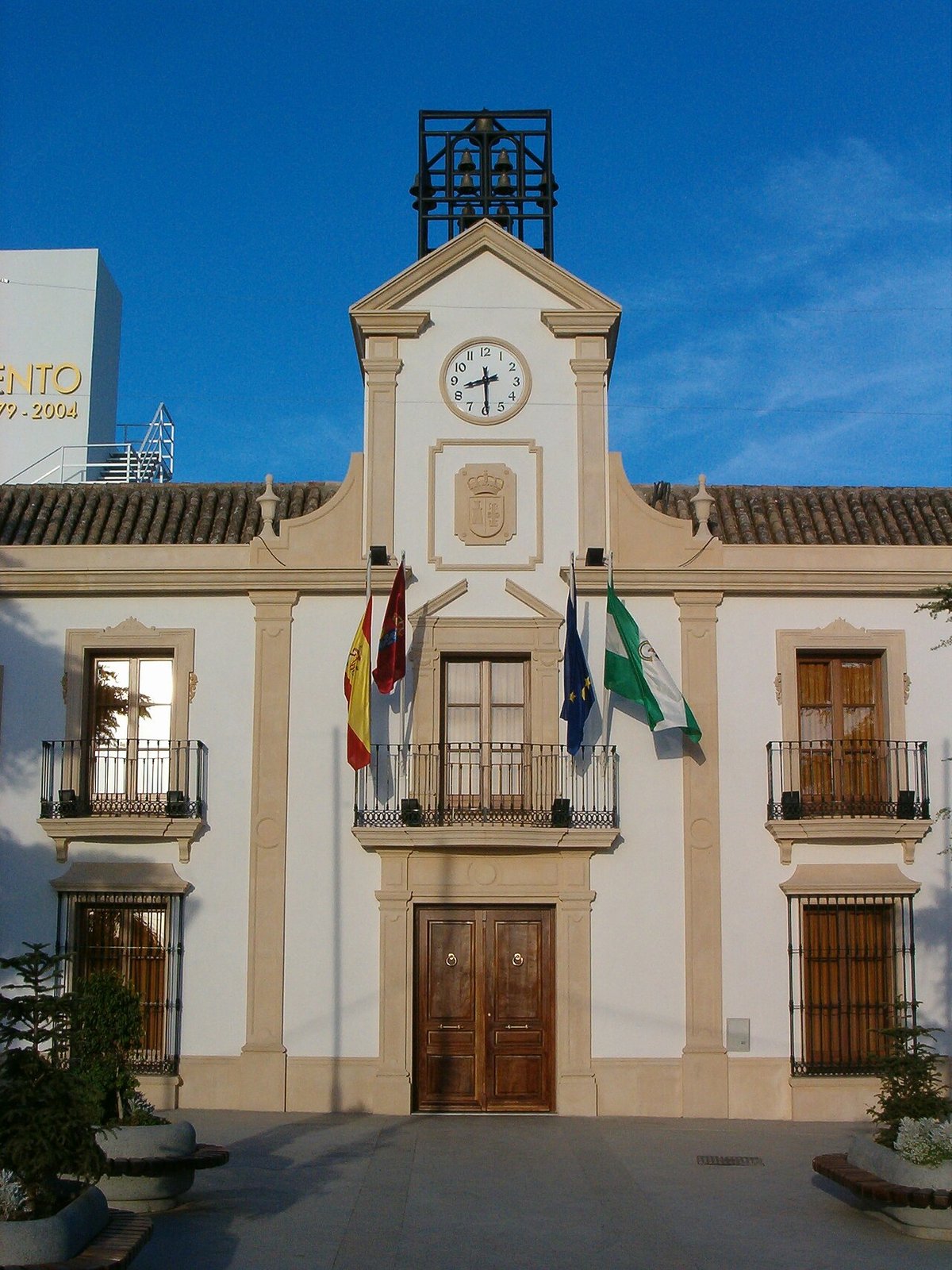
Next to it stands the town hall, a brick building with a clock that sometimes shows the right time and sometimes does not.
There is no clearly defined old quarter. Streets run straight, lined with low houses. A couple of stretches have more activity, where the village bars are grouped together.
At one end, there is a small park with swings and a few plane trees providing shade. The kiosk there has been closed for some time.
Below the village runs a stream, now channelled. Years ago there was a small wooden walkway where people could stroll by the water. Today, there is a concrete wall and a sign stating “prohibido el baño”, no swimming allowed.
Food and everyday life
Around midday, it is possible to find a café open near the square serving straightforward food. A bocadillo de lomo, a pork loin sandwich, is typical of what people working in the area might eat.
Local conversations give a clearer sense of the place than any menu. In summer, there are sometimes espichás, informal gatherings where sardines are grilled in the square, usually tied to a local fiesta or romería. There is not always a fixed date. It depends on who organises it and whether the town hall gives permission.
On Thursdays, a small market is usually held. Melons from the Vega appear alongside pimentón brought in from other towns in the province. Farmers come straight from the fields, and the talk revolves more around harvests than around visitors.
Timing your visit
From October to April, the climate is easier to handle. For the rest of the year, the heat settles in heavily.
During Semana Santa, three pasos, religious floats carried in procession, move through the streets and circle the village several times. Many residents place chairs outside their homes and stay there for the afternoon. The atmosphere is local and familiar, more neighbourhood gathering than large-scale event.
There are no hotels in Villaverde del Río. Visitors usually stay in Seville and come through for a short stop.
A place to pass through
Villaverde del Río is not set up as a tourist destination. It is a working village where daily life centres on the fields and on routines that have little to do with travel.
For those driving along the motorway, it can make sense as a brief pause. A walk around the square, a look at the church, something cold to drink, and then back on the road.
An hour is enough to see it. After that, the journey continues, while life in Villaverde del Río carries on in its own direction.