Full Article
about Biescas
Hide article Read full article
A village shaped by water and crossroads
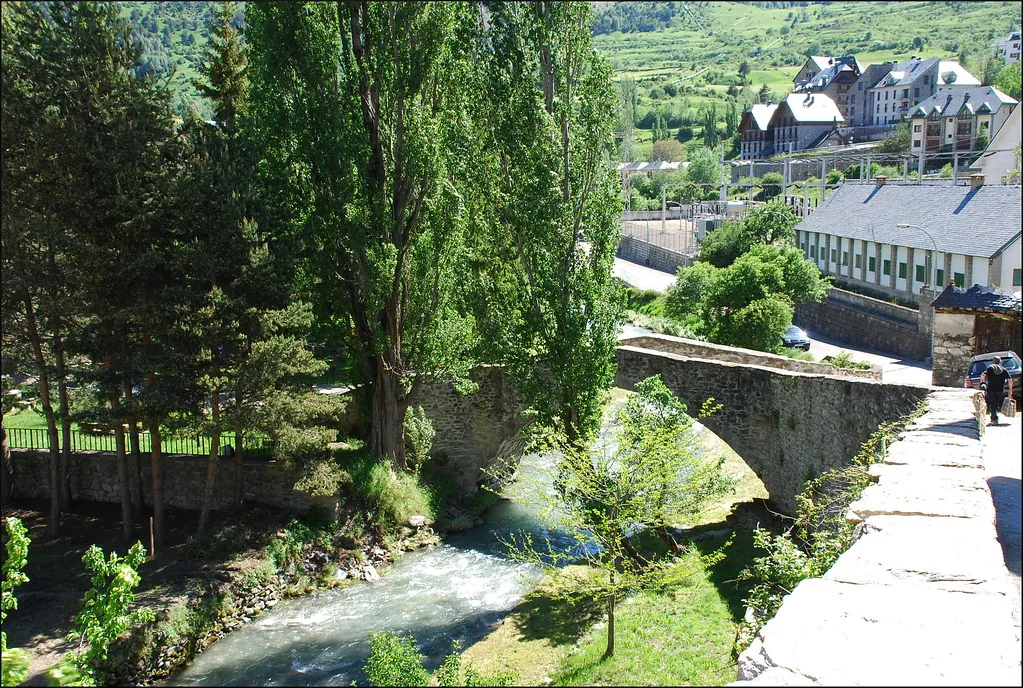
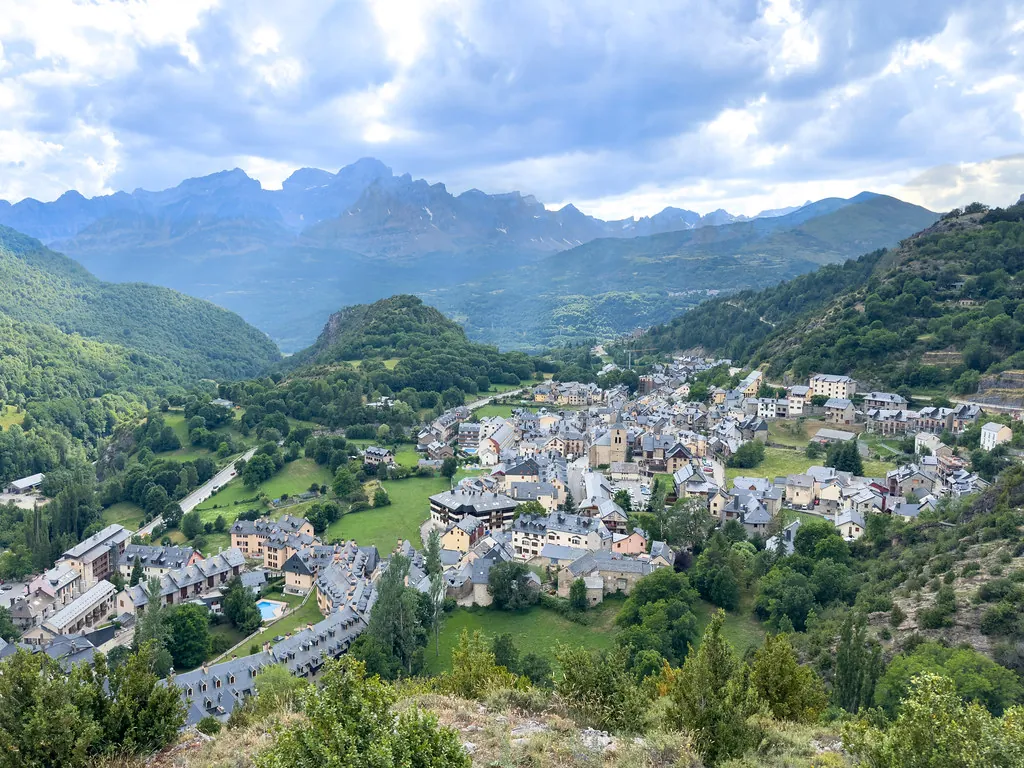
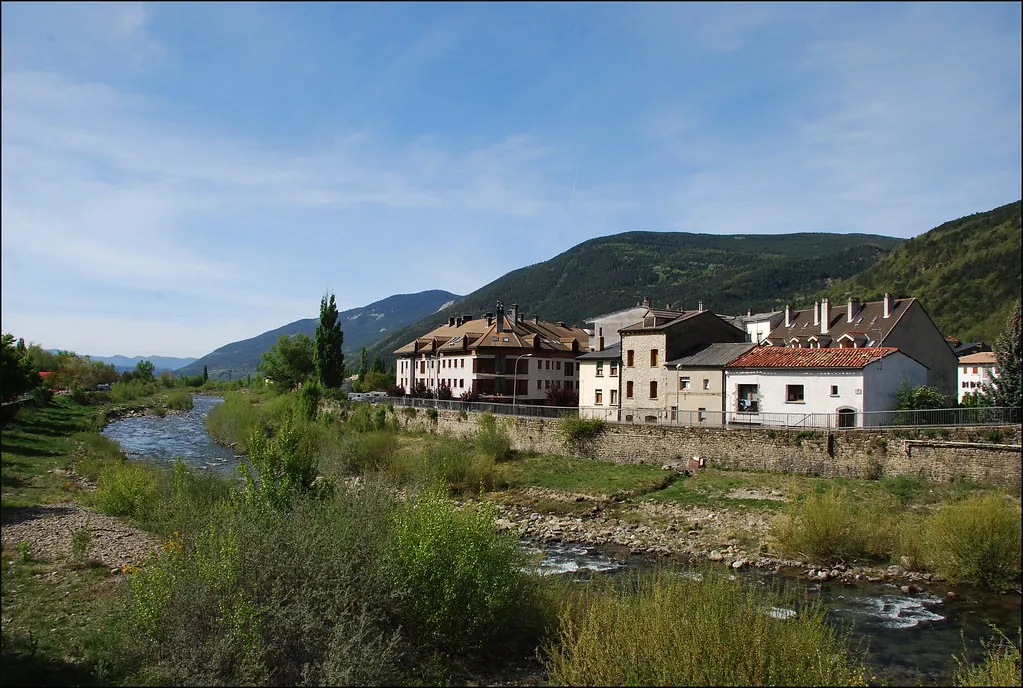
By mid-morning, when sunlight starts filtering through the valley clouds, the river is heard before it is seen. In Biescas, water is never far away. The Aurín runs through the village, and just a short distance off, the Gállego flows down more forcefully from the Tena Valley. Between these two rivers, stone houses with dark roofs line quiet streets where the sound of shutters being raised still carries.
Biescas sits in the Alto Gállego area and has around 1,600 residents. For years it has worked as a crossroads in the Pyrenees. From here, routes lead up into the Tena Valley, across towards Ordesa, or onward to France via the Portalet pass. That position explains why, despite its small size, the village has a petrol station, supermarkets and other practical services that make exploring the area straightforward without much planning.
Walking through Biescas
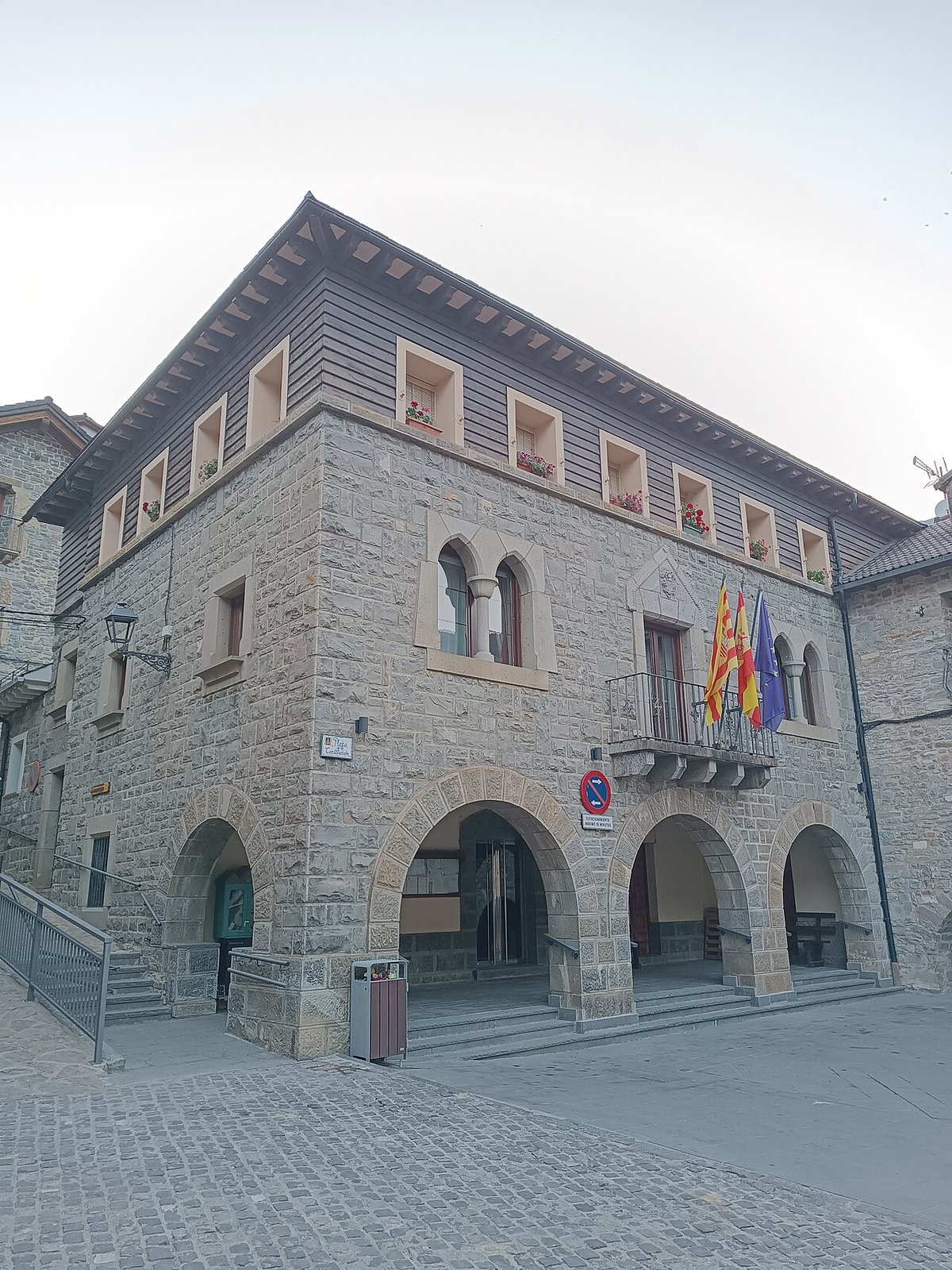
The town centre blends traditional buildings with more recent ones. Even so, some streets still show worn stone doorways and thick walls that keep interiors cool in summer. The Church of San Salvador, built in the 16th century, appears almost unexpectedly among the houses. It has a restrained look, with solid walls and a modest tower, the kind of place that has seen generations pass without changing much.
Water reappears along the riverside paths. There are easy walks crossing green areas where locals head out in the late afternoon, when the heat softens and the mountain tops begin to darken. In summer, this becomes one of the most pleasant parts of the village: shade, the steady sound of water, and benches for sitting without hurry.
A short drive opens up several places that help explain the landscape of this part of the Pyrenees.
The Búbal reservoir lies on the way to Panticosa. When the wind drops, the surface turns almost black and reflects the pine-covered slopes and rocky sides around it. Beneath the reservoir lies the old village of Búbal, abandoned after the dam was built. When water levels fall significantly, remains of walls or paths sometimes reappear, hinting at the houses and fields that once stood there.
The Arás ravine offers a sharper contrast. It is a narrow gorge, with damp vegetation clinging to the rock walls and a constant sound of water moving through stones. It is important to check conditions before visiting and to follow local signage. The area is delicate and has a history marked by sudden flooding.
Moving through the surrounding landscape
One of Biescas’ advantages is how easily it connects to the mountains without long drives. Nearby, simple trails follow the river or lead into open meadows where the first peaks of the Tena Valley come into view. In spring, the green is intense. In winter, many mornings begin with frost covering the grass.
Those looking for more demanding terrain turn towards the Sierra de Tendeñera. The peak of the same name rises above 2,800 metres and requires experience, navigation skills and careful attention to the weather. It is not a casual outing.
There are also quieter routes linking nearby villages or heading towards the Búbal reservoir along wide paths. These are commonly used for cycling or for walking without much difficulty, always with the presence of the surrounding peaks, often snow-covered in winter.
Food in the area still reflects its livestock traditions. Dishes frequently feature lamb, hearty stews, or river trout. When temperatures drop, these meals feel particularly fitting after a morning in the mountains.
Biescas also works as a base for visiting the Ordesa y Monte Perdido National Park. In summer, access by car to the Pradera de Ordesa is usually regulated, with shuttle buses running from the valley. It is worth checking in advance to avoid unnecessary detours.
Traditions rooted in rural life
The village calendar continues to revolve around celebrations closely tied to rural life. In January, San Antón is marked with the blessing of animals, a reminder of the importance livestock has always had in these mountains.
At the beginning of August come the festivities of San Salvador. Over several days, the main square shifts rhythm, with music, long evening conversations and residents returning to the village even if they live elsewhere for most of the year.
In September, the pilgrimage to Santa Elena takes place a few kilometres from Biescas. The hermitage stands beside a small gorge and a woodland that holds onto its moisture even in summer. On that day, many families head up on foot or by car to spend time outdoors, sharing food and stretching conversations beneath the trees.
Getting there
Biescas is just over an hour by car from Huesca. The usual route follows the A-23 to Sabiñánigo, then continues along the N-260 towards the Tena Valley. The road is straightforward and generally well maintained, although in winter conditions can change.