Full Article
about Azara
Ocultar artículo Leer artículo completo
A village that measures life in tractors, not timetables
The church bell in Azara still marks the quarters, yet most people glance at the sky instead of a watch. At 430 m above sea-level the air is dry enough for clouds to mean something: shade for the shepherd, a possible shower for the almond blossom, an excuse to linger at the bar counter. Only 170 souls are registered here, and the parish rolls drop every decade. Even so, the place refuses to feel abandoned. Tractors leave at dawn for the surrounding fields; someone is always hammering a loose balcony bracket back into sandstone; bread arrives in a white van at ten, not a minute earlier.
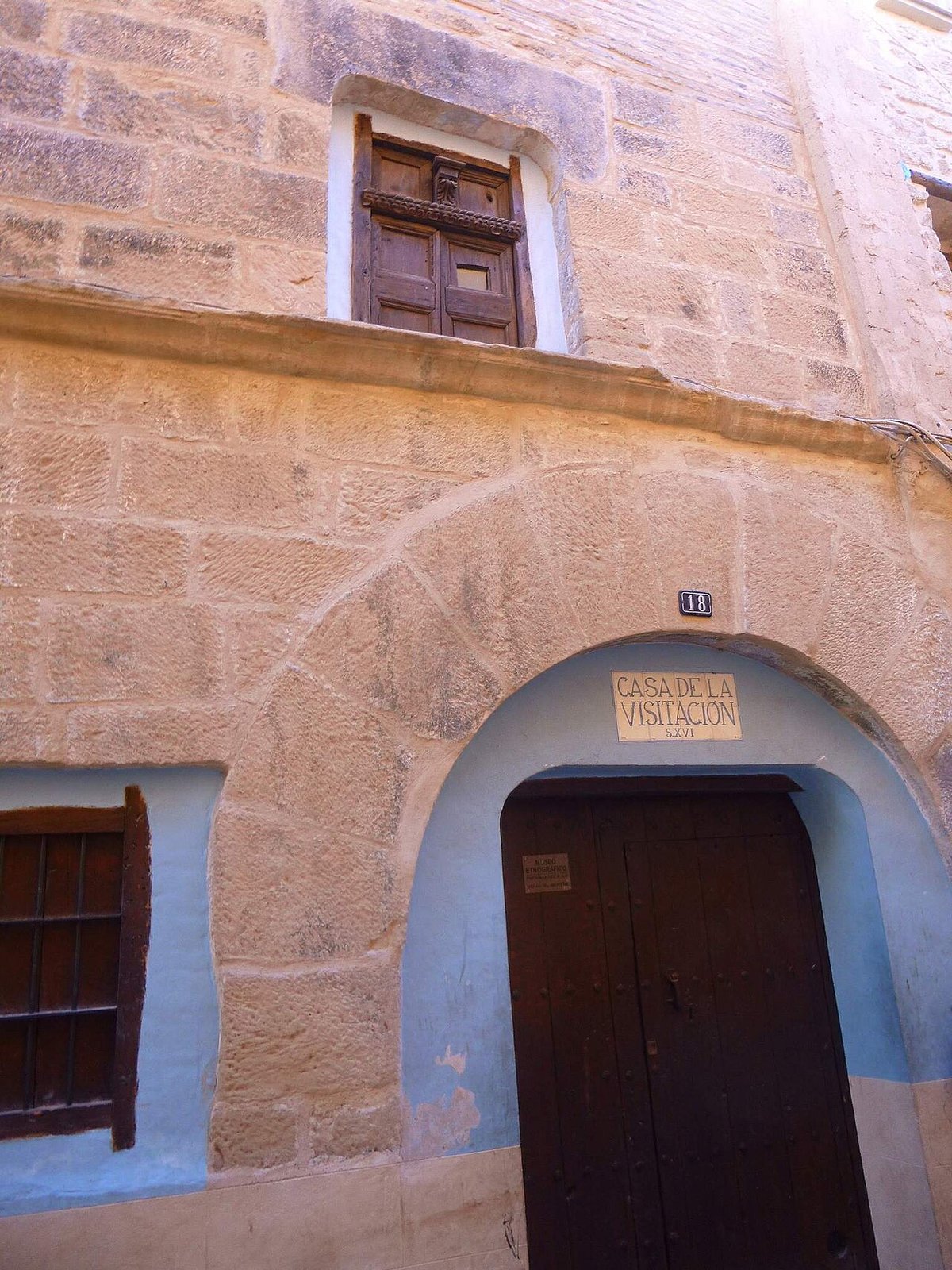
Stone walls the colour of pale ale curve around a knot of narrow lanes. Adobe patches show where owners swapped quarried blocks for cheaper mud-brick when the harvest failed. The architecture is ordinary, local, honest: no carved coats of arms, just the occasional date—1894, 1921—pressed into the lintel. A passing farmer will point out the former communal oven, now a woodshed, without breaking stride. He is heading to the corral to feed the goats before the sun climbs over the ridge that separates Azara from the river Vero.
Somontano in miniature
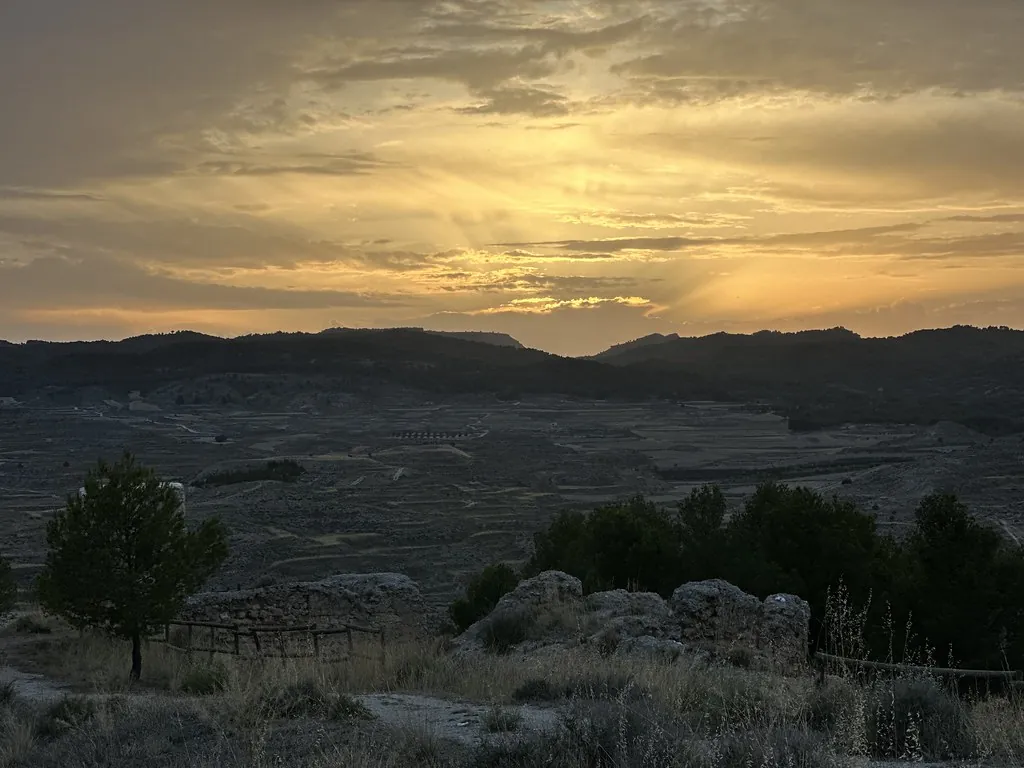
Geographers call this wedge of land the Somontano de Barbastro, literally “beneath the mountain”. The Pyrenees proper lie forty minutes north by car, yet their tail ridges ripple through the vineyards and give the region its tilted topography. From the small rise behind the church you can see the pattern: olive groves on the steepest scars, almonds on the middle slopes, cereals across the flatter valley floor. Irrigation channels—some Moorish in origin—glint where the water level is high. After Easter the vines bud, and the whole mosaic smells of damp earth and bruised fennel.
The village functions as a microcosm of Somontano life, scaled down until it almost disappears. There is no hotel, no gift shop, no Saturday market. What you get instead is proximity. Within a twenty-minute drive the landscape thickens into the Vero canyon, where Griffon vultures wheel above climbing bolts, and Barbastro’s cathedral stores a sixteenth-century organ that once accompanied Morales’ polyphony. Wine tourists tend to base themselves in the larger town, ticking off boutique bodegas and Michelin-listed restaurants. Azara offers the counterpoint: a place to sleep soundly (there are two village houses signed up as rural lets) then set out early, before the coach parties park outside Enate or Bodegas Pirineos.
Walking the dry-farming lattice
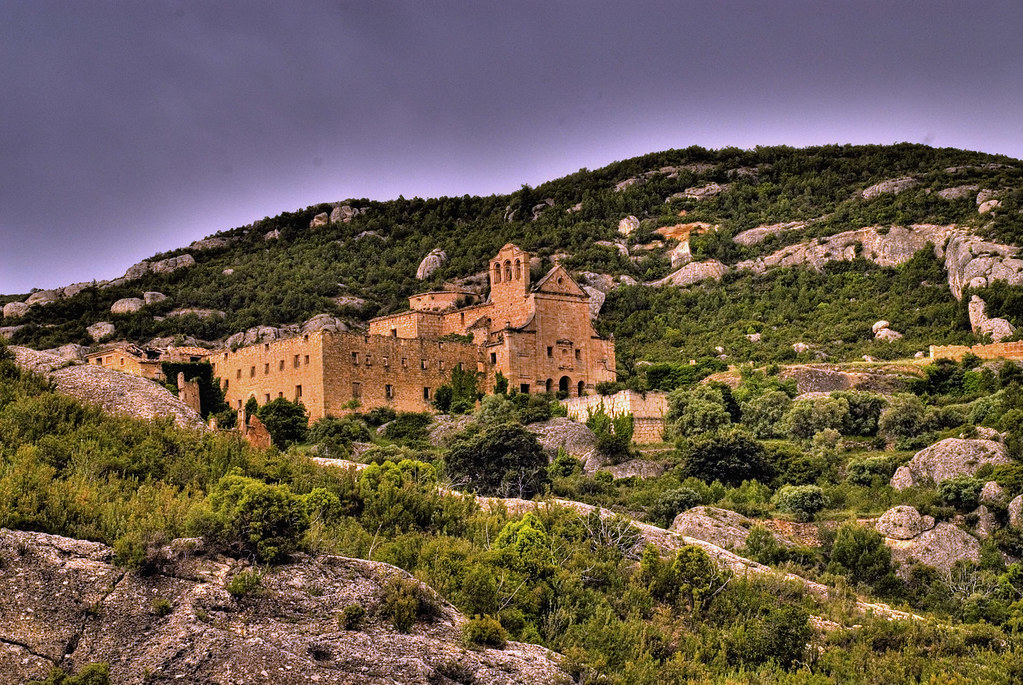
You do not come here for altitude records. The highest almond terrace stops just short of 600 m, and even the wind feels lazy. What makes walking pleasant is the lattice of farm tracks that have linked hamlets since the Middle Ages. One hour south-east leads to the abandoned village of San Roman, roofless walls blackened by fires lit by grape-pickers at harvest. Head west instead and you reach a string of stone cisterns built to catch melt-water for livestock; ibex tracks score the mud around the lip.
Maps are helpful but not essential. The strategy is simple: keep the cereal fields on your left, the carrasca holm-oaks on your right, and you will eventually hit a tarmac lane where someone in a hi-vis vest is spraying herbicide from a quad bike. He will wave you over, offer directions, and warn that the next farmhouse keeps a territorial mastiff. Spring brings carpets of star-shaped Narcissus asturiensis; by late May the same ground is brittle straw, so carry more water than you think necessary.
When the village remembers how to party
For eleven months Azara murmurs. Then, on the second weekend of August, the volume jumps. The fiestas patronales haul sound systems into the square, string paper lanterns between balconies, and roast a pair of pigs in an iron cradle. Visitors are welcome but not flattered: buy a raffle ticket, queue for the communal paella, dance until the generator cuts out at three. The next morning elderly women in housecoats sweep up bottle tops while teenagers nurse hangovers against the cool church wall.
January offers a quieter ritual: the blessing of animals on San Antón. Dogs outnumber mules these days, although a farmer still leads a suspicious donkey up the lane. The priest recites a brief prayer, the beasts shake their bells, everyone retreats indoors for anise liqueur and sponge fingers. Photographs are fine; flashguns less so—several dogs object, and the donkey has been known to kick.
Practicalities without the brochure gloss
Arriving: From Huesca take the A-22 south to Barbastro (35 min), then the A-1235 and HU-331 country roads. The final eight kilometres twist between vine parcels; meet a combine harvester and you will be reversing to the nearest lay-by. Public buses reach Laluenga, 5 km away, on Tuesdays and Fridays only—walkable if the temperature is below 30 °C and you enjoy dust.
Sleeping: Casa Rurals La Parada and El Rincón de Azara both offer two bedrooms, stone walls, Wi-Fi that flickers when the microwave runs. Expect €70–90 per night for the whole house. Bring own coffee; the village shop opens 09:00-11:00, sometimes.
Eating: No restaurant. The butcher’s van visits Thursday; fresh fish arrives frozen on Friday. Barbastro (12 min drive) has La Cadena for Somontano wines by the glass and Piscina for charcoal-grilled ternasco lamb. If you must eat in Azara, knock at the bakery the day before and order empanadas; the owner will pass you a tray through the window.
Weather: Winters bite—night frost is common, central heating is not. April and October hover around 20 °C, ideal for walking, though showers can arrive suddenly over the ridge. Mid-July to August tops 38 °C; siesta is not a tourist conceit here but agricultural necessity.
Costs: Entrance to everything is free, because nothing charges. Fill a five-litre jug at the spring by the cemetery and you have paid the only tariff the village recognises.
Leaving without the hard sell
Azara will not change your life. You will not post a selfie with a landmark because the landmarks are everyday walls, a threshing circle, the sound of goats coughing in the dusk. What the village offers is a calibration point: a chance to recalibrate speed, appetite, the number of possessions you actually need. Drive away at sunrise and the cereal rows look like comb marks in wet clay. Ten minutes down the road phone reception returns, podcasts resume, the world widens. The bell keeps tolling for those who stay.