Full Article
about Bádenas
Ocultar artículo Leer artículo completo
The thermometer reads eight degrees cooler than it did an hour ago. That's what happens when you climb from Teruel's plateau to Bádenas, where the road finally stops climbing at 996 metres above sea level. Nineteen people call this home—fewer than the number of terraced fields surrounding the village, and certainly fewer than the griffon vultures you'll spot circling overhead.
Stone Walls and Adobe Dreams
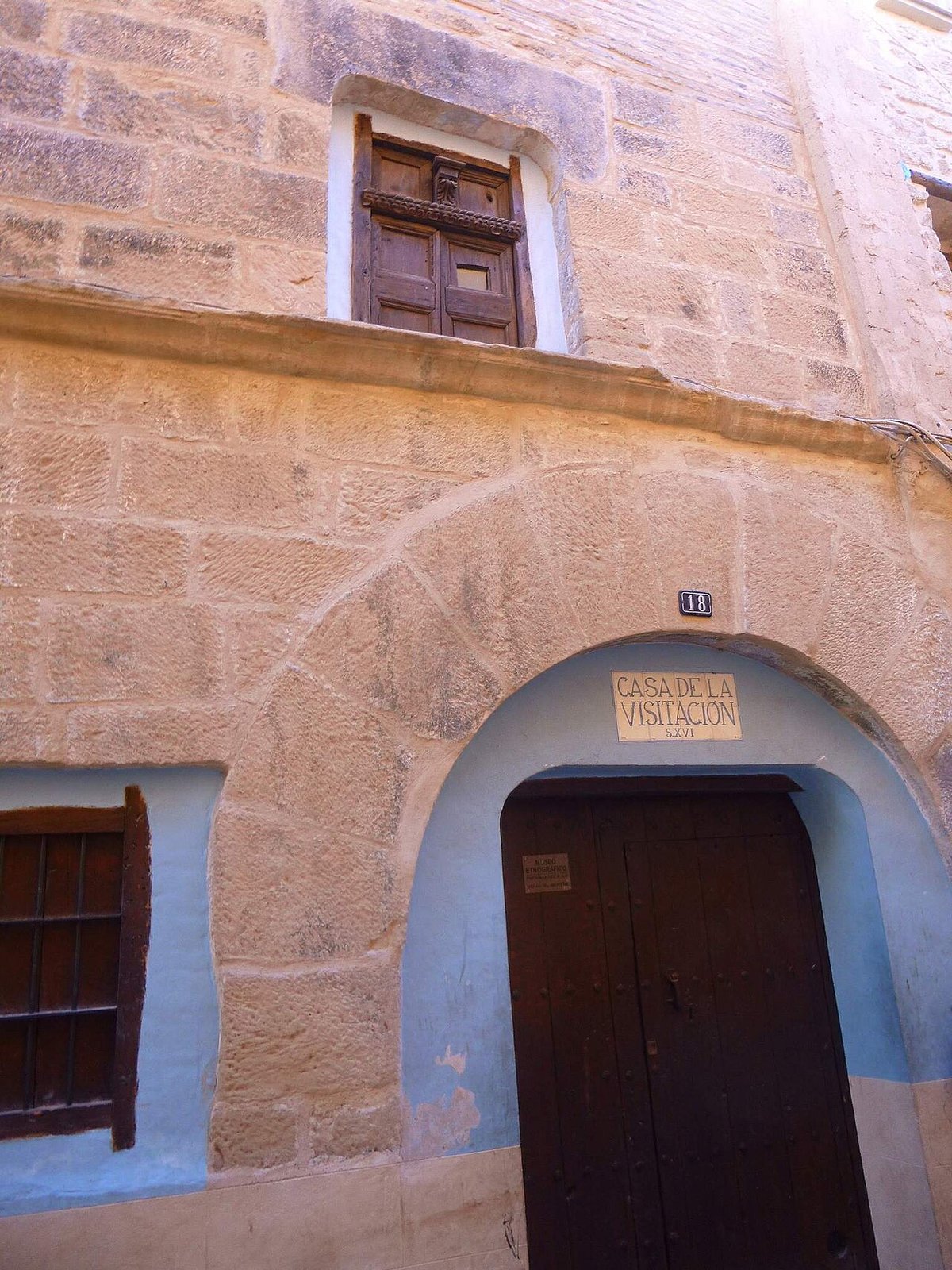
Bádenas doesn't announce itself. The village appears gradually, houses clinging to the slope like they've grown there, their stone bases giving way to adobe walls the colour of dry earth. These aren't the manicured façades of more celebrated Spanish villages. Here, walls bulge where centuries of winter frosts have expanded the stone. Wooden doors hang slightly askew on hand-forged hinges. It's architecture that admits to its age.
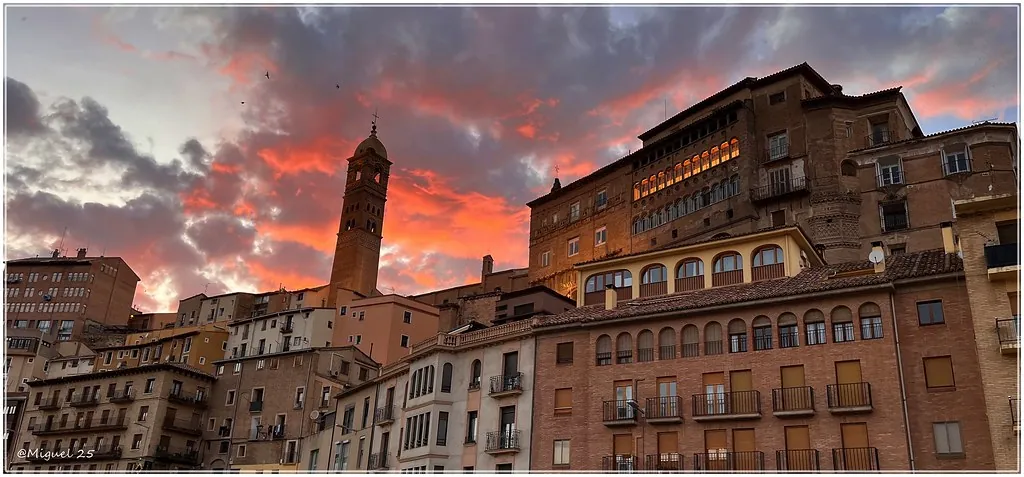
The single main street takes precisely twelve minutes to walk from end to end, assuming you stop to read the 1947 date on the fountain or trace the weathered carvings on what was once a wealthy farmer's doorway. The church tower serves as both landmark and weather vane—when clouds obscure it, locals know to bring the goats down from higher pastures.
Summer evenings bring relief from the plateau's heat. While Calamocha swelters at 35°C, Bádenas settles into a civilised 24°C. Night-time temperatures drop to 12°C even in July, making that extra jumper you packed essential. Winter tells a different story. Snow arrives as early as October and lingers into April. The access road, perfectly serviceable for three seasons, becomes an ice rink. When the forecast predicts heavy snow, villagers stock up in Teruel rather than risk being cut off.
Walking Where Maps End
Ordnance Survey enthusiasts will be disappointed. The footpaths here aren't marked with reassuring yellow arrows or convenient distance markers. What you get instead is a network of agricultural tracks worn by generations of farmers checking their almond trees or leading mules to harvest rosemary. The principle is simple: if it looks walkable, it probably is. If it doesn't, it definitely isn't.
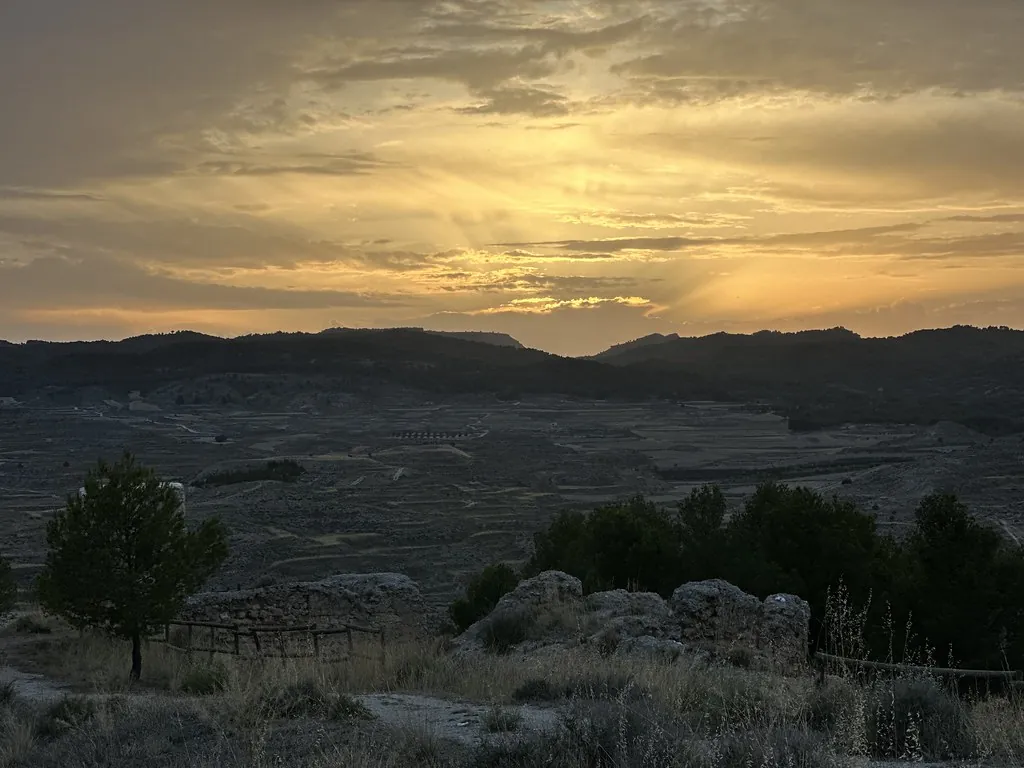
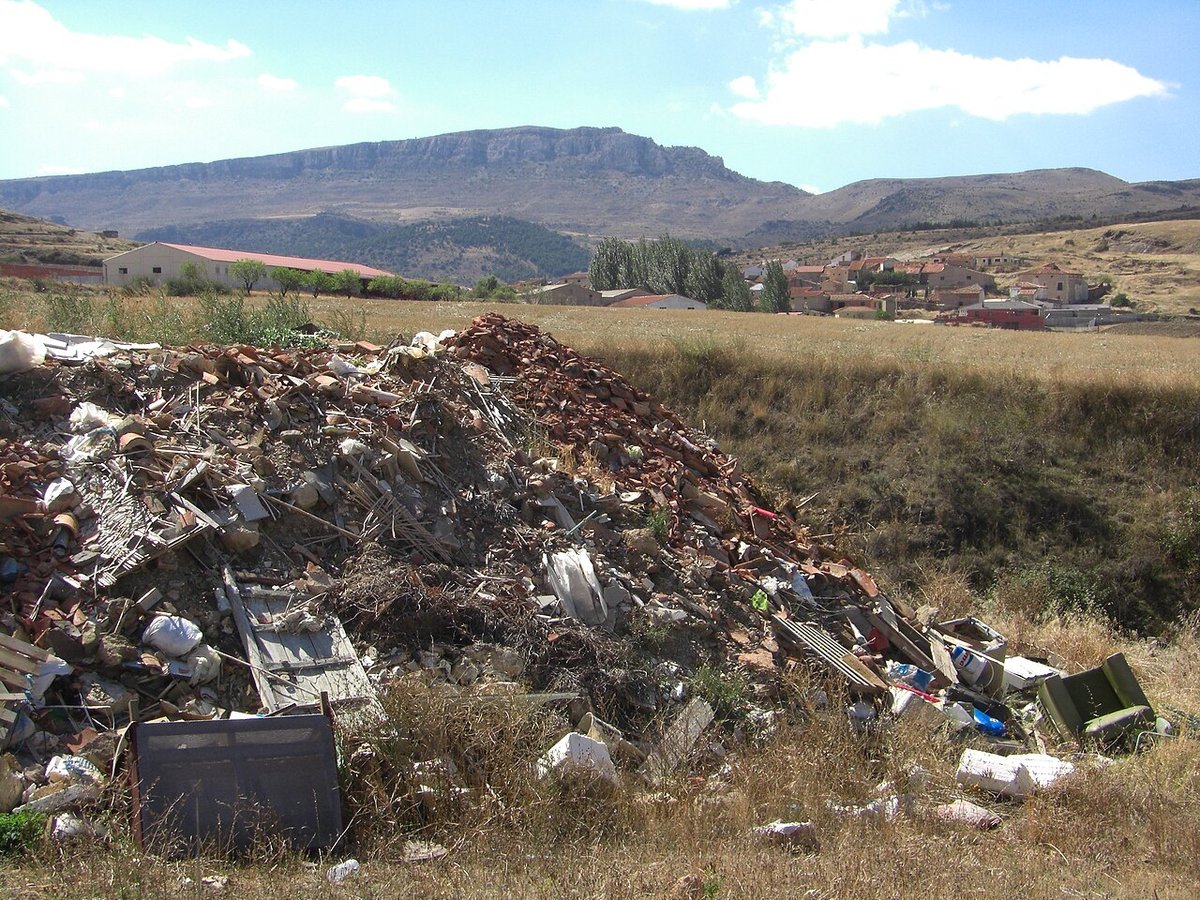
Three main routes radiate from the village. The shortest climbs south to a limestone outcrop called El Castillo, though no castle ever stood here—just the sort of strategic viewpoint mediaeval bandits found useful. Thirty minutes of steady climbing rewards walkers with views across the Jiloca valley, where the pattern of medieval agriculture remains visible: almond terraces on south-facing slopes, cereal plots on the gentler ground, pine forest on the northern exposures where nothing much grows except mushrooms and patience.
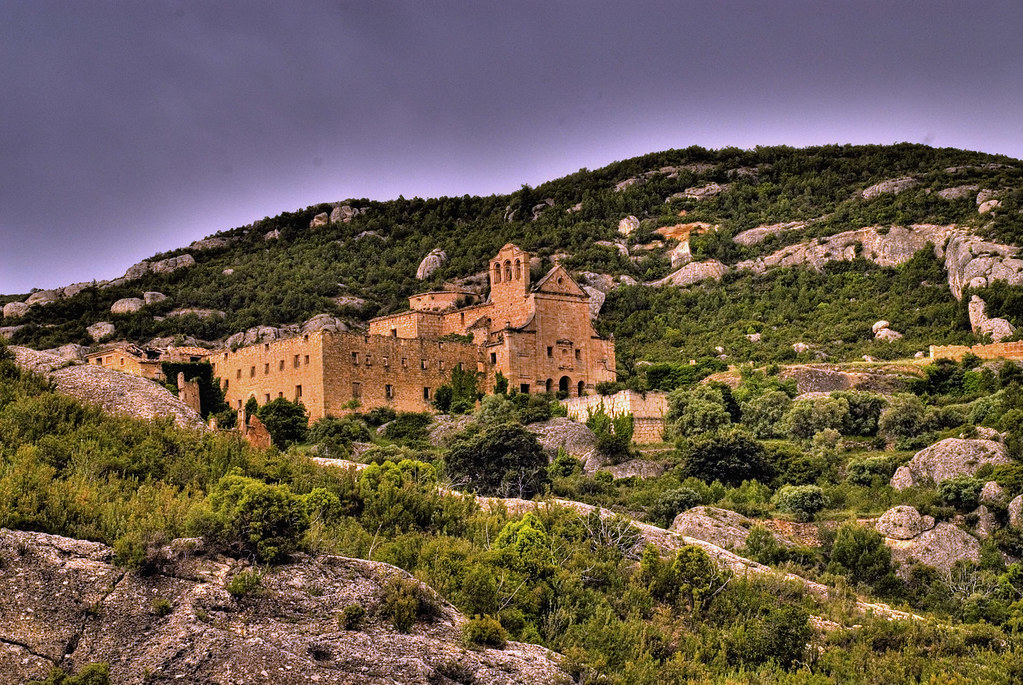
More ambitious walkers can follow the track west towards the Sierra de Menera. The route follows an old drove road used until the 1960s for moving sheep between summer and winter pastures. After two hours, the path drops into a hidden valley where an abandoned hamlet shelters beneath cliffs. Five houses, a bread oven, and a threshing floor—nothing more, but enough to map the outline of lives lived without electricity or running water. Return via the same route, or continue over the col to emerge at the service road for the Menera wind farm, where the nearest mobile phone signal lives.
The Economics of Almost-Nothing
Bádenas has no petrol station, no cash machine, no boutique selling artisanal cheese. The nearest shop sits fourteen kilometres away in Cosa, and it opens for three hours each morning except Sunday. What the village does have is space—terraces that once grew wheat now support a handful of sheep tended by José María, who inherited his grandfather's flock and his grandmother's recipe for gazpacho de pastor, a shepherd's soup thickened with almonds rather than tomatoes.
The village's economic revival, such as it is, comes from people like Ana and Luis, who bought three ruined houses for the price of a London parking space and spent three years rebuilding them using traditional techniques. Their guest accommodation sleeps six. Rates start at €70 per night for the entire house, including firewood and a bottle of wine from their neighbour's vineyard. They'll also stock the kitchen with local provisions: eggs from the woman up the lane, almonds from the cooperative in Cosa, lamb from José María's brother.
Seasons of Silence
Spring arrives late at this altitude. Almond blossom appears in April, a month after it flowers in the Ebro valley. By May, the terraces blaze yellow with Spanish broom, filling the air with the scent of vanilla and coconut. It's the best walking season—warm days, cool nights, and paths firm after winter rains. The village's single bar opens at weekends, serving beer chilled to perfection and tapas that change according to what's available: wild asparagus omelette in April, fresh goat's cheese in June, mushrooms in October when the rains arrive.
October brings the most reliable weather. The summer thunderstorms have passed, leaving air so clear you can pick out individual trees on distant slopes. It's mushroom season, though locals guard their favourite spots with the same enthusiasm British gardeners reserve for their asparagus beds. If you're invited to join a foraging expedition, accept. You'll learn to distinguish a níscalo from a deadly amanita, and you'll probably be sent home with more mushrooms than you can carry.
Winter empties the village. Of the nineteen registered inhabitants, six actually live here year-round. The others—a teacher in Zaragoza, a nurse in Valencia, a retired couple in Calamocha—return for fiestas or long weekends. Those who remain gather each evening in whichever house has the best fire. They'll tell you about the winter of 2005, when snow reached the first-floor windows and they had to tunnel between houses. They'll also tell you about the winter just passed, when temperatures dropped to minus eighteen and the pipes froze for three weeks. They sound almost nostalgic.
Getting There, Staying Sane
The drive from Teruel takes ninety minutes on good roads, the last twenty on a surface that deteriorates with altitude. Hire cars must be returned with full tanks—the nearest petrol station is twenty-five kilometres away in Monreal del Campo. Public transport doesn't reach Bádenas. The closest bus stop is in Cosa, fourteen kilometres downhill, with two services daily to Teruel except Sunday.
Mobile phone coverage is patchy at best. Vodafone works from the church square if you stand in the right spot. EE and O2 require a twenty-minute walk towards the wind farm. This isn't a bug—it's a feature. Bádenas offers what increasing numbers of British travellers claim to seek: genuine disconnection. No Wi-Fi, no Instagram moments, no crowds of fellow tourists asking whether you've read the latest Bill Bryson.
The village isn't pretending to be anything other than what it is: a place people left, some returned to, and a few never abandoned. It won't change your life. It might, however, remind you what silence sounds like when it's not being sold as an experience.