Full Article
about Bujaraloz
Ocultar artículo Leer artículo completo
The thermometer outside the Repsol garage already reads 34 °C at nine-thirty in the morning, and the wind tastes of flour. This is Bujaraloz, 327 m above sea level yet somehow flatter than the surrounding desert steppe. Lorries heading for Barcelona hiss air-brakes on the slip-road; a single stork circles overhead, looking unconvinced. If you have driven the AP-2 between Zaragoza and Lleida you have probably accelerated straight past the sign. Most people do.
That is the point. The village makes no effort to seduce passing traffic. There is no honey-coloured hilltop quarter, no artisan ice-cream parlour, no craft brewery with Edison bulbs. What exists is a working grid of cereal silos, low houses the colour of biscuit, and a 1950s church tower patched with mismatched brick. The place was half-flattened during the Civil War and rebuilt fast; charm was not the priority. Yet for travellers who need to stop before the 60-kilometre fuel desert that begins beyond the service station, Bujaraloz offers a crash course in how Spain survives when rainfall drops below 350 mm a year.
The Steppe That Pretends to Be Boring
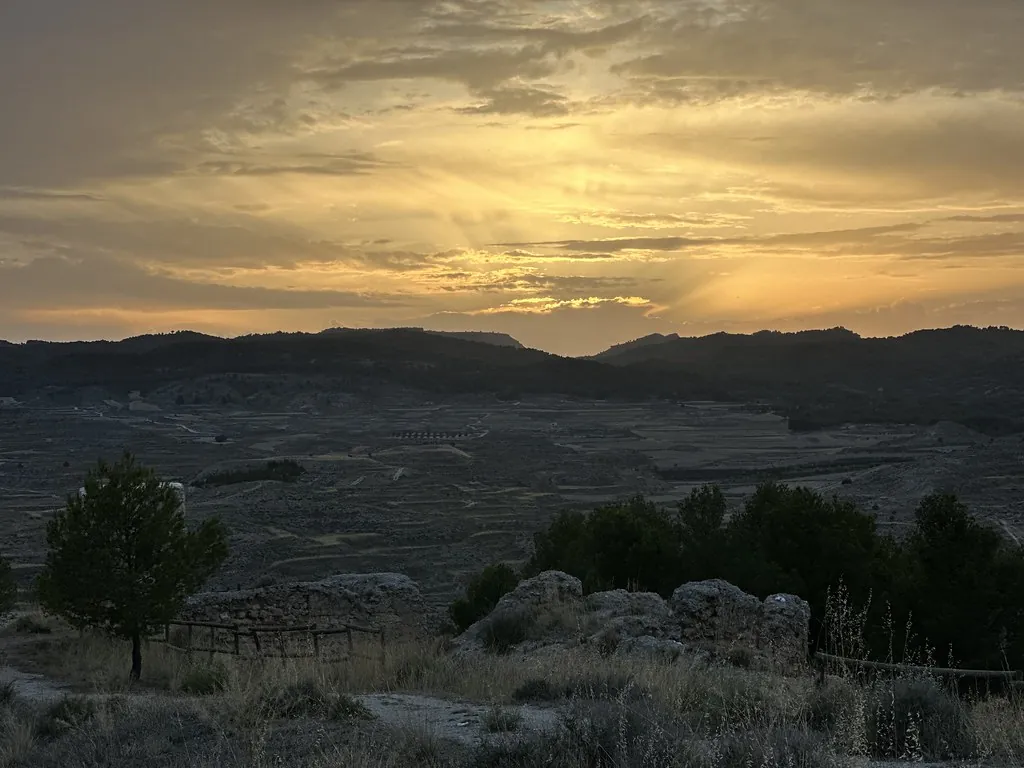
Walk five minutes south of the main road and the asphalt simply gives up. Dusty tracks divide wheat stubble into giant chess squares, each edge marked by a line of stubborn almond trees. In April the soil is lavender-grey; by late July it has bleached to bone. The horizon really is straight: no hills, no irrigation pivots, just the occasional dot of a stone hut built for grain storage. Locals call these caserías; swallows call them real-estate.
It looks empty. It is not. Look down instead of out and you will find thyme the size of ping-pong balls, black-bellied sandgrouse hiding in tractor ruts, and beetles iridescent as petrol. The Monegros region contains more than 7 500 plant and insect species, many found nowhere else in Europe. Dawn is the time to witness the show: temperatures below 20 °C, air so clear you can read the kilometre posts on the motorway from the village edge. By noon the same spot shimmers like tarmac and even the lizards seek shade under discarded irrigation hose.
Bring water. Twice as much as you think. The dry wind evaporates sweat before you feel it, and dehydration headaches are the single most common reason British visitors cut short walks. A wide-brimmed hat beats a baseball cap; the sun is overhead from May to September and skin burns fast at this latitude.
Lunch at the Edge of the Desert
The only menu written in English belongs to the Hotel Moncayo, but the chef admits he uses Google Translate and “probably the grammar is dying”. Better to point. Order ternasco de Aragón – milk-fed lamb roasted with nothing more than salt and the local cierzo wind. It arrives rose in the middle, crisp at the edges, on a metal plate hot enough to keep your chips warm even when the dining room’s air-conditioning gives up. A half-litre of Cariñena red costs €3.80 and tastes like blackberries left in a leather glove.
Vegetarians are not doomed, but they need to be flexible. The bar Casa César will make espárragos a la plancha if asparagus is in season; otherwise expect tortilla, salad, and the best tinned white beans you have ever tasted, dressed with raw garlic and olive oil. Pudding is usually watermelon served in wedges the size of house bricks. Order coffee and you get an espresso; ask for a white coffee and you will receive a puzzled look and a small jug of UHT milk.
Sunday lunch starts at 14:30 sharp. Arrive at 15:15 and the waiters are already mopping the floor; the cook has to catch the bus to her sister’s in Sástago. Plan accordingly.
What Passes for Sightseeing
The parish church of San Miguel occupies the site of a Romanesque original demolished in 1938. The replacement is brick, not stone, with a single nave and a bell cast from melted agricultural machinery. Inside, the temperature drops ten degrees; the air smells of candle wax and grain dust. A 17th-century gilded altarpiece somehow survived the fighting and now gleams against the bare walls like jewellery on a farm labourer.
Opposite stands the old grain exchange, its facade still pock-marked by bullet holes. The building is locked most days, but the tourist office (open Tuesday and Thursday 10:00-13:00, or ask inside the town hall) keeps a key. Upstairs you can see ledgers recording wheat prices in reales dated 1892, the ink unchanged since the day the market closed for the Civil War. Touch the paper and it crackles like dry leaves.
That is more or less it. The town museum consists of two rooms above the library: farm tools, a moth-eaten wolf shot in 1954, and a photograph of British troops watering their tanks at the village fountain in 1938. Admission is free; ring the bell and the librarian walks up with the key. Allow twenty minutes, thirty if you read every caption.
Practicalities Without the Brochure-speak
Getting here: Ryanair and easyJet fly direct to Zaragoza from London-Stansted and Manchester. Hire cars are available in the terminal; take the AP-2 east, exit 335, and follow the N-II for six kilometres. Total driving time is 75 minutes, most of it across steppe so featureless that the sat-nav map appears frozen.
Where to sleep: The three-star Hotel Moncoyo (€55 double, breakfast €6) has the only lift in town and a pool open June-September. Rooms overlook either the silos or the steppe; ask for the steppe side and you can watch thunderstorms march across the plain like advancing armies. Cheaper pensións exist but rarely answer email; turn up before 20:00 or they lock the door.
Weather: May and October deliver 24 °C highs and cool nights. August reaches 42 °C; January dips to –5 °C and the wind cuts straight through denim. The village sits on a plateau; altitude is not enough to moderate extremes, only to make the sun brighter. Frost at dawn in April is common enough that almond growers keep smudge pots ready.
Language: English is effectively non-existent. Learn “¿Hay menu del día?” and “la cuenta, por favor” before arrival. Staff are patient, but pointing at the next table works faster than slow school Spanish.
When to Cut Your Losses
Bujaraloz will never compete with Albarracín or Tarazona for postcard value. If you need cobblestones, craft shops, or a jazz festival, keep driving. The village suits travellers who have already accepted that half of Spain is dry, sparsely populated, and indifferent to tourism. Treat it as a place to refill the tank, stretch your legs, and eat lamb that never saw a freezer. Stay longer than one night and you will start counting the silos for entertainment; stay for lunch and you will remember the taste of wind and rosemary long after the motorway has carried you back towards the coast.