Full Article
about Chodes
Ocultar artículo Leer artículo completo
The church bell strikes noon, but only six people hear it. Four are clustered beneath the plane trees in Plaza Mayor, debating football over small glasses of vermouth. One is cycling past with a baguette balanced across the handlebars. The sixth is the priest, somewhere inside the mudéjar tower that's been keeping watch since the 1500s.
This is Chodes, population ninety-six, give or take whoever's working the fields that day. At 410 metres above sea level, the village sits where the Jalón valley begins its gentle climb towards the Iberian mountains. The altitude doesn't sound dramatic until you realise it's enough to shave five degrees off Zaragoza's summer furnace, and enough to catch the evening breeze that makes the cereal fields ripple like water.
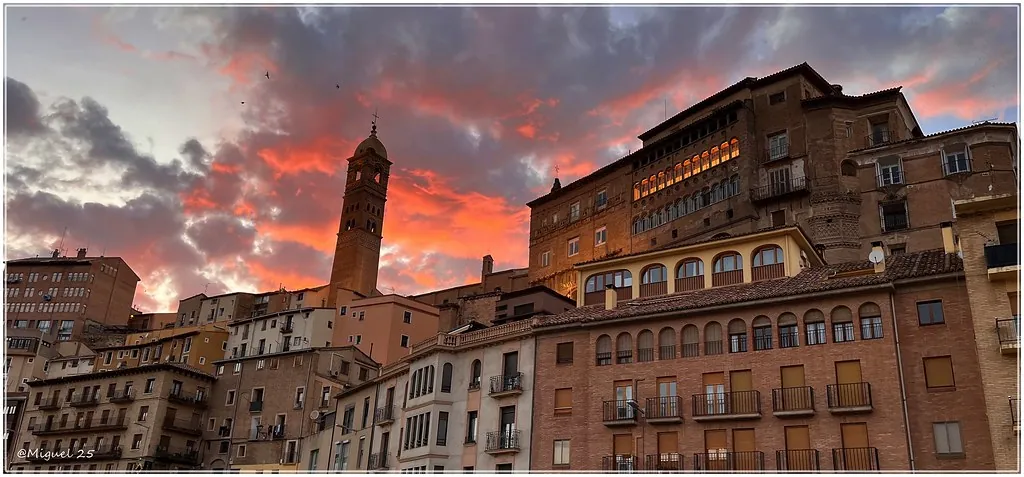
The approach road tells you everything. Fifty kilometres south-west of Zaragoza, you leave the A-2's articulated lorries behind at La Almunia de Doña Godina. From there, the tarmac narrows, the horizons widen, and mobile phone signal becomes theoretical. Wheat and barley stretch to the edge of vision, punctuated by the occasional vineyard whose gnarled vines look older than the road itself. Then suddenly, Chodes appears—not dramatically, but as a modest cluster of earth-coloured houses that seem to have grown from the soil they're built on.
The Architecture of Practicality
There's no grand plaza here, no triumphal arch or cathedral façade. Instead, the village follows a logic that makes sense once you understand the land. Streets run parallel to the prevailing wind, narrow enough to provide shade but wide enough for a tractor to pass. Houses are built from tapial—rammed earth mixed with local clay—then whitewashed annually to reflect the fierce Aragonese sun. Their roofs slope just enough to channel the infrequent but torrential rains, tiled in curved Arabic terracotta that the older residents still call "mission red."
The Church of San Pedro stands at the highest point, not for spiritual elevation but because stone foundations here need good drainage. Its tower wears a crown of glazed tiles in green and manganese, a flourish that seems almost frivolous against the sober functionality below. Step inside and the temperature drops ten degrees immediately; the thick walls act as natural air conditioning, which explains why Sunday mass attendance spikes during August.
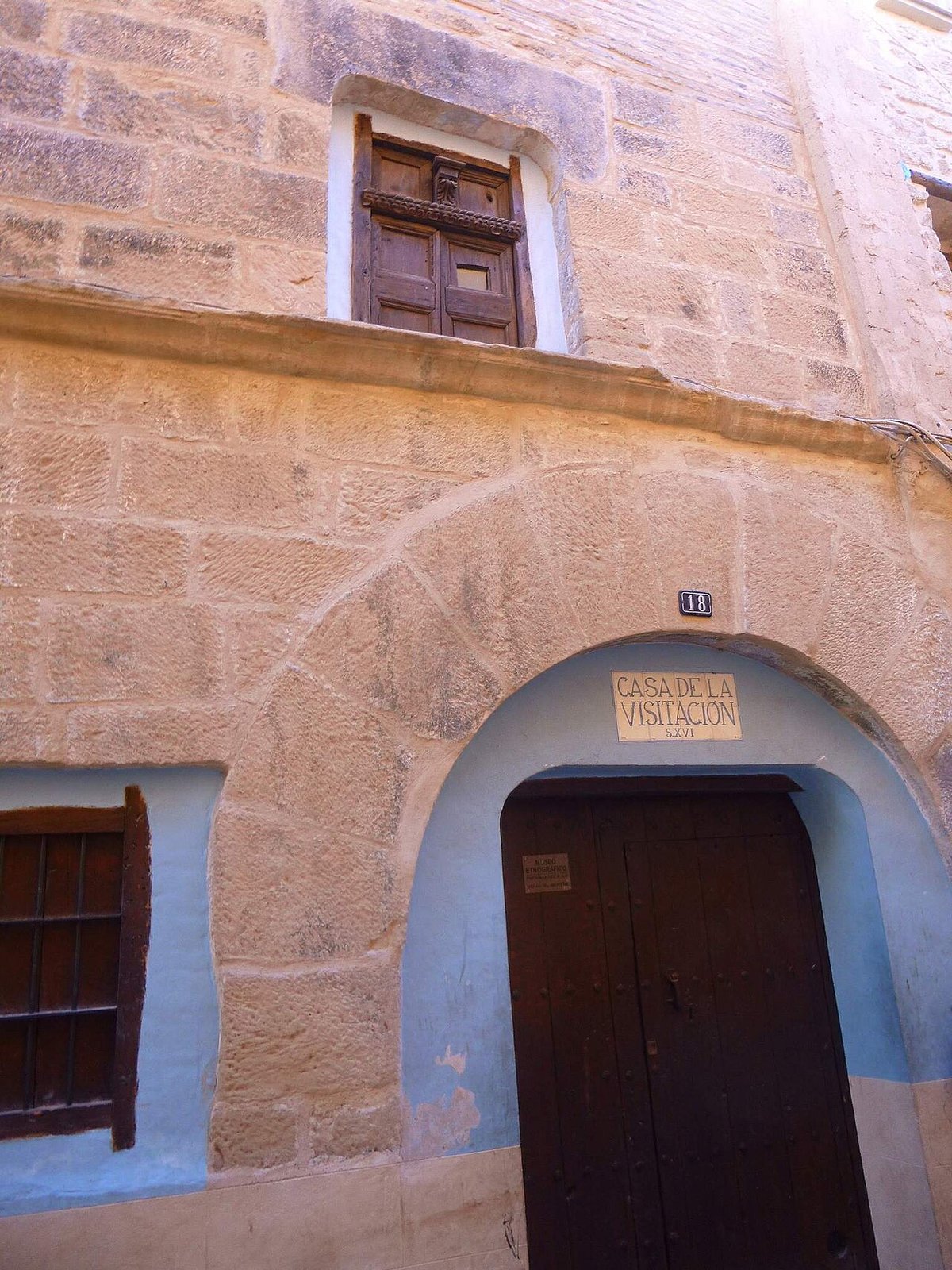
Walking the streets reveals details that reward attention. A portal from 1764, its stone arch still bearing the mason's mark. A communal bread oven, now converted to store garden tools, its chimney blackened by decades of weekly baking. Iron rings set into walls for tethering mules, their metal polished by generations of ropes. These aren't museum pieces but working architecture, repurposed rather than preserved.
What the Fields Remember
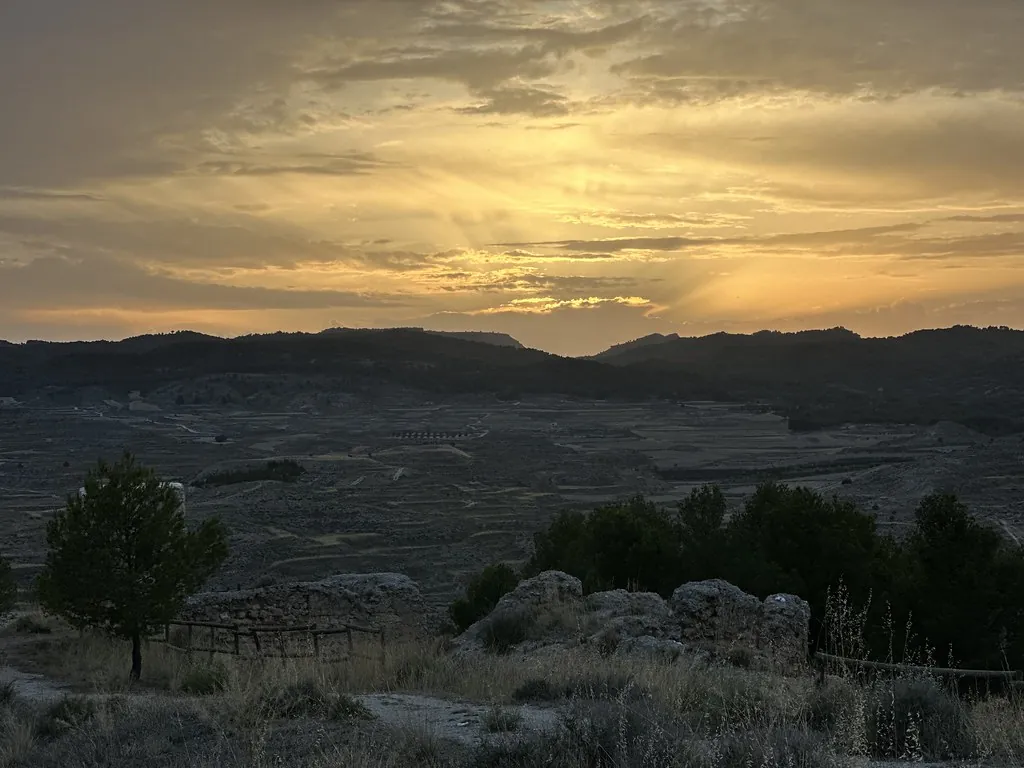
The surrounding landscape operates on agricultural time, not tourist time. In late April, the wheat shows green as Ireland. By June, it's turned the colour of lion skin and rustles like dry paper. September brings the grape harvest, when temporary labour appears from nowhere and the village population triples for three frantic weeks. October sees the stubble burned, sending columns of smoke skyward that the wind carries towards Moncayo, fifty kilometres distant.
Walking tracks radiate from the village like spokes, following ancient rights of way between plots of land. The Sendero del Barranco leads two kilometres to a dried riverbed where otter prints sometimes appear after rain. The Cerro del Castillo climb gains 150 metres over three kilometres, ending at an Iron Age settlement whose stones have been scavenged for field walls. These aren't manicured National Trust paths but working routes; expect to share them with the occasional tractor or shepherd on a motorbike.
Birdlife here is subtle rather than spectacular. Crested larks rise from the wheat singing their liquid trills. Red-legged partridges whirr across the track in coveys of six or eight. During migration periods, honey buzzards ride the thermals overhead, their silhouettes crossing the moon like slow clock hands. Bring binoculars, but don't expect hide facilities or information boards. The farmer leaning on his gate can usually identify what's circling above, though he'll measure wingspan in comparison to his spaniel rather than centimetres.
The Economics of Small
There's no hotel in Chodes, no gift shop, no ATM. The nearest cash machine is seven kilometres away in Lécera, along a road where encountering another vehicle counts as traffic. What the village does offer is a bar that opens at seven for the agricultural workers and closes when the last customer leaves, usually around ten. Coffee costs €1.20, wine €1.50, and the tapas depend on what María's cooking that day—perhaps migas with grapes, or tortilla thick as a paperback.
For accommodation, you have options but they're scattered. Casa Rural La Vega in nearby Santa Cruz has three rooms from €65 nightly, including breakfast featuring local honey and eggs from hens you can hear clucking. Alternatively, stay in La Almunia de Doña Godina where Hotel Ciudad de Zaragoza offers modern rooms from €55, making Chodes an easy half-hour drive for dinner at Restaurante Jalón. Their cordero al chilindrón—lamb stewed with peppers and tomatoes—comes from animals that grazed the fields you're looking at.
The village's fiestas happen in mid-August, when temperatures finally drop enough for humans to function after noon. The programme mixes sacred and secular with pragmatic efficiency: morning mass, followed by a paella contest using rabbits shot the previous week; evening procession, then a rock covers band that plays until the Guardia Civil arrive to enforce noise regulations. Visitors are welcome but not catered for specifically. If you want to join the paella competition, arrive early with your own pan. The judges favour those who've brought their own wood for the fire.
When to Arrive, When to Leave
Spring brings wild asparagus in the field margins and enough green to satisfy northern European eyes jaded by winter. Temperatures hover around twenty degrees, perfect for walking before the afternoon wind picks up. Autumn offers the reverse palette—ochres, siennas, burnt umber—under skies so clear you can see the Pyrenees on exceptional days. Both seasons attract birdwatchers and photographers, though never in numbers that require advance booking.
Summer is brutal. From June to September, the mercury regularly hits thirty-five by eleven o'clock. The village empties as residents sensibly retreat indoors, emerging only after five when shadows stretch longer. If you must visit during these months, follow local rhythm: walk early, siesta properly, resume activity as the church bell tolls six. The compensation comes at night, when stars crowd the sky like spilled sugar and the Milky Way appears solid enough to walk across.
Winter surprises. At this altitude, frost feathers the wheat on clear nights and the village fountain develops a skin of ice. Days can be T-shirt warm if the sun's shining, but the moment it drops behind the church, temperature plummets ten degrees in as many minutes. This is when the bar's fireplace earns its keep, and when the local wine—heavy, garnacha-based reds from Cariñena fifteen kilometres south—tastes exactly right.
The Honest Verdict
Chodes won't change your life. It offers no epiphanies, sells no souvenirs, promises no transformative experiences. What it does provide is a calibrated sense of scale: how small humans are against cereal oceans, how recent our modern conveniences, how persistent the rhythms of sun and rain and growth and harvest that still dictate terms here.
Come if you're passing, stay if you have time, but don't expect to be entertained. The village's greatest gift is silence thick enough to hear your own thoughts, interrupted only by the wind that shapes this land and everything on it. When you leave, the wheat will still be growing, the church bell still marking hours that matter here more than anywhere you've come from. Chodes continues, indifferent to whether you visited, carrying on the business of being a place while you're back on the A-2, accelerating towards somewhere that probably thinks it's more important.