Full Article
about Foz-Calanda
Ocultar artículo Leer artículo completo
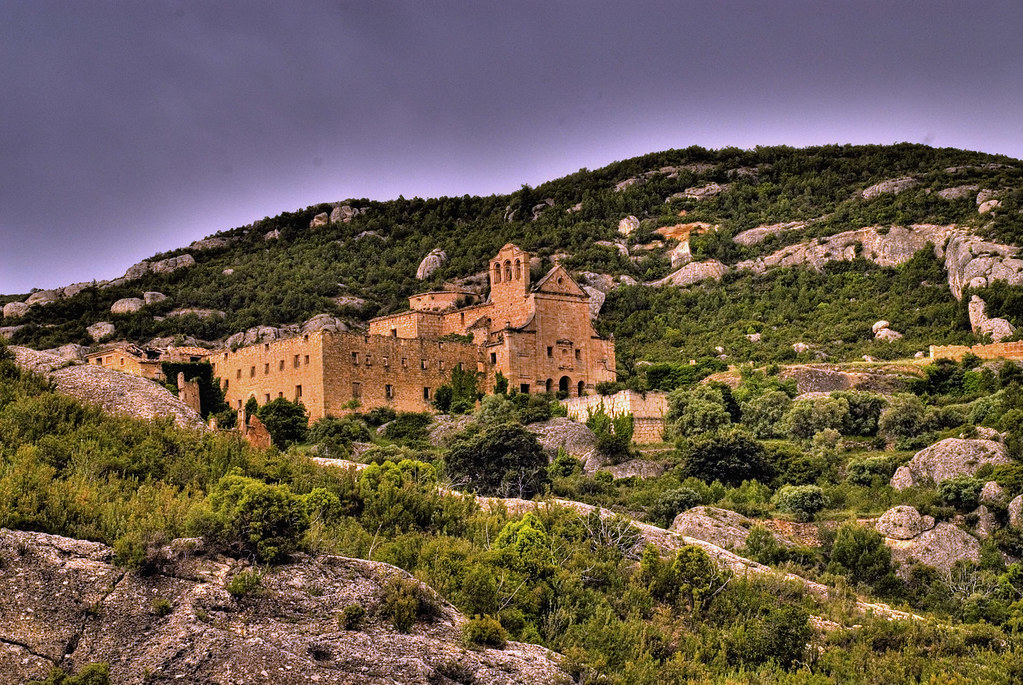
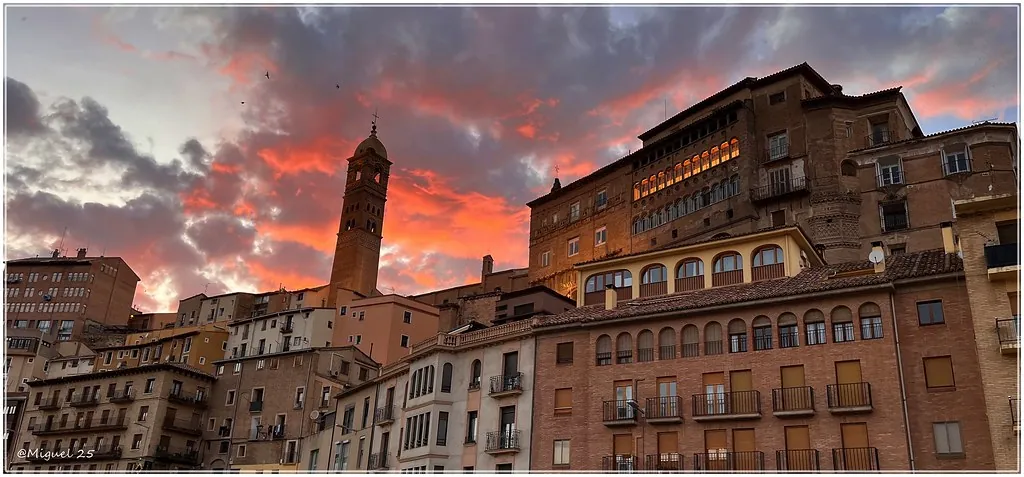
The church bell tolls twice at midday, echoing off stone walls that have withstood centuries of Aragonese sun. Nothing else moves in Foz Calanda's single street except a pair of swallows diving between terracotta rooftops. At 496 metres above sea level, this mountain village feels suspended between earth and sky, its 273 inhabitants living at a pace that makes British country life seem positively frantic.
The Vertical Village
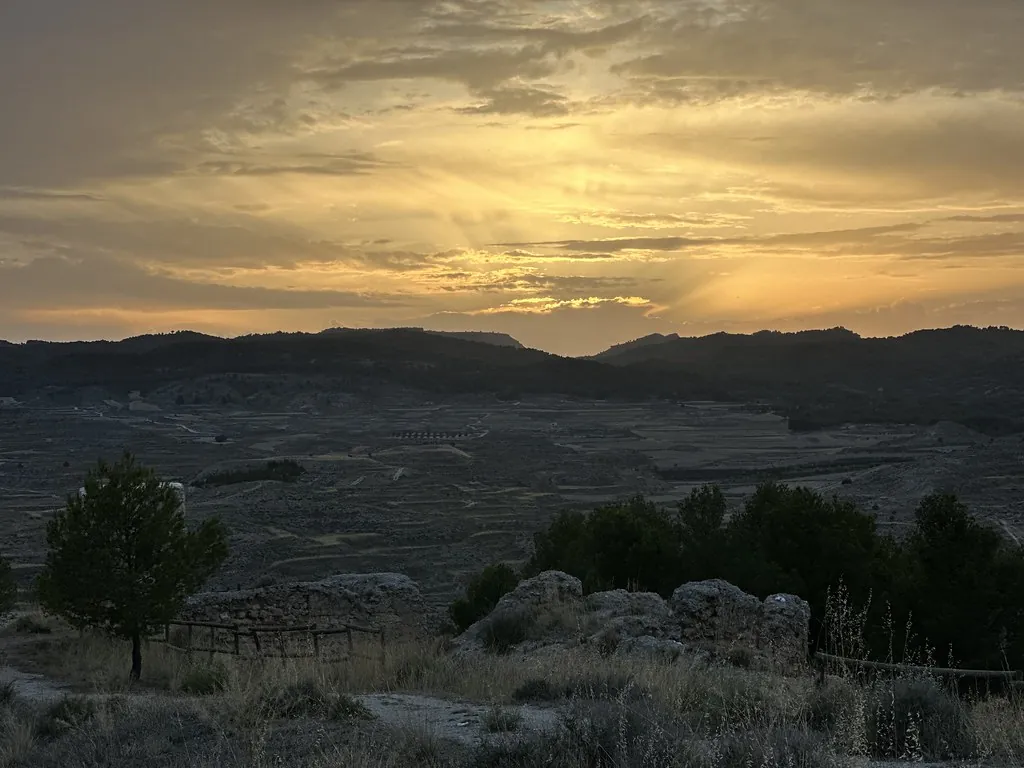
Altitude changes everything here. While coastal Spain swelters through August, Foz Calanda's elevated position brings relief in the form of mountain breezes that ripple through olive groves stretching to the horizon. The village sits perched above the surrounding plains of Bajo Aragón, creating natural amphitheatres where agricultural terraces carve geometric patterns into hillsides. These aren't dramatic Alpine peaks, but rather the gentle yet persistent uplift of ancient geology, where every road leading into town climbs steadily through switchbacks that reward drivers with expanding views across Teruel's drylands.
Winter arrives earlier than expected. When coastal resorts still bask in autumn warmth, Foz Calanda's residents are already burning olive wood in their fireplaces, the scent drifting through evening air that drops surprisingly sharp after sunset. Snow isn't uncommon from December through February, occasionally cutting road access for a day or two. The village's mountain location transforms it into a different place entirely during colder months: quieter, more introspective, with mornings where mist pools in the valleys below while the settlement floats above like an island in a white sea.
Walking Through Layers of Time
The surrounding landscape offers walking opportunities that British ramblers will find both familiar and foreign. Footpaths follow ancient routes between agricultural plots, their stone walls reminiscent of Yorkshire Dales but built to contain olive and almond groves rather than sheep pastures. A circular route heading east from the village climbs gradually through these terraces before reaching a ridge that delivers views extending thirty kilometres on clear days. The path then descends through a small gorge where limestone cliffs provide nesting sites for eagle owls, their deep hoots carrying across the valley at dusk.
Spring walking brings particular rewards. March rains transform the apparently barren hillsides into carpets of wildflowers: purple rosemary blooms, yellow gorse, and delicate white rockroses that close their petals as afternoon heat builds. The contrast between cultivated groves and wild mountain slopes creates a patchwork effect best appreciated from the old mule track that connects Foz Calanda with neighbouring Calanda, a three-hour walk that drops 200 metres before climbing back up the opposite valley side.
Summer hiking requires early starts. By 10am, temperatures in the exposed agricultural terraces can reach thirty degrees, sending sensible walkers back to village bars for cortados and conversations with locals who've been up since dawn tending their trees. The mountain location means sudden weather changes: morning clarity can dissolve into afternoon thunderstorms that send dramatic cloud formations rolling across the landscape, temporarily transforming the ochre earth into a landscape worthy of Turner.
The Taste of Elevation
Mountain agriculture produces distinctive flavours that reflect the village's altitude and climate. Olive oil from Foz Calanda carries peppery notes that develop only in fruit grown above 400 metres, where cool nights slow ripening and concentrate flavours. Local almonds, harvested in September, taste noticeably sweeter than their coastal counterparts, a difference attributed to the temperature variation between mountain days and nights. These ingredients appear in village cooking that remains resolutely seasonal and traditional.
The bar on Calle Mayor serves ajoatao, a garlicky potato dish that tastes like Spanish bubble-and-squeak, accompanied by local ham that's noticeably milder than the more famous Iberico varieties from the south. During almond harvest season, village women still gather to prepare dulces de almendra, pastries that combine mountain honey with their distinctive nuts. The village's altitude makes wine production impossible, but local beers taste better here than at sea level, the mountain water used in brewing creating cleaner, crisper flavours that complement the robust local cuisine.
Practical Realities
Reaching Foz Calanda requires commitment. The nearest airport at Reus lies 110 kilometres away, involving a hire car journey that initially speeds along motorways before narrowing to regional roads that twist through increasingly mountainous terrain. The final approach involves a series of hairpin bends that climb 300 metres in the last five kilometres, explaining why coach tours never appear and mass tourism remains theoretical rather than actual.
Accommodation options remain limited. Casa Rural Prado Alto, three kilometres outside the village, offers three-bedroom self-catering with a pool that appears almost surreal against the mountain backdrop. Booking ahead becomes essential during April's almond blossom season and September's harvest period, when Spanish families return for long weekends. Otherwise, most visitors base themselves in nearby Alcañiz, twenty-two kilometres away, driving up for day visits that allow them to experience the village's mountain atmosphere without committing to its nocturnal isolation.
Mobile phone coverage remains patchy throughout the area. This isn't marketing spin about "digital detox" but practical reality: the mountain geography creates dead zones where even Spanish networks struggle. Downloading offline maps before arrival isn't suggestion but necessity, particularly for walkers planning to explore the network of agricultural tracks that spider-web across surrounding hillsides.
The Honest Truth
Foz Calanda won't suit everyone seeking Spanish mountain experiences. The village offers no dramatic peaks to conquer, no boutique hotels with spas, no Michelin-starred restaurants reinterpreting local cuisine. Evenings remain quiet affairs where entertainment means watching the sun set behind distant mountains while drinking beer that costs €1.50 a glass. British visitors accustomed to Lake District villages with their tea shops and outdoor gear stores will find none of the familiar infrastructure that makes rural tourism comfortable.
Yet for those willing to embrace its particular rhythm, Foz Calanda delivers something increasingly rare: a mountain village that remains fundamentally unchanged by the tourism that has transformed so many Spanish settlements. The altitude that makes access challenging also preserves authenticity, creating a place where British walkers can experience rural Spain as it existed before cheap flights and package holidays. Just remember to fill up with fuel in Alcañiz, bring cash rather than relying on cards, and pack walking boots that can handle both mountain paths and village streets that have known centuries of harvest boots rather than tourist sandals.