Full Article
about Lascuarre
Ocultar artículo Leer artículo completo
The village that forgot to grow
Stand at the top of Lascuarre’s single cobbled lane at seven-thirty on a June morning and the only sound is the clink of a feeding trough somewhere below the houses. Stone roofs still hold the night’s cool; swifts stitch the gap between chimney pots and a sky the colour of skimmed milk. Population 135, altitude 647 m, mobile signal one bar if the wind cooperates—statistics that read like a warning on most tourism sites become the whole point here.
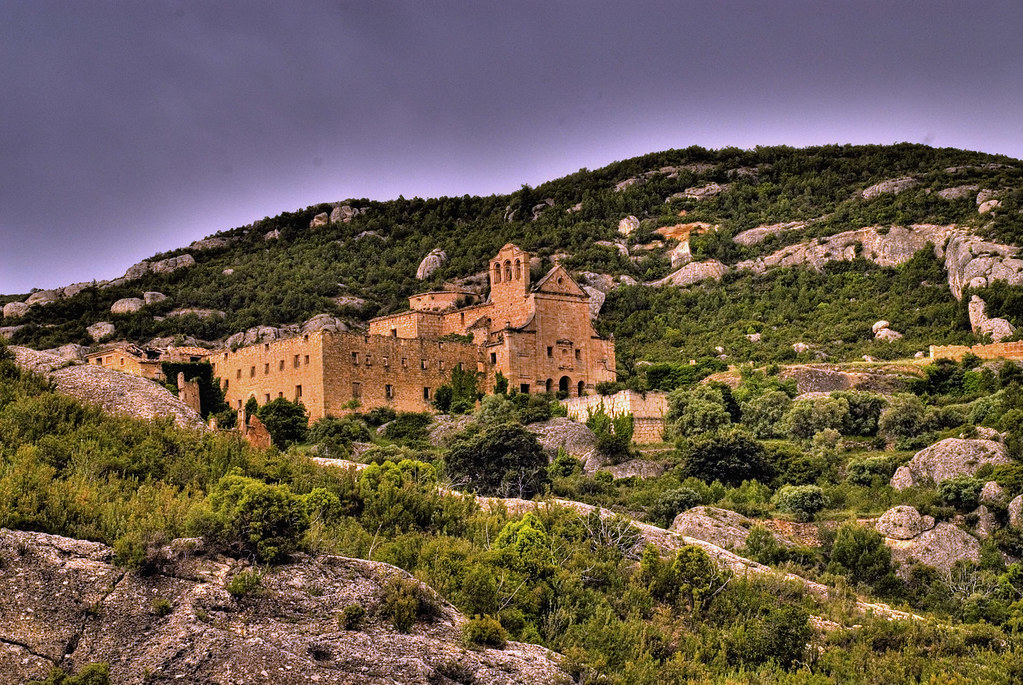
The place never quite made the leap from medieval granary to market town. While other settlements in the Ribagorza chased the wool trade down the valley, Lascuarre simply watched them leave. The result is a hill-top warren that fits inside ten minutes’ walk, built for mules, not minibuses, and still shaped like a hand cupped against the north wind.
Walking into a quieter century
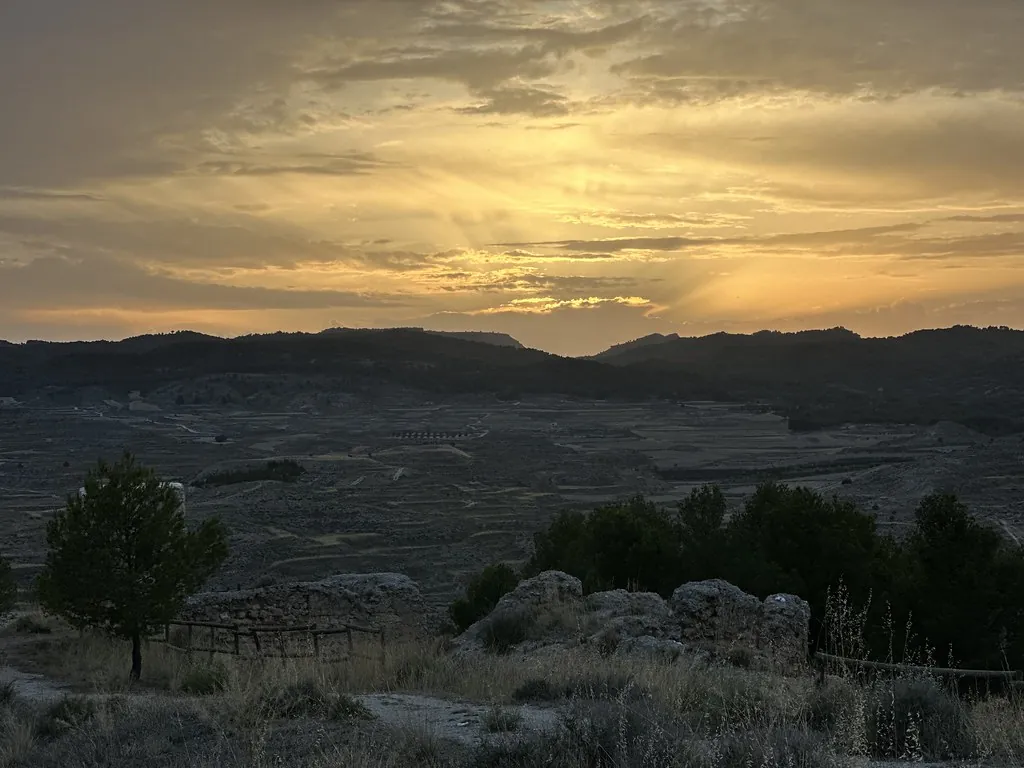
Footpaths leave the upper houses as naturally as gutters. One drops east through almond terraces to the abandoned hamlet of Aler; another climbs west to a low ridge where red kites hunt the thermals. Neither route is signed beyond the occasional paint splash, so print an OS-style strip from the Spanish IGN site or follow the stone cairns locals rebuild after every winter. Distances are modest—four kilometres, eight kilometres—but the gradients are honest; allow an hour for every 250 m of ascent and carry more water than you think sensible.
Spring brings a haze of broom and the first house martins; October turns the surrounding oak to copper and fills the air with the smell of burnt sugar from distant cane fields. Mid-summer can touch 34 °C in the valley, yet evenings on the ridge still need a fleece. Snow shuts the access road two or three days most winters; if the forecast mentions cota 600, postpone the trip.
What passes for sights
The church of San Andrés squats at the highest point, its bell-tower doubling as the village compass. Inside, the single nave smells of candle wax and damp stone; fresco fragments from the 1500s survive on the south wall, though you’ll need a €1 coin to activate the strip-light long enough to see them. Opposite the altar a wooden Christ wears real human hair, renewed every generation by whichever family draws the shortest straw at the fiesta committee.
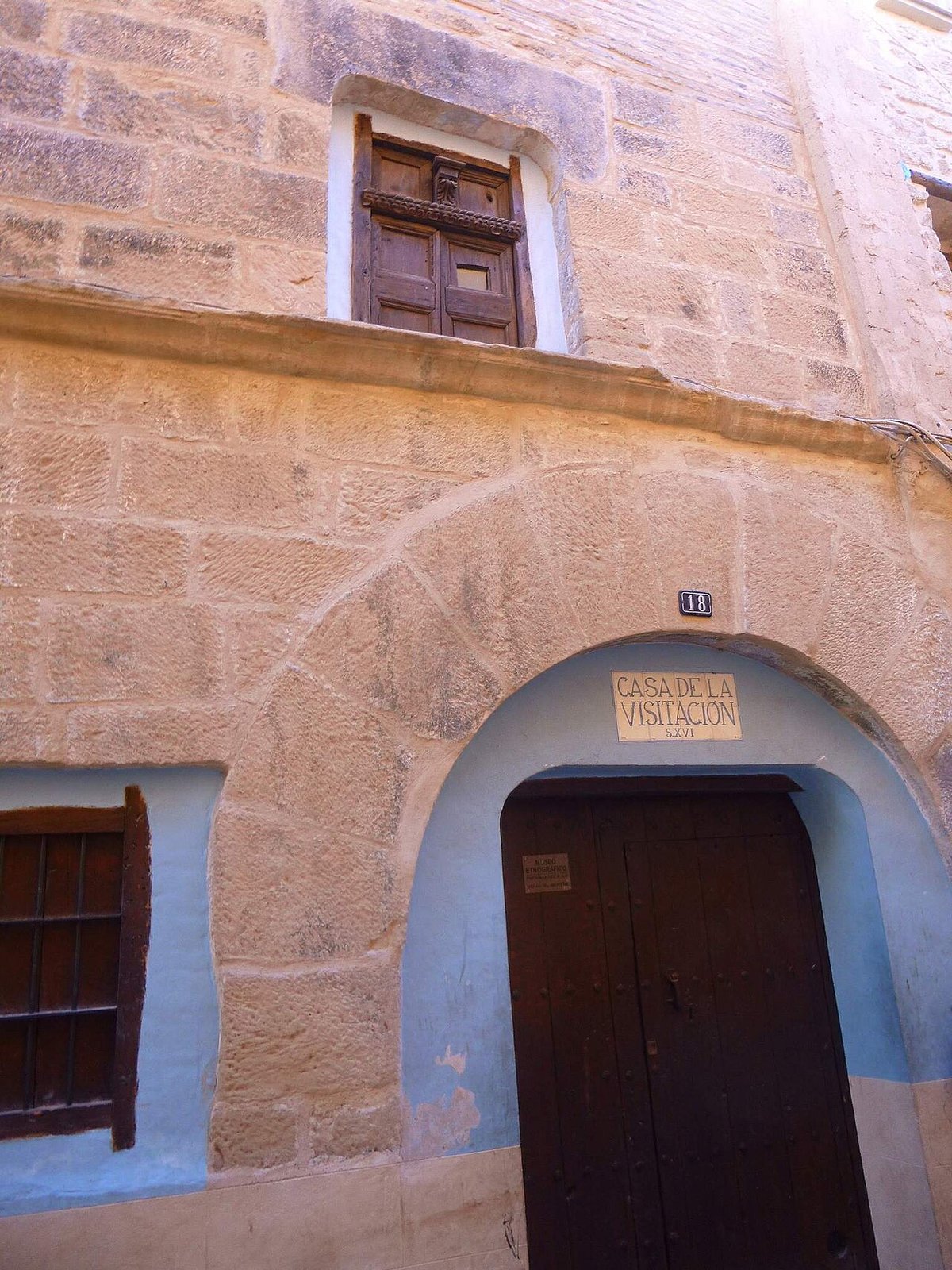
Below the church doorway a medieval grain store has been patched into holiday accommodation—thick walls, tiny windows, Wi-Fi that only works in the kitchen. Notice the iron rings set into the jambs: mule harness storage, not romantic detail. Further down, an alley narrows to Shoulder-Width Alley—locals call it el paso del colegial because school truants once squeezed through to avoid the teacher waiting on the plaza. Tourists usually discover it backwards while following Google Maps, which still thinks the lane is drivable.
Eating and the lack of it
There is no café in Lascuarre. The last grocery closed when the proprietor turned ninety-three; the nearest coffee is nine kilometres away in Benabarre. Self-cater or time your walk to finish in Graus, where the Saturday market sells Serrano ends for a few euros and the bakery does a flat coca topped with almonds that travels well in a rucksack.
If you crave something hot, Casa Rufino in Benabarre lights the oak grill at 13:30 sharp. Order chuletón de ternasco—milk-fed Aragonese lamb, thick as a paperback, salted only at the table. A half-kilo portion feeds two greedy walkers and comes with nothing more than roast padron peppers and a bottle of Somontano tinto joven that costs less than a London pint. Sunday lunch fills up with multi-generational families who talk field prices across the tables; book or arrive before 14:00.
When things open (and close)
Time works by obligation, not clock. The village bakery operates from a ground-floor kitchen on Tuesdays and Fridays—follow the smell of aniseed and knock loudly. Bread is sold by the kilo, sliced with a wallpaper knife and wrapped in the previous day’s Heraldo de Aragón. For everything else, Graus has supermarkets, fuel and a cash machine that refuses most UK cards after 18:00. Withdraw before you head uphill.
Mobile coverage favours Vodafone; EE users should stand on the church step, left foot on the loose slab, phone raised at forty-five degrees. Even then expect audio that sounds like 1995 dial-up. Download offline maps and tell someone where you’re walking.
A roof for the night
Three houses take paying guests, none of them advertised with more than a hand-painted tile. The cleanest sheets belong to Casa del Portalón, a 1750 townhouse rebuilt around a microscopic courtyard where swallows nest above the shower. Rooms start at €65 including firewood; the owner leaves eggs, instant coffee and a note saying the tap water is drinkable (it is). Checkout is whenever you leave, keys balanced on the beam above the door because nobody can ever find them again.
Camping is technically forbidden within the municipal boundary, though the mayor keeps a blind eye if you bivvy above the last terrace and are gone before the shepherd passes at dawn. Fires are banned April–October; a Jetboil won’t attract attention, a barbecue will.
Departures
Leave on a weekday and you meet the school bus grinding up the switchbacks—white-knuckle proof that roads wider than a single track are considered decadent round here. The driver flashes headlights twice: acknowledgement, not greeting. By the time the village disappears in the mirror the silence feels almost noisy, as though the ears need to recalibrate for traffic and conversation.
Lascuarre offers no postcard moment, no bucket-list tick. It gives instead the rarer pleasure of a landscape still governed by weather and work, where walking is transport not leisure and where, for a night or two, the calendar slows to the speed of stone cooling after sunset. Come prepared, don’t expect lunch, and the village will repay you with the sort of quiet most people only pretend to want.