Full Article
about Loscorrales
Ocultar artículo Leer artículo completo
A place the guidebooks forgot
The wheat stops here. After forty kilometres of hypnotic cereal plains that roll north-west from Zaragoza, the road to Loscorrales suddenly narrows, climbs 620 metres, and deposits you in a single-lane village where the loudest sound is barley rustling in the wind. Population: 98 on paper, fewer in the bar. There is no hotel, no museum, no souvenir shop. The bakery closed in 1998; the school follows the same calendar as the combine harvesters.
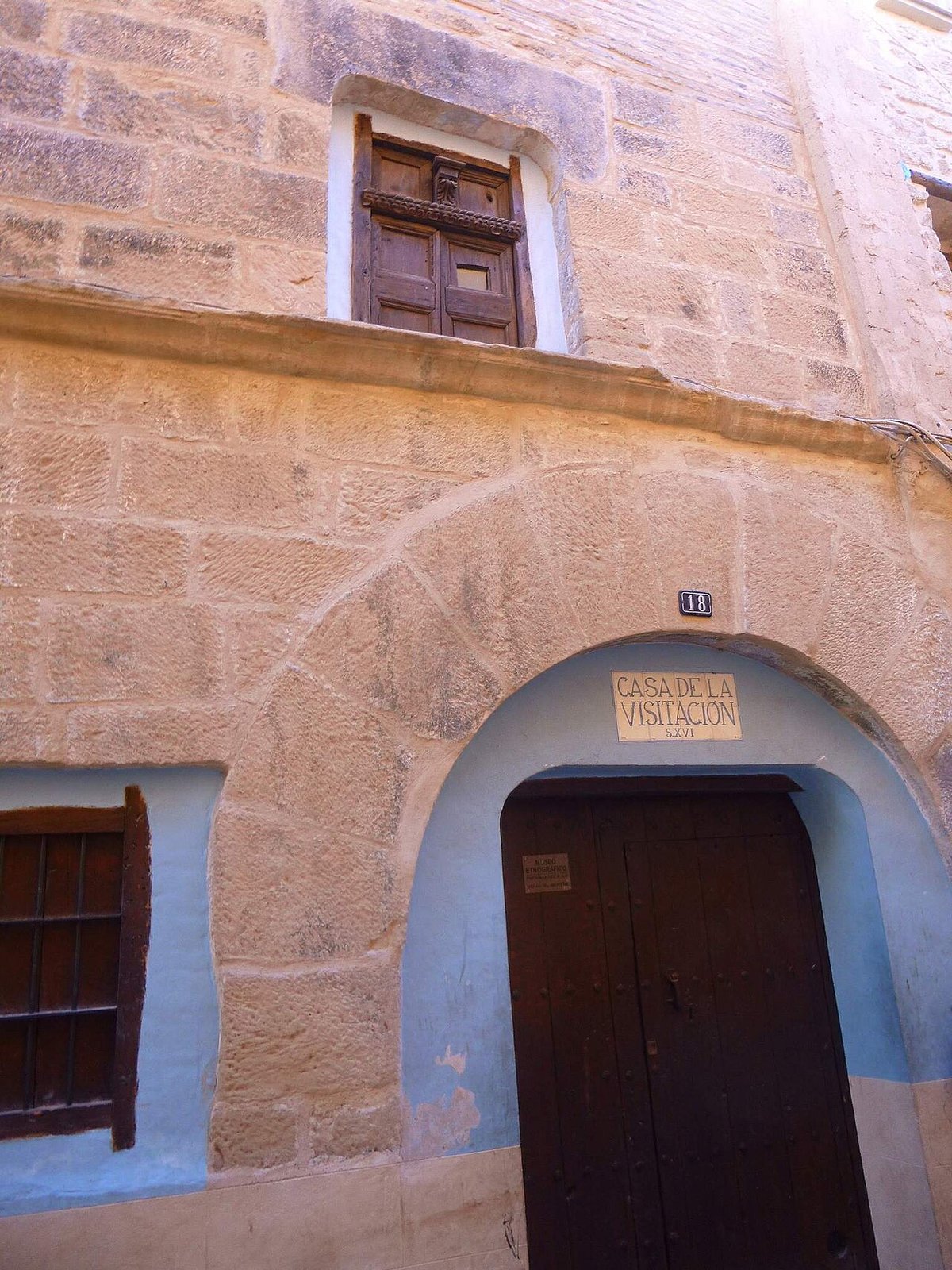
What remains is a compact grid of stone-and-adobe houses, their half-moon doorways painted the colour of ox-blood, and a 16th-century church tower that still tolls for funerals, weddings and the occasional lost traveller. Walk the length of Calle Mayor in four minutes, turn right at the stone trough where donkeys once drank, and you have seen the historic centre. The effect is less “step back in time” than “time forgot to step here”.
Why the fields feel endless
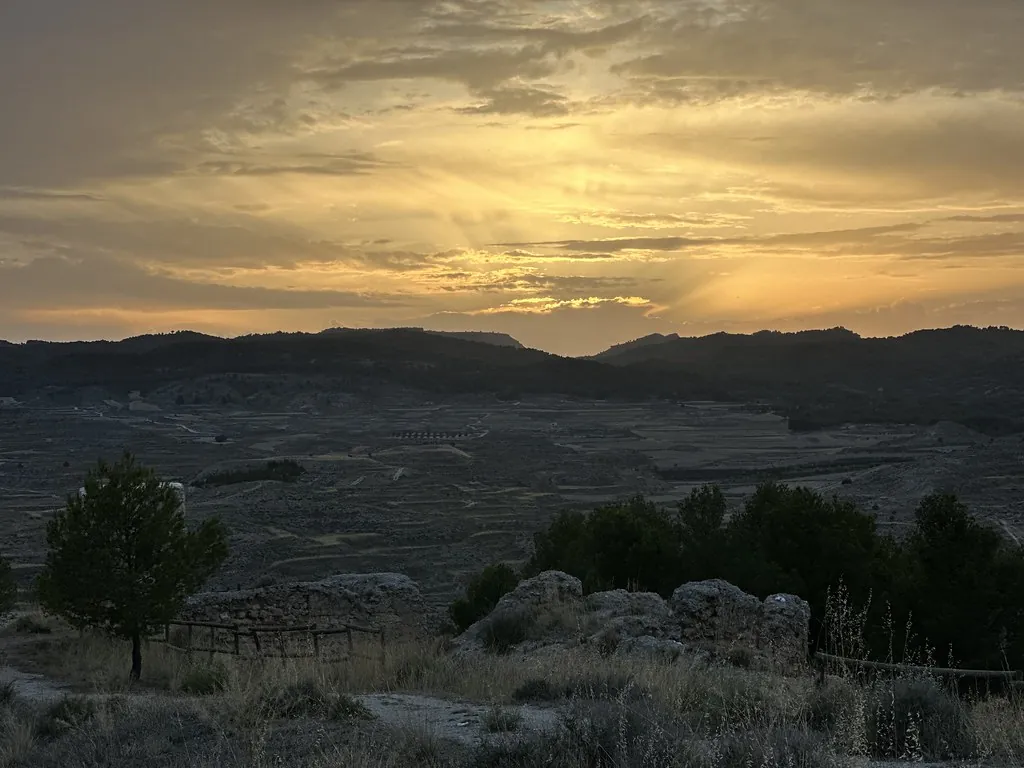
Stand on the low ridge behind the church and the view is almost alarming: a 360-degree disc of cultivated land broken only by the faint white line of the Pyrenees 70 kilometres north. Spring brings an almost lurid green that hurts the eyes after the beige motorway; by July the palette has burnt to gold; October adds rust and charcoal stubble. Photographers arrive at dawn hoping for drama, find instead a calm so complete it feels like holding your breath.
The paths are farm tracks, not signed trails. One leads east to the abandoned hamlet of Urríes (5 km), another west towards the salt-coloured cliffs of Riglos (11 km). Both are flat, shadeless and, in summer, furnace-hot after 11 a.m. Take two litres of water, a hat, and the mobile number of farmer Jesús Lera – scrawled on the village noticeboard – in case the combine harvesters have obliterated the return footprints.
What you can (and can’t) eat
There is no restaurant. The only commerce is a tiny ultramarinos open three mornings a week where you can buy tinned sardines, overripe peaches and a lottery ticket. Ask for “migas” and the owner, Lucía, might phone her sister-in-law, who will appear twenty minutes later with a tray of fried breadcrumbs, grapes and scraps of chorizo – €8 a portion, eaten on the shop step. Proper meals require a ten-minute drive to Siétamo, where Bar Mundo serves shoulder of lamb slow-roasted in a wood oven and a carafe of Somontano wine for €14.
The regional speciality is not food but calendar. Visit during the September fiestas and you’ll share long tables under fairy lights, dance to a lone accordion, watch teenagers release coloured balloons from the bell-tower at midnight. In January the blessing of animals turns the plaza into a mild chaos of dogs, tractors and one suspiciously clean sheep wearing a red ribbon. Both events are public, free and conducted entirely in rapid-fire Aragonese Spanish; bring a phrasebook and a bottle of anís for sharing.
Weather that argues back
At 620 metres Loscorrales sits just high enough to escape the Zaragoza furnace, but not high enough for mountain cool. July afternoons regularly touch 36 °C; the wind, unimpeded by trees, whips dust into eyes and camera sensors. Winters are the inverse: bitter, often fog-bound, with week-long spells when the temperature never creeps above 4 °C. The village can be cut off by snow for a day or two, though the council’s single gritter usually appears faster than the national press.
Spring and autumn are the sensible seasons. In May the wheat is knee-high and dotted with crimson poppies; migrating storks use the church tower as a motorway service station. Late September offers soft light, threshing machines that look like mechanical dinosaurs, and the smell of straw fermenting in stacks.
The honesty clause
Staying overnight means persuading. There are no rental flats, no rural casas rurales, not even a paddock for campervans. The ayuntamiento keeps a list of three villagers with spare bedrooms; expect ceiling fans, shared bathrooms and a breakfast of instant coffee plus Magdalena sponge biscuits – €25 pp, cash only, no card machine within 25 km. Book by ringing the town hall (they still answer the landline) or simply turn up and hope someone’s cousin is away.
The upside of such absence is silence so pure you can hear grain stalks knock together. Night skies reach Bortle class 3 – the Milky Way looks like spilled sugar. The downside is that after ninety minutes you have exhausted the sights. Most visitors fold Loscorrales into a wider circuit: morning here, lunch in nearby Ayerbe, afternoon at the Loarre castle, bed in Huesca’s leafy suburbs 35 minutes north.
How to arrive, how to leave
Public transport is theoretical. A Monday-only bus links Zaragoza with Ayerbe at 07:40; from there a regional taxi charges €35 for the final 19 km. Hiring a car is simpler: take the A-23 to Huesca, then the N-240 towards Pamplona, exit at km 444, follow signs for “Loscorrales” across a road that shrinks to single track and finally gravel. Parking is the widening before the first house; leave room for the combine harvester that needs to swing in at dusk.
Fill the tank in Huesca – the village pump closed in 2009. Mobile coverage is patchy; download offline maps. If the barrier across the western track is locked, it means shooting season; walkers are tolerated, bright clothing advised.
Parting shot
Loscorrales will not change your life. It offers no epiphany, no Instagram jackpot, no story that plays well at dinner parties back home. What it does provide is a calibrated reset: a place where human noise drops to zero, where the horizon is measured in wheat waves, and where the village mayor still rings the church bell by hand at noon to prove the day is ticking. Spend an hour, or spend a night, then roll the windows down and drive back towards the twentieth century – the fields will whisper you goodbye for a full ten kilometres.