Full Article
about Miravete de la Sierra
Ocultar artículo Leer artículo completo
The church bell strikes noon and nobody appears. Not a single villager steps outside, no dog barks, no scooter rattles past. At 1,218 m above sea level, Miravete de la Sierra keeps its own timetable: the sun burns hotter, the shadows stretch longer, and the only reliable meeting point is the bench outside the combined bar-supermarket-tourist office that opens when the owner finishes feeding her goats.
Twenty-seven souls are registered here, five stay through winter. They have no mayor—officially the post is vacant—and the last time anyone bothered to lock a door was 1994. Yet the stone houses stand straight, their timber eaves newly patched, and every roof carries a television aerial, proof that even nothing-ever-happens can happen with Netflix.
A geography of absence
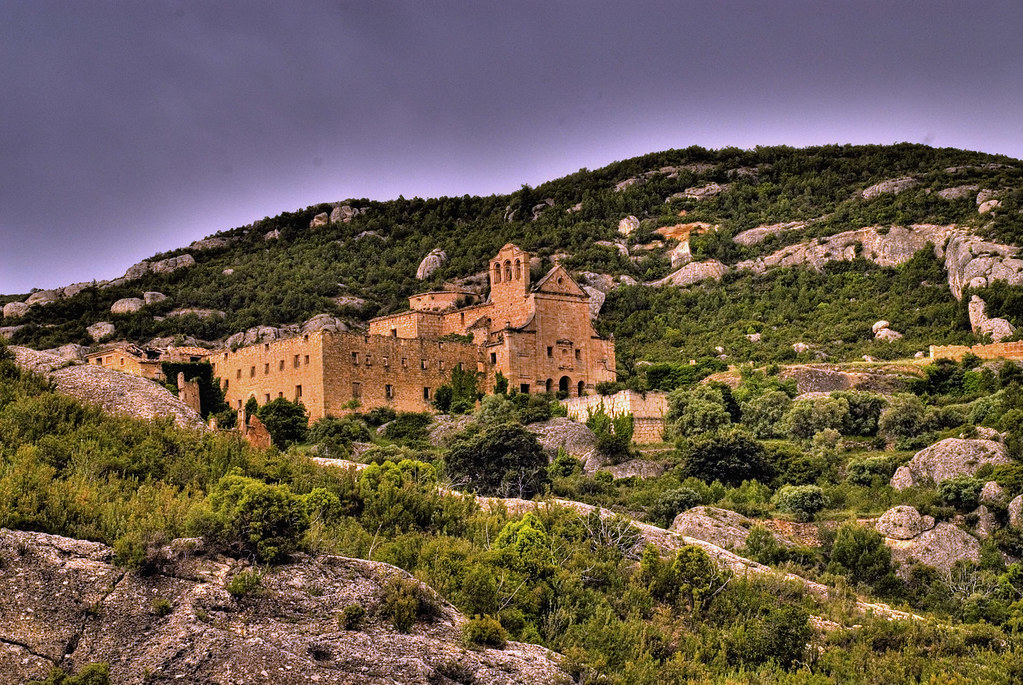
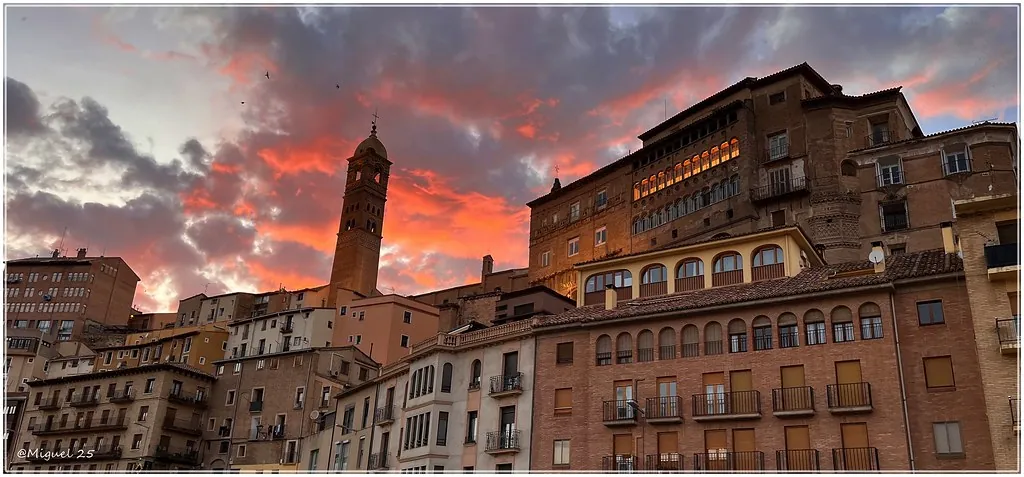
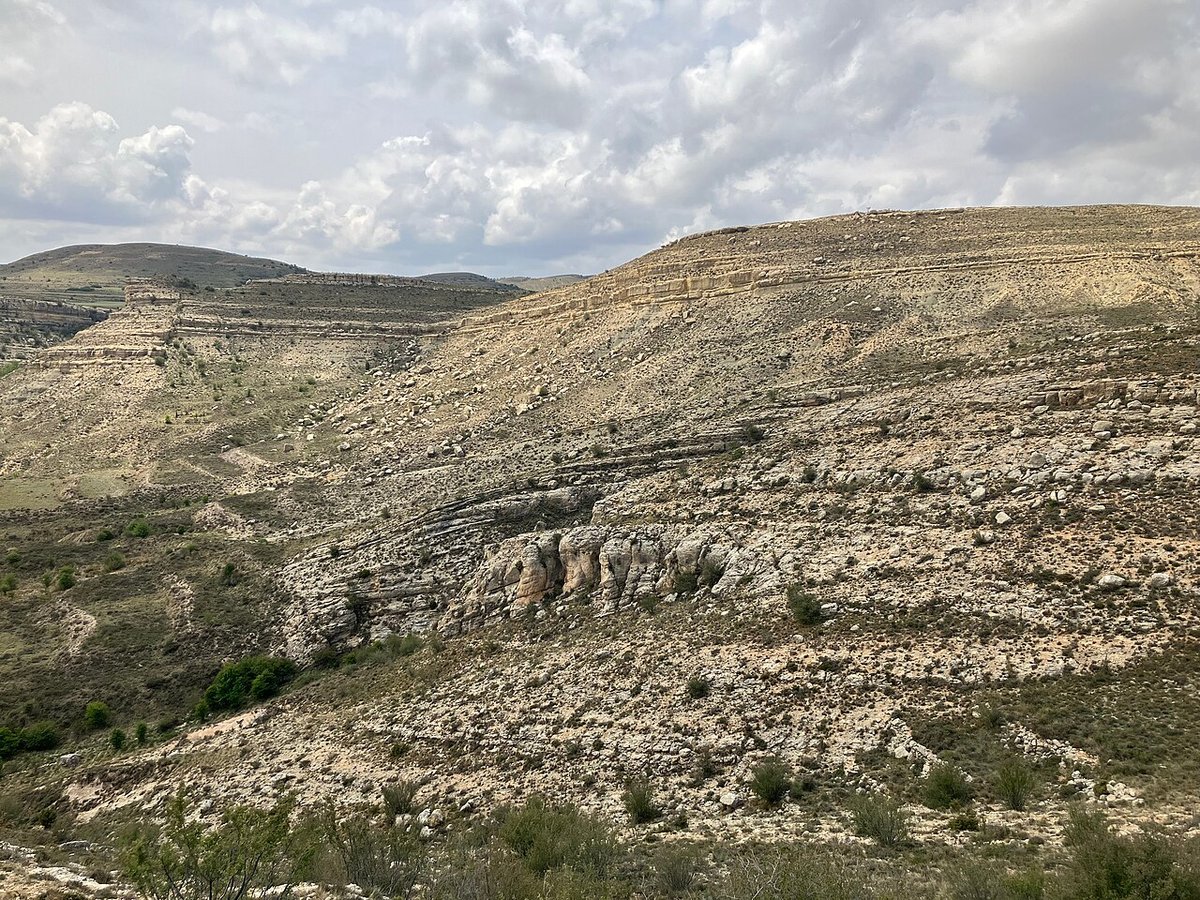
Approach from Teruel on the A-23 and the land empties in stages. First the olive groves thin, then the traffic thins, finally the phone signal thins. You turn off at the N-211, climb 19 km of switchbacks, and crest a ridge where the only colour is the occasional red cross of a distant wind turbine. Miravete appears as a dark ripple on the skyline: a slate roofline pressed against limestone outcrops, no church tower visible until the final bend because the builders tucked the village into the lee of the prevailing north wind. Smart people. August afternoons hit 34 °C, but five minutes after sunset you’ll be zipping your fleece.
Park where the tarmac stops—lanes ahead are 2.1 m wide, gradients reach 18%, and reversing to let a local’s Landini tractor pass is part of the entertainment. From the barrier it is a three-minute walk to the plaza, time enough for ears to adjust to a soundtrack of pine needles and your own pulse.
Stone that learned to breathe
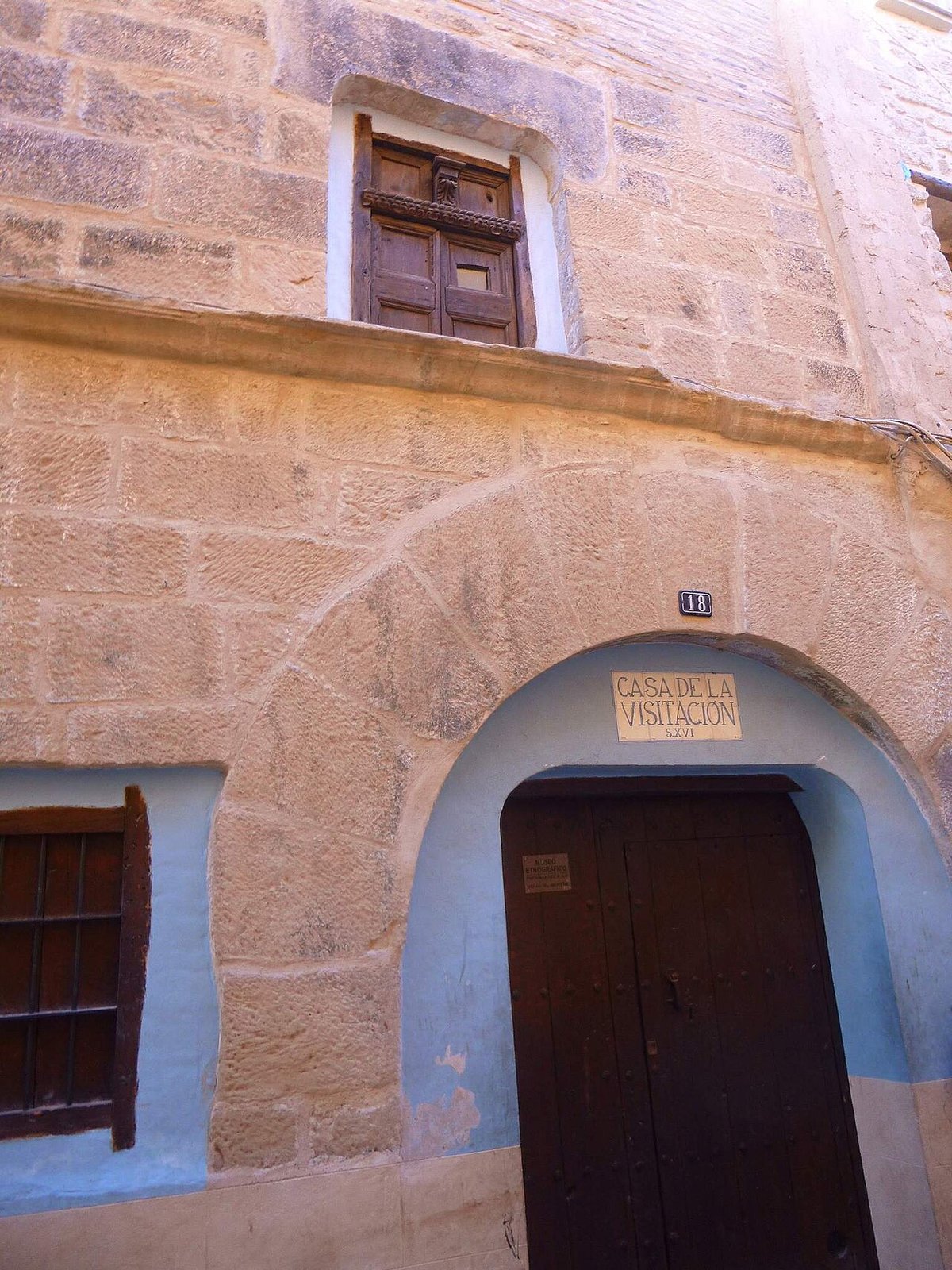
Every house is mortared with the mountain’s own rock, split along its grain so walls shimmer like fish scales. Doorways barely clear six feet; generations were shorter and heat rises. Peek through an open portal and you may see a palloza-style round stable now converted into a holiday kitchen, the original feeding trough polished and repurposed as a breakfast bar. One cottage displays a brass letterbox engraved “Sheffield 1908”—brought back by a migrant who spent three winters cutting rail tracks beside the Don.
The plaza is the size of a tennis court. Two plane trees drop leaves on the war memorial that lists one dead in Cuba, 1898, and one in the Civil War, 1938. Between them lies a third name, 1996: a shepherd who fell asleep on the track home, his flock still circling him at dawn. Locals bring flowers on All Saints’ Day; outsiders mistake the bouquets for municipal decoration.
Walking without waymarks
Set out south-east along the unsignposted track that passes the last cottage and you drop into the Rambla de los Navazos, a dry watercourse paved with white quartz pebbles. Ten minutes down, the gorge narrows to shoulder width; ferns brush your shins and the temperature falls five degrees. Another twenty minutes and the ravine spits you onto a high meadow where an abandoned threshing floor sits like a helicopter pad. From here the GR-8 long-distance path crosses on its 500 km traverse of the Maestrazgo; follow it east for ninety minutes and you reach the hamlet of La Cuba, population three, where a stone fountain dribbles drinkable water. Retrace your steps at dusk and you will meet roe deer feeding on the terraced almond terraces—introduced in the 1980s and now bolder than the residents.
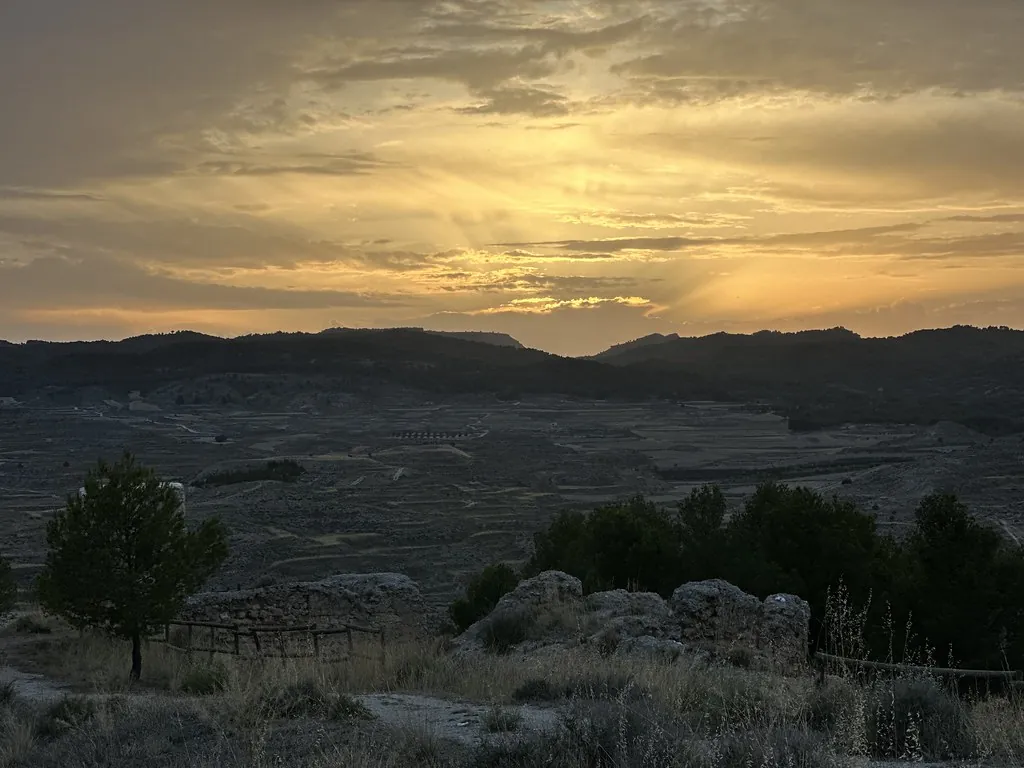
If that sounds too energetic, simply circle the village perimeter. The loop is 1.4 km, gains 80 m, and delivers three natural balconies. The middle one faces west across the Huerva valley; on clear winter evenings you can pick out the wind turbines near Teruel 50 km away, their blades flashing like harbour lights.
Food meant for wool gloves
The bar-supermarket opens 10:00–14:00 and 17:00–20:00, hours that shrink in sympathy with daylight. There is no menu. Ask what exists: usually a clay bowl of arroz con verduras made with the owner’s own tomatoes and whatever the season offers—cardoons in March, wild mushrooms in October. A portion costs €7 and arrives with half a loaf cut from the communal wood-fired oven, restored in 2016 and fired every Saturday so neighbours can bake batches of bread that keeps for a week. Drink the house wine, drawn from a plastic barrel labelled “Vino Tinto” in felt-tip; it is from Calatayud, costs €1.50 a glass, and tastes better when clouds park themselves on the sill.
If you need supplies beyond crisps and tinned tuna, drive 25 minutes to Orihuela del Tremedal where the carnicería sells Teruel ham carved to order. The denomination insists on pigs fattened on at least 80% acorns; the resulting fat melts at 22 °C, room temperature in most British kitchens but a furnace up here, so the flavour stays locked in the fibres until it hits your tongue.
When the village remembers it has a calendar
August’s fiestas double the population for three days. Returning emigrants pitch tents on their grandparents’ threshing floors, a sound system appears in the plaza, and the baker’s son—now living in Zaragoza—DJ’s until 03:00. The highlight is the verbena supper: long tables laid with cordero al chilindrón (lamb simmered in smoky paprika), bottomless jugs of garnacha rosé, and a raffle whose top prize is a live kid goat. Visitors are welcome to buy tickets; you probably don’t want to win.
Easter is quieter. At dusk on Good Friday villagers carry a bare wooden cross to the western mirador; someone reads the Passion aloud, voice cracking in the wind. The crowd—twenty at most—then files back to the church for hot chocolate thickened with cornflour in the Aragonese way. It tastes like school pudding and nobody refuses a second cup.
The catch in the idyll
Winter is serious. Snow can arrive overnight and the access road is not first on the gritter’s list. In January 2021 drifts cut Miravete off for four days; the shop ran out of milk and the owner skied down to La Puebla de Valverde to restock. Mobile data flickers between 3G and nothing, so download offline maps before you leave the lowlands. There is no ATM, cards are tolerated only when the terminal feels like working, and the nearest petrol pump is 38 km away in Albarracín—check your gauge.
Come between May and mid-July and you trade snow for pollen. The surrounding pine plantations release clouds that trigger allergies so fierce locals wear FFP2 masks long before pandemics made them fashionable. Pack antihistamines or you will spend the night itching inside a 300-year-old bedroom whose walls breathe the same air as the forest.
Leaving without really leaving
Drive away at dawn and the village shrinks in the mirror until only the church ridge line remains, a broken tooth against pink sky. The silence follows you down the switchbacks, a pressure change inside the ears. Somewhere around 900 m the radio crackles back to life, a lorry driver complains about diesel prices, and the 21st century reassembles itself. Miravete de la Sierra has already forgotten you; that is part of the bargain, and most visitors find they prefer it that way.