Full Article
about Molinos
Ocultar artículo Leer artículo completo
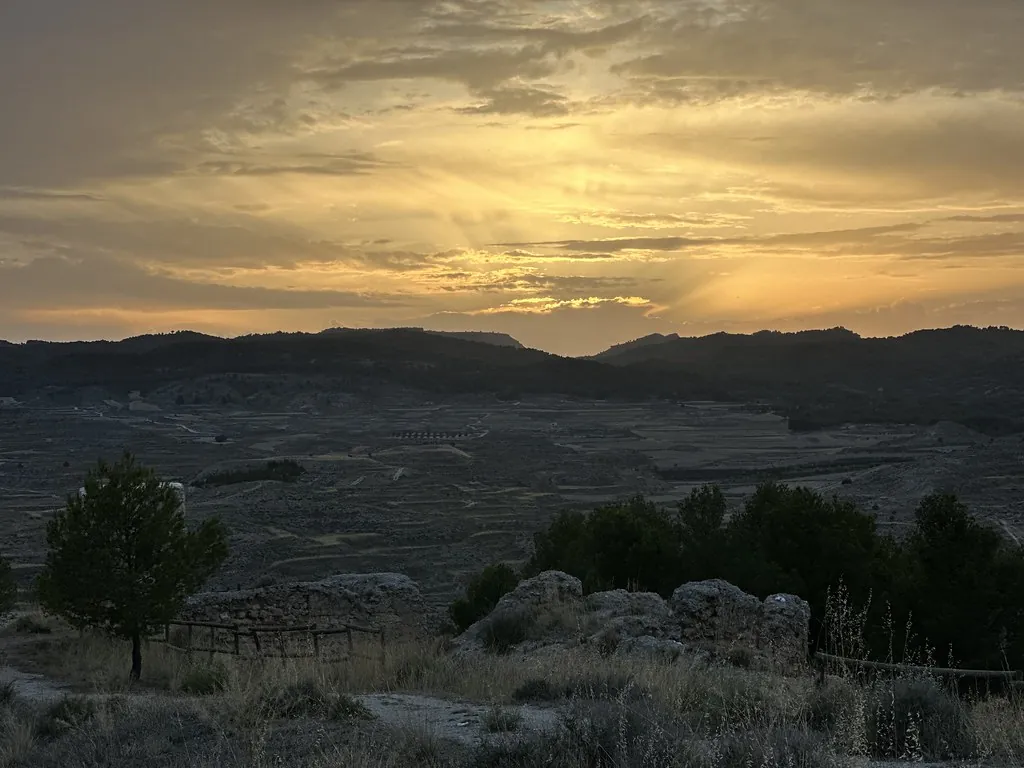
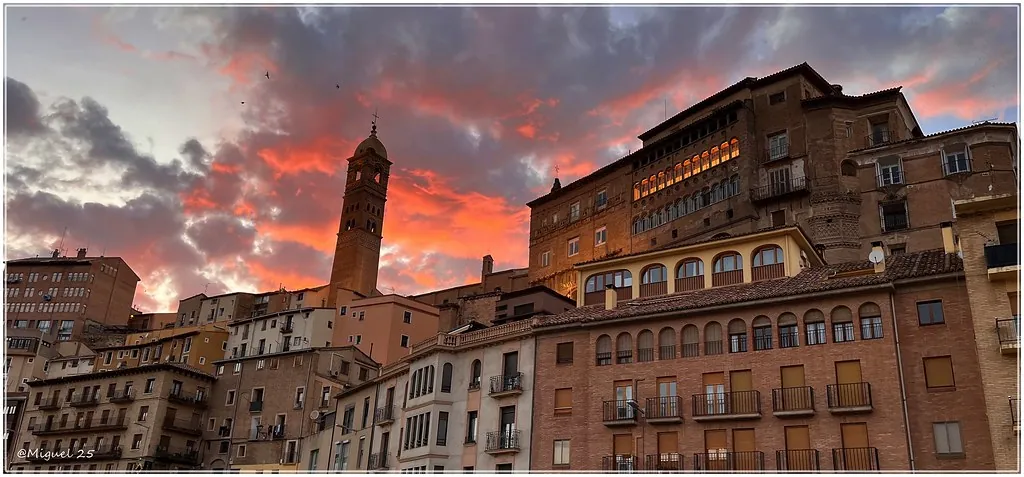
The road to Molinos climbs through empty kilometres of scrub and stone, past roadside shrines where fresh flowers appear without explanation. At 838 metres above sea level, the village materialises as a tight knot of honey-coloured houses wedged into a fold of the Maestrazgo mountains, its church tower acting as both compass and exclamation mark. From the mirador on the approach road, the houses look as though they've been poured into the ravine and left to set.
This is not a place that tolerates half-measures. The wind arrives with the force of a freight train, rattling shutters and whipping through the narrow lanes that climb from the riverbed. It carries the scent of rosemary and damp stone, and occasionally the faint clank of a goat bell from somewhere up the slope. With 227 permanent residents, Molinos operates on a scale where everyone knows whose donkey has escaped before the owner does.
Stone That Remembers
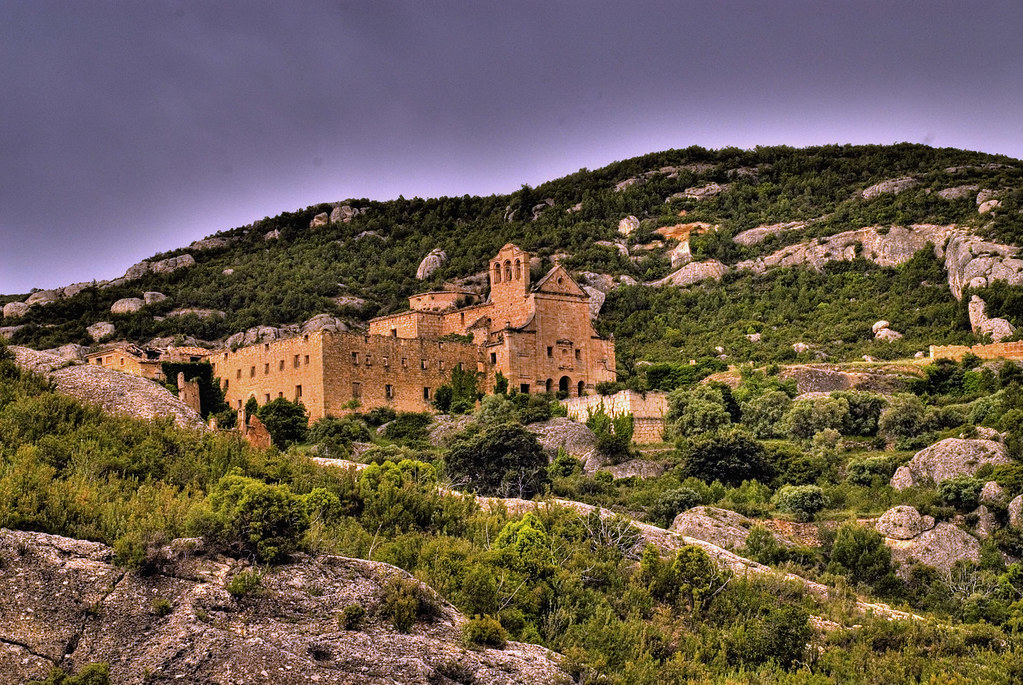
The Castillo de Molinos squats on its rocky outcrop like a broken tooth, fragments of fourteenth-century walls still defying gravity above the Guadalope valley. What remains is skeletal – a gateway here, a section of battlement there – but the vantage point explains everything about why people stayed. From the castle's base, the land drops away in terraces of almond and olive, while to the north the Sierra de Albarracín rises in layers of blue-grey limestone. On clear days you can trace the old mule tracks that once connected this village to the silver mines of Hiendelaencina, 150 kilometres east.
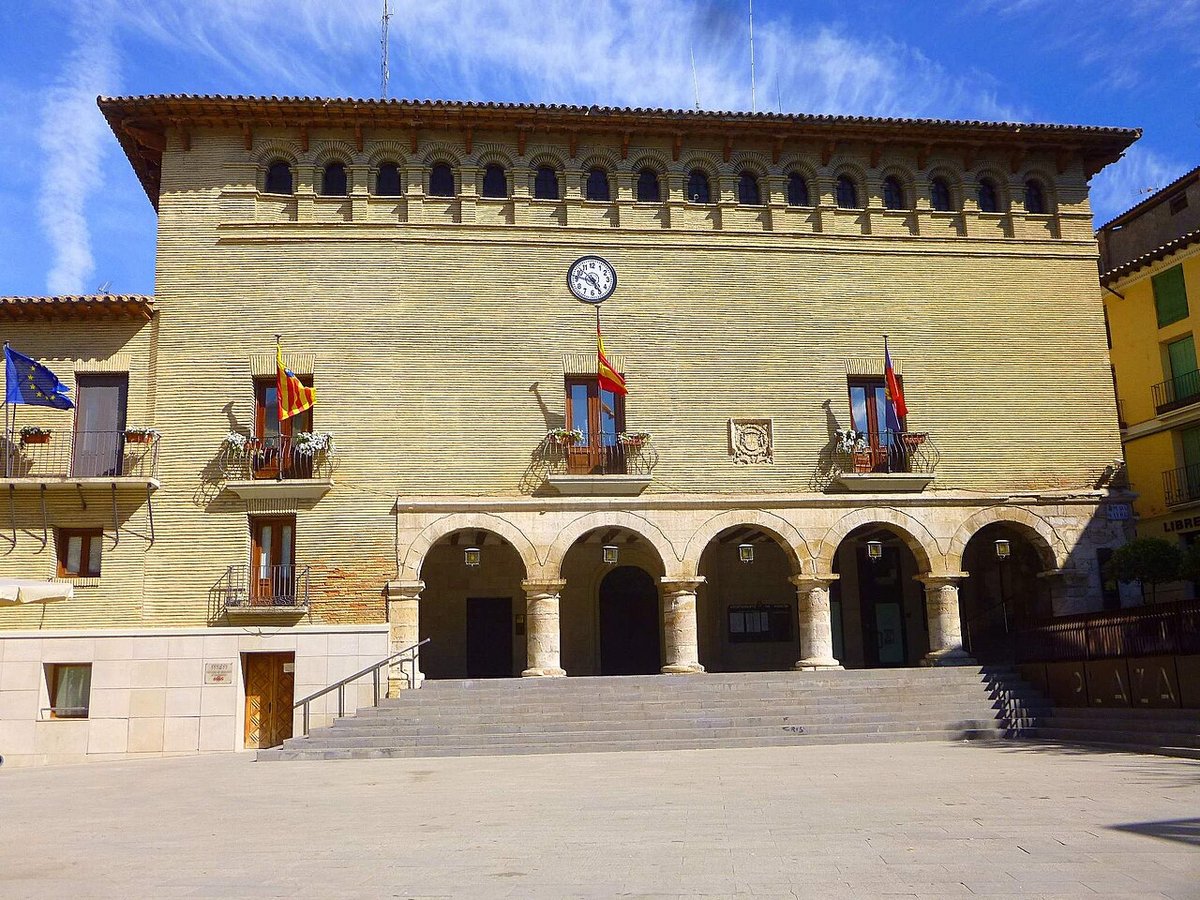
Down in the streets, the Iglesia de la Purísima Concepción serves as both spiritual and geographical centre. Its seventeenth-century rebuild left it with a tower robust enough to withstand the region's savage temperature swings – winter nights of minus ten give way to summer afternoons nudging forty. Inside, the air smells of beeswax and centuries of frankincense, while outside the stone flags of the Plaza Mayor slope at angles that would give a surveyor nightmares. The arcade that runs along one side provides the only reliable shade for miles, and on market days it's where the lone baker sets out trays of pastissets, diamond-shaped pastries filled with pumpkin jam that stick to your teeth for hours.
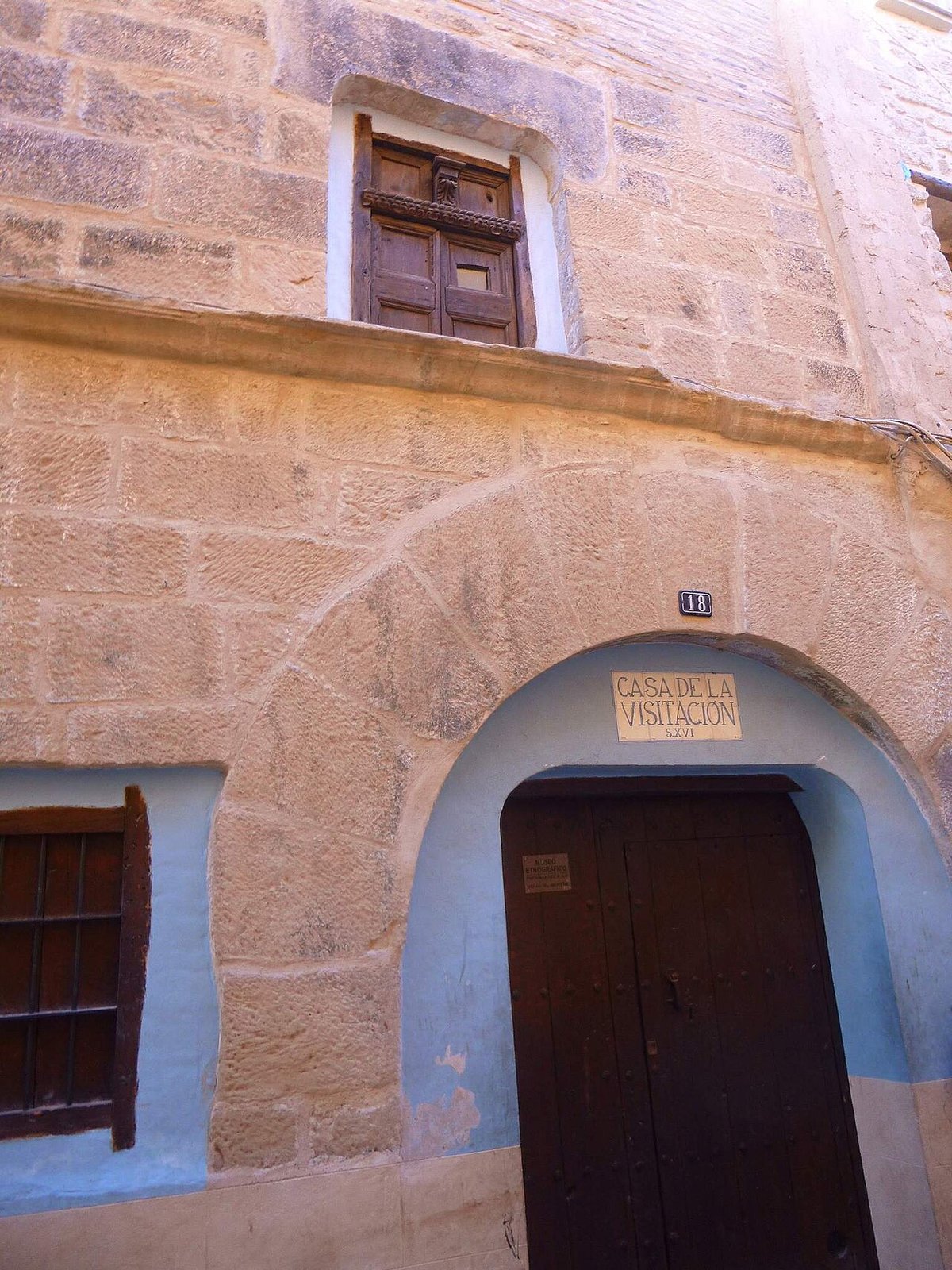
The houses themselves tell a more honest story than any heritage brochure. Some retain their sixteenth-century coats of arms – a boar here, a tower there – carved with the confidence of families who controlled entire valleys. Others have collapsed into rubble where roofs couldn't be replaced, creating gaps like missing teeth in the streetscape. One facade on Calle de la Fuente sports a perfectly preserved Renaissance doorway that opens onto thirty centimetres of fresh air; the rest of the building fell into the ravine during a storm in 1987.
When Silence Has Weight
Between Monday and Thursday, Molinos operates in a different timezone to the rest of Spain. The single bar opens at seven for the shepherd's breakfast of coffee and anisette, then closes again until eleven. There's no cash machine, no petrol station, and the village shop stocks tinned goods that expired during the last World Cup. The nearest supermarket is a 35-minute drive to Albarracín along a road where vultures outnumber cars two to one.
This is precisely why people come. The silence isn't absence – it's presence. It weighs on your eardrums after the first hour, broken only by the church bell striking quarters or the sudden clatter of a neighbour's roof tiles in the afternoon thermal. Walk fifty metres up the track behind the cemetery and the village drops away entirely, leaving you alone with the sound of your own blood and the distant bark of a dog that might belong to anyone.
The GR 8 long-distance footpath passes within two kilometres, but most visitors prefer the shorter climb to the Santuario de la Balma. The path starts opposite the old laundry where women still scrub sheets against stone, climbing through rosemary scrub to where the hermitage is gouged into living rock. Fourteenth-century monks chose the site well – the cave maintains twelve degrees year-round, and the view encompasses three provinces on a clear day. The annual September pilgrimage sees the village population quadruple overnight, with families sleeping in cars and the priest saying mass by torchlight.
The Economics of Almost-Nothing
Molinos survives because it refuses to die. The primary school closed in 2003 when pupil numbers dropped to four, but the ayuntamiento keeps the building heated for occasional adult education classes. Young people leave for Zaragoza or Valencia and return only for funerals, yet someone still tends the geraniums in the window boxes of abandoned houses. The village earns its keep through a delicate balance: weekend visitors en route to the Grutas de Cristal at Castellote, retirees from Barcelona who've bought two houses and knocked them into one, and the stubborn few who continue to keep sheep on plots too small for machinery.
The four restaurants operate on rotation rather than competition. Mesón el Castillo serves migas – fried breadcrumbs with grapes and ham – in portions that could sink a fishing boat, while Casa Roque opposite the church specialises in trout from the Guadalope, served with slivers of jamón that cost more than the fish. Prices hover around €14 for a three-course menú del día, but don't expect a vegetarian option unless you count the bread. Wine comes from neighbouring Calaceite in unlabelled bottles that taste of iron and thyme.
The Cave Question
Most visitors treat Molinos as a punctuation mark after the Grutas de Cristal. The caves lie twenty-five minutes north-east by car, their crystal formations requiring advance online booking and Spanish-only tours where photography is banned. The contrast is instructive: underground, guides speak of geology in reverent whispers; above ground in Molinos, the bar owner explains that the village's own cave system was sealed in the 1950s after a goat herder and his entire flock disappeared. Whether this represents sound safety policy or local myth depends on how many carajillos – coffee with brandy – you've consumed.
The wise visitor reverses the order. Arrive in Molinos at nine when the bakery's oven still radiates yesterday's heat, walk the ravine path to the ruined mill that gave the village its name, then depart for the caves already knowing what two millennia of human settlement looks like when the mountains finally win. By the time you reach Castellote's underground galleries, the drip of limestone water will sound like the village fountain heard from three streets away.
Leaving Without Goodbye
The last reliable petrol is forty kilometres back towards Teruel, so fill up before you arrive. As you descend the switchbacks towards the main road, Molinos shrinks in the rear-view mirror until only the church tower remains visible, a stone finger raised against the empty sky. The village doesn't do farewells – people have been leaving here since the Romans shipped out – but the wind carries a sound like distant bells, or possibly just goat bells, or maybe just the echo of your own engine fading into the limestone hills.
Come in May when the almond blossom has blown away and the temperature hovers at a civilised twenty-two degrees. Or arrive in October when the woods below the castle burn copper and rust, and the village prepares pig slaughter with the same matter-of-factness that Londoners reserve for recycling day. Just don't expect to leave unchanged. Molinos operates on geological time, and three hours here recalibrates something fundamental about what constitutes noise, or company, or enough.