Full Article
about Muel
Ocultar artículo Leer artículo completo
The clay arrives by lorry now, but the potters of Muel still stamp their wheels with the same rhythm their grandfathers used when the raw earth came up the Huerva valley on mule-back. That steady thud-thud leaks from half-open workshop doors along Calle Nueva, a reminder that this small Zaragozan town never stopped making the bowls, tiles and wine jugs that once supplied half of inland Spain.
At 424 m above sea level, Muel sits on a gentle ridge between the river and the vine-covered hills of Campo de Cariñena, 25 km south-east of Zaragoza. The altitude keeps the nights cool even in July, so the grapes keep their acidity and the potters can work without the clay drying too fast. Winters bite harder than on the nearby plain—frost can linger until ten in the morning—yet the town stays open year-round; the kilns must never cool completely.
A High Street of Kilns
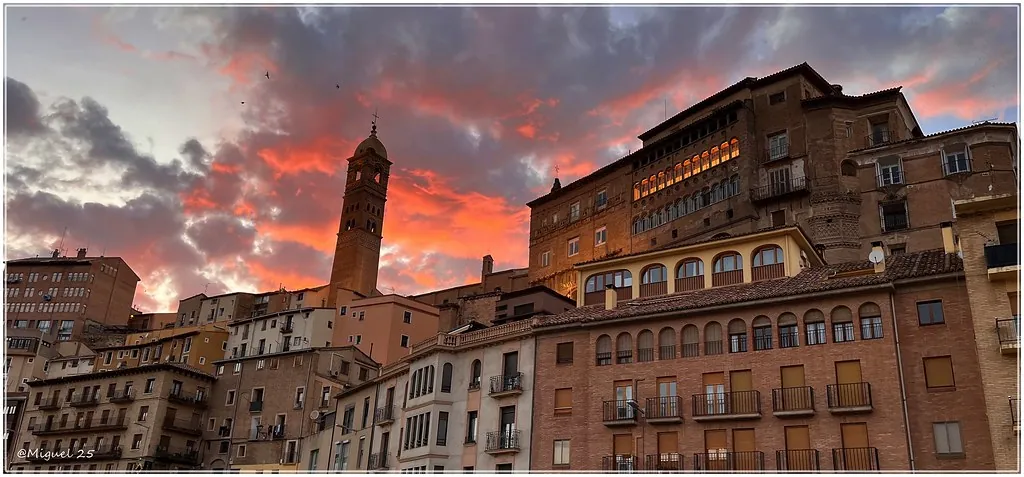
Start in Plaza de España, the only square big enough to turn a cart. The 16th-century church tower rises in warm brick, its Mudejar pattern echoed by the ceramic plaques bolted to half the surrounding houses. Each plaque names the workshop inside: Artesanía San José, Taller Blasco, Cerámicas Muñoz. The doors stand open; step over the threshold and you’re likely to find José Blasco himself, sleeves grey with slip, trimming the rim of a cazuela the size of a satellite dish. He’ll nod, carry on, and only if you ask will he tell you the piece is ordered by a restaurant in San Sebastián that pays €45 for a pan that will last thirty years.
Buying direct saves the 60 % mark-up you’ll pay in Zaragoza gift shops. A standard two-handled jug is €18; the green-glazed wine porrón your Spanish friends insist you drink from costs €12. Everything is dishwasher-safe—lead-free glazes arrived in the 1990s after a scandal involving tourist tableware—yet most pieces still carry the faint thumb-print of whoever lifted them off the wheel.
The small Goya etched-museum, one flight up above the bakery, opens on request at the town-hall desk. Four tiny rooms hold original plates and early proofs; the attendant unlocks the shutters so the copper sheen flashes in the Aragonese sun. British visitors usually have the place to themselves; the comments book shows three entries this year, two of them in Spanish.
When the Siesta Wins
Lunch is the hinge of the day, and Muel still obeys the old timetable. Bars serve until 14:00, then metal shutters clatter down until 17:00. Arrive at 14:15 and you’ll find only the pharmacy open—and even that closes at 14:30. Fonda Rubio, the one restaurant foreigners mention online, roasts its ternasco (milk-fed lamb) in a wood-fired oven whose bricks were made locally. The meat arrives pink, lightly salted, with a dish of roast potatoes that taste faintly of clay because the chef bakes them in leftover cazuelas. A three-course lunch with wine is €19; book by phone, not email, and don’t expect menus in English.
Vegetarians survive on tortilla and salad; vegans should pack sandwiches. The house wine is a young Cariñena that costs €2.50 a glass and tastes like Rioja that’s skipped finishing school. Ask for “Cariñena seco” if you want the driest red; the word seco avoids the syrupy tourist blend that gives the region a bad name.
Outside the Walls
Walk off lunch on the circular track that leaves from the back of the cemetery. The path skirts vineyards planted on terraces built during the Napoleonic wars; stone walls still carry musket-ball scars. October turns the leaves the colour of burnt sugar, and the only sound is the mechanical honk of a grape harvester lumbering across a distant row. The loop is 5 km, almost flat, and takes ninety minutes if you stop to photograph the Huerva valley folding into blue distance.
Summer walkers need water: the land is open, the shade scarce, and the thermometer touches 35 °C by 11 a.m. In winter the same path can be icy; the town owns one gritting lorry and the priority is the main road, not the vineyard tracks.
A Festival of Fire and Ferment
The Feria de Cerámica, usually the first weekend of May, turns every doorway into a stall. Potters from neighbouring villages set up rickety tables; children glue broken tiles into colourful mosaics; someone roasts chestnuts in a ceramic dish big enough to bathe a toddler. The local band plays pasodobles with more enthusiasm than tune, and the bars run beer taps until 02:00—an exception to the normal closing time of 23:30.
September brings the vendimia (grape-harvest) fiesta. Stalls on the square sell migas—fried breadcrumbs with grapes and bacon—while the co-operative winery offers free tastings of the new must. British drivers note: the police set up a breath-test point at the roundabout by the petrol station. The limit is 0.25 mg/l, lower than the UK’s 0.35; two glasses of the young red will put you over.
Getting There, Getting Out
By car from Zaragoza, leave the A-23 at exit 299 (Botorrita) and follow the ZA-30 for 12 km. The turn-off is poorly signed; if you reach the wind turbine factory you’ve gone 3 km too far. Parking on Plaza de España is free and unlimited, but the cobbles shake small cars like a washing machine on spin. There is no train; the twice-daily bus from Zaragoza Delicias takes 50 minutes and drops you on the main road, a ten-minute walk from the centre.
Staying overnight limits you to two small guesthouses: Fonda Rubio has four rooms above the restaurant (€55 double, breakfast €6), while Casa de los Artesanos offers studio flats with tiny kitchenettes from €70. Both fill up during fiestas; book early or base yourself in Zaragoza and day-trip.
The Honest Verdict
Muel will never tick the “white hill-town” box British travellers expect. The houses are brick, not whitewash; the streets are straight, not labyrinthine; the selfie backdrop is a working kiln, not a Moorish castle. What you get instead is a place that still makes things with its hands, closes when it feels like it, and greets foreigners with a mixture of curiosity and courtesy. Come for the pots, stay for lunch, leave before the siesta—unless you’re happy to kill three hours watching the clay dry in the sun.