Full Article
about Novales
Ocultar artículo Leer artículo completo
The church bell strikes noon and nobody stirs. A single tractor idles beside the stone trough in Novales' only square; its driver has vanished into the social-bar for a quick coffee and perhaps a game of cards. At 464 metres above sea level, on a clear day you can see the snow-dusted Pyreneos rising like a wall behind a chessboard of cereal plots. This is not one of Aragón's headline villages—there is no castle to tour, no Michelin mention, no coach park—but that is precisely why it rewards a detour.
A Plain That Changes Colour
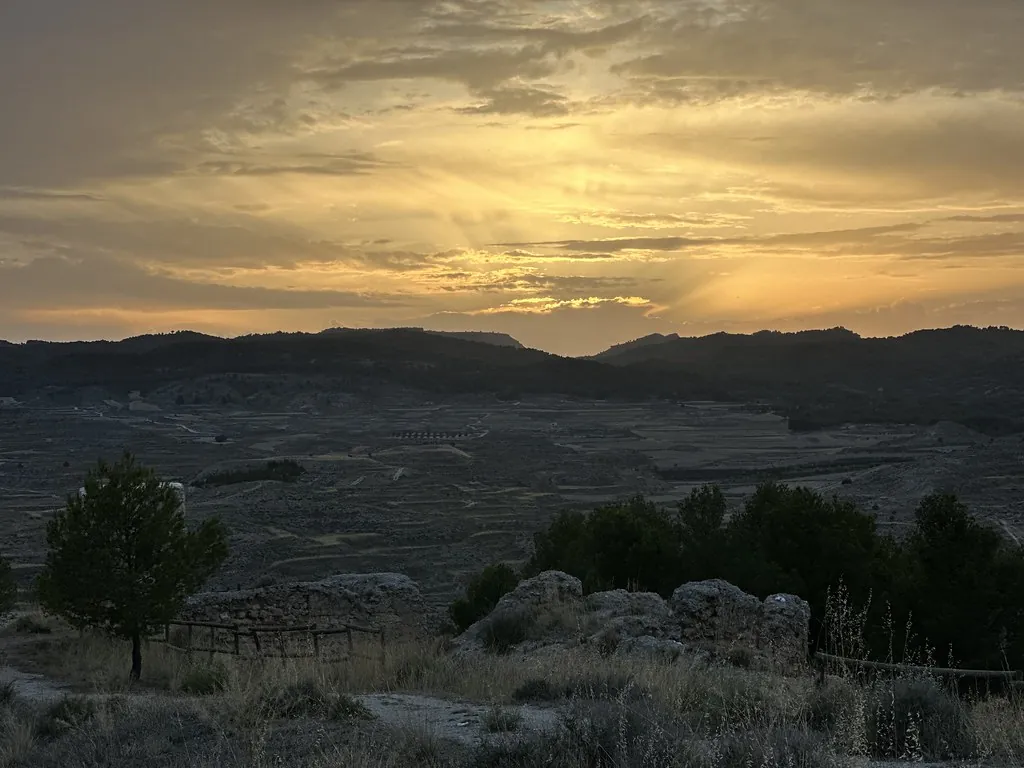
Novales sits in the middle of La Hoya de Huesca, a flat-bottomed basin that the Romans drained and the Moors later irrigated. The landscape obeys the agricultural calendar with almost Victorian punctuality. In April the wheat is ankle-high and bright as lime juice; by late June the fields turn metallic gold; after harvest the stubble resembles a brown corduroy jacket pressed against the earth. Sunflowers and almonds add flashes of yellow and pale pink, while the occasional wind turbine glints on the northern ridge, the only modern interloper.
Walking tracks radiate from the village in straight farm lanes—think of them as Spain's answer to Roman roads, only narrower and surfaced with compacted earth. The GR-90 long-distance path brushes the outskirts, but most visitors simply follow the signed 6-kilometre circuit called Ruta de las Eras, which passes old threshing floors and a disused shepherd's hut. The going is level; boots are overkill, trainers suffice. Interpretation panels appear every kilometre, though only in Spanish. Binoculars are worth packing: little bustards and pin-tailed sandgrouse feed in the open, and Montagu's harriers quarter the field margins at dawn.
Stone, Adobe and a Bell That Still Works
Architecture buffs will not find flying buttresses or Mudéjar towers here; what you get is a textbook example of a 17th–19th-century Aragonese farming settlement. The parish church of San Bartolomé rises dead centre, its chunky stone bell-tower doubling as the village's time-piece and weather vane. Step inside and the air smells of candle wax and centuries-old timber; the retablo is a sober Baroque piece, gilded but not flashy, paid for by local wheat tithes.
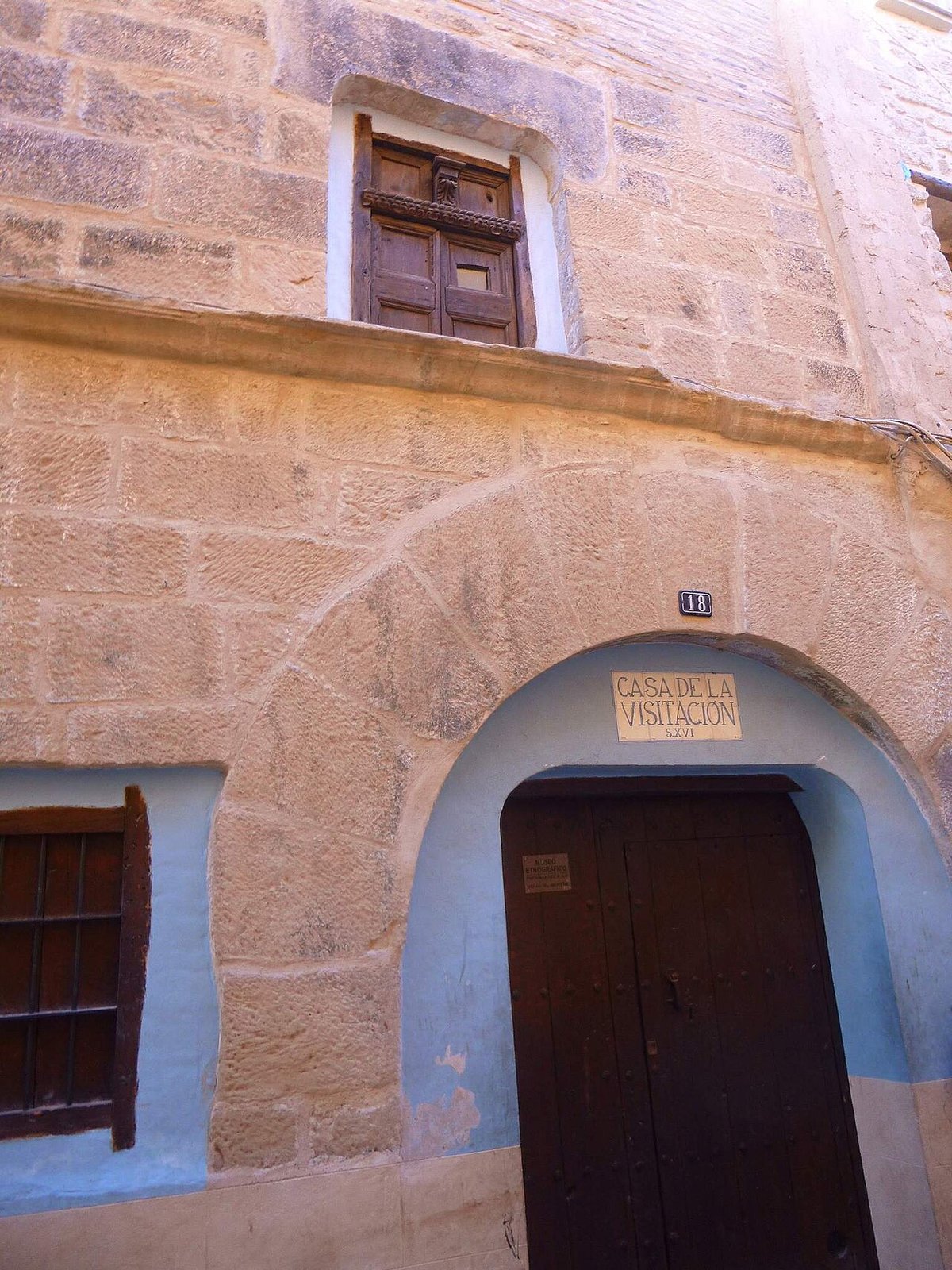
Houses are arranged in a tight honeycomb, their lower courses built from ochre limestone, upper levels from adobe brick slathered in whitewash. Many retain wooden eaves carved with stylised rosettes—look up when you walk or you'll miss them. The occasional façade is painted the colour of bulls' blood, a nod to Aragón's regional flag. Windows are small; summers reach 36°C and winters drop to –3°C, so thick walls matter more than views. A couple of dwellings have been converted into weekend rentals: Casa Roque and Casa Saria, both two-bedroom, bookable through the Huesca tourist office. Expect beams, stone staircases, Wi-Fi that works when the wind isn't blowing.
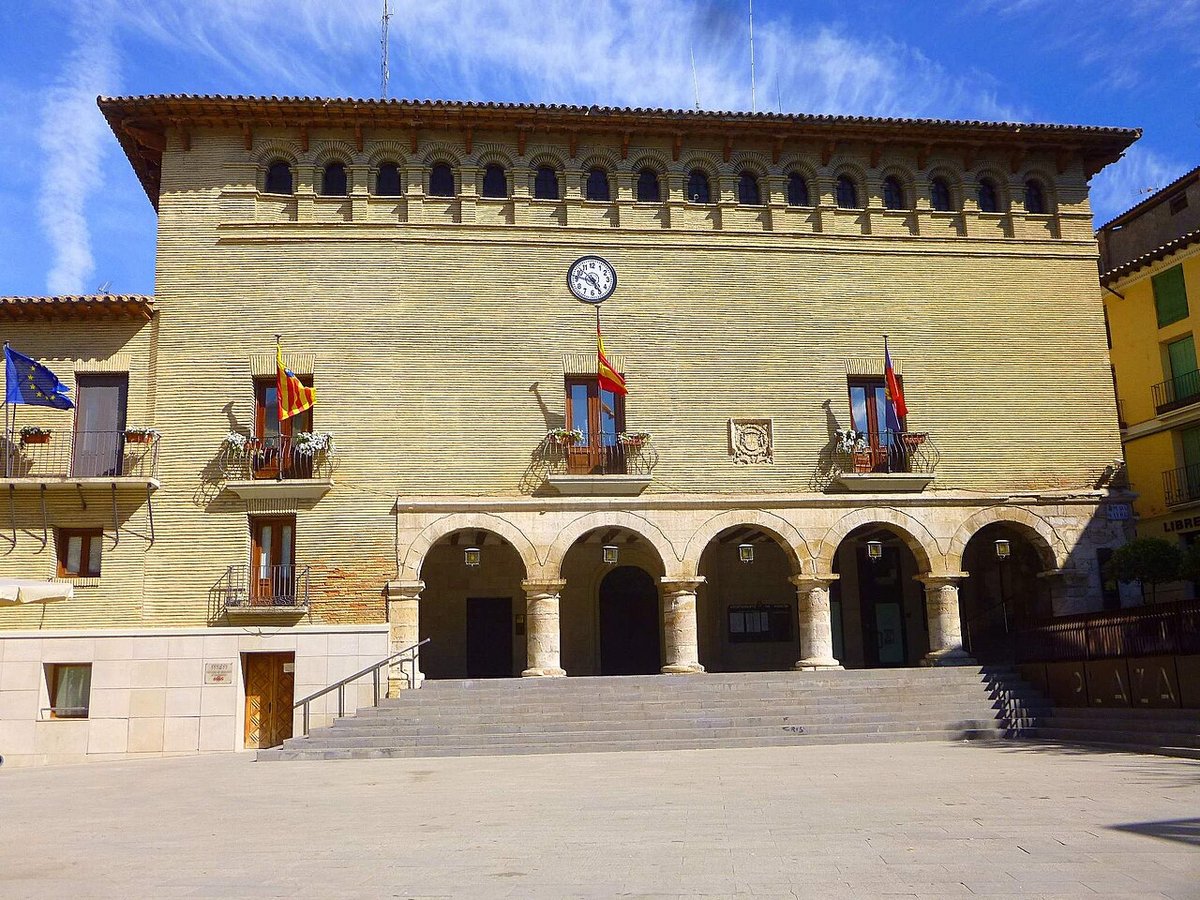
There is no dedicated museum, yet the village keeps its artefacts scattered about: a stone grain measure cemented into the plaza, an iron village crest bolted to the old council building, a 19th-century olive press displayed under a corrugated-iron shelter that doubles as the peña clubhouse during fiestas. Read the panels and you'll learn that Novales once supplied bread to the military garrison in Huesca; the fields still grow a heritage variety of durum wheat sold to artisan bakeries in Zaragoza.
When the Village Comes Out of Hibernation
Outside July and August the population drops to around a hundred permanent residents. Visit in May, however, and you'll stumble into the Romería de San Bartolomé. Half the county squeezes into cars and drives out for an open-air mass followed by a communal paella so large it requires a scaffold of scaffolding poles to support the pan. Bring your own plate and glass; the village provides the rice and rabbit free of charge, funded by a small agricultural levy. Music is provided by a single brass band that has played the same four pasodobles since 1982.
Autumn brings the Fiesta de la Trashumancia, when a shepherd herds 400 merino sheep through the main street on the way to winter pasture in the Ebro valley. Children are handed sprigs of rosemary to ward off the smell; adults sample torta de chicharrones, a lard-based pastry that tastes better than it sounds. The event lasts three hours, after which the sheep leave and the village returns to quiet.
Where to Eat, Sleep and Fill the Tank
Let's be blunt: Novales does not do boutique hotels. The nearest beds are in neighbouring Piracés, four kilometres away, where two stone cottages have been converted into CASA RURAL accommodation (about £85 a night for the whole house). Hotel San Marcos in Huesca offers a more conventional stay—modern rooms, underground parking, breakfast buffet—at £70 a night. Inside Novales you'll find only the aforementioned social-bar, open Thursday to Sunday, 10:00–14:00 and 18:00–21:00. Coffee is €1.20, a caña of local Somontano beer €2. They will rustle up a bocadillo of ternasco if you ask politely and don't mind waiting while the owner finishes her game of dominoes.
For anything fancier you drive 17 km to Huesca, where Casa Fau serves slow-roasted lamb shoulder and migas fried in chorizo fat. Expect to pay €18 for a main; book at weekends. Stocking up on groceries before arrival is wise: the village has no shop, and the nearest supermarket is a Spar on the HU-3314 near Quicena, ten minutes by car. Fuel stations are the same distance—run the tank low and you risk a very quiet evening.
Getting Here Without the Tears
Public transport is, to put it kindly, theoretical. There is a Monday-only bus from Huesca that arrives at 11:00 and leaves at 14:00—fine for a swift walk and lunch, but hardly flexible. Car hire is the sensible option. Flights from London-Stansted or Manchester land in Zaragoza three to four times a week on Ryanair and easyJet. Pick up a rental at the airport, swing onto the A-23 towards Huesca, then peel off onto the A-132 towards Barbastro. After 25 km a small white sign points right to Novales; the final five kilometres are on the HU-V-9031, single-lane but paved. Parking is free beside the plaza except during fiestas, when a farmer volunteers his field for €2 a day.
Final Word
Novales offers no souvenir shops, no audio guides, no sunrise yoga on the battlements—because there are no battlements. What it does give you is space to hear your own footsteps echoing off 300-year-old walls, and the chance to watch Spanish country life carry on much as it did before tourism became a national industry. Come for the grain-coloured horizons, stay for the bread-heavy scent of a bakery you cannot see, and leave before the silence starts to feel like a reproach.