Full Article
about Oliete
Ocultar artículo Leer artículo completo
The abandoned olive trees appear first. Hundreds of them, their silver-green leaves catching the high-plateau light as the A-23 motorway shrinks in the rear-view mirror. These aren't just any olive groves—they're centenary specimens, their gnarled trunks thicker than a farmer's embrace, left to their own devices after decades of rural exodus. Oliete, when it finally materialises at 541 metres above sea level, feels almost incidental to this arboreal graveyard.
The Village That Refused to Die
Three hundred and fifty souls call Oliete home, though the olive trees once supported ten times that number. The village clings to a limestone outcrop in Teruel's forgotten corner, where Aragon's continental climate does its best impression of a furnace in July and a freezer in January. Stone houses with doors painted government-issue green line streets barely wide enough for a donkey, let alone the 4x4s that occasionally rumble through from Zaragoza, ninety minutes distant.
There's no petrol station, no cash machine, no tourist office. The pharmacy operates on Tuesday mornings. The bank left in 2012. Yet Oliete persists, its survival story written in the recently restored cooperative olive mill where locals queue with plastic containers every December, hoping this year's empeltre crop will cover the electricity bill.
The mill offers tastings that would make a Shoreditch sommelier weep—not from pretension, but from pure, uncomplicated quality. A middle-aged woman named Marisol pours oil onto toasted farmhouse bread, adding grated tomato and a pinch of salt with the practiced efficiency of someone who's done this thousands of times. The oil tastes of almonds and freshly cut grass, nothing like the bitter supermarket varieties back home. When she learns you've travelled from Britain, she disappears briefly, returning with a bottle pressed into your hands. "Para el viaje," she insists. No charge.
Walking Through Layered Histories
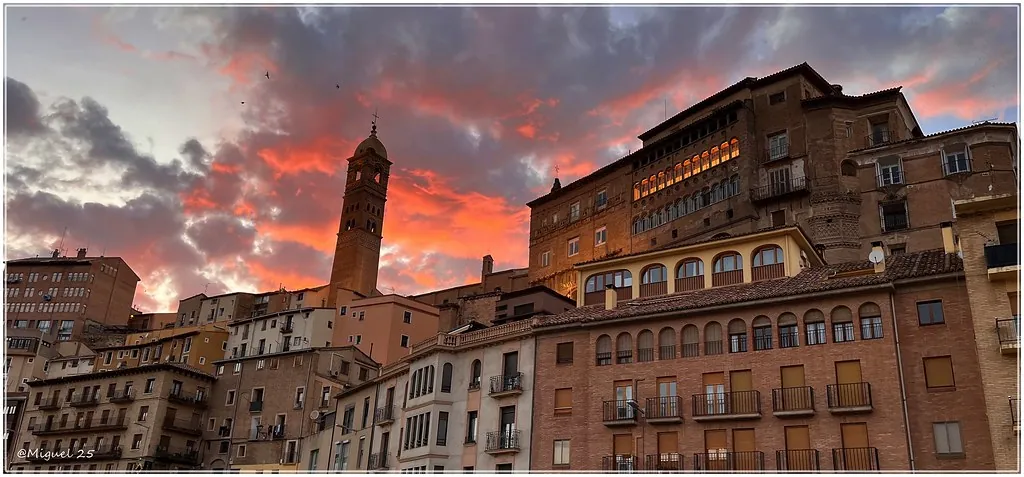
The Mudéjar church tower dominates Oliete's skyline, its terracotta bricks arranged in patterns that wouldn't look out of place in Granada's Alhambra. Built between the sixteenth and seventeenth centuries, it replaced something older, which replaced something older still. Inside, the air carries centuries of incense and candle smoke. Look up: the ceiling displays geometric stars carved by craftsmen who'd never heard of Islam yet still remembered its aesthetics.
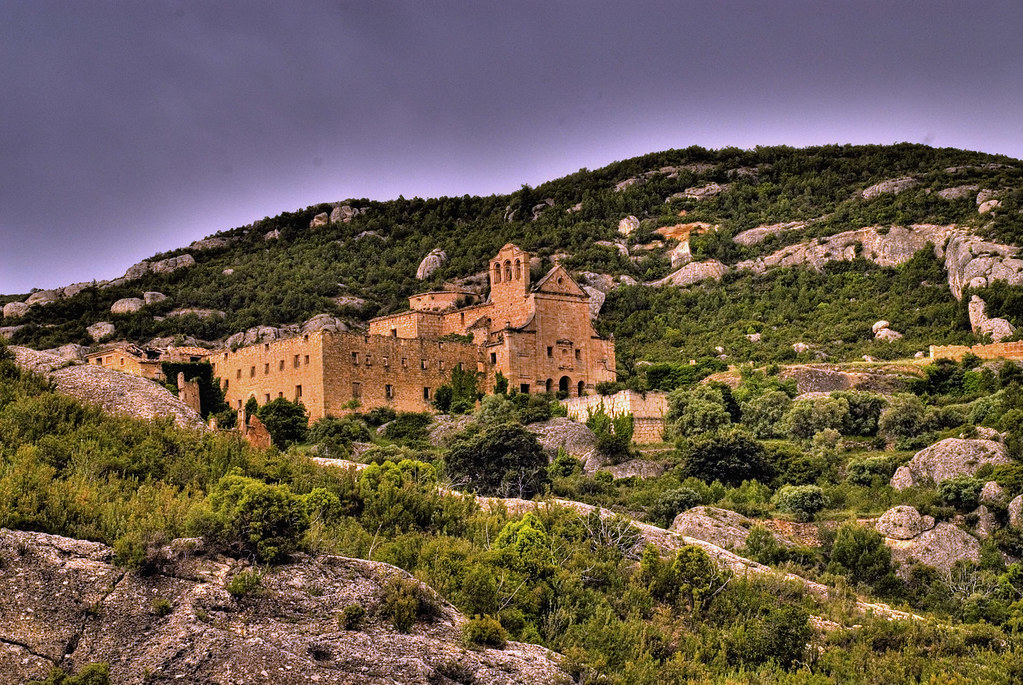
But the real history lies outside town. Follow the signposted track past the last house, where asphalt gives way to gravel, and you'll reach El Palomar after twenty minutes of steady climbing. These Iberian ruins aren't fenced off or sanitised—just foundations and wall bases emerging from thyme-scented scrub, with an information board so weathered it's illegible. A pair of golden eagles circles overhead, their shadows crossing the stones where someone roasted lamb and argued about politics 2,300 years ago.
Continue another kilometre to San Pedro, a second Iberian settlement perched above a limestone gorge. The drop is immediate and spectacular, falling 200 metres to a dry riverbed where only oleanders grow. This is where Oliete's teenagers come to drink cheap beer on summer nights, leaving behind the occasional crushed can as their contribution to archaeology.
When the Earth Opens Up
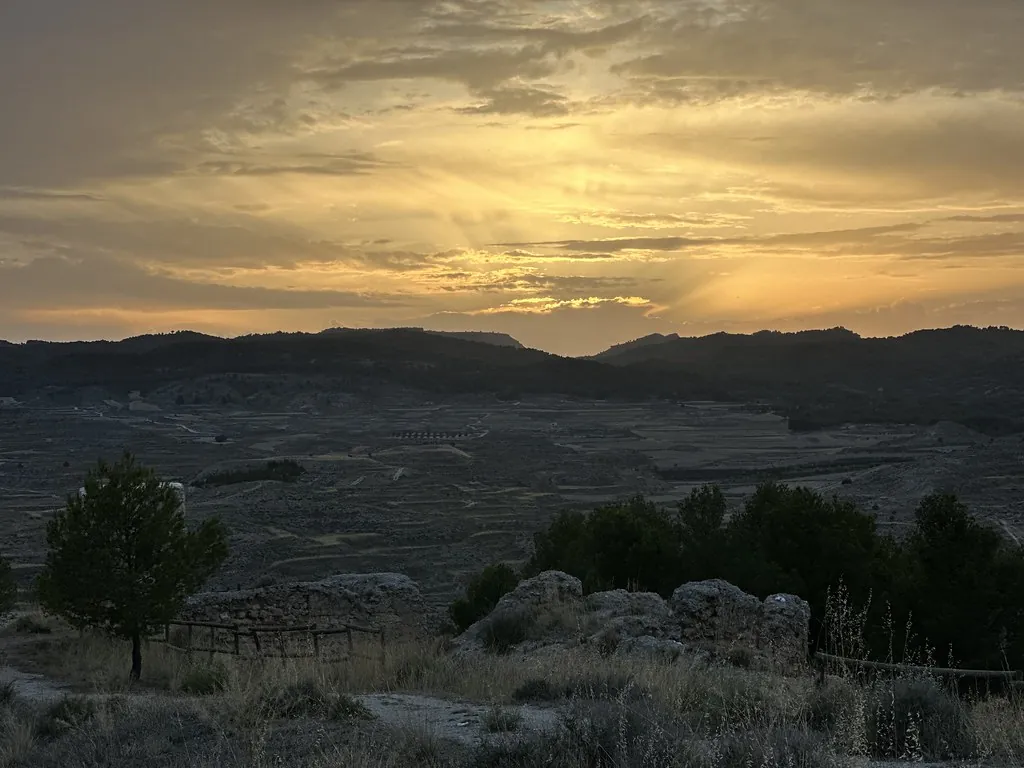
The Sima de San Pedro demands a separate excursion. Drive two kilometres south on the TE-V-8043, park where the road bends sharply, and follow the dirt track marked by a single wooden post. After ten minutes of easy walking, the ground simply stops. A natural sinkhole 120 metres across drops into darkness, its limestone walls glowing amber in the late afternoon light. Photographers gather here at sunset, tripods lined like sentries along the rim, waiting for that moment when the sinking sun transforms the chasm into something approaching spiritual.
Local legend claims the hole appeared overnight, swallowing a shepherd and his entire flock. Geologists insist it took 200,000 years. Both versions feel equally plausible when you're standing at the edge, watching swallows dive into the void and disappear.
Eating Like You Mean It
Food here rejects subtlety. At Casa Bareta, weekends mean ternasco—roast suckling lamb so tender it surrenders at the touch of a fork. The portions assume you've spent the morning ploughing fields rather than photographing ruins. A half-order feeds two adequately; a full order could satisfy four, though good luck finding takers once everyone sees the size of the serving dish.
Migas aragonesas arrive in a volcanic heap, breadcrumbs fried with garlic and bacon until they achieve the texture of particularly moreish gravel. The dish began as shepherd's fare, designed to use stale bread and provide calories for cold nights on the hills. It still works, though now it's more likely to fuel afternoon siestas than sheep-minding.
For lighter appetites, the bakery produces olive-oil biscuits that taste faintly of citrus and childhood. Buy them early—they sell out by eleven, and nothing else opens until five.
Practical Realities in a Place That Time Forgot
Oliete punishes poor planning. The nearest cash machine sits twenty-five kilometres away in Andorra (not the tax haven—the other one). Both village shops close for siesta between two and five, everything shuts on Sunday afternoons, and the single bar might close early if it's quiet. Download offline maps before arrival—phone signal vanishes entirely in certain streets, particularly near the church.
Walking boots aren't optional. The paths to Iberian ruins cross loose limestone that eats trainers for breakfast. Bring water too—temperatures regularly exceed 35°C in July and August, and shade exists only where olive trees feel like providing it.
August's fiesta week transforms the village entirely. The population doubles as former residents return from Barcelona and Zaragoza, streets fill with generators powering sound systems, and finding accommodation becomes impossible without six months' notice. Book Casa Araceli's single guest room for any other month, and you'll have the place largely to yourself.
The Long Goodbye
Leaving Oliete means navigating those same abandoned olive groves, though now they appear less abandoned than simply patient. A local initiative called "Adopt an Olive Tree" has started bringing some groves back into production—£45 per year gets you photographs, three litres of oil, and the knowledge that you've helped keep this landscape alive.
The motorway approaches with depressing speed. Within minutes, Oliete's church tower disappears behind hills that once seemed welcoming but now feel merely obstructive. Back in Zaragoza, the first Costa Coffee feels like landing on another planet entirely, one where olive oil comes in tiny glass bottles and nobody presses homemade biscuits into your hands.
Some places reward Instagram likes. Others offer something quieter: the realisation that Europe still contains pockets where lunch isn't rushed, where neighbours know each other's grandparents, where a village of 350 people maintains a cooperative mill because stopping would mean admitting defeat. Oliete hasn't admitted defeat yet. Whether it survives another fifty years depends partly on visitors, partly on olive prices, and partly on that stubborn Aragonese refusal to acknowledge when they're beaten.
Visit in spring, when wildflowers transform the abandoned groves into impressionist paintings. Or come in October, when migrant birds pause en route to Africa and the air smells of woodsmoke and pressing olives. Just don't expect souvenir shops or guided tours. Oliete offers something rarer: the chance to see rural Spain as it actually is, not as marketing departments wish it were.