Full Article
about Pitarque
Ocultar artículo Leer artículo completo
The village appears only after the last hairpin, folded into a limestone trough at 970 m. One moment the A-226 is chewing through empty maquis, the next a tight wedge of stone roofs slides into view, glued to the slope by a single road and the ribbon of the Río Pitarque. Sixty-nine residents, one grocery shop, no traffic lights, and a car park that British motorhomers on the park4night app rate higher than most five-star campsites: “Absolute silence by ten, stars you can read by.”
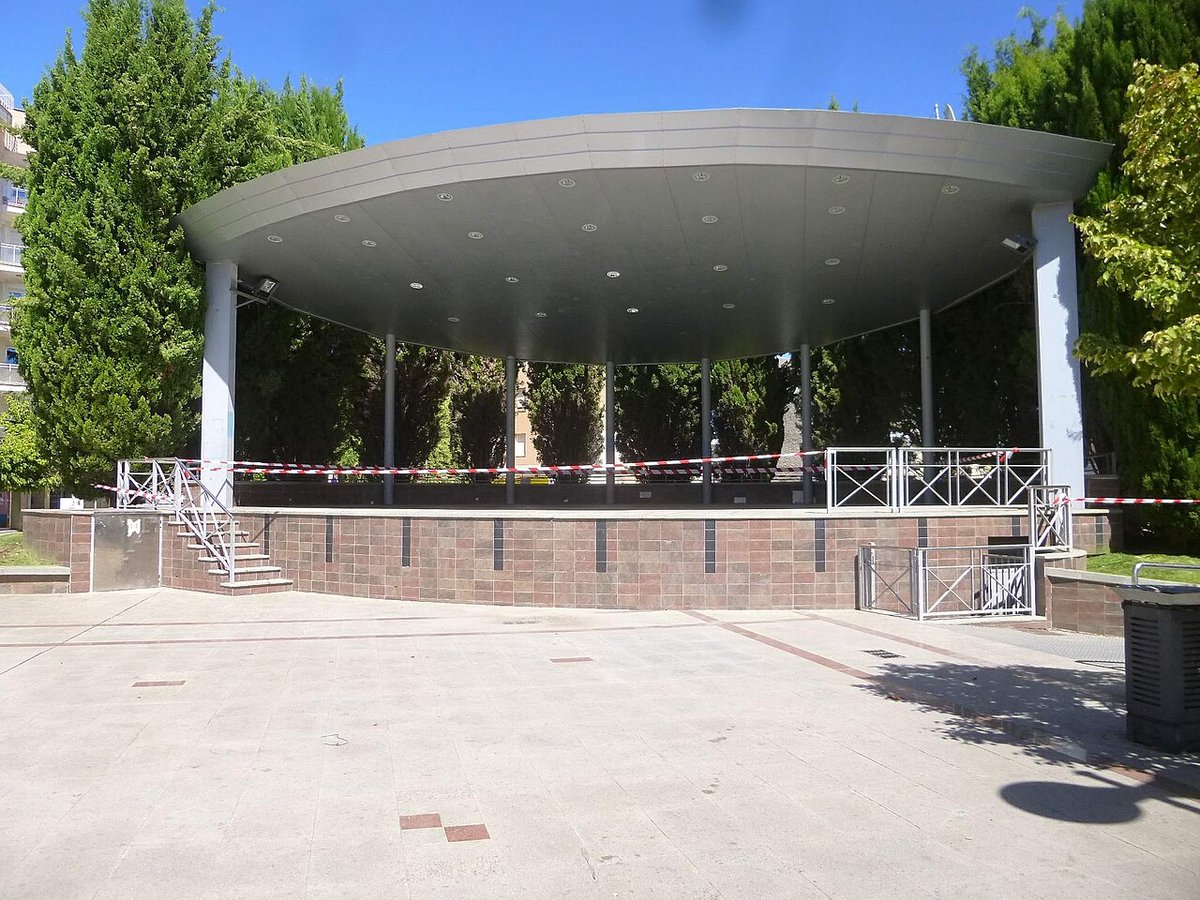
That car park, behind the polideportivo, is the closest thing Pitarque has to a tourist office. Arrive before dusk if you’re in anything longer than six metres; the almost-level bay between the retaining wall and the walnut tree is first-come-first-served and the only place you’ll get away without levelling chocks. There are no services—bring your own water and take your grey waste with you—but the river walk starts at the gate and the village shop is three minutes up the lane for emergency Jamon de Teruel and local thyme honey.
Pitarque never bothered with a medieval wall or a grand plaza. The houses simply pile on top of one another, their back walls quarried out of the same grey stone that tumbles down the gorge. Rooflines sag, alleys narrow to shoulder-width, and the church of Santa Ana looks more like a neighbour who’s been asked to keep an eye on things than a monument. Walk uphill past the stone basin where women still rinse lettuce and you’ll meet the old laundry trough, water racing through it even in August when the valley cracks with heat. That water is the village CV: it powers the irrigation channels, dictates the vegetable plots and, every July, determines whether the fiesta firework fuse will be lit or rained off.
The only curated “sight” is the signposted footpath that follows the river upstream to its karst spring. The full circuit is 10 km with 350 m of ascent, doable in sturdy trainers but easier in boots. Leave early; by eleven the gorge is a sun-trap and the only shade is the holm-oak scrub on the higher ridges. The path starts wide enough for a tractor, then squeezes between limestone walls where swallows nest and the water turns turquoise over white marble. At the head of the gorge the valley folds into a natural amphitheatre and the spring bursts straight out of the cliff—more volume after rain, but always loud enough to make conversation difficult. Griffon vultures use the thermals above the rim; sit still and you’ll hear the air creak in their primary feathers.
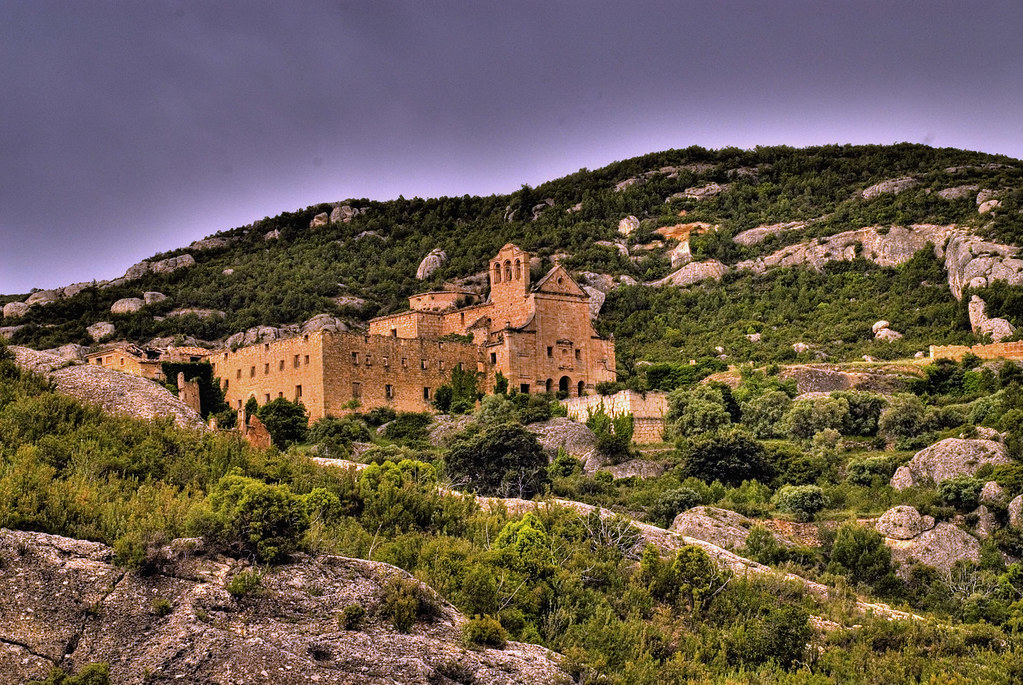
Turn around here unless you’ve got a map and a head for navigation. The track continues over the watershed to the abandoned hamlet of La Vila, but the stones are loose and the drop unforgiving. British walkers who press on anyway report “spectacular views and absolutely no phone signal”—useful only if you fancy spending the night under a ledge.
Back in the village the grocery opens again at six. Stock is laid out on two shelves: tinned beans, courgettes the owner picked that morning, vacuum-packed lamb from the next valley, and wine at €3.50 that tastes better than most London pub plonk. There is no bar, no restaurant, no Saturday craft market. If you want a chair and a menu you drive fifteen minutes to Villarluengo, where Casa Ramón grills chuletón over vine shoots and the waiters understand “medium” without flinching.
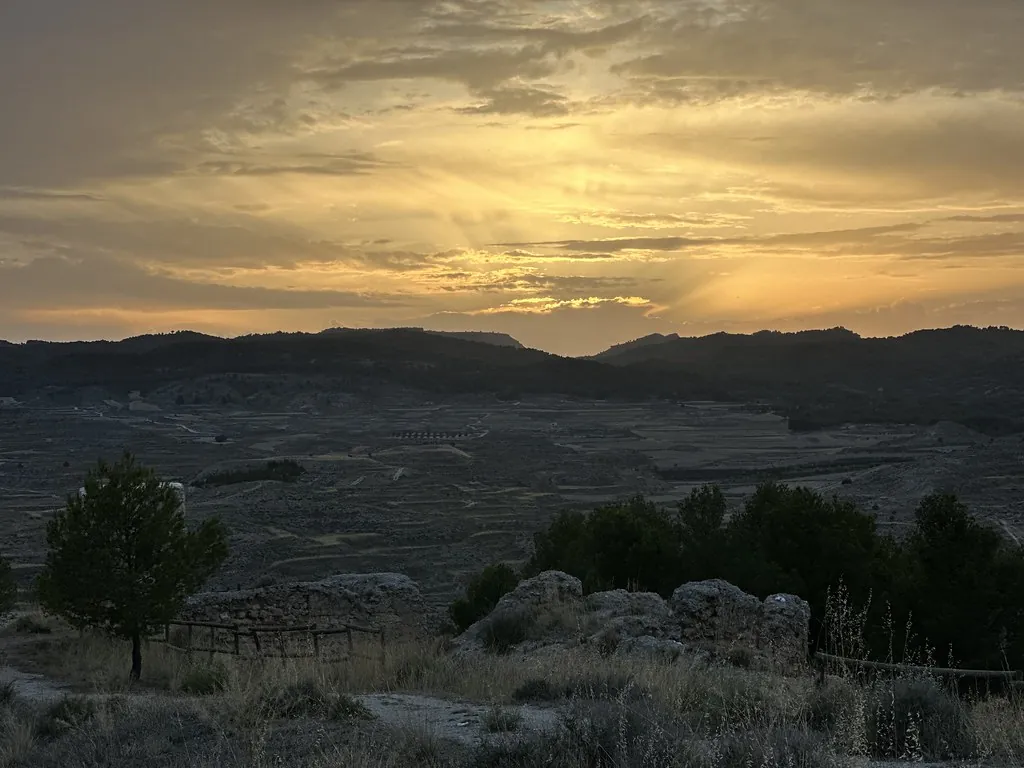
Evenings in Pitarque are a lesson in decibels. At nine the temperature drops ten degrees, the river amplifies every footstep, and the village sounds like a recording studio: a dog, a distant chainsaw, the click of pool balls from the single streetlamp outside the social club. By half-ten it’s silent enough to hear your own pulse. Light pollution is zero; the Milky Way looks like someone smudged chalk across wet paper. Bring a jacket—nights at this altitude stay cool even when Valencia is sweltering ninety minutes away.
The practical geography is simple. Fly to Zaragoza (1 h 45 m drive) or Valencia (2 h), hire a car and stay on the A-23 until the sign for “Maestrazgo – Pitarque”. The final seventeen kilometres are asphalt but single-lane; pull in at the passing places and don’t trust sat-nav shortcuts that turn into forestry tracks. In winter the pass can ice over—chains are sensible from December to March. Summer brings furnace days of 35 °C, yet the valley stays ten degrees cooler; start walks at dawn and plan a siesta in the car park’s scrap of shade.
What the village does not offer is as important as what it does. No souvenir stalls, no guided ghost walks, no craft beer. The nearest cash machine is twenty-five kilometres away and it eats cards for sport. Mobile coverage is patchy unless you climb the cemetery hill and wave your phone like a flare. If that sounds like hardship, Pitarque will disappoint. If you travel to subtract rather than to accumulate—fewer notifications, lighter schedule, quieter head—it delivers more than plenty.
Come late July if you want noise. The fiesta of Santa Ana drags exiles back from Zaragoza and Barcelona, the population swells to maybe two hundred, and the village square hosts a raffle whose top prize is a live goat. A sound system appears, powered by a generator that competes with the river until four a.m. It is the one week of the year when the car park overflows and earplugs beat binoculars in the packing list. Even then the mornings belong to the vultures and the water.
Leave on a weekday, early, and you’ll meet the baker’s van doing its loop, horn tooting, selling warm loaves from a plastic crate. That might be the most sophisticated transaction Pitarque manages, and it’s enough. The village doesn’t need to be “discovered”; it just needs walkers who remember to shut the gate and drivers who can reverse to the passing place. Bring sturdy shoes, a sense of altitude, and an tolerance for silence that borders on the medicinal. The river will handle the rest.