Full Article
about Ródenas
Ocultar artículo Leer artículo completo
The church bell strikes noon, yet only three villagers emerge onto the stone lanes. At 1,370 metres above sea level, Rodenas moves to a clock that predates electricity: wood-smoke at dawn, siesta at noon, and the soft thud of pine logs being stacked before dusk. Sixty-two permanent residents keep the place alive, trading gossip in the same sandstone houses their great-grandparents built straight onto the rock.
Stone, Timber and the Sierra's Red Bone
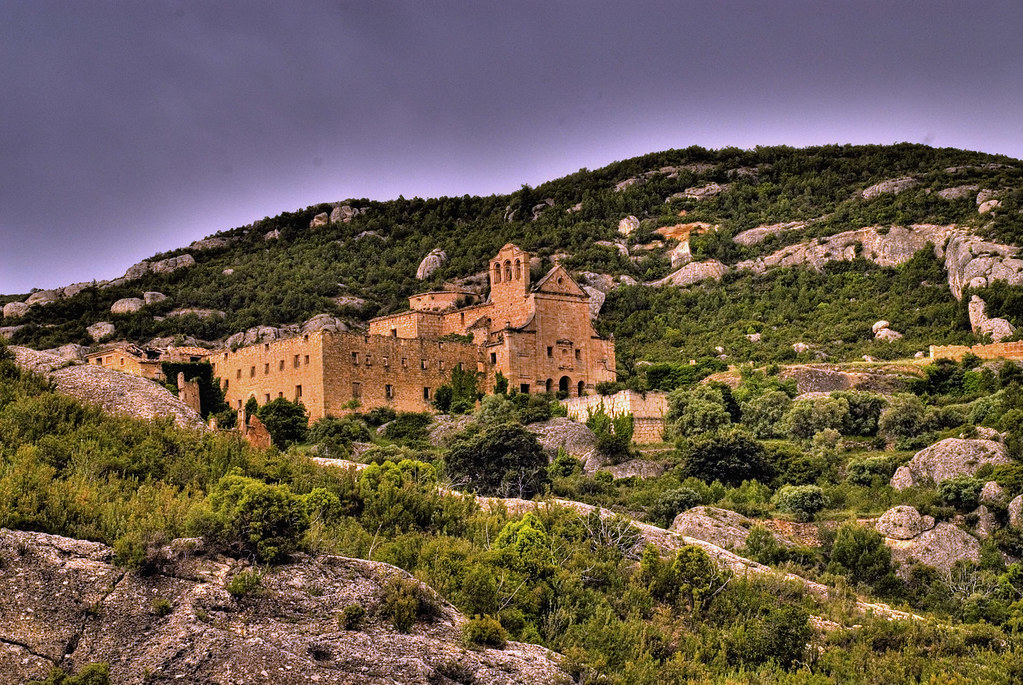
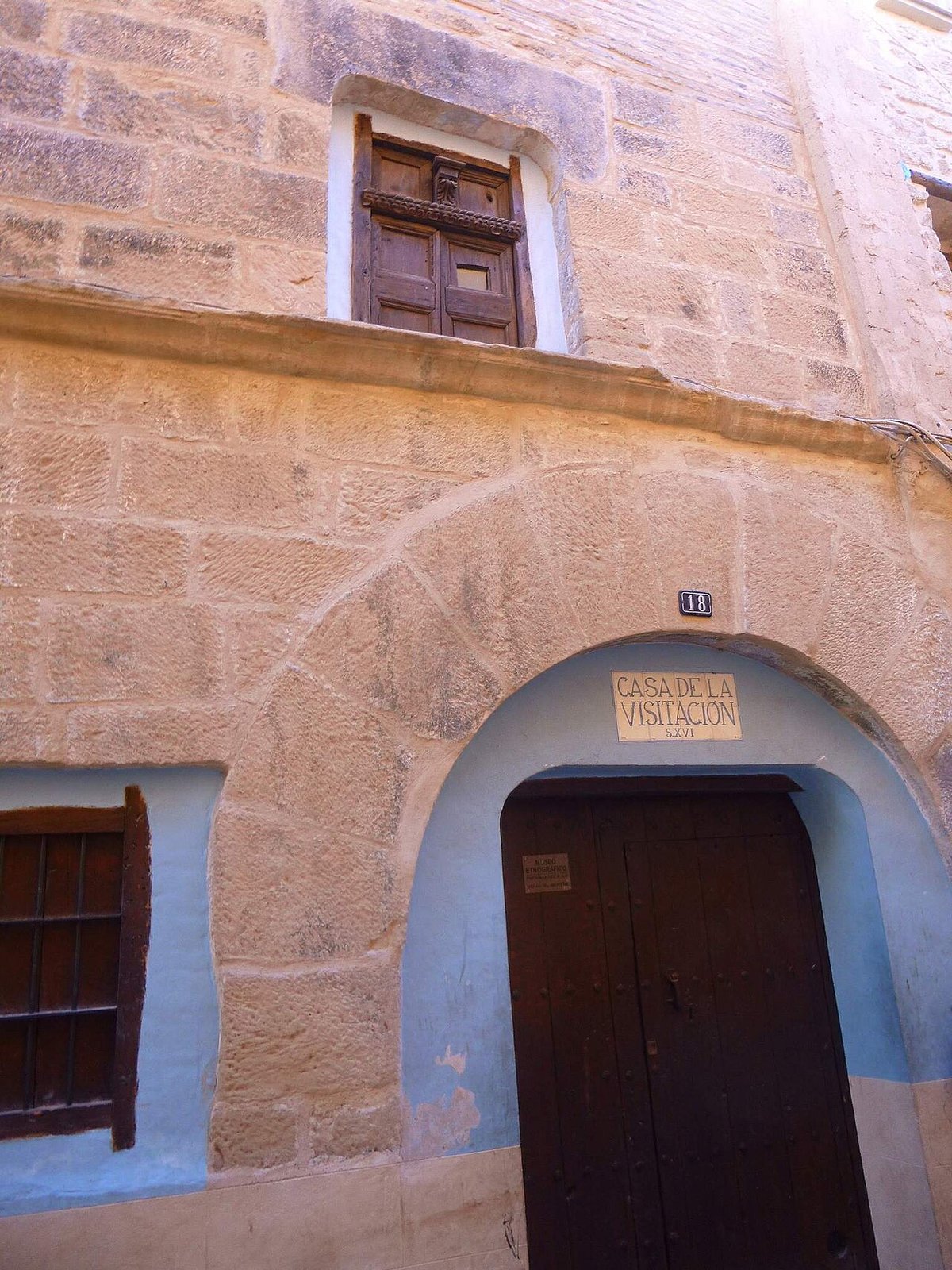
Every wall here is a mosaic of terracotta tones. Builders simply levered off slabs of the surrounding sandstone, mortared them with local ochre clay, and let the mountain provide its own camouflage. Oak beams, hand-hewn and still showing adze marks, hold up corner balconies just wide enough for a chair and a geranium. The effect is less chocolate-box, more geological accident—an extension of the cliffs that rise immediately behind the last row of cottages.
The Iglesia de la Natividad dominates the tiny plaza. Its squat masonry tower was raised in the 1500s, patched in the 1800s, and retains a Romanesque doorway that still bears the masons' chisel scores. Inside, a single nave smells of candle wax and centuries of frankincense. A polychrome wooden Virgin, her paint flaking like sunburnt skin, surveys offerings of wild rosemary rather than the usual shop-bought chrysanthemums. Photography is allowed, but silence is expected; the elderly sacristan will appear from a side door if footsteps echo too loudly.
Tracks through Pine and the Promise of Empty Valleys
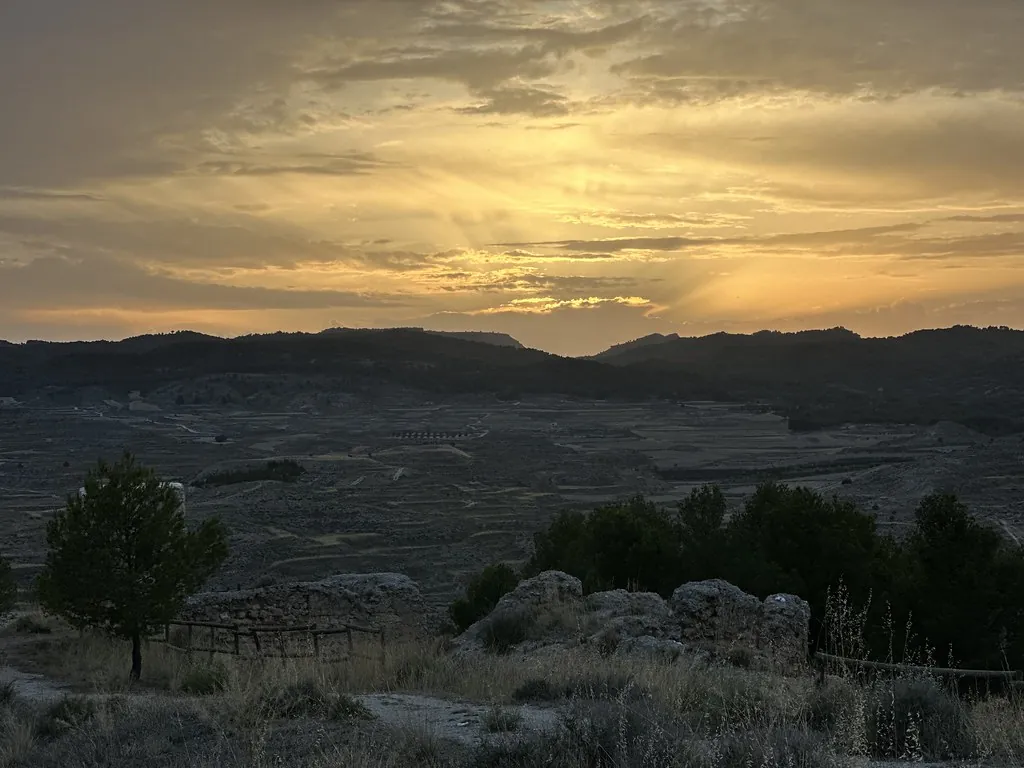
Forest roads, really just gravel tracks pressed by the occasional 4×4, fan north-east towards the Guadalaviar gorge. Marked footpaths are few, so visitors usually follow the red-and-white flashes of the GR-10 long-distance route that skirts the village. A ninety-minute loop climbs to a sandstone bluff known locally as El Mirador del Diablo, where the river appears as a silver thread 400 metres below and griffon vultures circle at eye level. Spring brings purple orchids and the faint smell of resin; after October the same trail can be blocked by snow that lingers until March.
Maps are sold at the petrol station in Albarracín, 19 kilometres away—there is no shop in Rodenas—so most walkers photograph the panel beside the church door and hope the weather holds. Mobile coverage is patchy above the tree line; download offline maps before leaving the tarmac.
What You’ll Eat and When You’ll Eat It
There is no restaurant. On Fridays the village bar opens at 20:00 and serves whatever Maria has decided to cook: perhaps ajoarriero (salt-cod and potato mash once eaten by muleteers), perhaps conejo al romero, the rabbit shot the previous afternoon. A plate costs €9, wine included, but when the casserole is finished the kitchen closes. Saturday lunch is more reliable; villagers arrive on tractors, order coffee laced with aguardiente, and play cards until the light fades. Visitors are welcome, though conversation stalls quickly if your Spanish falters—English is rarely spoken.
Self-caterers should stock up in Teruel: the supermarket on Calle Zaragoza sells local jamón serrano at €18 a kilo and vacuum-packed trufa negra when in season (November–February). Most holiday cottages provide wood-fired cookers; kindling is sold in 5-kilo nets from a barn on the road into the village. Bring matches and newspaper—damp pine refuses to light without encouragement.
Getting There, Getting Stuck, Getting Out
The drive from Valencia airport takes two and a quarter hours: A-23 towards Teruel, exit at Cella, then a wriggling TE-V-9031 that gains 700 metres in 25 kilometres. Winter tyres are not mandatory but highly advisable; the last 6 kilometres twist through shaded gullies where black ice survives until midday. In heavy snow the road is cleared, eventually, by a tractor fitted with a plough—there is no municipal gritter. If the white stuff is falling, park in the passing place before the final slope and walk the last 400 metres; villagers will point you to a safe verge.
There is no bus service. A taxi from Teruel rail station costs €55 and must be booked a day ahead—drivers refuse to wait on the off-chance of a return fare. Car hire therefore becomes essential; reserve an all-terrain model if visiting between December and March. Sat-nav co-ordinates (40°23'N, 1°34'W) work, but follow the brown "Rodenas" finger-posts once you leave the national road; cellular data drops out for the final half-hour.
Festivals, Fire and the Return of the Emigrants
For fifty weeks the village is quiet. Then, on 8 September, the fiesta erupts: brass bands echo off stone, barrels of young wine are broached, and a paella pan three metres wide appears in the square. Former residents—those who left for Zaragoza factories or Barcelona building sites—return with children who speak city Spanish and clutch mobile phones. The population swells to perhaps 300; every spare room is occupied, camp-sprawls edge into the pine woods, and the church bell rings until 04:00. Book accommodation a year ahead if you insist on witnessing this; otherwise steer clear, because the silence that follows feels even deeper.
January brings the lesser-known hogueras de San Antón. Bonfires built from vine prunings and old pallets crackle in the lanes, casting orange light onto the sandstone so the whole village appears to glow. Spectators pass earthenware cups of anise liqueur; fireworks, home-made and unpredictable, whistle overhead. The event is free, unpublicised, and ends when the last log becomes embers—usually around midnight, because even revellers have tractors to start at dawn.
When to Come, What to Bring, What to Leave
April–June and mid-September–October offer 20 °C days, cool nights, and a low chance of snow. Walking boots with ankle support are advisable; the sandstone breaks into scree that slides underfoot. A light fleece is useful even in July—the altitude keeps evenings fresh. Binoculars add value: Iberian ibex sometimes descend to lick salt from the road cuttings, and wallcreepers flutter like burnt paper across the cliffs.
Leave the drone at home. Privacy is prized, and the metallic buzz of rotors empties the bar faster than a fire alarm. Bring cash; neither the bar nor the cottage owners accept cards, and the nearest ATM is in Albarracín. Above all, bring time—Rodenas offers nothing that must be ticked off, only the slow revelation of how quietly humans can still live when granite, pine and silence set the rules.