Full Article
about Salas Bajas
Ocultar artículo Leer artículo completo
The church bell in Salas Bajas strikes seven and the only reply is a dog somewhere near the almond store. At 460 m above sea-level, on a plateau of cereal fields and Garnacha vines, this scatter of sandstone houses has no traffic hum, no terrace chatter, not even a fountain. The loudest noise most evenings is the iron latch of the bakery shutting for the day.
That bakery is half the size of a London living-room and opens when it opens: 08:30 most mornings, but if María has to take her mother to Barbastro you’ll find a hand-written “vuelvo pronto” taped to the metal shutter. Bread is €1.20 a loaf; she’ll slice it for you if you ask in Spanish. Bring cash—notes bigger than €20 are refused with a polite head-shake.
Stone, sun and soil
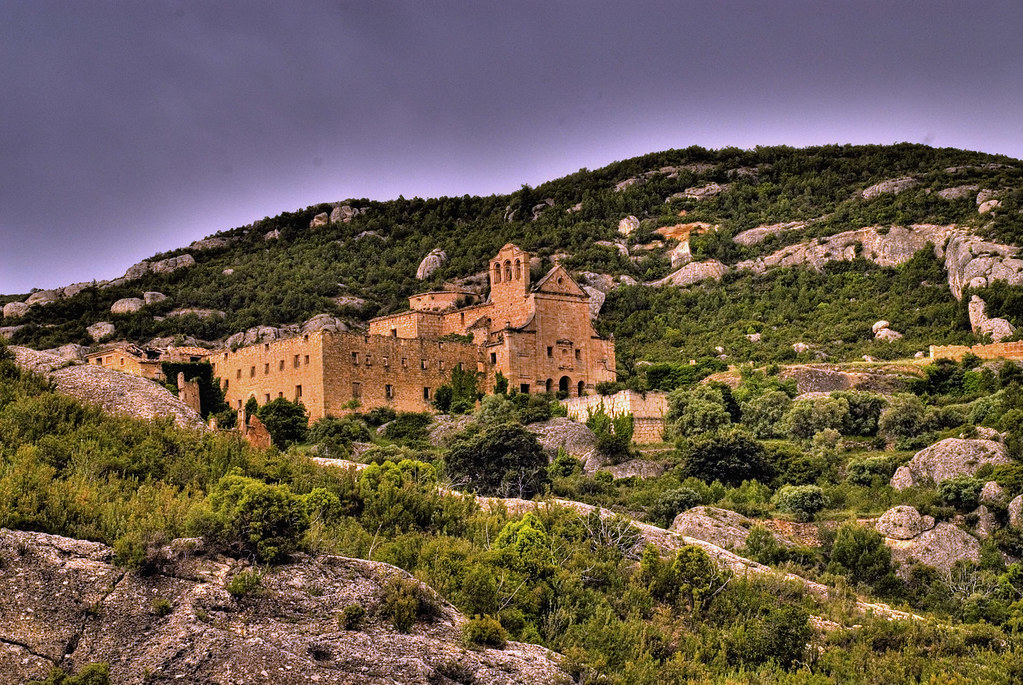
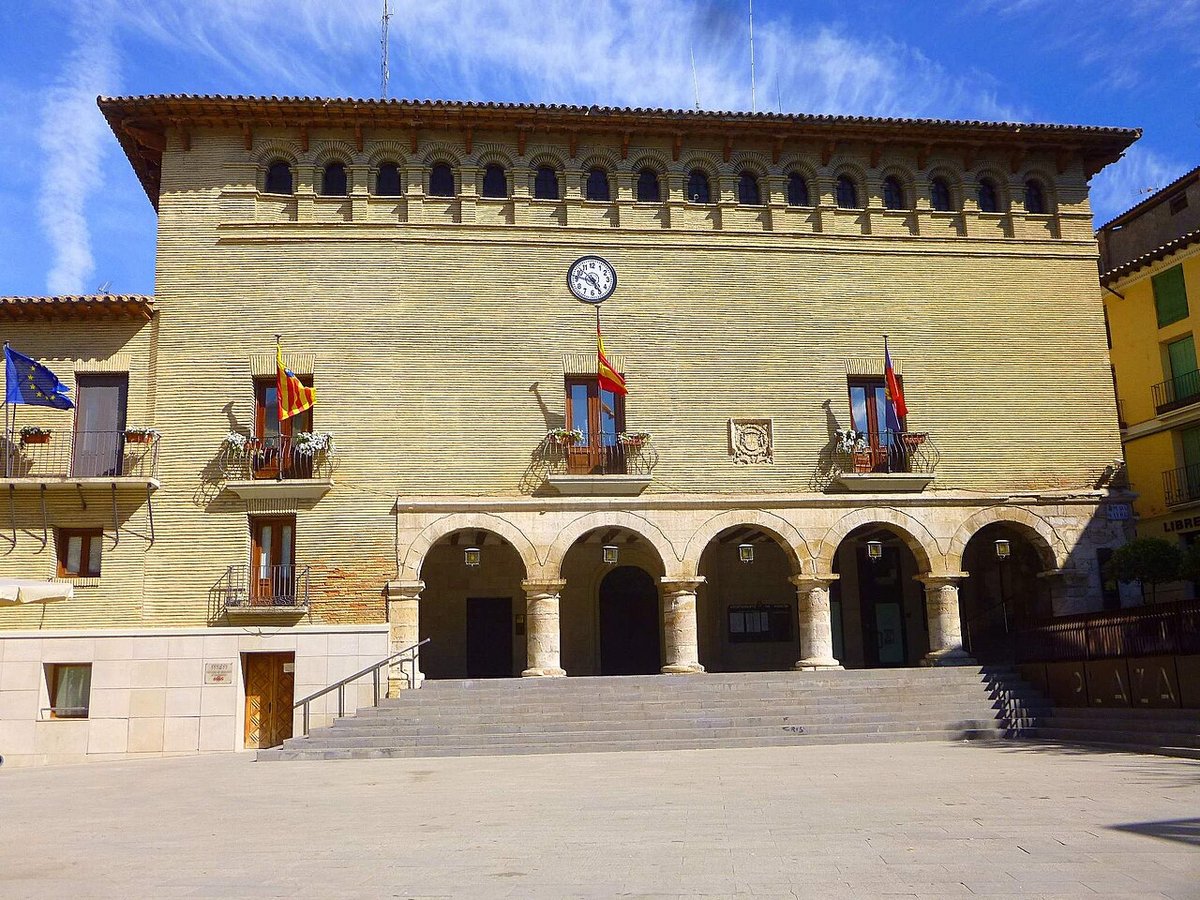
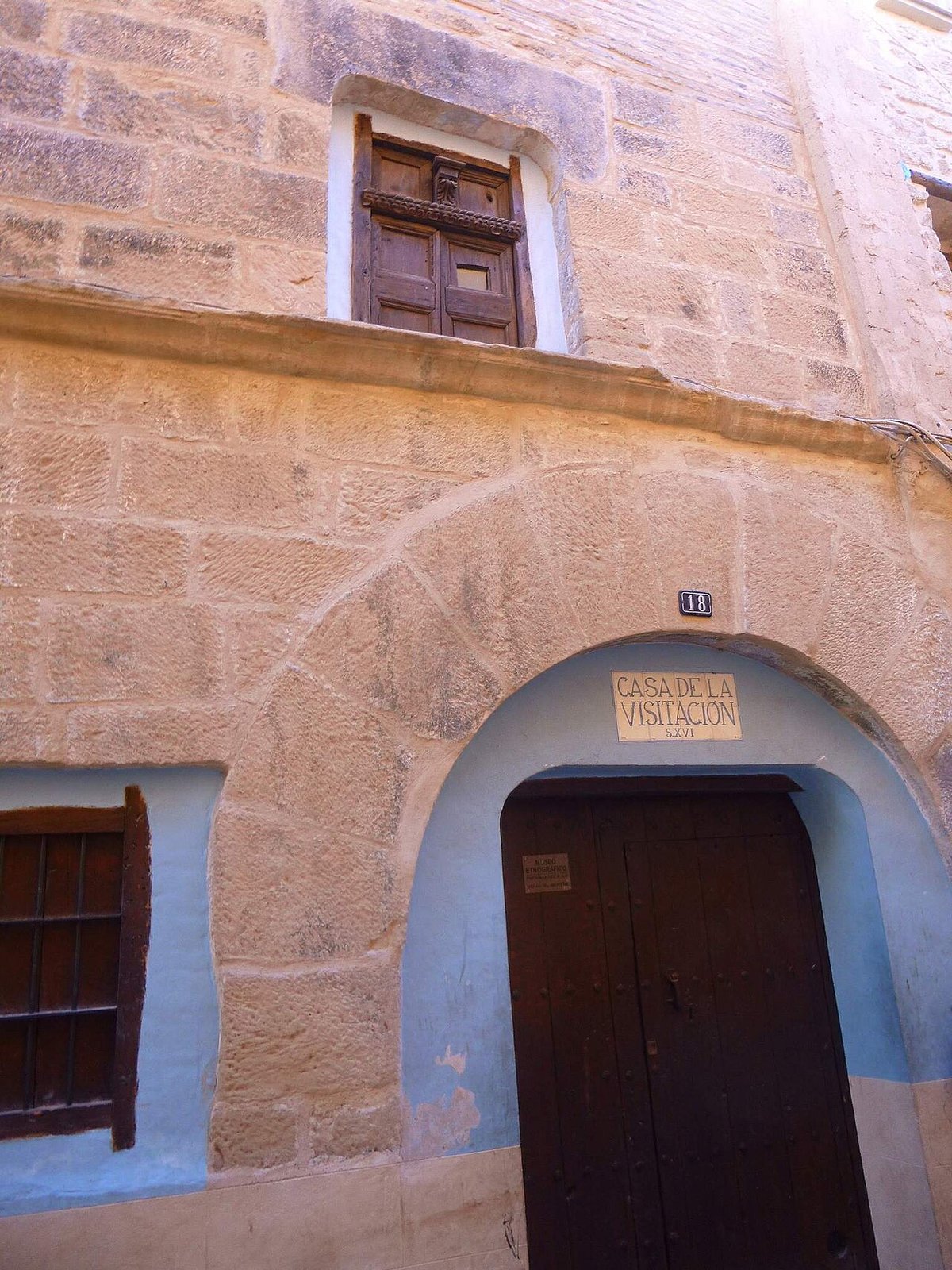
Every building here is the same warm biscuit colour because every building is carved from the same local sandstone. Arched doorways are built high enough for a tractor; many still have the original wooden gates bowed by decades of grain sacks. Walk the three streets—Calle Mayor, Calle la Fuente and the unnamed lane everyone calls “la de la plaza”—and you’ll see more barn conversions than listed monuments. One is now a weekend house owned by a couple from Zaragoza; another stores a bright-green John Deere that probably cost more than the entire village budget.
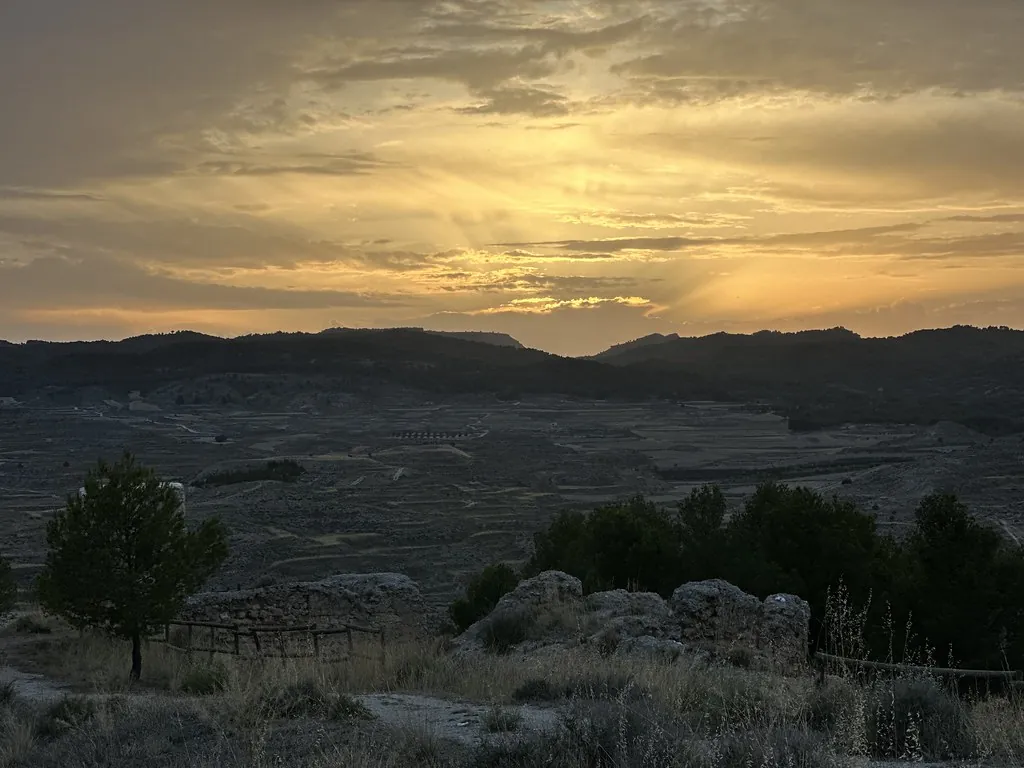
The horizon is all agriculture. In April the fields glow emerald with young barley; by late July the colour has drained to gold and the air smells of chaff. Vines turn flame-red in the second week of October, just as the vendimia (grape harvest) gets under way. Locals don’t treat this as folklore—it’s urgent, paid-by-the-ton work that starts at dawn and ends when the light goes. Tourists are welcome to watch, but if you stand in the wrong place you’ll be handed a pair of secateurs and a crate.
Wine without the tour-bus mark-up
Salas Bajas sits inside the D.O. Somontano wine belt, which means you can taste wines that retail in the UK for £14 a bottle at cellar-door prices of €6. The nearest bodega, Fénix, is five minutes by car towards Barbastro. Ring 24 hours ahead and Pilar will open the tasting room, talk you through three vintages in confident English and sell you a 2017 oak-aged Cabernet for €8. She keeps English tasting notes printed because, as she puts it, “your accent is better than my school German, but wine words are tricky”.
If you’d rather stay on foot, the village cooperative sells unlabelled young Garnacha from a stainless-steel vat. Bring your own plastic bottle; they’ll fill a litre for €2.40. It won’t win medals, but chilled for an hour it’s perfect with the local morcilla de Aragón—black pudding bulked out with rice and onion, mild enough for a breakfast fry-up if you’re self-catering.
Walking: straight lines and short climbs
There are no signed footpaths in Salas Bajas, which is either liberating or reckless, depending on your map-reading nerve. A farm track leaves the south end of the village, passes an abandoned stone quarry and climbs 120 m to a low ridge after 35 minutes. From the top you can see the olive groves of Peraltilla to the east and, on clear winter days, the snow-dusted Pyrenees 60 km north. The round loop is 6 km; carry water because there is no bar, no fountain, almost no shade.
Serious hikers often use the village as a cheap bed for the Cañones del Río Vero, a 20-minute drive away. There you’ll find limestone gorges, Griffon vultures and bolted sport routes graded 5+ to 8a. Guidebook author Pete O’Donovan has lived in the area since 1998; he offers half-day climbs with kit hire for €40 if you don’t fancy lugging a rack on the plane.
When to come, when to stay away
Late March to mid-May is ideal: daytime temperatures hover around 18 °C, the fields are green and the village bar still serves stewed-lentil tapas on Fridays. Accommodation is limited to three self-catering houses booked through Somontano Rural; expect €70 a night for a two-bedroom cottage with Wi-Fi that falters whenever the wind blows west.
August is hot—34 °C by 11 a.m.—and the fiesta brings ear-splitting fireworks that ricochet off the stone walls until 3 a.m. If you enjoy street parties where everyone knows the neighbour’s cousin’s dog, come then. If you want the silence that first drew you here, stay away. November can be glorious: empty roads, mushroom season in the oak woods 30 km north, and hotel prices drop 20 %. The risk is the Cierzo, a cold north-westerly that whistles down the Ebro valley at 60 mph and makes cycling feel like uphill into a hair-dryer on freeze setting.
Feeding yourself: what’s open when
The village has one bar, Casa Julian, open Tue–Sun 07:00–15:00 and 19:00–22:00. Close the door hard or Julian’s hunting dog escapes. Menu is chalked on a board: migas (fried breadcrumbs with chorizo) €6, ternasco (milk-fed lamb) €14, pudding usually flan. House red is from the cooperative and costs €1.50 a glass—cheaper than the bottled water. On Mondays the bar shuts completely; stock up the night before or drive to Barbastro (18 km) where Mercadona stays open until 21:30.
There is no restaurant, no cash machine, no petrol station. The nearest supermarket is in Huesca, 35 km north on the A-23—stick to the speed limit, Guardia Civil patrols love this stretch. Fill the tank before you arrive; the only pump in the next 15 km closes at 20:00 and doesn’t accept UK credit cards with magnetic strips.
A parting note on silence
British visitors often arrive searching for the “authentic” Spain and leave slightly unnerved by how empty the place feels. Salas Bajas will not entertain you. It will not guide you, photograph you, or sell you a fridge magnet. What it offers is agricultural rhythm, wine without theatre and nights so quiet you can hear your own blood. Bring a phrase-book, bring cash and bring something to read—then relax into the fact that nothing is happening, on schedule, until the church bell says otherwise.