Full Article
about Santa Cruz de Nogueras
Ocultar artículo Leer artículo completo
The silence breaks at seven-thirty sharp. A single diesel engine fires up, ricochets off stone walls, and every inhabitant knows Pedro is heading out to check his barley. In Santa Cruz de Nogueras, twenty-five souls spread across a handful of houses, that brief mechanical cough passes for the morning rush hour.
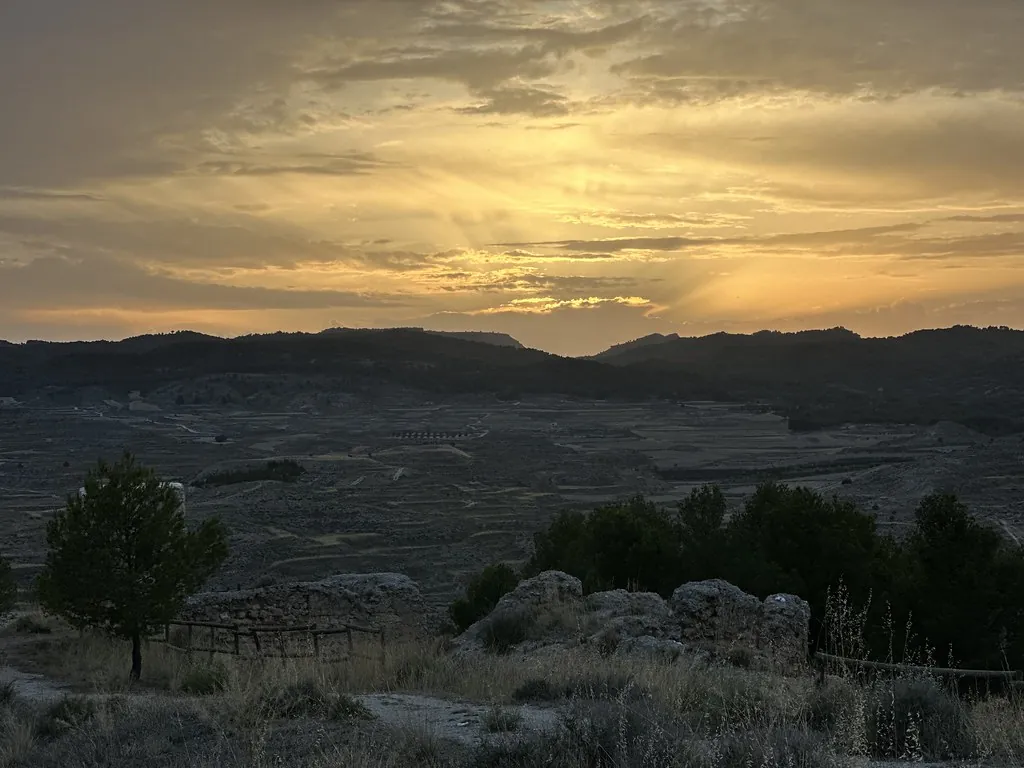
Perched at roughly 900 m on a rolling steppe of the Jiloca comarca, the village sits a full three degrees cooler than Teruel city on most nights. Frost can arrive in October and linger until late April; locals joke that winter “takes the licence plate off the road” when snow isolates the final 12 km of county track. Even in May, a stiff easterly can make a T-shirt feel foolish, yet by mid-afternoon the same wind becomes a thermal elevator for red kites drifting above the cereal plains. Bring layers, whatever the season.
Stone, Adobe and the Smell of Rain on Earth
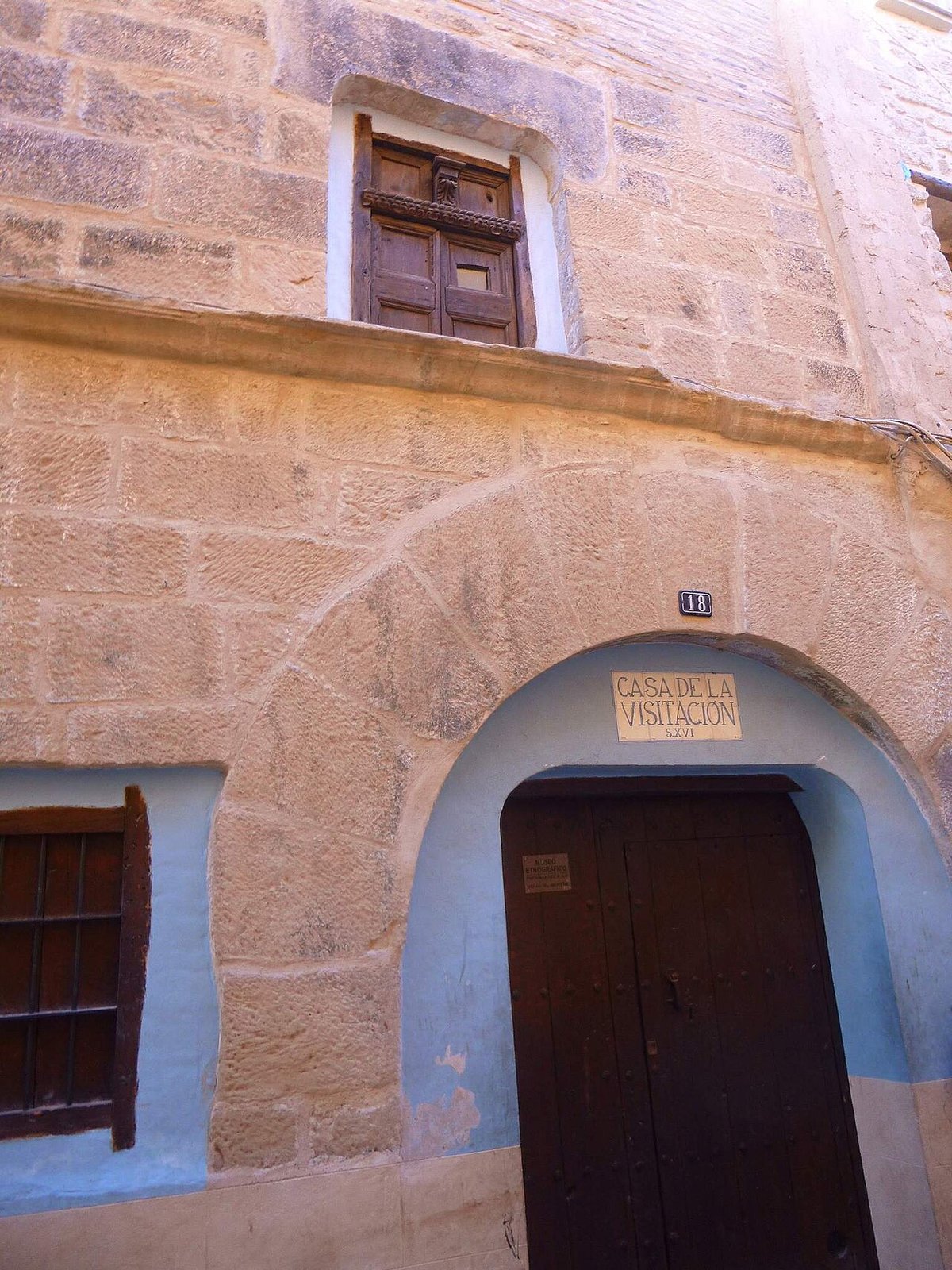
There is no postcard monument, no Instagram-friendly plaza. Instead, narrow lanes funnel visitors between houses pieced together from whatever the ground offered: chunky limestone blocks at the base, softer adobe bricks above, all capped with curved Arab tiles the colour of burnt toast. Notice the wooden balconies, warped by decades of freezing nights and blistering summers, their iron railings painted the same municipal green you will find in every forgotten corner of Aragón. Peer into an open gateway and you may glimpse an interior patio where a single pomegranate tree survives on drip irrigation and stubborn optimism.
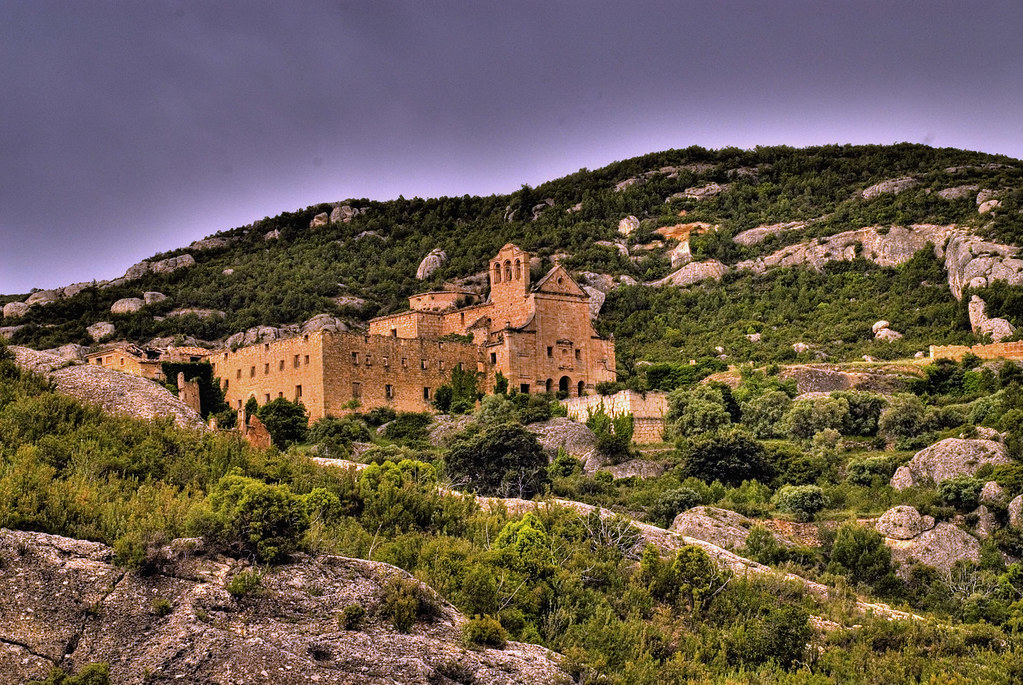
The parish church of La Santa Cruz keeps watch from the upper ridge. Medieval footings, eighteenth-century bell tower, twentieth-century roof tiles – the building is less a stylistic set piece than a palimpsest of whatever the village could afford each century. The door is usually locked; the key hangs, supposedly, in the house nearest the font, but finding someone to answer the knock can take patience. Exterior details repay the walk: a crumbling coat-of-arms hacked by Napoleonic soldiers, slots in the tower once used to haul grain sacks during sieges, swifts that return to the same nesting holes every spring on the dot of 24 April.
Walking Without Waymarks
Forget the notion of manicured footpaths. Santa Cruz functions as a trailhead to a lattice of dirt tracks that pre-date any Ordnance Survey equivalent. Head south-east on the farm road signed “La Ermita 3 km” and you will soon share a dust ribbon with a shepherd moving 400 Merino sheep to summer pasture. The route eventually peters out on a limestone bluff overlooking the Jiloca gorge – no safety barrier, no interpretive panel, just 200 m of empty air and the smell of wild thyme baking in the sun.
Carry a printed map; phone signal vanishes in every barranco. GPS works, but batteries drain faster in the cold upland air, so pack the old-fashioned paper kind. A circular tramp through cereal fields to the ghost hamlet of Villarroya and back takes two hours, rises 180 m, and offers decent chances of spotting little bustards performing their late-winter parachute display. Stout footwear is sensible; the same flints that wreck combine harvester blades will happily chew through city trainers.
Food that Doesn’t Need a Menu
There isn’t a bar. Not one. The last village shop closed when the proprietor retired in 2003, so the nearest cortado is 17 km away in Monreal del Campo. Self-catering is the norm. Saturday morning street markets in nearby Calamocha (25 min drive) sell local lamb shoulder at €14 a kilo, jars of thyme honey for €6, and the oblong loaves villagers call pan de pueblo, crusts tough enough to survive a hike.
If you are invited inside, expect migas – fried breadcrumbs heavy on garlic and scraps of pancetta – followed by gazpacho aragonés, a meat stew nothing like the chilled Andalusian soup Brits recognise. Eating times stay rigid: lunch at 14:00, dinner at 21:00, and anyone arriving five minutes late will find the host already spooning the second course. Vegetarians should speak up early; the concept is still viewed with polite suspicion.
When the Village Swells
For forty-eight hours around 3 May the population quadruples. The fiesta de la Santa Cruz drags back offspring who escaped to Zaragoza factories, plus a handful of German bird-watchers who discovered the date online. A brass trio plays pasodobles in the tiny square, someone roasts a goat on a scaffolding pole, and at dusk villagers carry the cross-shaped reliquary once round the church before disappearing into the bar marquee – actually the tractor shed with fairy lights. By 5 May the rubbish lorry has hauled away the empty Estrella crates and silence reclaims the plateau.
August brings a gentler influx: families who keep the keys to tumbledown second homes, grandchildren chasing geckos among the stones. Even then, don’t expect nightlife beyond a bottle of Somontano wine on a self-built terrace. The village obeys the dark sky; by 23:30 the only illumination is the bathroom light of Casa Rural La Malena, glowing like a beacon above the lane.
Getting There, Staying Warm
Teruel’s tiny airport currently handles no scheduled flights, so most Brits arrive via Valencia (190 km, 2 h 20 min) or Zaragoza (140 km, 1 h 45 min). Car hire is essential; public transport involves a train to Calamocha and a taxi that must be booked a day ahead, costs €35, and refuses to run after 20:00. From the A-23 autopista take exit 22 (Monreal del Campo), then follow the TE-61 and TE-V-3021 for 29 km of switchbacks. The tarmac is sound but encounters more agricultural machinery than artics; expect to crawl behind a barley trailer for the last quarter-hour.
Accommodation choices fit on a Post-it. La Sargantana, two restored labourers’ cottages sharing a pool, scores 9.8 on Booking and charges €95 per night for the larger unit. Casa Rural La Malena, slightly cheaper at €80, keeps a wood-burning stove that devours a full basket of oak logs every chilly evening; hosts leave the first crate free, then charge €5 a refill. Winter visitors should confirm road clearance; snowploughs reach the village eventually, but “eventually” is measured in rural, not municipal, time.
Leave the Checklist at Home
Santa Cruz de Nogueras will never feature on a “Top Ten Aragón” list, and the village is perfectly content with that. Come if you want to clock up miles on empty tracks, read a whole book before the sun crawls over the adobe roofline, or simply test whether silence still exists in Europe. You might leave with a jar of home-pressed olive oil handed over in payment for helping restart a neighbour’s strimmer. Or you might depart after one cold night, muttering about the lack of mobile coverage and a decent cappuccino. Both reactions are entirely reasonable.