Full Article
about Valfarta
Ocultar artículo Leer artículo completo
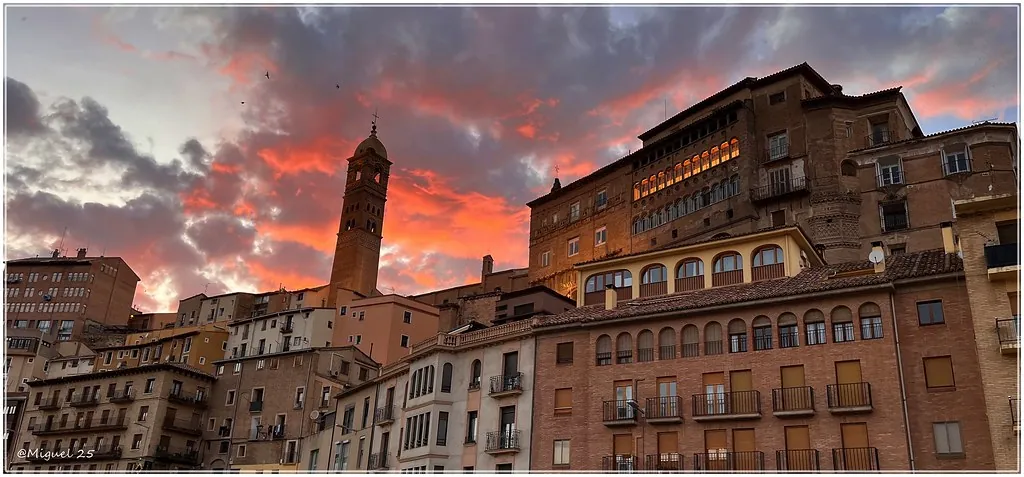
The church bell strikes noon, yet nobody appears. A single magpie lands on the stone cross of Valfarta’s modest tower, surveys the two streets below, and flies off towards the ochre hills. With only 62 souls on the register, the village can feel like a rehearsal for abandonment—until you notice the freshly swept doorsteps, the geraniums in olive-oil tins, and the tarpaulin-draped tractor that definitely worked this morning. Valfarta does not do postcard pretty; it does empty-room quiet and horizon-wide skies, and it does them for free.
A Steppe That Refuses to Behave Like a Desert
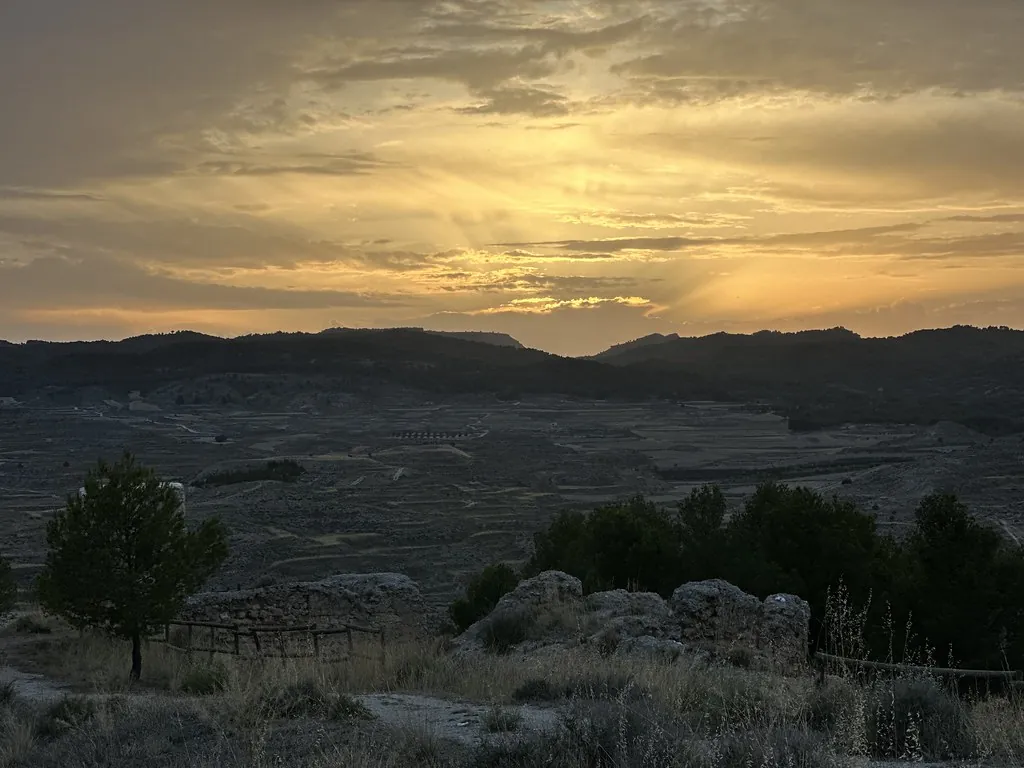
At 372 m above sea level, the village sits on the rim of the Monegros basin, a slab of arid clay and gypsum the size of Greater London but with fewer residents than a single Croydon block. The word “desert” gets thrown around, yet after spring rains the same flats blush green and burst into ankle-high meadows of purple larkspur and white asphodel. British botanists who arrive expecting Arrakis leave clutching photos of sea-lavender and glasswort—plants that happily tolerate the salty crust left by ancient seas.
Footpaths strike out from the north end of Calle del Medio, signed only by the occasional paint splash. Within twenty minutes the last almond tree is behind you and the land tilts into shallow ravines where great bustards shuffle behind tamarisk clumps. Bring binoculars: stone-curlews call at dusk and, if you sit still, little bustards perform their odd neck-inflation dance. There are no hides, no entry fees, and almost no people—just the wind and the smell of warm thyme.
Night brings a different spectacle. Light pollution maps show this corner of Aragón as a black hole between Zaragoza and Lleida; on clear evenings the Milky Way feels close enough to snag on the church weathervane. Campers at the sole site, Camping La Estepa, routinely abandon tents at 02:00 to stare upwards. Reviews left by returning Brits praise the “excellent Wi-Fi that you won’t use because the sky is better”—high praise from a nation that normally demands router locations on arrival.
A Village That Measures Time by Who Is (and Isn’t) There
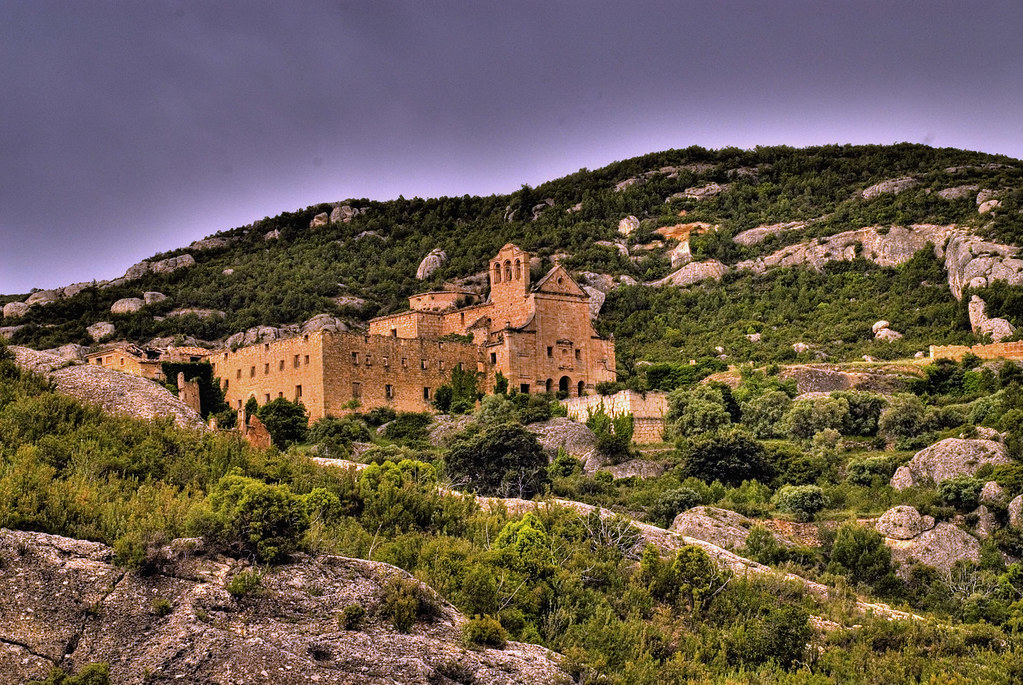
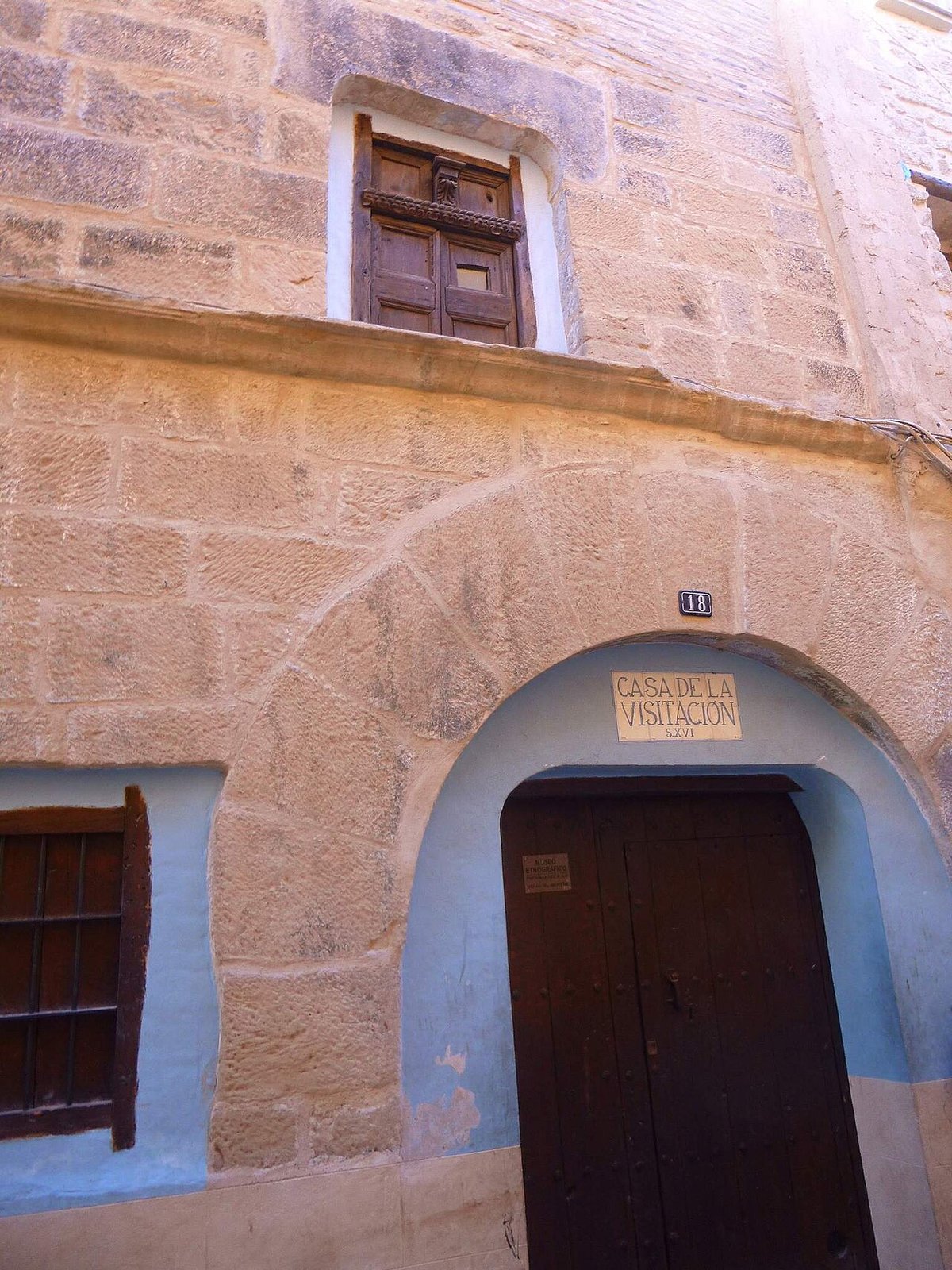
Valfarta’s houses are built from the ground they stand on: ochre limestone banded with chalky gypsum veins. Rooflines sag, walls bulge, yet the structures refuse to fall. The parish church, closed outside service times, contains little more than a carved 17th-century crucifix and a poster thanking the EU for roof repairs. Ask at number 14 for the key: an elderly man nicknamed El Francés (“because he once worked in Pau”) will accompany you, then invite you to his patio for a glass of warm Mirinda. Accept; conversation is limited, but hospitality is not.
August changes the tempo. Former residents drive up from Zaragoza or Barcelona, cars stuffed with folding chairs and polystyrene cool-boxes. Suddenly every doorway sprouts a plastic tablecloth, and the plaza’s single bar—closed since January—opens for three nights, serving lukewanz lager and plates of migas fried in mutton fat. The fiesta programme, photocopied on neon paper, lists a foam party, a paella for 150, and a mass “with musical accompaniment.” It is hardly Pamplona, yet for the village it constitutes a population boom. Visitors are welcome, though beds are not provided free.
Eating When the Pantry Is the Countryside
There is no restaurant, but the campsite kitchen has four gas rings and a view of the corn field. Local produce appears in unexpected ways: a farmer may offer a leg of lamb in exchange for carrying his irrigation pump to the boot. Should you lack barter skills, drive 12 km to Sariñena where the cooperative supermarket sells Monegros olive oil pressed from century-old trees and wine from the Cariñena DO that costs less than bottled water at Gatwick.
Dishes worth mastering start with ternasco—milk-fed lamb roasted with potatoes until both meat and edges of the tray caramelise. Winter visitors get gachas, a paprika-thickened porridge that shepherds once carried frozen in saddlebags. Vegetarians can survive on borrajas (borage) stewed with tomato and almond, though you will be regarded with the suspicion normally reserved for people who forget to close gates.
Getting Here, Staying Here, Leaving Again
Ryanair’s morning flight from Stansted lands in Zaragoza at 11:05 local time. Collect a hire car, join the A-23 north-east, then peel off on the A-22 towards Huesca. After 45 min the landscape empties, GPS bars flicker, and the turning for Valfarta appears beside a roadside shrine decorated with plastic flowers. Total drive: 1 h 30 min, 110 km, two motorway tolls of €2.40 each. public transport stops at Sariñena, 12 km away; taxis are scarce and Uber non-existent.
Accommodation options fit on a Post-it. Camping La Estepa occupies a gravel terrace on the village edge: 60 pitches, hot showers, washing machines that accept €1 coins, and Wi-Fi strong enough for Teams calls should you wish to horrify colleagues with a steppe backdrop. A night for two adults plus electricity costs €21 in low season, rising to €28 in August. The only alternative is a pair of rural cottages sleeping four; book through the council website and collect the key from the woman who runs the bakery counter—open 07:00–08:30, cash only.
Leave time for the exit drive. North-west across the N-240 lies the Unesco-listed rock art of the River Vero, while 40 min south the abandoned village of Belchite offers civil-war ruins untouched since 1938. Both detours make the journey feel less like a pilgrimage to nowhere and more like a plotted loop.
The Catch You Need to Know
Valfarta will not suit everyone. July and August bake at 38 °C, the flies are persistent, and the nearest decent coffee is a 25-minute drive. Winter brings the cierzo, a wind that originates in the Ebro valley and accelerates until it can whip unsecured tents into the next province. Shops amount to a weekly van selling bread, tins and washing powder; fresh milk is mythical. If conversation matters more than constellations, boredom sets in around hour 14.
Yet for those who measure a break in decibels dropped and horizons gained, the village offers something increasingly scarce: silence without a price tag, and a landscape that changes colour faster than British weather. Come with water, walking boots, and a tolerance for places that do not need you. The bell will still strike noon, the magpie will still leave, and Valfarta will still be there—quiet, self-contained, and unlikely to add Wi-Fi hotspots any time soon.