Full Article
about Calanda
Hide article Read full article
When the town stops and the drums begin
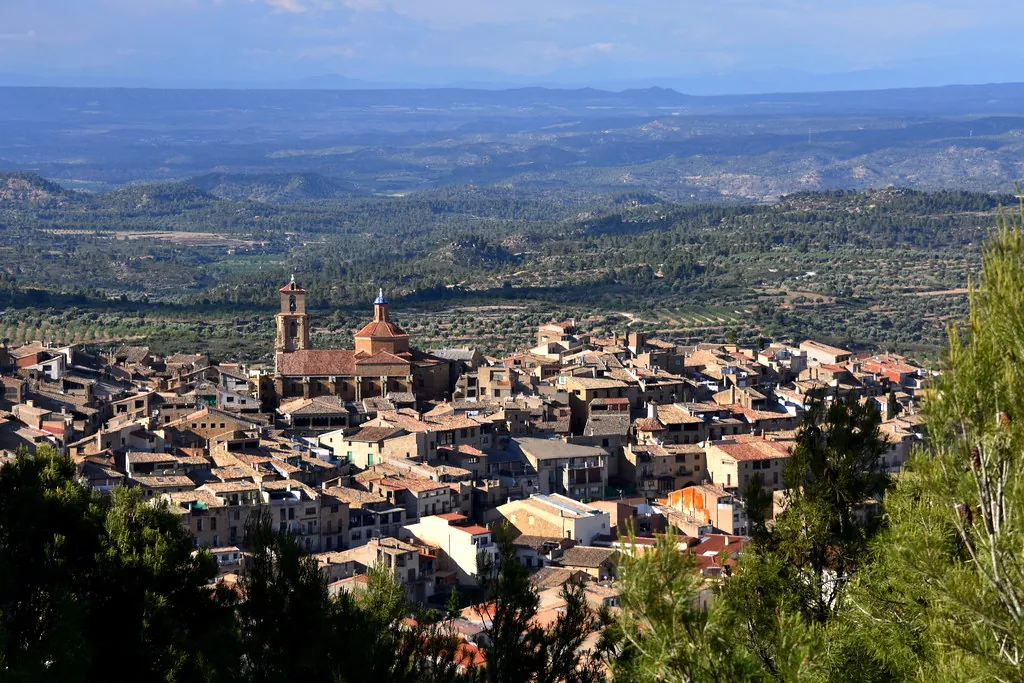
At midday on Good Friday, Calanda stops behaving like a small town in Bajo Aragón. Two thousand drums sound at once and the air turns dense, almost solid. It does not feel like music. It feels like a shared pulse that presses against the ribs and pushes from within. Windows tremble with each heavy strike. Dogs bark upwards without quite knowing why. For exactly one hour, silence disappears from the streets.
When it ends, the final beats fade slowly, like a fire burning itself out. The town smells of damp leather and resin. The streets are left scattered with tiny wood shavings from the drums, as if a brief fall of sawdust had passed through.
The hour that refuses to pass
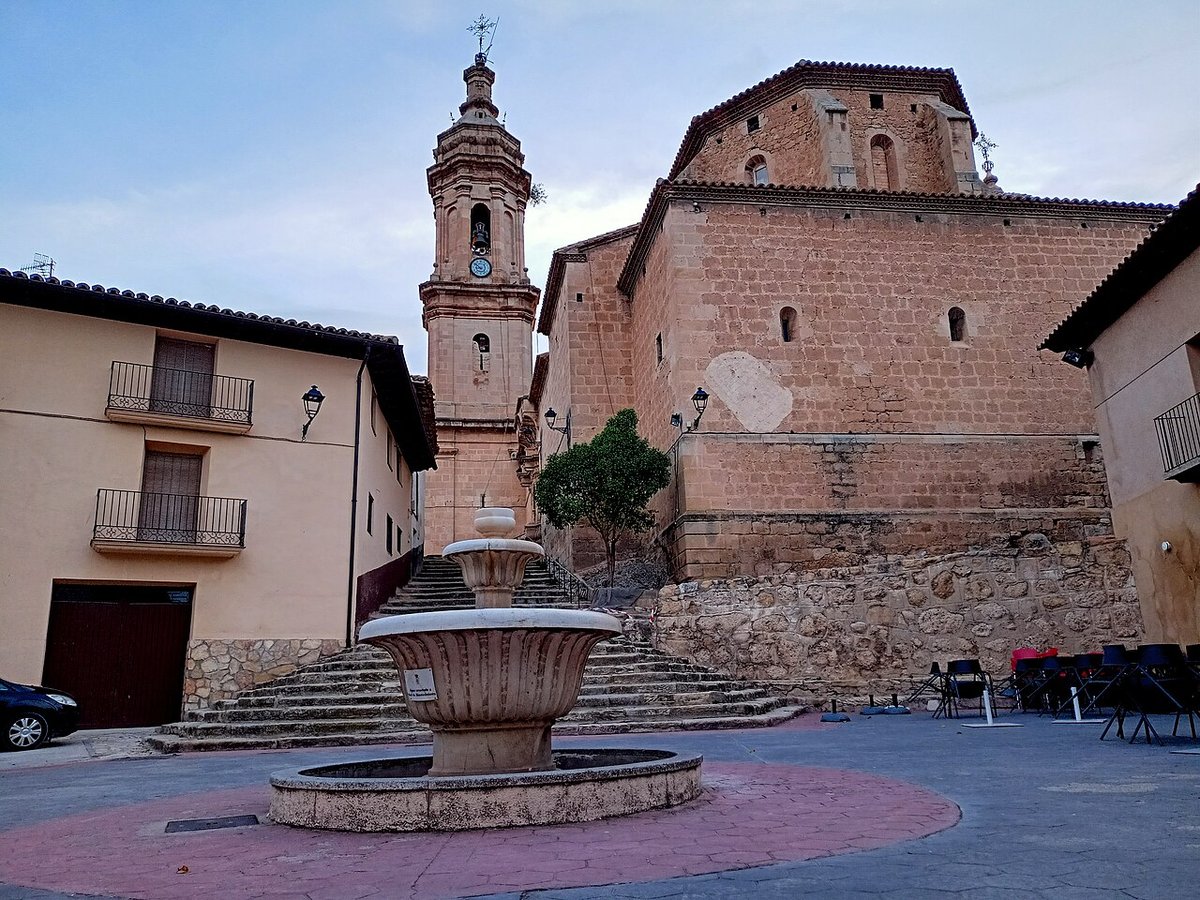
La Rompida de la Hora is not set up as a spectacle for outsiders to observe. It works more like an old agreement between those who live here and those who return year after year. No one can say precisely when it began, yet almost everyone knows they need to be there when the moment arrives. Around ten minutes before noon, balconies begin to fill. A few minutes later, the drummers gather in the Plaza Mayor, beneath the church clock.
The clock strikes twelve and something breaks open inside the town. There is no conductor and no shared tempo imposed from above. Each person plays their drum in their own way, following a rhythm learned at home. Even so, what emerges is a single, continuous vibration that seems to rise from the ground and travel up the stone walls.
Anyone visiting that day would do well to carry earplugs in a pocket. The challenge is not only the noise, but the pressure that builds in the chest after a while. Questions about why it happens rarely lead far. The answer tends to be brief and repeated with little variation: “It’s what we do.”
The scent of peaches before they appear
Outside Easter, Calanda shifts completely in pace and sound. In April, when the alfalfa fields around the town grow tall and green, the air carries a soft sweetness that is neither sugar nor honey. It comes from the peaches of Calanda. They ripen later in summer, yet their presence is announced much earlier.
The trees are pruned into open shapes, forming low orchards that stretch towards the surrounding farmland. Many trunks are painted with white lime. From a distance, they resemble still zebras against the dry soil.
In the Plaza Mayor stands the house where Luis Buñuel was born. The façade is easy to miss without knowing what to look for. Two simple balconies face the square. A green door sits below them, and a small bronze plaque is fixed beside the frame. Inside, the Centro Buñuel holds photographs, letters and personal objects. One detail draws more attention than the display cases. In the inner courtyard there is an old stone well. It is not hard to picture a child looking down and watching the sky reflected in dark water.
Hermitages beyond the road
From the road, Calanda appears flat and without relief. Walking into the town reveals something different. The streets rest on a gentle rise that slopes southwards. A slow descent along the Cuesta de San Roque leads to the first hermitage. San Roque is small, built from reddish brick worn by the wind. A slightly leaning iron cross sits on the roof, like an old tree shaped by years of cierzo.
From here begins what many call the route of the hermitages. They appear one by one, spaced across fields and paths: Santa Bárbara, el Humilladero, Virgen del Campo, Santa Águeda and San Blas. Some open on specific days. Others remain closed for most of the year and can only be seen from outside.
The full walk covers around three kilometres at an unhurried pace, with pauses along the way. Water is worth carrying, as fountains are not always available. Summer visits are easier earlier in the day, before the sun settles fully over the pale ground.
The convent that fell away
Several kilometres from the town centre, beyond agricultural tracks that leave from behind the cemetery, stand the remains of what is known as the Convento del Desierto. Carmelite monks abandoned it in the nineteenth century. Over time, the building deteriorated on its own. The roof disappeared first. Rain followed, opening cracks in the walls.
What remains today is a pale stone skeleton among pines and low scrub. Around midday, the dominant sounds are insects and the steady hum of bees. Later in the day, light enters sideways through the empty windows. Shadows stretch across the ground and shift as the sun lowers.
The path is not always clearly marked. It helps to ask in the town for the best current route. After heavy rain, some stretches of earth become awkward to cross.