Full Article
about La Ginebrosa
Hide article Read full article
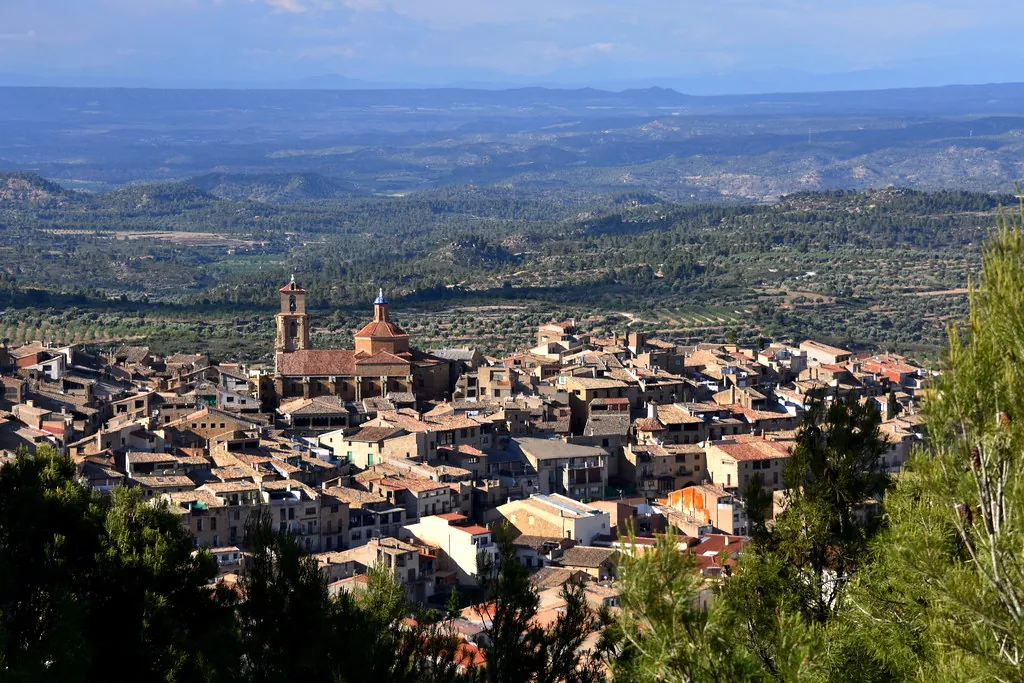
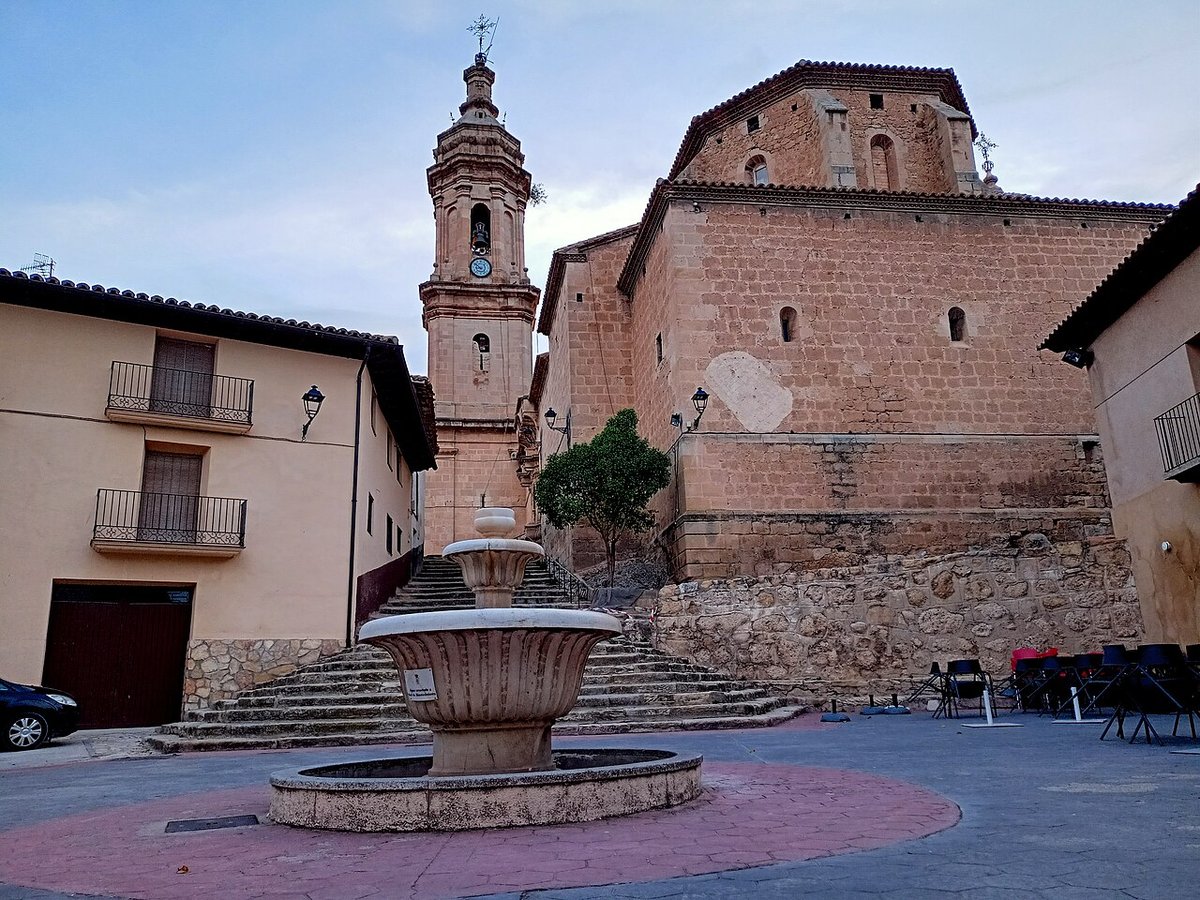
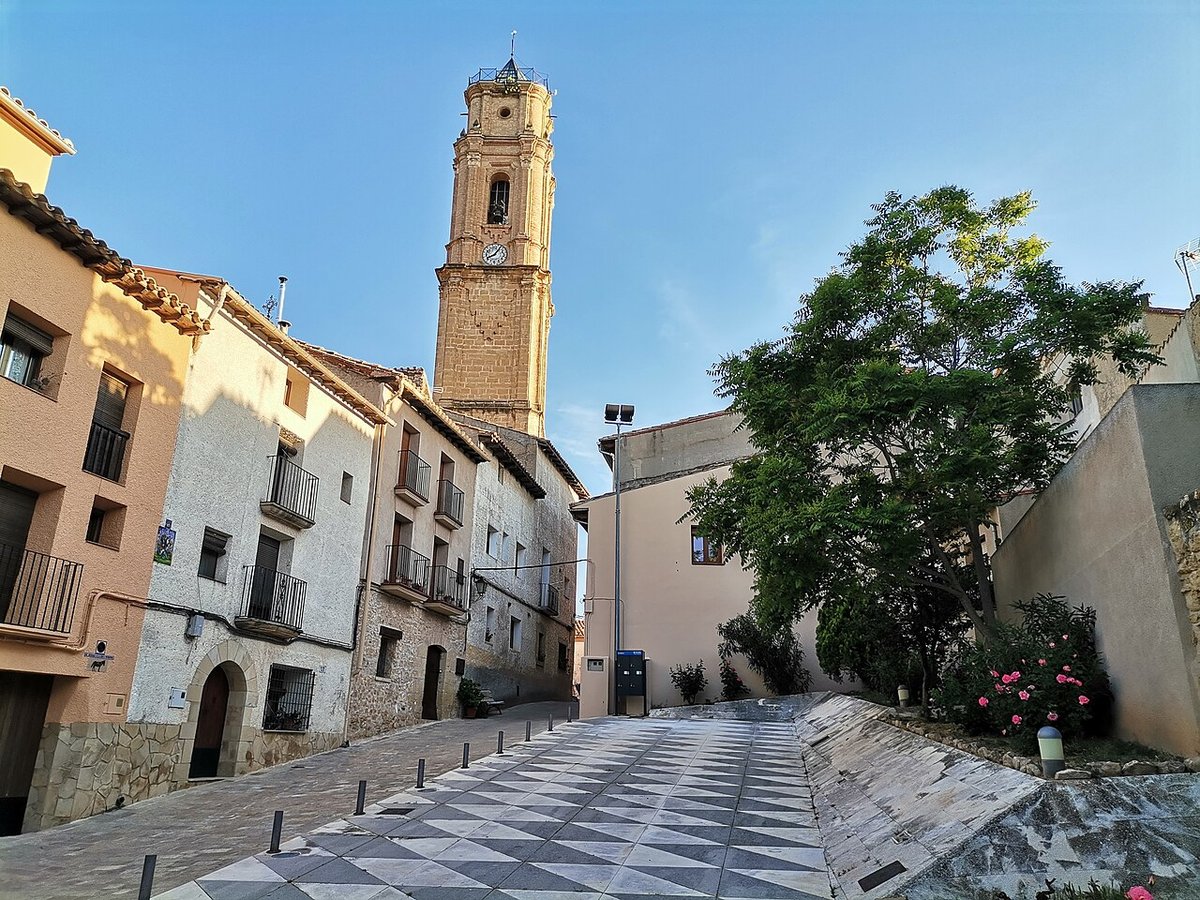
The fountain in the square has a steady, quiet sound, the kind you only notice when nothing else is moving. At that hour, the light hits the stone church façade and turns it a pale, chalky grey. A door opens somewhere behind you. This is La Ginebrosa in the Bajo Aragón, a village of fewer than two hundred people, holding its silence for a little longer.
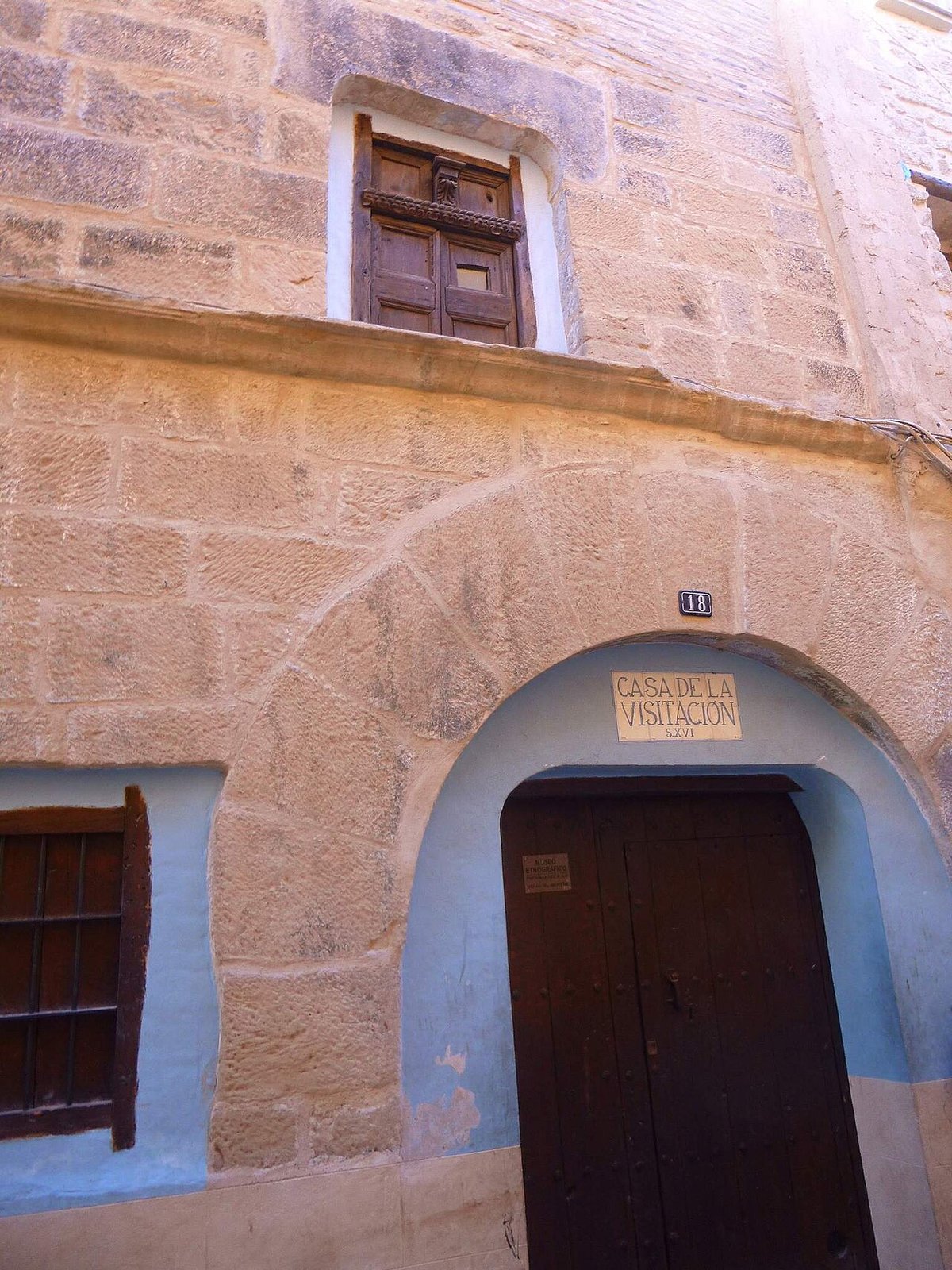
The streets climb from the square without much order. You walk past houses where stone shows through whitewash, past wooden gates and simple iron balconies. One lane leads to the old school, its building closed but its walls holding onto faded drawings from another time. The church of Santa María shapes the skyline, a solid, late-19th century building. Inside, it smells of wax and old wood, the pews worn smooth.
The land beyond the last house
The village ends abruptly, giving way to open fields. The landscape is wide here, defined by long horizons and ochre tones for most of the year. In winter, it’s the brown of turned soil and grey skies. Come spring, almond trees bloom white among the cereal plots. Several unpaved agricultural tracks lead out into this space. They are not signposted for walking, but you can follow them easily if you keep your bearings. The ground is compact when dry, but turns to sticky mud after rain.
From a slight rise, like the area known as the Sima Grande, the scale becomes clear. Fields stretch out to distant villages, dotted with an isolated farmhouse. For walking, spring and autumn are sensible. In summer, the sun is relentless and shade is scarce once you leave the village streets.
Sounds of the fields
Quietness dominates, but it’s not empty. The crunch of gravel underfoot is loud. Sometimes a flock of sheep moves along a distant track, raising dust. Partridges call from the fields, and with patience you might see a kestrel hanging in the air. At dawn, the sound is larks above the crops. Later, as evening cools, you hear horses from nearby farms and wind moving through the few pines at the field edges.
Moving through the landscape
Those same farm tracks are used by locals on foot or by bike. A mountain bike is practical here; loose stones appear without warning and mud clings to wheels when damp. The point isn’t to reach a destination, but to move slowly through this open space and return the way you came.
A calendar of food and return
The cooking here follows the agricultural year. Dishes are substantial: migas often served with grapes or meat, lamb stews, cured sausages from local pigs. These are typically home recipes, prepared for family, not found on public menus.
August alters the village rhythm. People return for the patron saint festivities, filling streets that are usually quiet. There’s music then, religious processions, and shared meals that gather neighbours of all ages.
Practicalities of place
You reach La Ginebrosa by car, driving kilometres of open country from larger towns like Alcañiz or Caspe. It sits apart from main roads. To see it at its most itself, come on a weekday morning before the heat builds. By midday in summer, streets empty until late afternoon. This isn’t a place built for visitors; life here moves to the slower rhythm of fields and seasons.