Full Article
about Molinos
Hide article Read full article
A village that moves at its own pace
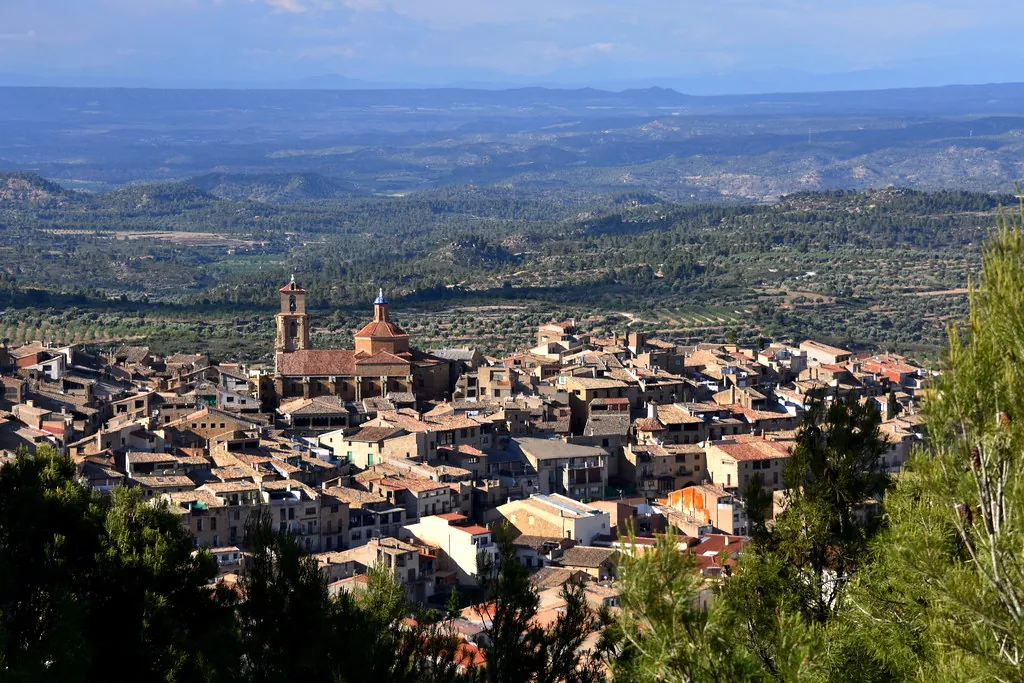
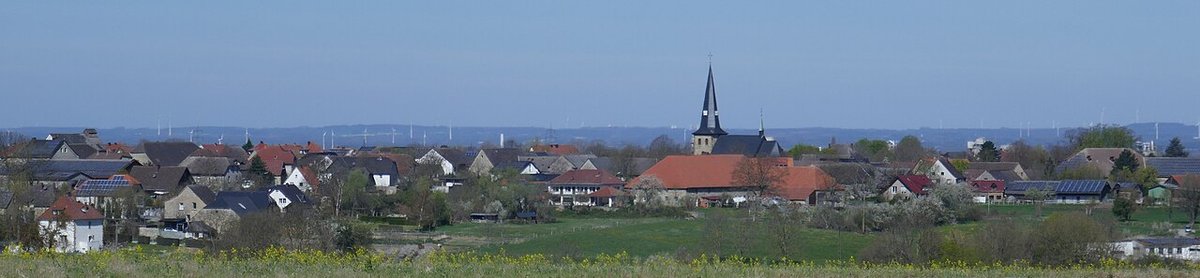
At nine in the morning, the dominant sound in Molinos is not traffic but the soft clanging of cowbells drifting across nearby slopes. The narrow streets hold onto the night’s cool air, and the stone façades still feel fresh to the touch. This small village in the Bajo Aragón area of Teruel sits at around 800 metres above sea level and has just over two hundred residents. It remains compact, clinging to the incline with very few concessions to modern expansion.
On arrival, the first impression is of stone houses stacked closely together, as if they had grown naturally along the hillside. Streets are short and slightly uneven, with bends that slow your steps without effort. Walking here happens at an unhurried pace almost by default.
Molinos is part of the association Los Pueblos Más Bonitos de España, a designation that has brought a noticeable increase in visitors, especially at weekends and during holiday periods. During the week, things settle back into a quieter rhythm. Footsteps carry further than voices, and movement is minimal. Those arriving by car usually find it easier to park in the lower part of the village and continue on foot, as the historic centre has narrow streets where manoeuvring can be tricky.
Silence is occasionally broken by livestock in the surrounding fields or the sound of a door opening onto the main square. This is not a place of constant activity. It invites slow walks and careful observation, especially of the stonework, which reveals much about the village’s past.
Traces of history in stone
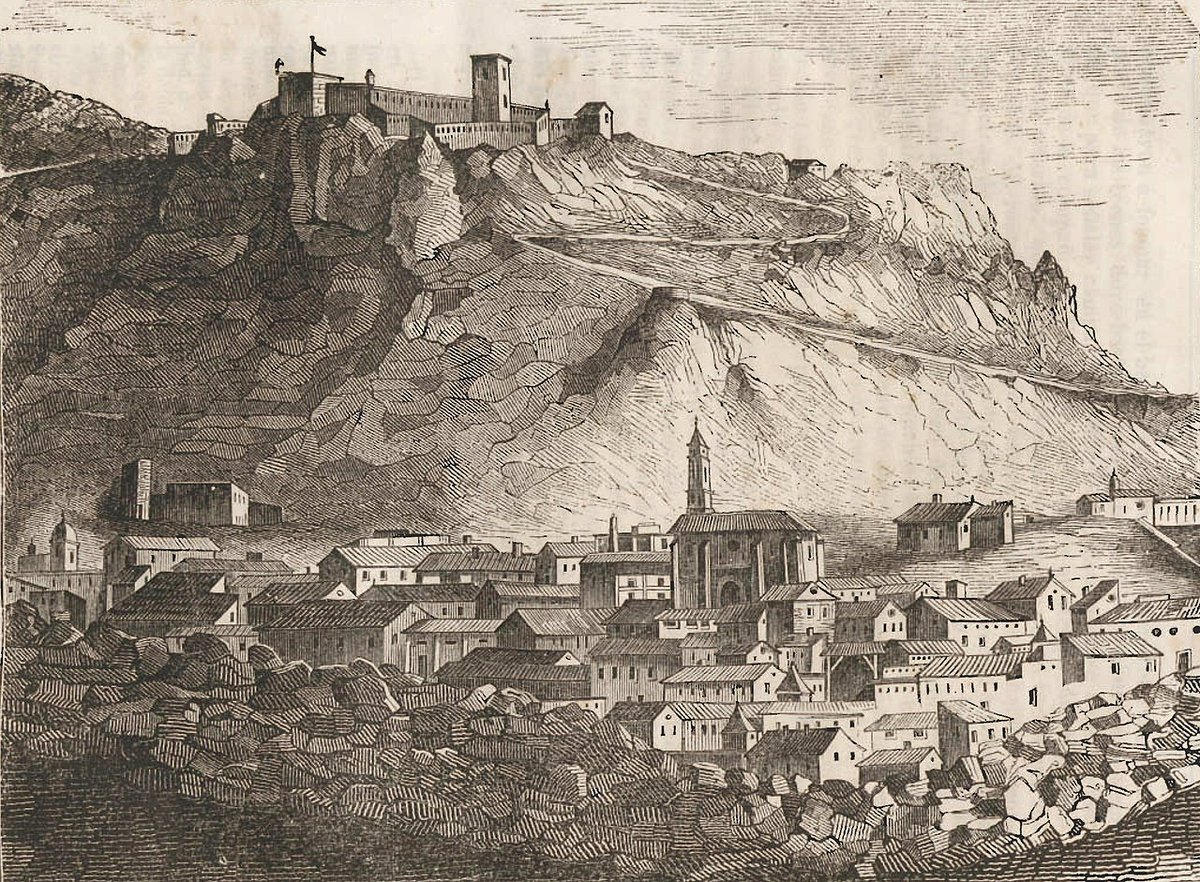
On a rocky outcrop above the village stand the remains of a medieval castle. These are not restored ruins or a formal visitor site, but fragments that hint at the strategic reasons for building here. From this position, the settlement overlooks the valley of the Guadalope River and the natural routes that cross the area.
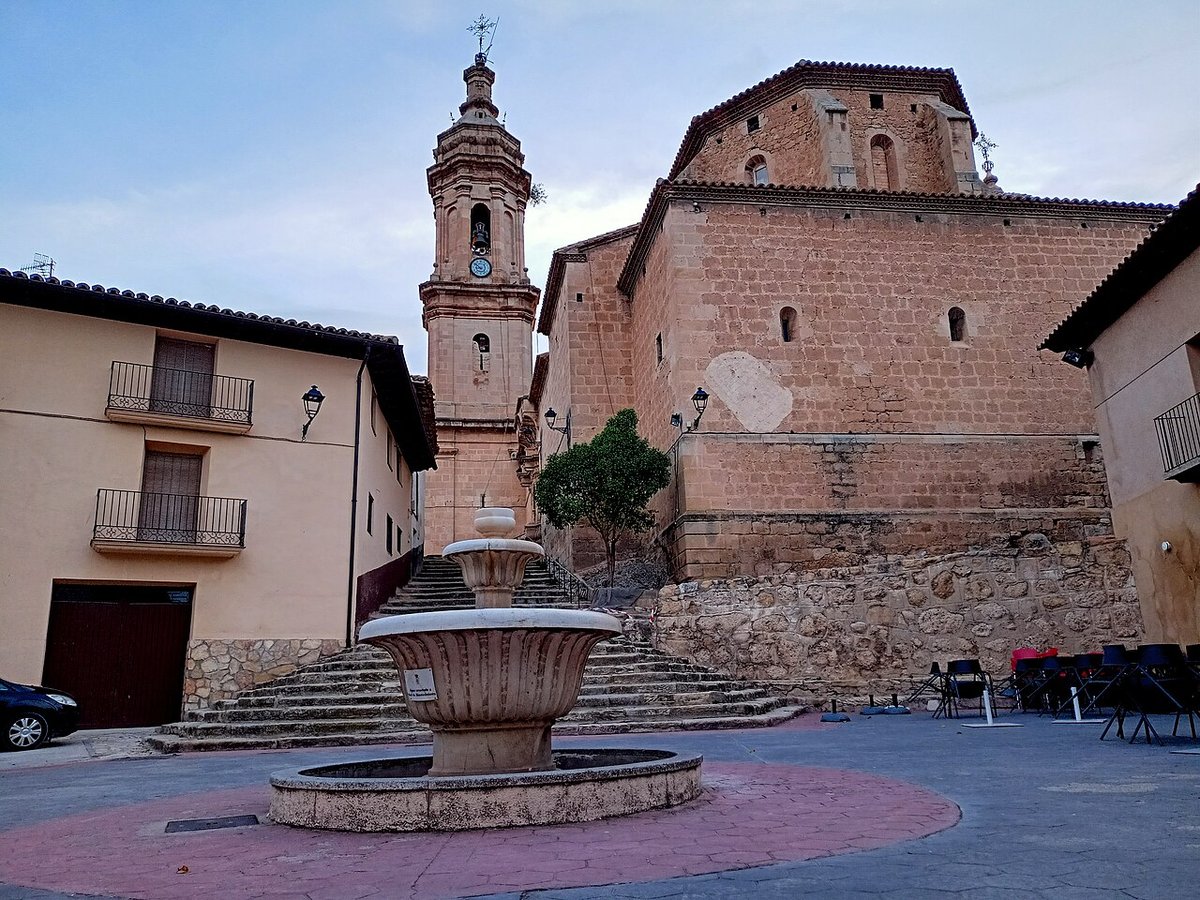
In the centre of the village stands the iglesia de la Purísima Concepción, its solid tower rising above the rooftops. The current structure dates from a 17th-century renovation built over earlier foundations. From certain viewpoints, the tower aligns with the ridges of the surrounding hills, a familiar sight in the evening light.
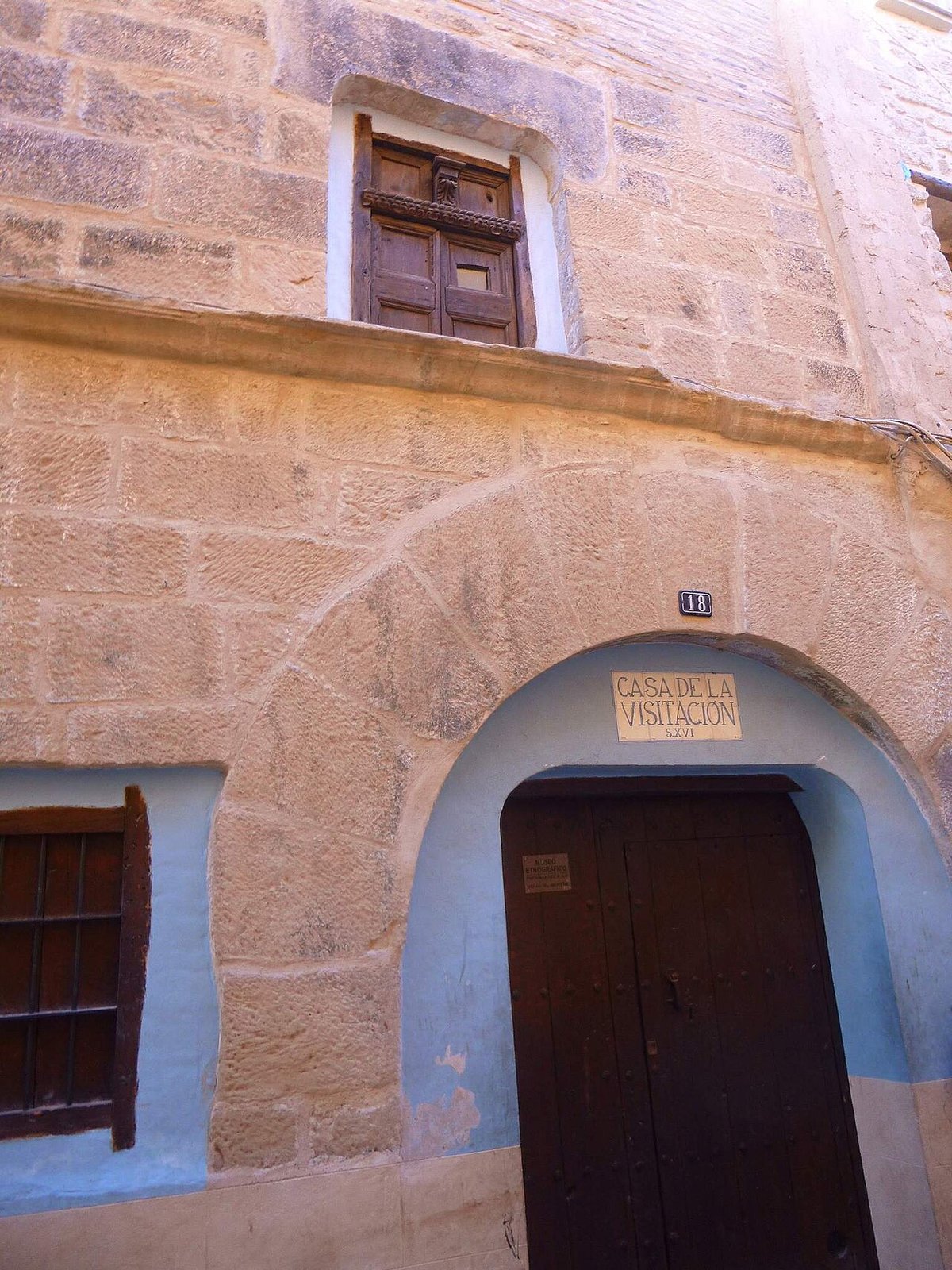
A walk through the historic centre does not cover much distance, yet it rewards attention to detail. The Plaza Mayor, lined with arcades, forms a focal point. Nearby are houses dating from the 16th and 17th centuries, along with carved stone coats of arms embedded in façades. These features are not heavily signposted, so noticing them depends on taking time and looking closely.
Closer to the river, the old molino harinero survives alongside stone fountains and washhouses. This area offers a clear sense of how daily life once worked: water flowing steadily, clothes rinsed in basins, and grain processed into flour. The setting remains simple and functional, reflecting routines that shaped the village for generations.
Beneath the hills: the Grutas de Cristal
A few kilometres from the village centre lie the Grutas de Cristal, a cave system known for its formations of stalactites and stalagmites. Access is organised through guided visits, and it is worth checking availability in advance, as tours do not necessarily run continuously throughout the day.
Inside, the temperature drops several degrees compared to outside, which can be particularly noticeable in summer. The route through the cave is not long, but it passes through chambers where calcite columns rise from floor to ceiling and damp walls reflect light with a soft, almost translucent sheen. This quality gives the cave its name and defines the atmosphere within.
The experience contrasts with the open landscape above ground. After the dry hills and pale rock outside, the interior feels enclosed, cool and quietly active with slow geological change.
Paths and viewpoints around Molinos
The surroundings of Molinos offer simple walking routes that pass through pine woodland, cultivated fields and slopes of pale rock. These are not especially long walks, but they do involve steady climbs that can feel demanding in places.
Scattered across the landscape are small hermitages. One of them, the ermita de la Virgen de la Soledad, sits on a nearby height and provides clear views over the valley and back towards the village. From here, the way the houses follow the incline becomes more obvious, giving a better sense of how the settlement fits into its terrain.
For those interested in going further, rural tracks extend towards other villages in the Maestrazgo and the historic Bajo Aragón region. Distances can be deceptive, and the sun is strong from midday in warmer months, so it is sensible to carry water and check routes before setting out.
Molinos also lends itself well to photography at specific times of day. Early morning and late afternoon are particularly effective. The limestone used in many façades takes on a soft golden tone, while shadows bring out textures that remain flat under stronger midday light.
The village calendar
Seasonal events continue to shape life in Molinos. In winter, the celebration of San Antonio Abad includes bonfires and the blessing of animals, a tradition shared across many villages in the region.
August brings the main festivities dedicated to la Virgen de la Asunción. During these days, the atmosphere changes noticeably as residents who live elsewhere return, and the streets become busier than usual.
Semana Santa, or Holy Week, is marked in a more understated way, with religious observances taking place within the historic centre. In autumn, customs linked to the slaughter of pigs and the preparation of cured meats are still maintained. These practices, rooted in domestic life, have long structured the yearly cycle in the village.
Molinos does not aim to impress through scale or spectacle. Its character lies in small details, in the weight of its stone buildings, and in a pace that resists urgency. It is a place best understood by slowing down and paying attention to what is already there.