Full Article
about Codo
Hide article Read full article
A pause on the road
Some places work like those roadside stops where you pull over for five minutes and end up lingering a bit longer without quite knowing why. Tourism in Codo has something of that feeling. You arrive after crossing the flat expanse of the Campo de Belchite, see a handful of streets, quiet, fields stretching out all around, and realise that nothing here is trying to grab your attention.
With around 200 residents and about 50 kilometres from Zaragoza, Codo keeps the pace of a small Aragonese village where time seems slightly out of step with everything else. It is not about ticking off sights or filling a schedule. It is more about noticing what is already there.
A village shaped by cereal fields
Much of Codo’s character comes from its surroundings. The village is made up of tightly packed stone and brick houses, pressed close together as if for shelter, with kilometres of cereal fields opening out in every direction. The colours shift with the seasons. Spring leans towards green, while summer brings that dry yellow that feels almost endless.
At the centre stands the church of Santa María. It is one of those buildings that has changed over time: a medieval base with later alterations layered on top. The additions are easy to spot if you take a moment. Its tower is visible from quite a distance and ends up acting as a reference point when wandering through the streets without any clear plan.
There is no sense of display here. The village sits within its landscape rather than trying to stand apart from it, and that connection to the land is constant.
Walking through everyday life
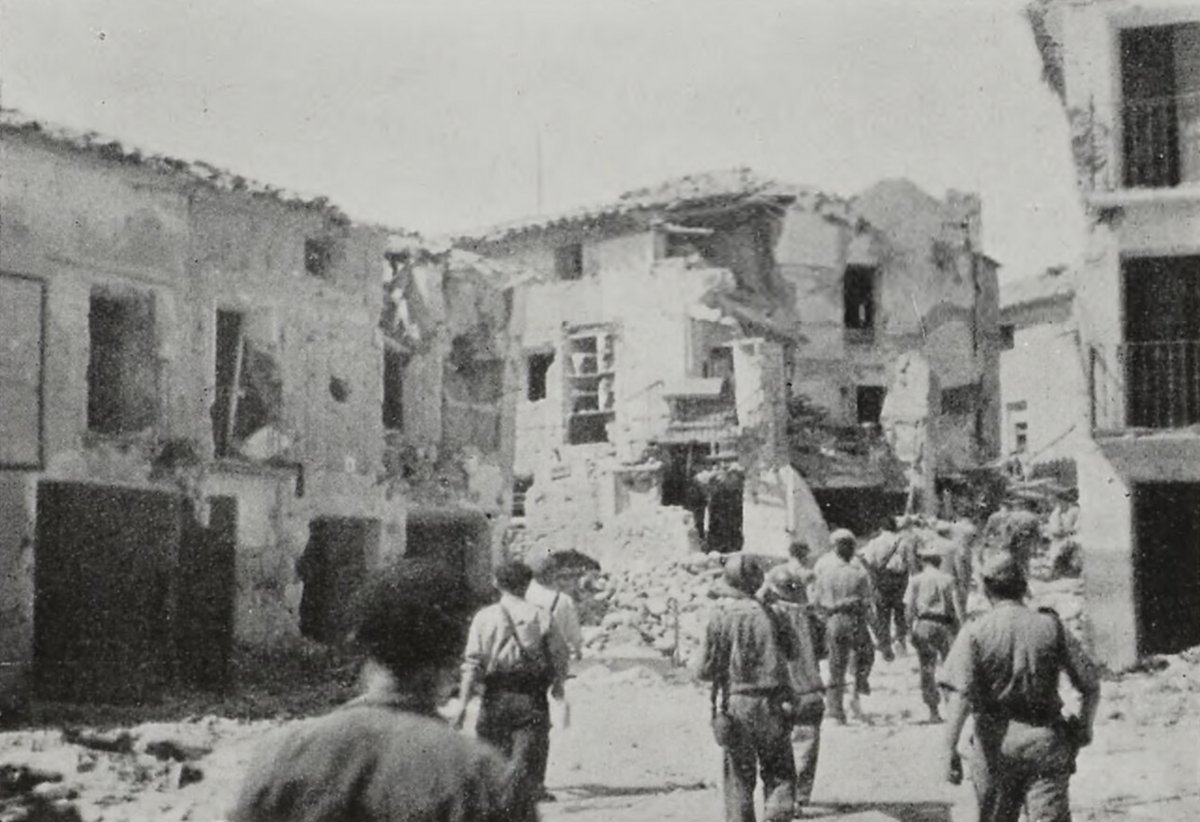
A walk around Codo is simple, though not without small details if you pay attention. Large doorways hint at a time when carts and animals moved in and out regularly. Interior courtyards once worked as corrals or small workshops. Iron balconies still hold laundry on certain days, adding a lived-in rhythm to the streets.
This is not polished or decorative architecture. It is practical. Houses built for living, working and storing tools, shaped by daily needs rather than appearance. That sense of function gives the village a different kind of interest, especially compared to places that feel overly arranged.
There is little in the way of obvious landmarks beyond the church. Instead, it is the repetition of these everyday elements that defines the experience: textures of brick and stone, quiet corners, and the occasional open door offering a glimpse inside.
Tracks across the Campo de Belchite
Step outside the built-up area and agricultural tracks begin almost immediately. These are straightforward paths crossing fields of wheat and barley, with the occasional olive or almond tree breaking the pattern. There are no steep climbs or technical routes, just easy ground that invites unhurried walking.
Shade is scarce, and the sun in the Ebro valley can be strong. Water and a hat are almost always a good idea here. The openness of the land means there is little to interrupt the light or the wind.
From slightly higher points, the distant outline of the Iberian mountain ranges comes into view. It is not a dramatic skyline, but it adds depth to the otherwise flat horizon. At sunrise and sunset, the light shifts noticeably, changing how the fields and sky relate to each other. In this setting, the sky often feels more important than anything built on the ground.
Food rooted in the land
Local cooking in Codo remains closely tied to what the land provides. Cereals, pulses and vegetables from small kitchen gardens form the base, with hearty spoon dishes appearing when the colder months arrive. In winter, many families still prepare homemade cured meats, and stews sometimes include small game, which is fairly common in the area.
This is not a cuisine built around novelty. It is straightforward and filling, shaped by the demands of agricultural work and the seasons. Meals reflect continuity rather than change, and that simplicity is part of their identity.
Festivities and village life
Celebrations in Codo follow the religious calendar and the agricultural cycle. The patron saint festivities dedicated to Santa María usually take place in August and mark the moment when the village becomes more animated.
There are simple processions, music in the streets and shared meals among neighbours. Nothing feels overly structured or staged, yet there is a strong sense of reunion. In a small community, these gatherings carry particular weight, bringing together people who may now live elsewhere but return for these days.
Outside of those moments, daily life remains quiet and steady, shaped by routine and familiarity.
Getting there and when to go
Codo is reached from Zaragoza in roughly forty minutes, typically via the A‑222 towards Alcañiz. The journey itself is part of the experience, crossing the open landscape of the Campo de Belchite with long straight roads, fields changing colour through the year, and the occasional rise where it is worth pausing briefly.
Spring and autumn tend to be the most comfortable times to visit. The fields show more contrast in colour and the temperatures are better suited to walking.
Codo is not a destination for major monuments or a packed itinerary. It is the kind of place where a few hours, a slow walk and a bit of observation offer a clearer sense of how much of rural Aragon still works. And sometimes, that is more than enough.