Full Article
about Agon
Hide article Read full article
A village shaped by its surroundings
In the valley of the river Huecha, within the Campo de Borja, Agón is best understood by looking beyond its streets to the land around it. Tourism here does not revolve around standout monuments, but around an agricultural landscape with deep roots and a way of settlement that has barely shifted over the centuries. Around 135 people live here today, and daily life still follows the rhythm of the fields.
This part of western Aragon once marked a frontier during the Middle Ages. After the Christian conquest of the Ebro valley in the 12th century, small communities along the Huecha reorganised around farming and irrigation systems, some of them inherited from the Andalusí period of Muslim rule in the Iberian Peninsula. Many of the villages seen today, including Agón, developed as settlements tied closely to the land and to a network of acequias, irrigation channels that make cultivation possible in a dry environment.
Ties to the wider Campo de Borja
For centuries, Agón formed part of the economic and administrative orbit of Borja, the main town of the comarca. That relationship helps explain several aspects of the village: how its land is organised, which crops dominate, and the recurring patterns in local architecture seen across the region.
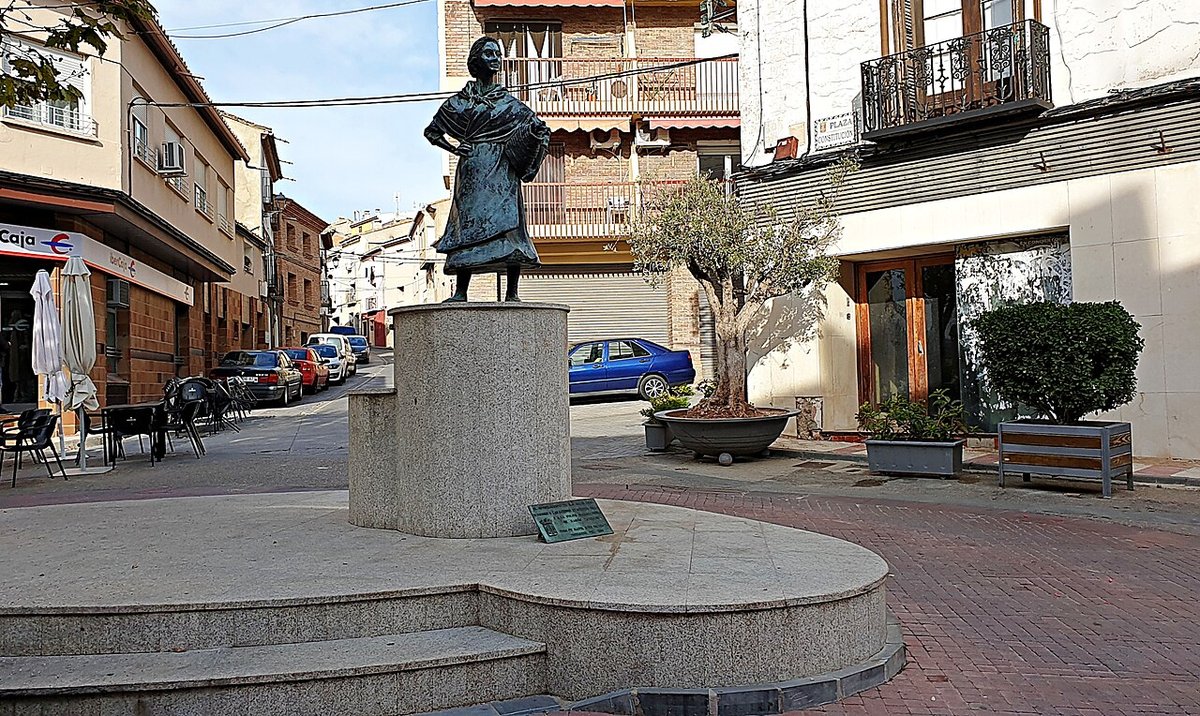
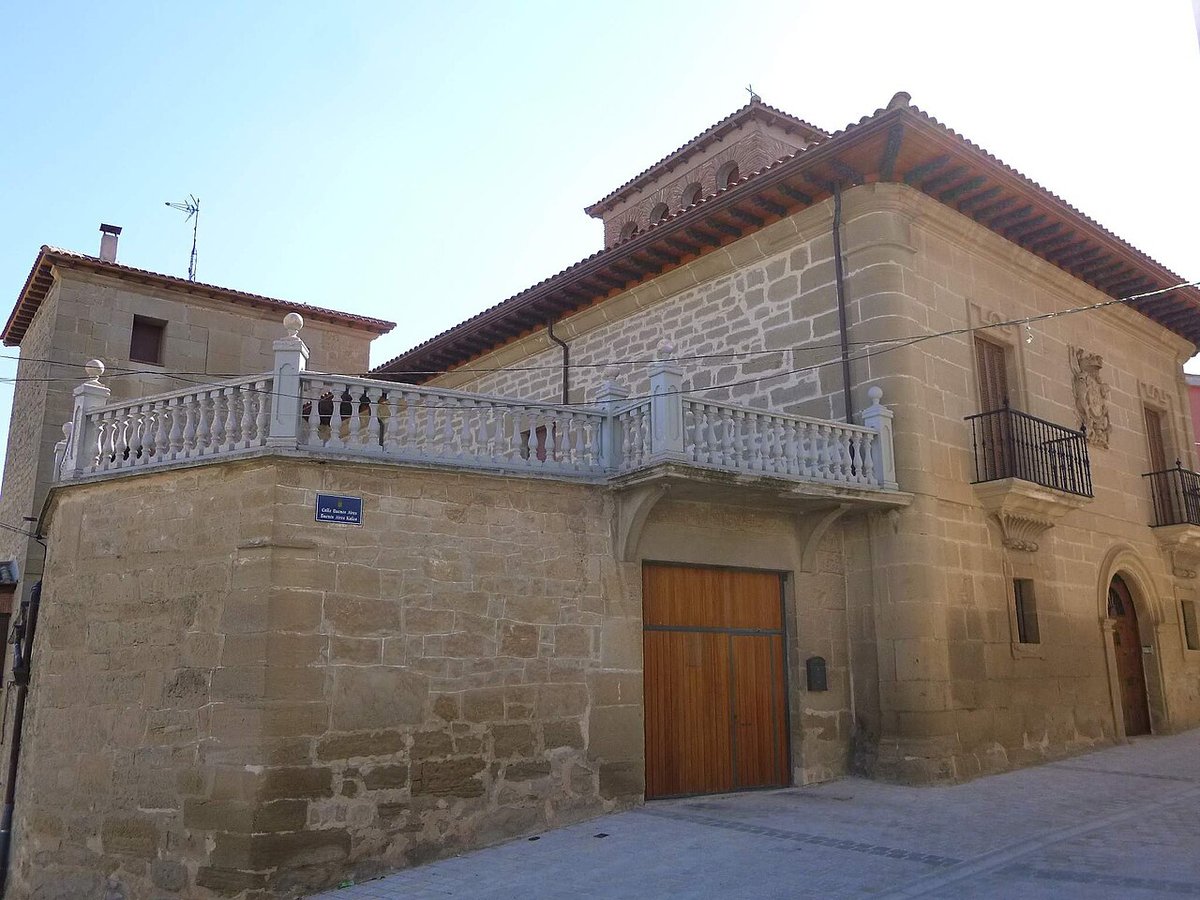
The urban centre is small and compact. Streets are short, lined with houses built from brick and masonry, most of them constructed between the 18th and 19th centuries on older layouts. There are no large palaces or grand civic buildings. What emerges instead is a place that grew slowly, shaped by agricultural needs rather than prestige.
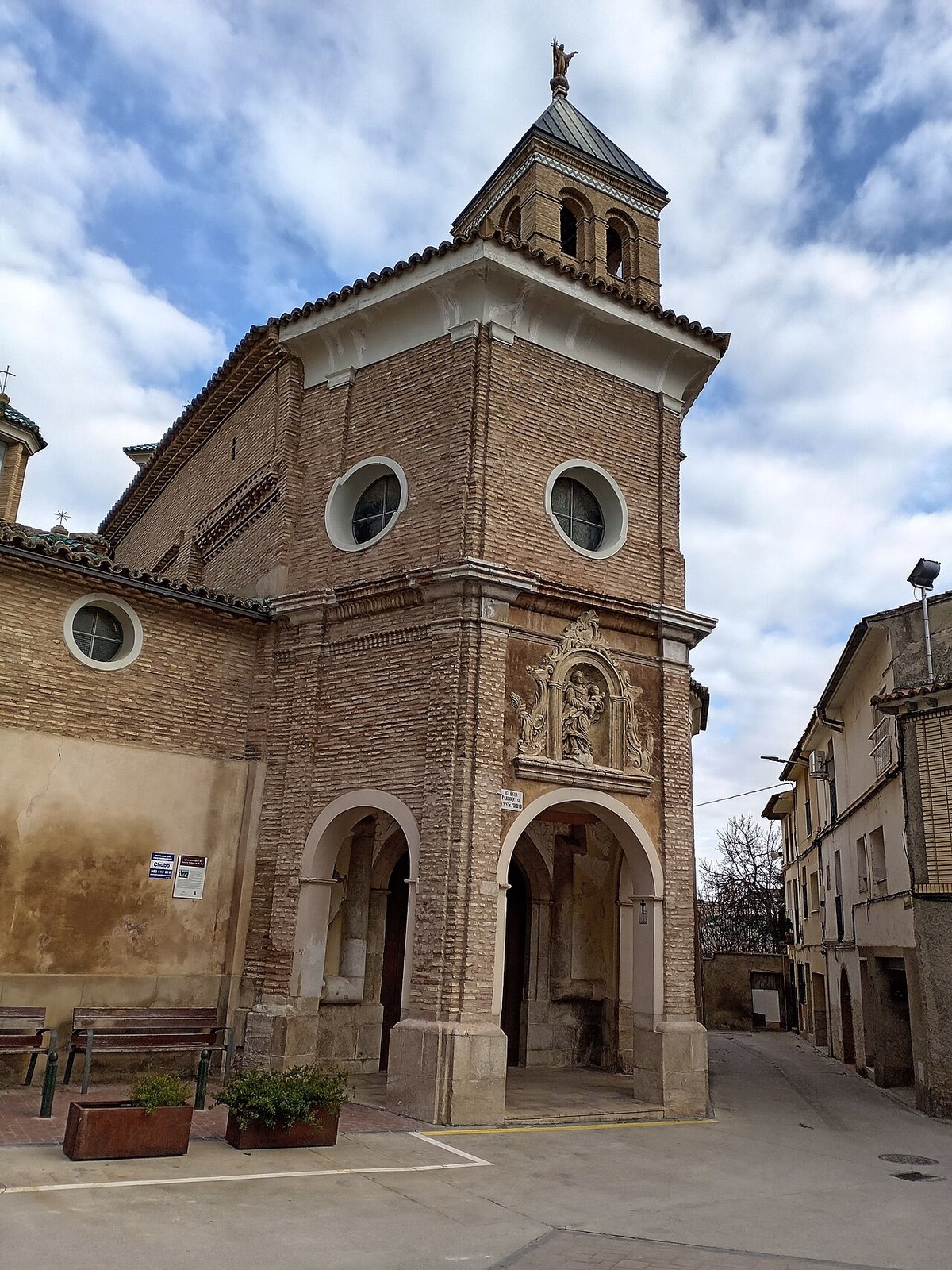
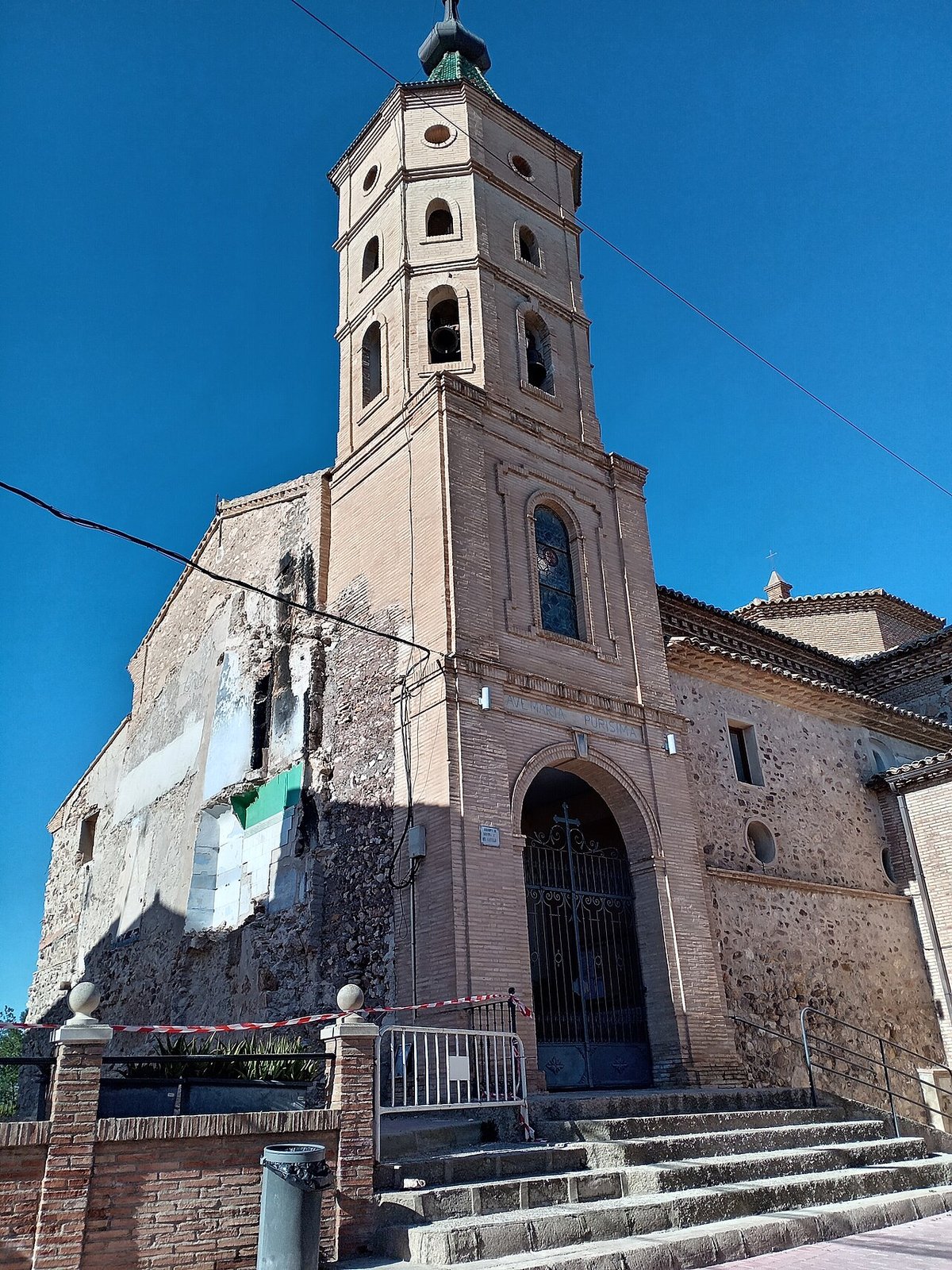
The parish church reflects this layering of time. The current building shows successive alterations, something typical of rural churches in Aragon. Certain elements appear to date back to earlier, likely medieval phases, although much of what stands today comes from later expansions. Its interest lies less in scale and more in what it reveals: that people have lived and rebuilt here continuously for generations.
Fields, wind and the logic of the land
Step just beyond the edge of the village and the structure of the landscape becomes clear. Flat terrain stretches along the Huecha, divided into plots of cereal, vineyards and some almond trees. This is part of the Denominación de Origen Campo de Borja, a protected wine region known for its garnacha grapes, and some of those vineyards are found here.
The cierzo, a strong, dry wind common in the Ebro valley, is a constant presence. In winter it clears the sky and sharpens the feel of the land; in summer it dries the soil quickly. Combined with stony ground and dry farming methods, this climate has shaped an agriculture that is restrained and closely tied to the calendar.
Tracks leading out of Agón link it with other villages in the valley, such as Ambel and Magallón. Many follow older routes once used to reach fields or connect small agricultural holdings. Walking these paths gives a sense of how the territory functions as a network rather than as isolated points on a map.
Traditions following the rural calendar
Local celebrations in Agón follow patterns seen across much of the Campo de Borja. The main festivities take place in summer, combining religious events with gatherings in the village square. A romería, a communal pilgrimage usually heading to a nearby hermitage, often plays an important role in bringing people together.
Other traditions remain closely tied to farming life. In spring, blessings of the crops mark the hope for a good season. In autumn, the atmosphere of the grape harvest recalls the continued importance of viticulture in the area. These moments are not staged for visitors; they are part of a living cycle that still shapes the community.
Visiting Agón today
Agón lies about 80 kilometres from Zaragoza. The usual approach is along the road that crosses the Campo de Borja towards Tarazona, followed by local roads through the Huecha valley.
The village itself can be explored in a short time. The more revealing experience comes from walking slowly through its streets and then heading out along the agricultural tracks that surround it. Away from the centre, the relationship between settlement and landscape becomes clearer, and it is easier to understand why places like Agón have remained so small in scale.
For overnight stays, accommodation is typically found in larger towns within the comarca, where options are more varied. From there, Agón works well as a brief stop as part of a wider route through the Huecha valley and the Campo de Borja.