Full Article
about Bisimbre
Hide article Read full article
A small village at first light
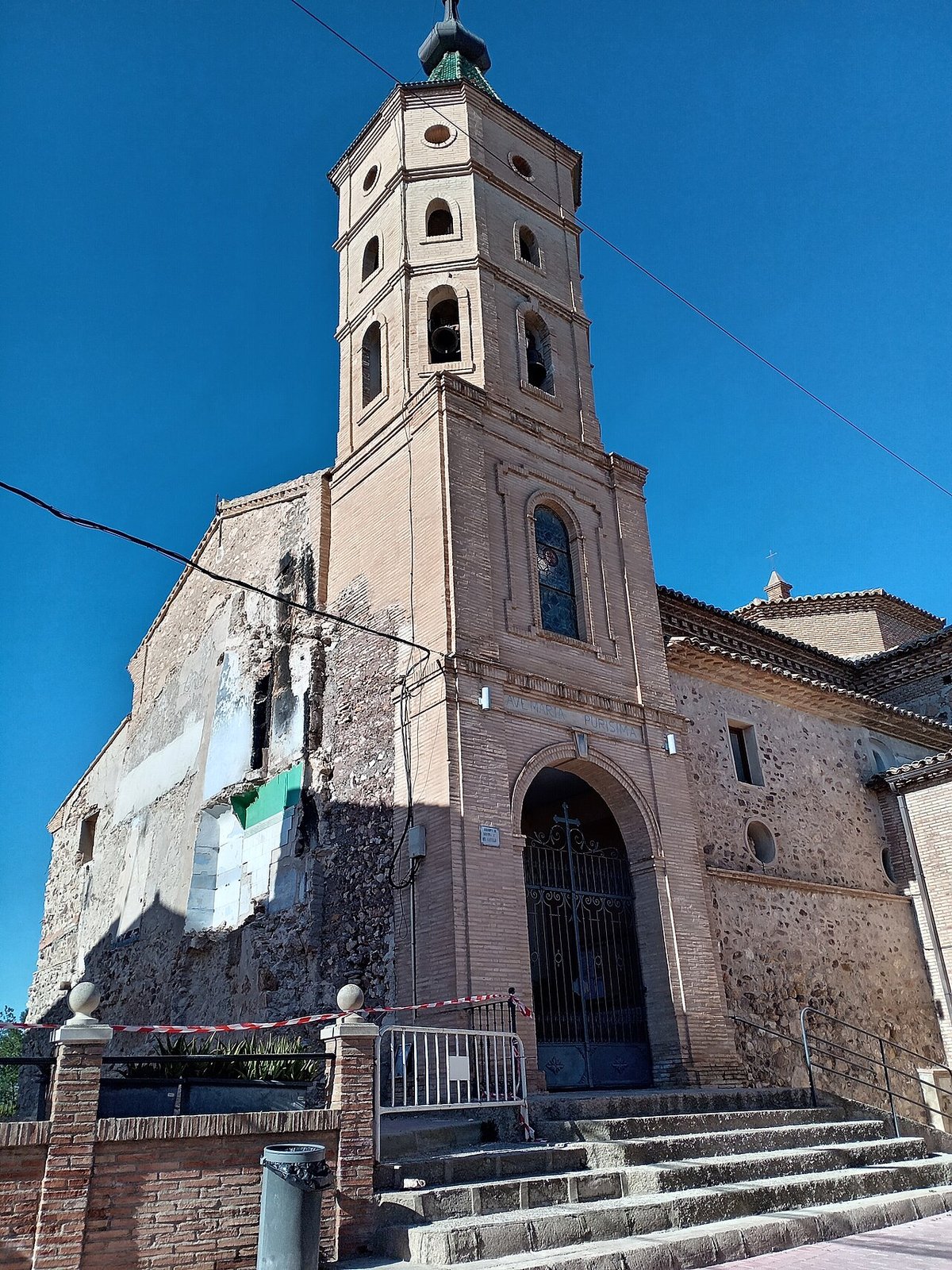
Early in the day, when the sun is still low, the tower of the church in Bisimbre rises just above the fields, a modest marker in the middle of the plain. If it rained overnight, the air often carries the smell of damp earth. At that hour the streets are almost empty. A shutter might open somewhere, and in the distance a tractor starts up.
Bisimbre sits in the Campo de Borja area of Aragon. It is one of those small villages that appear without much warning between vineyards and cereal fields. Fewer than a hundred people live here. The houses cluster around the church and a handful of gently curving streets. There are no striking monuments or constant activity. What defines the place is quieter: stillness, walls of stone and brick, and a sense that life follows the pace of the farming seasons.
The village is reached from Zaragoza by taking the A-68 to Mallén, then continuing along local roads, a journey of around 70 kilometres. It is sensible to arrive prepared with fuel, water and something to eat if planning to walk nearby. In summer the sun falls directly on the fields, and outside the village there is very little shade.
Streets shaped by time
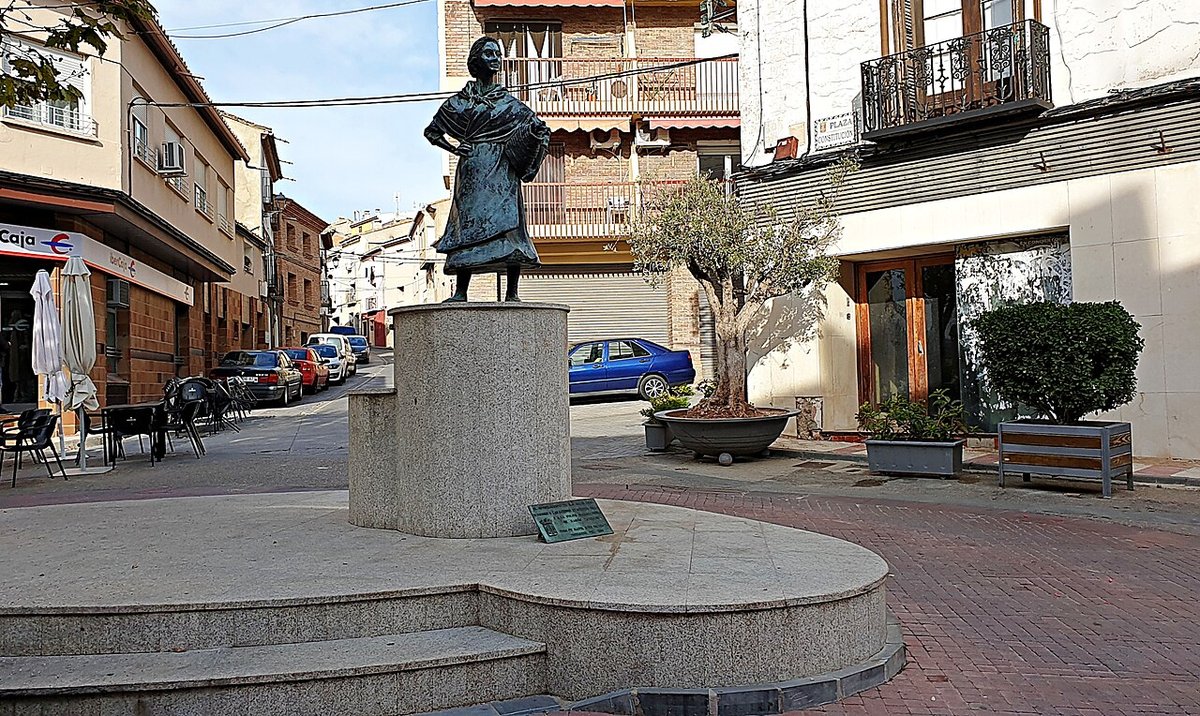
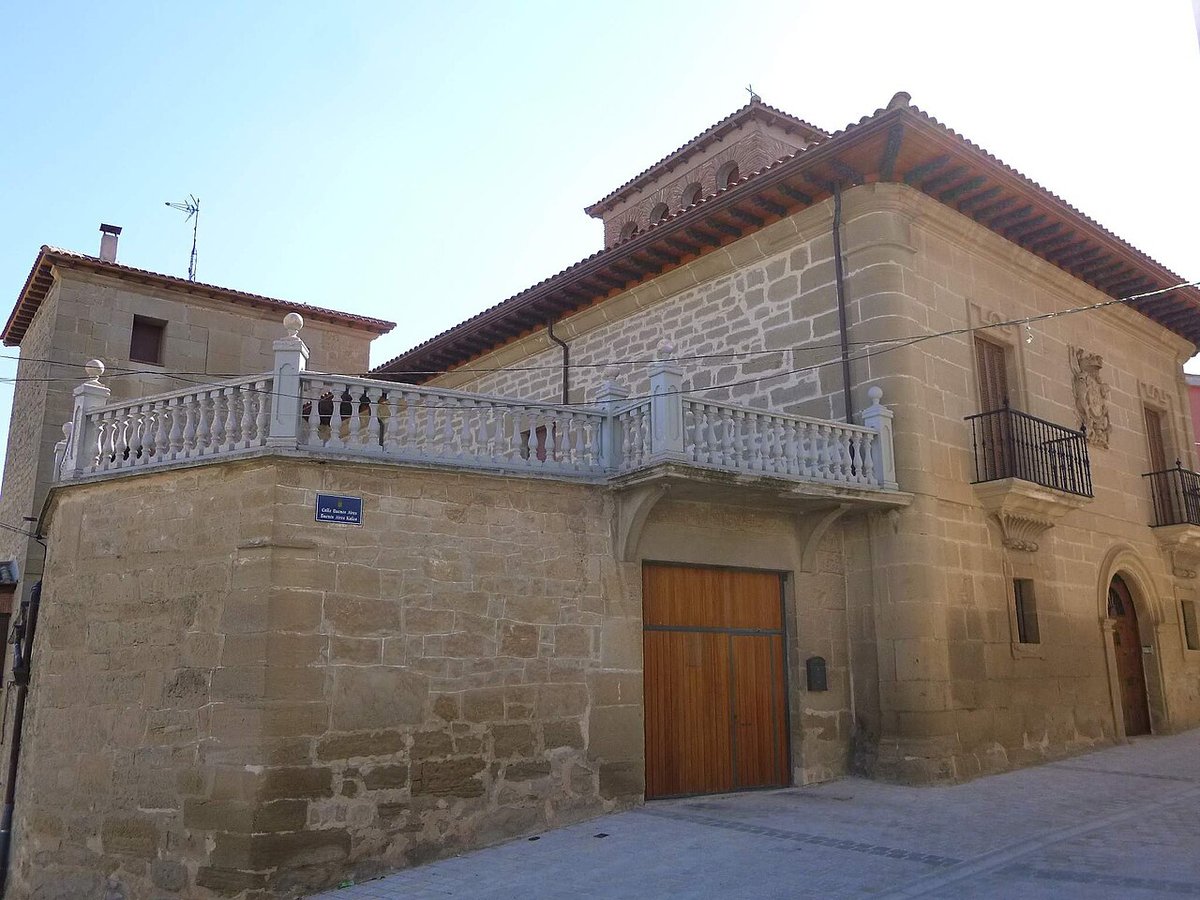
The layout of Bisimbre is simple and slightly irregular. Streets are short, some with stretches of stone, others patched with concrete and asphalt. Facades mix reddish brick with older walls, and many doorways are wooden, darkened over time.
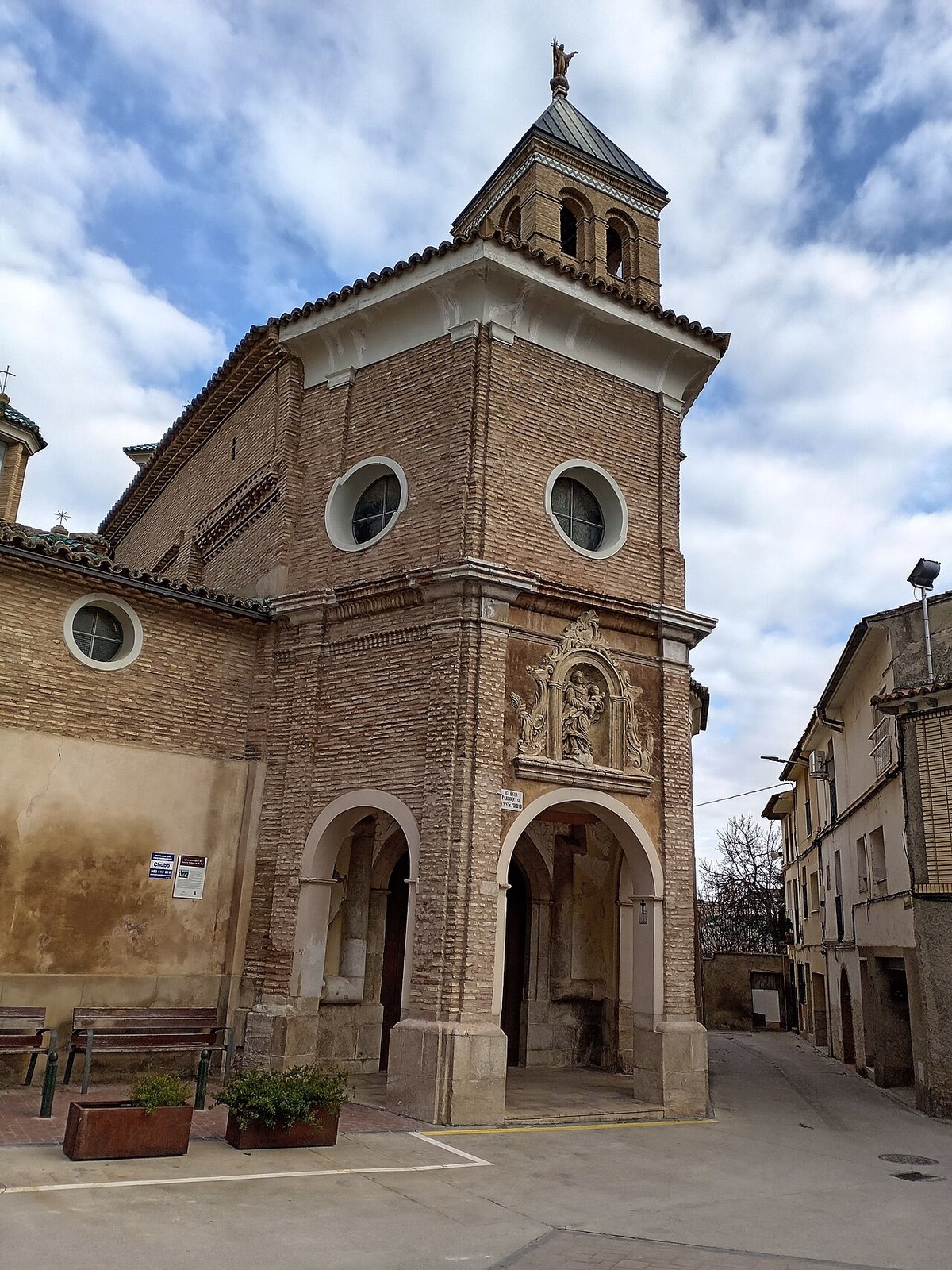
At the centre stands the church of San Juan Bautista. It is not large, yet its bell tower is visible from the surrounding paths and still marks parts of the day. In mid-afternoon, when the sun drops towards the west, the light clings to one side of the building and brings out the lines between the bricks.
Nearby there are small open spaces with benches made of stone or concrete. Sometimes someone sits there towards evening. At other times they are empty, and the only sound is the wind moving through cables and rooftop antennas.
Fields that set the rhythm
The land around Bisimbre is agricultural. Wheat, barley and vineyards take up almost the entire landscape. In spring the colours shift quickly, and green stretches right up to the edge of the village. By August the ground turns brown, and machinery passing through raises dust into the air.
The vineyards form part of the Campo de Borja wine-producing area. Not all plots lie close to the village centre, but along the nearby tracks rows of vines appear, set out in careful lines. In autumn the leaves turn reddish, and the ground is left scattered with cut vine shoots.
On clear days, from certain paths, the outline of Moncayo can be seen to the northwest, softened by distance.
Walking the farm tracks
There are no marked walking routes in Bisimbre. The usual approach is to follow the dirt tracks used by farmers. These begin at different points around the village and run between long, open plots of land.
The terrain is flat, though the ground can be uneven, with loose gravel or mud after rain. Closed footwear is helpful. In summer it is best to head out early or later in the day, since the heat builds strongly around midday and there are no trees for cover.
Distances can be deceptive. The openness of the landscape makes places seem closer than they are, and walks may take longer than expected.
Food rooted in the household
There are no establishments in the village operating on a continuous basis. The cooking that remains is domestic. In winter, embutidos from the traditional pig slaughter are prepared. Meals often include stews with potatoes, vegetables from small gardens, and lamb, usually reserved for special occasions.
The surrounding vineyards are a reminder that this area depends in part on wine. The most active wineries are in nearby towns, but even a short walk to the edge of a field shows how the vines are cultivated. They are kept low to the ground, trimmed back to withstand both wind and the heat of summer.
Moments through the year
The main local celebrations take place in summer, when residents who live elsewhere return. During those days the square becomes livelier than usual, and at night there is music or gatherings that stretch on.
Towards the end of September, the grape harvest begins in the surrounding fields. Tractors pulling trailers filled with grapes move along the tracks, and in some parts of the area the air carries the sweet scent of the fruit.
Getting there and choosing the moment
From Zaragoza, the most direct route is via the A-68 to Mallén, followed by local roads. The journey takes about an hour by car.
Spring and autumn are generally the most comfortable times to walk the tracks. The fields change colour and temperatures make longer walks manageable. In July and August the heat can be intense from midday onwards, so it makes more sense to set out early or wait until the sun begins to drop.