Full Article
about Aldehuela de Liestos
Hide article Read full article
A place that feels almost unreal
Some villages feel like a mistake on the sat nav. You drive for half an hour without seeing another car, the screen tells you to turn in a few hundred metres, and then it appears: a handful of streets, a scattering of houses, and very little else. Aldehuela de Liestos works a bit like that. Travel here has little to do with major sights or queues for photos. It is more about understanding what a village looks like when barely fifty people live there year-round.
Silence carries here. When people say “it’s empty”, they mean it quite literally. The official population hovers around 48 residents. August tells a different story. Families return to houses that have belonged to them for generations, and the village regains a sense of noise and movement, if only for a while.
Above the Piedra gorge
The journey to Aldehuela de Liestos has a certain rhythm to it. Secondary roads branch off from Calatayud, with junctions that make you double-check your route. The drive is not especially difficult, but the landscape takes over: dry fields, low hills, and then a sudden break in the terrain where the Piedra river has carved its way through.
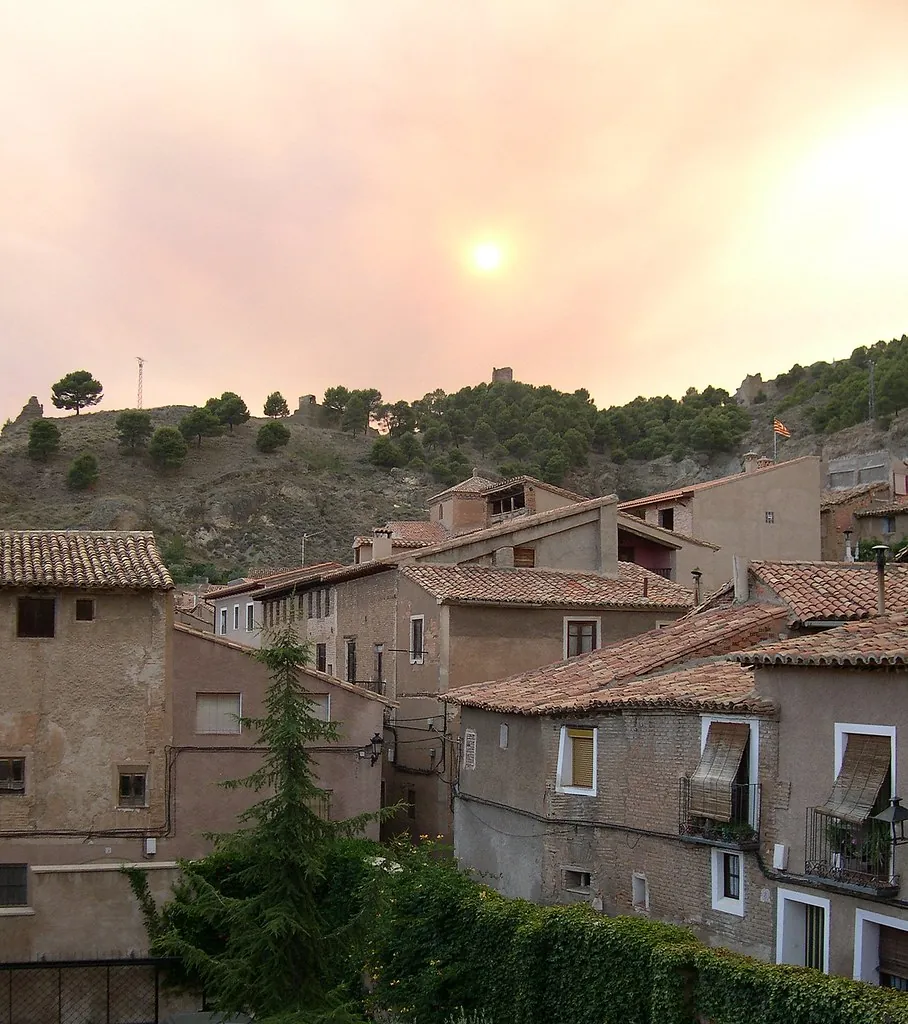
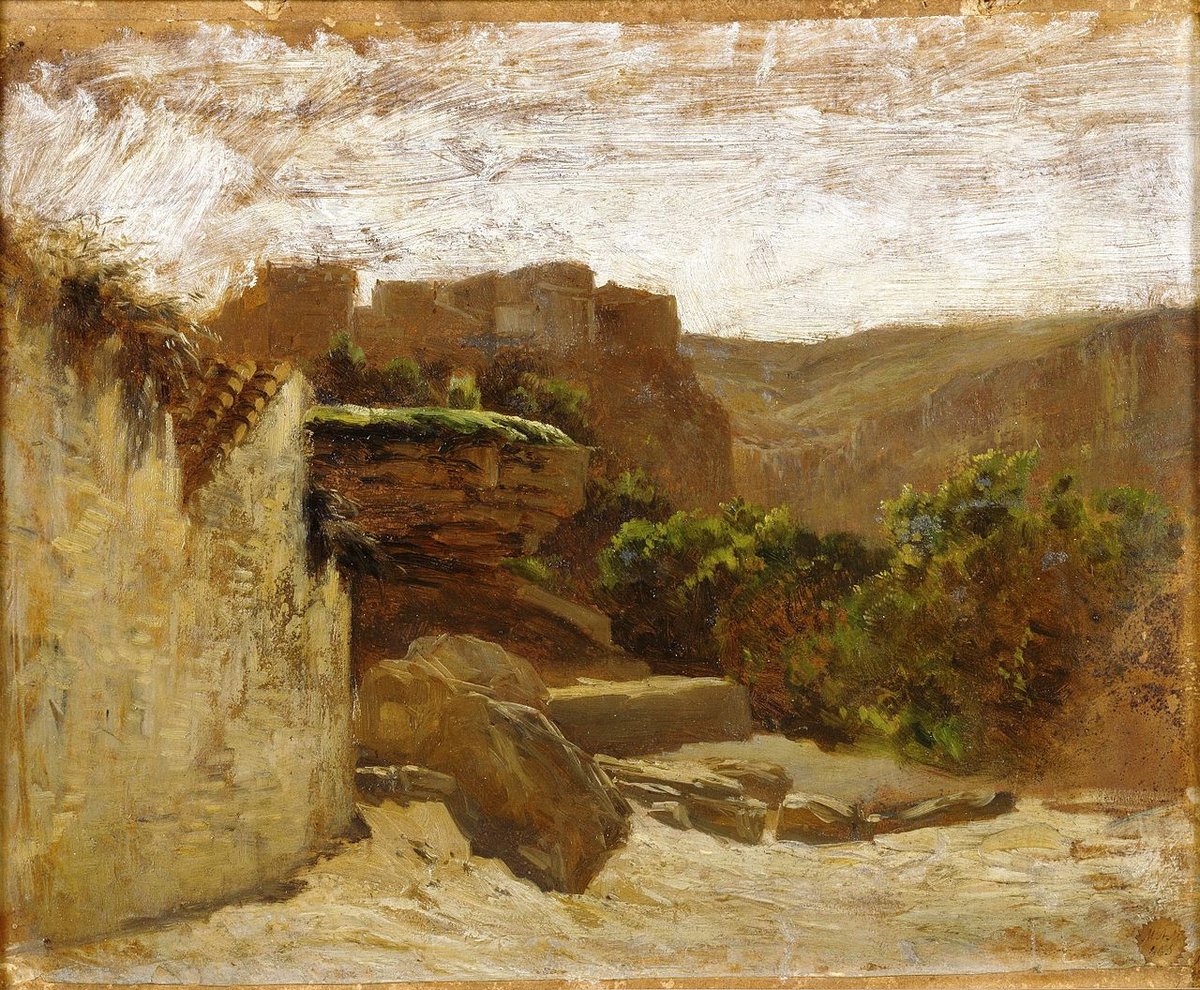
That is where everything starts to make sense. The hoces del Piedra, steep gorges formed over centuries, cut through the plateau with an unexpected strip of green. The village sits on the slope, almost clinging to it, looking out over that dramatic change in the land.
Streets are narrow and feel designed for walking rather than driving. Some barely reach a metre and a half across. Houses combine stone and adobe, with thick walls that keep interiors cool in summer and hold warmth in winter. Many homes are still lived in. Others remain closed for most of the year and open only at weekends or during holidays.
Signs of agricultural life are still visible. Tools often rest by doorways, small vegetable plots appear between buildings, and improvised chicken coops are not unusual. The place still reflects its origins as a farming community.
The church and local stories
The church of the Asunción stands slightly above the rest of the village. The current building dates from the 18th century, a time when Aldehuela had grown in size and importance. Its exterior is plain, built in stone with little decoration.
Inside, there is a painting of Santa Bárbara that draws quiet attention. Some people in the village link it to the circle of Francisco Bayeu, who was related to Goya by marriage. That connection sits somewhere between oral tradition and something half-remembered from a book, which is often how these stories survive in small places. The painting remains there, hanging near the altar.
Aldehuela also carries the memory of families and lineages that once held influence in the area. Old surnames still come up in conversation, especially among older residents. They recall who lived in each house before many people left for cities such as Zaragoza, Barcelona or Calatayud. That gradual departure forms part of the village’s recent history.
Walking the Piedra gorges
The long-distance GR‑24 route passes through Aldehuela de Liestos, linking several villages across the region. Here, it runs close to the hoces del Piedra and offers a rewarding stretch for a few hours of walking.
The path begins near the village square, where a fountain usually has water even in summer. From there, the route moves into pine woodland and areas of limestone rock. The terrain rises and falls steadily. On a map, it can look gentle, but by the end of the day the effort is noticeable.
Cliffs along the gorge are home to griffon vultures, which can often be seen circling overhead. Occasionally, climbers appear on the rock faces. They have been exploring the potential of these walls for some time, although the area remains quiet overall.
There are also remains of an old fortification on a nearby outcrop. Today, little more than scattered stones and ruins remain. The natural viewpoint at the top helps make sense of the wider landscape of the Campo de Daroca: open land, reddish tones, and the Piedra river marking a clear line of green through it.
August and the return of noise
As in many small villages, the calendar revolves around summer. Mid-August brings local festivities, and for a few days Aldehuela changes its pace completely.
Families return after years away, children fill the streets, and music carries across the square at night. Traditional village bands play familiar songs, and games of pétanque become unexpectedly serious.
Another date that residents remember is the pilgrimage linked to Corpus Christi. The route leads up to the hermitage of the Virgen de Guía, set on higher ground with views over the Piedra canyon. At the end, there is usually a simple shared meal: bread, wine and boiled eggs. Nothing elaborate, just long-standing custom.
Planning a visit
Aldehuela de Liestos is best approached with a clear idea of what it offers. There is no tourist accommodation within the village itself, and services remain very limited for most of the year. Many visitors choose to stay in Daroca or other nearby villages and drive in.
For food, the simplest option is often to bring something along or stop elsewhere before arriving. The visit itself is less about ticking off sights and more about spending time in a place where daily life continues at a very quiet pace, shaped by the landscape and by those who still call it home.