Full Article
about Atea
Hide article Read full article
Morning light over the village
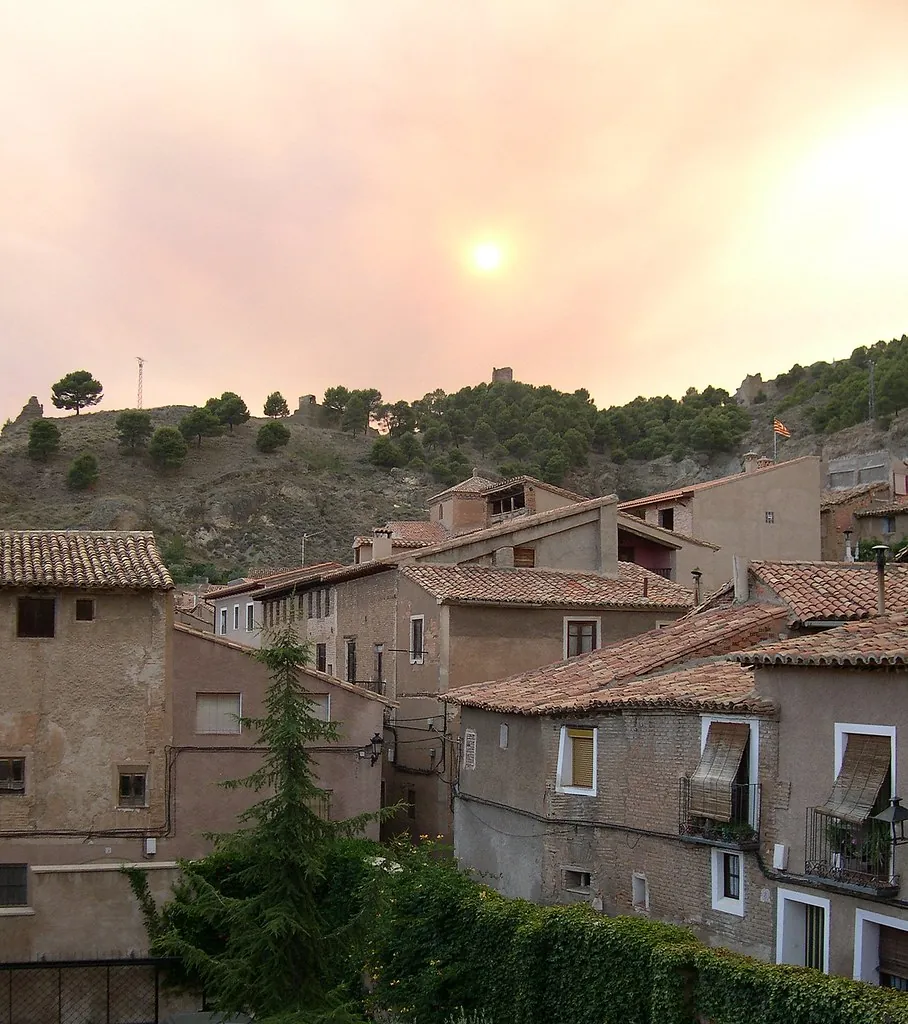
At eight in the morning, when the light is still cool and the sun is slow to rise over the low hills, tourism in Atea barely makes a sound. A tractor is more likely to be heard than a voice. Hoopoes pick at the edges of the fields, and the air carries the smell of turned earth and dry grain. The village comes into view gradually, its façades of stone, adobe and rammed earth following the curves of the land, as if the streets had grown from animal tracks rather than from a measured plan.
Atea sits in the Campo de Daroca, more than 800 metres above sea level. That height shows in the wind that moves through the streets even in summer. The population is small, just over a hundred residents, and the pace remains close to what it was decades ago. Cars are parked beside old doorways, conversations are brief when neighbours pass, and a few doors stay open to let in the cooler air.
San Pedro and the shape of the village
The centre of Atea gathers around the parish church of San Pedro, a restrained masonry building likely constructed in the 16th century. Its tower is not especially tall, yet it stands out from the surrounding fields when approaching by road.
Around it, small irregular squares appear where the ground changes underfoot: stretches of asphalt, patches of worn stone, the occasional bench set against a wall where people sit once the heat fades. There are no grand buildings or monumental landmarks. What defines the place is a coherent agricultural settlement, built with the materials found nearby.
A slow walk reveals details that are easy to miss at first glance. Wide wooden gates, once designed for carts, still frame entrances. Small wine cellars are dug into uneven ground. On some façades, the plaster has worn away to reveal the earth beneath the rammed construction. These are not restored features or staged elements, just parts of everyday life that have remained in place.
Tracks leading into open land
From the area around the church, several dirt tracks head outwards and quickly leave the village behind. They are not marked as hiking routes, but they are the same paths used by farmers and locals to reach their plots.
In spring, almond trees scatter white patches across the cultivated land. By late summer, the palette shifts towards gold, with harvested fields and the dry scent of straw hanging in the air. From certain higher points, the landscape of the Sistema Ibérico becomes easier to read: gentle hills, shallow ravines, and scattered areas of pine and holm oak stretching towards the Sierra de Santa Cruz.
Walking here in summer requires some care. Shade is limited, and the sun becomes intense from midday onwards. The openness of the terrain leaves little shelter, and distances can feel longer under the heat.
Life along the field edges
The margins of the fields hold more activity than first appears. Partridges dart through low scrub, rabbits cross paths at dusk, and with some luck a fox can be seen moving across the slopes as the light fades.
It is also a setting suited to watching birds typical of open farmland. At certain times of year, small birds of prey circle above the crops, along with other species adapted to cereal-growing landscapes. No special equipment is needed. Often it is enough to stop and listen, as the sound arrives before the bird comes into view.
These edges, known locally as ribazos, form a transition between cultivated land and rougher ground. They break up the uniformity of the fields and create small pockets where wildlife gathers. Spending a few quiet minutes here can reveal movement that would otherwise go unnoticed.
Festivities and everyday food
The rhythm of celebrations in Atea remains closely tied to the village itself. In summer, the main patron saint festivities usually take place, bringing together religious events, music and shared meals in the squares. They are not designed as a tourist attraction. Instead, they mark the time when people with family connections return, and the village fills out for a few days.
Food served during these gatherings reflects what has long been typical in the area. Migas, a dish made from fried breadcrumbs often combined with other ingredients, appears alongside roast lamb, cured sausages prepared over the winter, and bread made from locally grown cereals. These meals are less about display and more about continuity, linking present-day gatherings with older routines.
When to go and how to reach Atea
Atea lies near Daroca and is reached by local roads that cross open countryside. The final stretch already suggests what awaits: long straight sections, very little traffic, and a prevailing sense of quiet.
In summer, it is worth walking through the village early in the morning or later in the evening. Around midday, the heat becomes strong and most activity moves indoors. During autumn and spring, the surrounding tracks are easier to explore at length, and the landscape shifts in colour depending on the state of the crops.
The experience of Atea does not depend on a checklist of sights. It unfolds in small details, in the way the village sits within its terrain, and in the steady rhythm that continues with little change.