Full Article
about Cerveruela
Hide article Read full article
A village shaped by scale
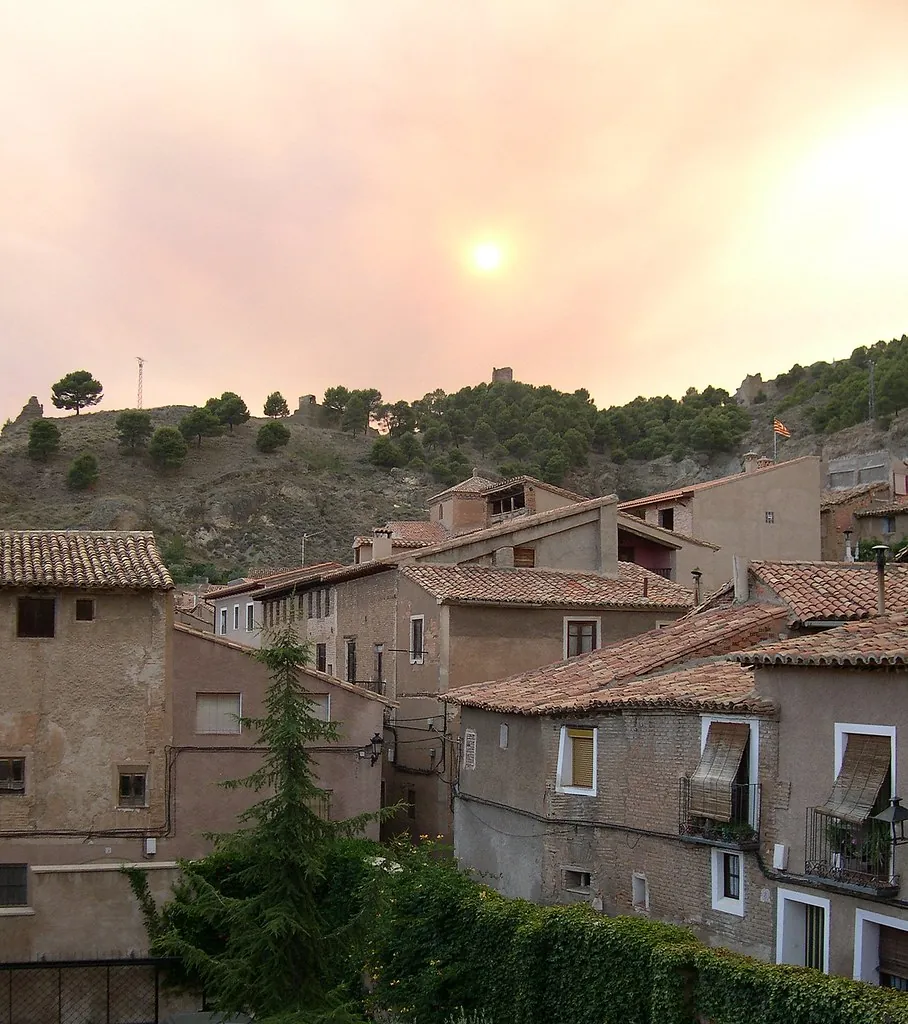
Tourism in Cerveruela is defined above all by its size. This small municipality in the Campo de Daroca sits at around 816 metres above sea level and has only a few dozen тұрғынs. The settlement follows the terrain without much intervention: short streets, houses built from stone and adobe, and adjoining yards that reflect how daily life here revolved around farming and livestock for generations.
It is not a place people pass through by chance. The road leads in and more or less ends at the village, after which the landscape returns to the dry farmland typical of southern Zaragoza province. That sense of arrival, and then stillness, is part of what characterises Cerveruela.
Buildings, materials and a rural past
The most recognisable building is the parish church of the Asunción de Nuestra Señora. Its origins are usually placed in the 16th century, though its current appearance comes from later alterations, something common in rural churches across Aragón. It is not a monumental structure, but it stands slightly above the rest of the village and defines Cerveruela’s outline when approached by road.
Traditional houses make use of what is available locally. Limestone forms the main walls, with adobe used in upper sections in some cases, and roofs covered with curved tiles. Several properties still have large entrance doors, originally intended for storing tools or housing animals. It is also common to find cellars dug into the rock and small enclosed yards attached to the home.
These features point to an economy long based on cereal cultivation, some vineyards and livestock. Activity today is more limited, yet agriculture continues to shape the surroundings and the appearance of the village itself.
The landscape of the Campo de Daroca
Around Cerveruela stretches the dry farmland typical of this part of Aragón. Fields of cereal shift in colour with the seasons, moving from green to gold, while low hills and shallow ravines break up the terrain. In these lower areas there is slightly more vegetation, including scattered holm oaks and Mediterranean scrub.
In spring, and after rainfall, the scent of thyme and rosemary can be noticeable when walking along the tracks that leave the village. There are no major signposted routes, but the agricultural paths allow for straightforward walks without needing a fixed plan.
The sky often feels wide and uninterrupted. Birds of prey such as kestrels and vultures are a common sight, taking advantage of air currents that form over the rolling hills.
Walking out from the village
Several rural tracks begin within the village itself. They are used mainly to reach nearby fields, whether on foot or by vehicle, but they also make it easy to head out for a walk without following a marked route.
Climbing any of the nearby rises helps to make sense of the geography of the Campo de Daroca. The view reveals a sequence of cultivated hills, shallow ravines and patches of low woodland. Light changes the character of the landscape noticeably, especially at the start and end of the day, when colours soften and contrasts become more pronounced.
The level of quiet is striking. During a walk, it is more likely to come across a farmer or agricultural machinery than other visitors. That absence of crowds shapes the experience as much as the landscape itself.
Traditions and local rhythms
The main annual celebrations take place around the feast of the Asunción in August. At that time, the population temporarily increases as people return to the village, and the atmosphere shifts for a few days.
Easter is also marked by simple events that bring together residents and those who maintain a connection to Cerveruela. As in many small villages in the Campo de Daroca, the festive calendar depends heavily on people who come back during holidays or weekends, so activity rises and falls throughout the year.
Getting there and practical notes
The most direct route from Zaragoza usually involves taking the A‑23 towards Daroca and then continuing along a regional road in the direction of Cerveruela. The journey is around 90 kilometres and typically takes just over an hour.
It is worth bearing in mind that the village is very small and services are limited. For shopping, accommodation or a busier setting, Daroca is relatively close by.
Cerveruela itself can be explored in a short time. A visit often makes more sense when combined with other villages in the Campo de Daroca or as part of a slower journey through the wider area.