Full Article
about Fombuena
Hide article Read full article
A village shaped by land and work
Fombuena sits in the Campo de Daroca, a landscape of soft hills and wide cereal fields in the south of Zaragoza province. It is a very small place, with a population of around sixty people, set at close to 950 metres above sea level. Its form and daily rhythm reflect an agricultural way of life that has defined this part of Aragón for centuries.
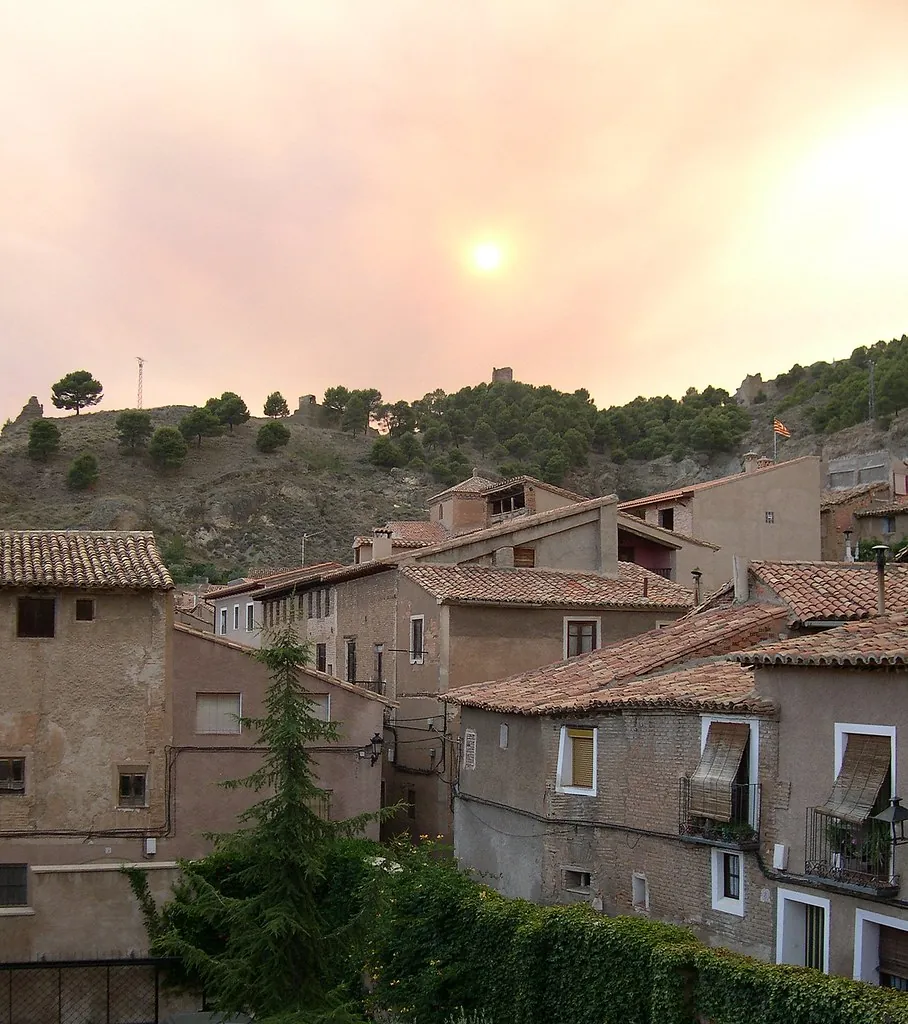
The land sets the rules here. Settlements grew where the terrain allowed, always close to workable ground. Fombuena still follows that older logic. Houses cluster without strict alignment, adapting to the slope of the land and to the paths that once led directly out to cultivated plots.
The architecture is straightforward. Stone, adobe and pale renders dominate. Many homes have changed over time, yet traces of earlier rural life remain visible in large gateways, enclosed yards and spaces tied to agricultural work. On the outskirts, threshing floors known as eras recall how important cereal production has been to the local economy.
San Pedro and the village centre
At the heart of Fombuena stands the church of San Pedro. It is not a large building, yet it shapes the layout of the village. Its brick tower suggests a Mudéjar influence, a style common in this part of Aragón that blends Christian and Islamic traditions in its use of materials and decoration. Inside, the church holds a modest Baroque altarpiece.
The building has been altered over different periods. This is visible in the mix of materials and later additions. Despite those changes, it continues to serve as a meeting point. The small forecourt opens views towards the fields that surround the built-up area.
Nearby streets retain traditional houses. Some feature wrought-iron balconies and small windows designed to keep out the winter cold. The layout is simple. Short lanes connect homes, yards and the tracks that lead out towards the countryside.
The agricultural landscape of the Campo de Daroca
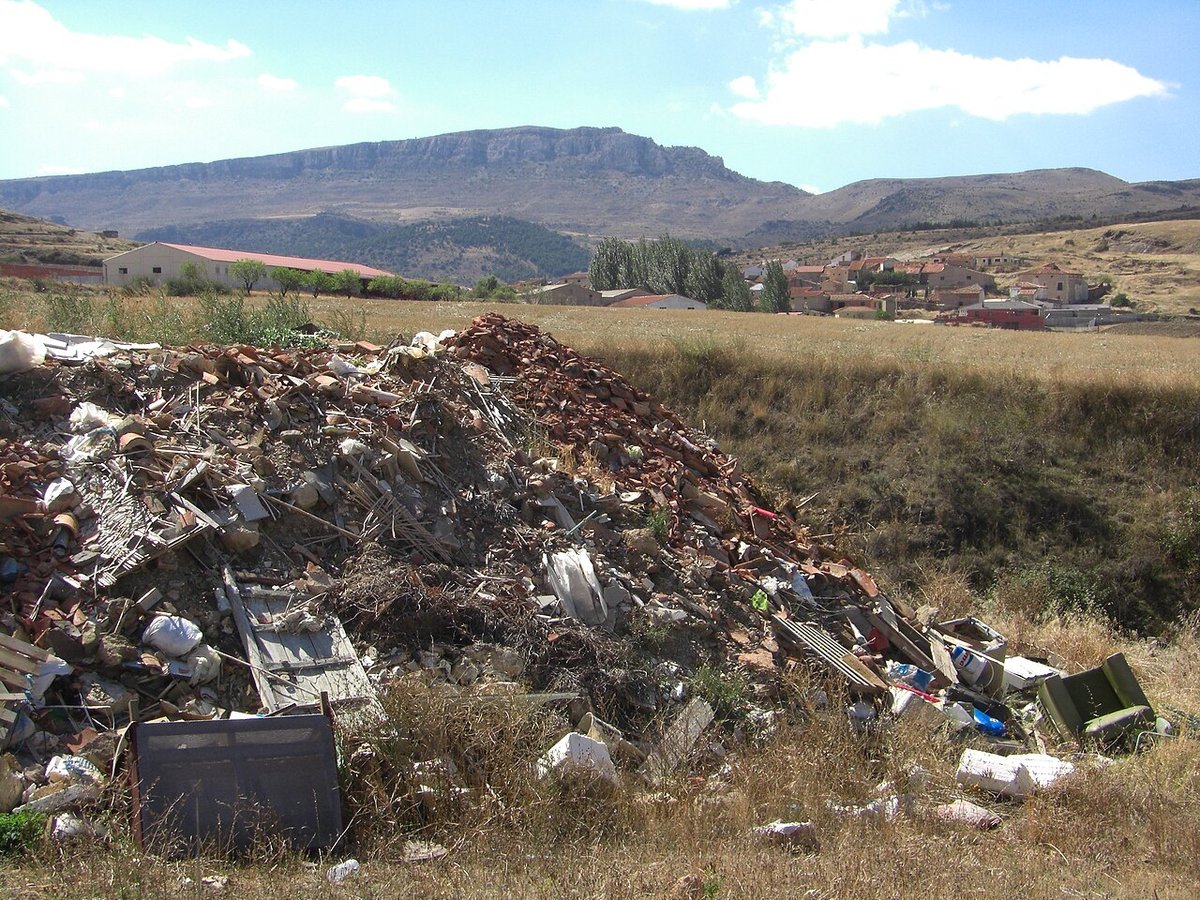
The surroundings of Fombuena are typical of dry farming areas in Aragón. Large cereal plots cover most of the land, broken up by ravines, low slopes and dirt tracks.
The look of the landscape shifts with the seasons. Spring brings green across the young crops. By summer the fields turn golden ahead of the harvest. In winter the land appears more bare, with muted tones dominating the view.
Several agricultural tracks begin in the village. These are not marked walking routes but working paths still used by farmers. It is advisable to rely on a map or navigation system when exploring them.
With a bit of patience, it is easy to spot wildlife common to this type of terrain. Partridges and hares often appear at the edges of fields. Birds of prey can sometimes be seen riding air currents above the hills.
Night falls with very little artificial light in the area. When the sky is clear, this lack of illumination allows for a surprisingly sharp view of the stars.
Food and local produce
Cooking in and around Fombuena reflects what the land provides. Lamb and pork have long been central to rural diets, alongside seasonal vegetables and preserved foods prepared at home.
The village itself has limited services. In nearby settlements it is easier to find bars or simple eateries serving traditional Aragonese dishes. Migas, a dish made from fried breadcrumbs, and ternasco, a type of young lamb typical of Aragón, appear regularly in the local cuisine.
In autumn, some residents head out into the countryside to look for wild mushrooms. It is a common activity in many villages, though it requires a good knowledge of which species are safe.
Festivities and daily life
Patron saint celebrations usually take place in summer. At that time, people who live elsewhere return, and for a few days the village regains a sense of movement. Religious events are combined with shared meals and gatherings.
In January, San Antón is marked with a tradition found across rural Spain. The blessing of animals reflects the long-standing link between village life and livestock.
For the rest of the year, life is quiet. Daily routines revolve around the home, the fields and trips to other towns in the comarca.
Getting there and choosing the moment
Fombuena lies within the Campo de Daroca comarca, in the southern part of Zaragoza province. The final stretch of the journey is along local roads, so it is sensible to check the route in advance.
Spring and autumn tend to be the most comfortable times to walk the surrounding tracks. Summer can be dry and hot in the middle of the day. In winter, the cold is noticeable, especially towards evening. Whatever the season, the landscape keeps the restrained, open character typical of this part of Aragón.