Full Article
about Las Cuerlas
Hide article Read full article
A small settlement on the plain
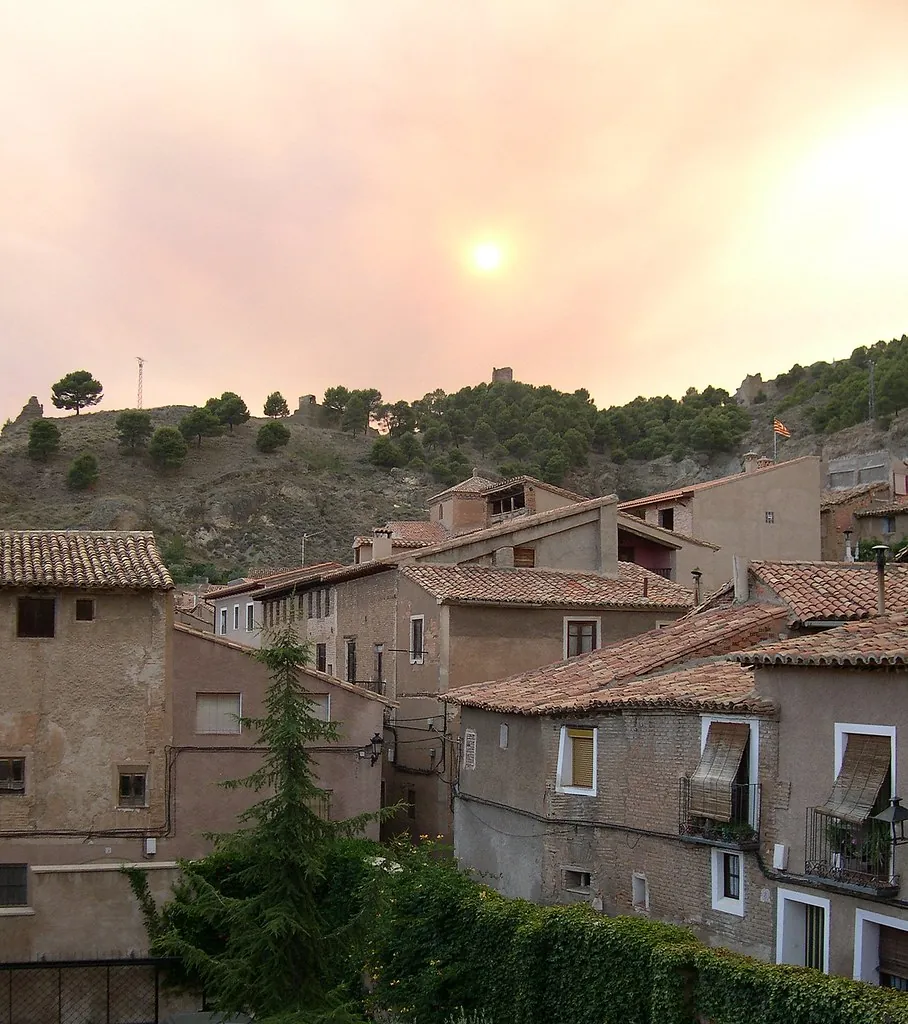
On a March morning, in the quiet of cereal fields, a handful of stone and adobe houses comes into view. The light is still low, brushing one side of the façades while the other remains in shadow. That is how Las Cuerlas appears, set in the Campo de Daroca, a rural area in the province of Zaragoza. The village has just over forty residents today, and it shows straight away. Time here does not rush, it stretches.
The streets are short and calm. Some are still unpaved, others covered with little more than a thin layer of gravel. Walking through them, there is the crunch underfoot and, if the wind picks up, the dry scrape of branches against walls.
Several houses keep their old woodwork, with dark timber that has shifted in tone over many winters. Others have been repaired in recent years, without dramatic changes. Stone walls, low roofs and small yards remain, sometimes with tools leaning against a wall.
The parish church, dedicated to San Juan Bautista, rises slightly above the rest of the buildings. It is not large, yet its bell tower acts as a reference point when approaching along the tracks that cut through the surrounding fields.
The landscape of Campo de Daroca
Everything around Las Cuerlas is dry farmland, known in Spain as secano, where crops rely on rainfall rather than irrigation. The fields stretch out in long, open strips that change colour with the seasons. In spring the green is even and bright. Towards the end of summer, the land turns to ochres and yellows that almost dazzle when the sun drops.
Wind is a constant presence in this part of Aragón. It carries the smell of turned soil and ripening grain, and sometimes makes you narrow your eyes when looking into the distance. Against this flat backdrop, birds of prey often appear, gliding high above.
These plains still support species typical of open countryside. Sisones, a type of bustard, can be spotted, along with larks and the occasional kestrel. Early morning and the cooler hours of the evening are the best moments to notice them moving across the fields.
Paths leading outwards
From the village itself, several agricultural tracks branch out between the fields. They are not marked hiking routes, but working paths used by farmers and residents. Walking them is straightforward, as the terrain is so open and landmarks remain visible from afar.
Follow one of these tracks for a while and the village quickly slips behind. The horizon takes over. Here and there stand dry stone walls, circular threshing floors once used to process grain, and half-collapsed pens where livestock was kept in earlier times.
If heading out on foot, early morning or late afternoon is the best choice. In summer, the sun can be intense and shade is scarce.
Nights under a clear sky
Once night falls, the silence becomes even more noticeable. Street lighting in Las Cuerlas is minimal, and on clear nights the sky fills with stars in striking clarity.
It takes only a short walk beyond the nearest lampposts for the pale band of the Milky Way to become visible across the horizon, something that is increasingly difficult to see in more populated areas.
Rural life still in motion
Las Cuerlas remains closely tied to the rhythms of the countryside. Throughout the year, tractors come and go, trailers loaded with grain pass through, and small flocks of animals move near the village during certain seasons.
Many houses still store old tools. Sickles, threshing boards and iron pieces speak of ways of working the land that are not so distant in time here.
The patron saint festivities dedicated to San Juan Bautista bring together residents who live elsewhere for most of the year. During those days, the village fills with more activity, conversations spill into the streets and long tables appear.
Before or after: Daroca
A few kilometres away lies Daroca, much larger and easily recognised by its walls, visible from afar when approaching by road. Many people head there to explore its historic centre, then continue on to smaller villages across the region.
Las Cuerlas plays a different role. There are no major monuments or a checklist of sights. What you find instead is something quieter: short streets, steady wind moving across the fields, and the sense of being in a place where everything unfolds slowly.
A visit works best without a tight plan. Park the car, walk through the village, then take one of the tracks that lead out into the plain. The landscape reveals itself gradually. The more time given to it, the more details begin to appear.