Full Article
about Used
Hide article Read full article
A village shaped by light and land
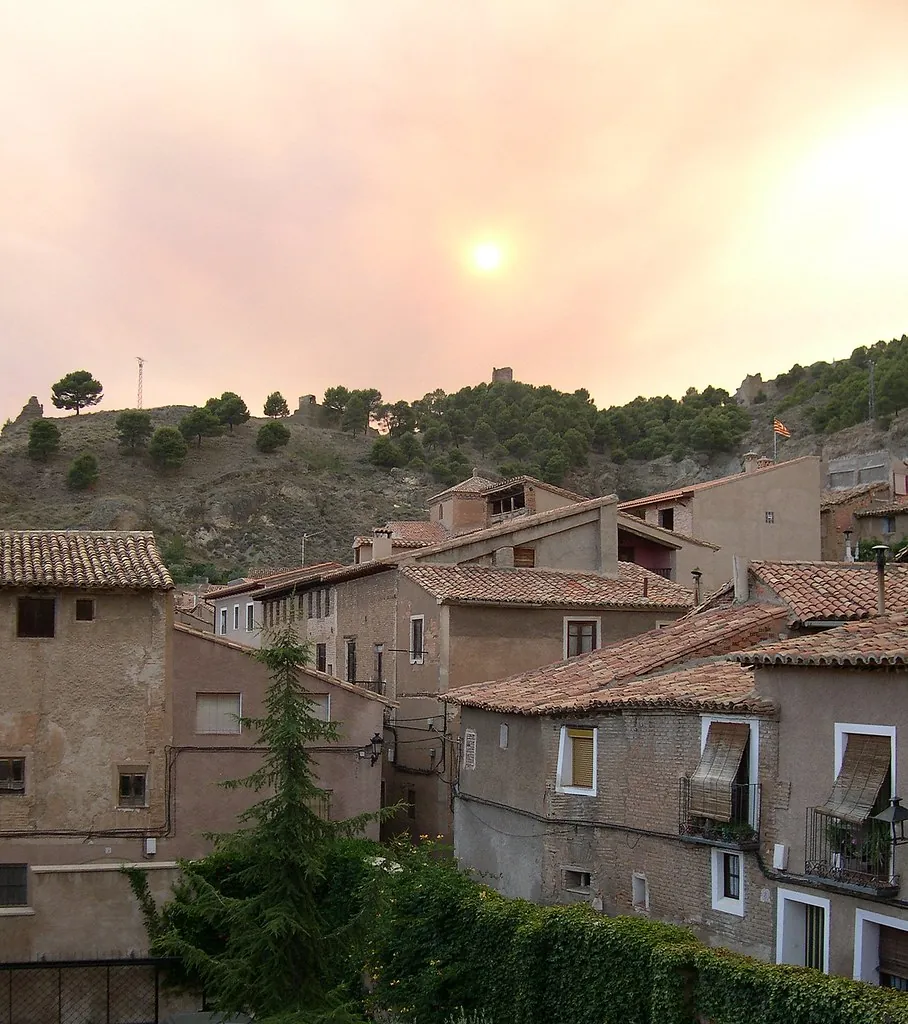
At the hour when sunlight drops at a low angle, Used comes into focus with a stark clarity. Adobe and stone façades catch the light in a way that feels typical of high plateau landscapes. The quiet is only broken by water running from a fountain, or occasionally the metallic thud of a farmyard door. In that stillness, the layout of the village becomes easy to read, spreading across gently undulating ground and surrounded by cereal fields and grazing land that shift in colour through the year.
Low rises around the settlement act as informal viewpoints. They are not dramatic hills, just soft elevations that open out onto a broad plain with long horizons. This sense of space defines the place as much as its buildings do.
Used sits in the Campo de Daroca comarca, at roughly one thousand metres above sea level. Around 250 people live here. Its character is closely tied to agriculture and livestock farming, which continue to shape daily life. Early in the day, tractors pass through the streets and activity gathers around fields and animal enclosures.
The layout is straightforward. A handful of streets lead towards the Plaza Mayor, where administrative life is centred. From there, roads connect Used to other nearby villages. Within minutes of leaving the built-up area, dirt tracks appear, leading out to old threshing floors, farm enclosures, and scattered rural buildings known as masadas.
Houses built to endure
In Used, heritage is found in repetition rather than in standout monuments. Walking slowly through the streets reveals details that speak of continuity and practicality. Thick wooden doors are fitted with dark ironwork. Adobe walls show older layers beneath the outer render. Stone walls are built with irregular joints that give them texture and weight.
These elements reflect an architecture designed to cope with cold winters and dry summers. Function comes first, but the result carries a quiet coherence.
The parish church dedicated to San Pedro stands at one of the most visible points in the village. Its form is simple, with a single nave and a bell tower that can be recognised from the surrounding fields. From its higher position, the view extends across the cultivated land of Campo de Daroca.
Inside, it is common to find Baroque altarpieces and a stone baptismal font that has been used for centuries. These features connect the present-day village with earlier generations without turning the building into a showpiece.
The landscape beyond the streets
The surroundings are essential to understanding Used. The fields change dramatically with the seasons. Spring brings intense greens as young cereal crops take hold. In summer, dry yellows dominate and reflect the sunlight with force. Autumn introduces ochre tones and a calmer atmosphere.
Silence is part of the experience, and with a bit of patience it becomes possible to spot birds of prey riding thermal currents above the fields. Kites and harriers are common sights, and vultures sometimes appear overhead. With binoculars and time, other birds adapted to open landscapes can also be seen. This part of Aragón still offers wide spaces with limited human presence, conditions that suit these species.
The sense of scale matters here. Distances appear manageable on a map, yet the combination of sun and wind stretches them out when travelling on foot or by bicycle. The environment sets the pace.
Tracks, corrals and parideras
Across the municipality, scattered structures point to older ways of working the land. Parideras, which are shelters used during lambing, appear alongside corrals and masadas built from stone and roof tiles. Some have fallen out of use, while others are still used occasionally.
These buildings help explain how extensive livestock farming once operated in the area. Herds moved between fields and pasture depending on the season, making use of these dispersed shelters and enclosures.
Rural tracks link much of this landscape. They are not formal signposted routes but agricultural paths connecting plots of land and low rises. They are generally easy to follow, making them suitable for walking or cycling without technical difficulty.
Preparation matters. Carrying water is advisable, and it is unwise to assume that services will be available in nearby villages. The region can feel more remote than expected.
In summer, the timing of any outing becomes important. Early hours are preferable, as the heat intensifies later in the day and there is little shade once outside the village centre.
Everyday food and seasonal gatherings
Food in Used remains rooted in tradition. The dishes are filling, designed for long working days. Lamb, often in the form of ternasco, appears in stews and roasts. It is typically accompanied by pulses or vegetables preserved for winter use.
In some households, cured meats are still prepared following the annual pig slaughter. This is a custom that has faded in larger towns but continues to hold on in smaller places like this.
The rhythm of the village shifts in summer. Patron saint festivals and occasional pilgrimages to nearby hermitages bring people back, including those who live elsewhere for most of the year. Streets that are usually quiet fill with conversation. Long tables are set up outdoors, and music carries from the square.
For the rest of the year, Used returns to its usual pace. Life settles into a steady routine with few distractions. The landscape takes precedence, and it does not take much walking to find yourself alone with the wind moving across the fields.