Full Article
about El Frago
Hide article Read full article
A place you find by drifting off route
Some places you travel to with a plan. Others appear when you turn off a main road and think, “let’s see what’s here”. El Frago fits the second kind. Tourism in El Frago is not about famous landmarks or busy streets lined with shops. It is about stopping the car, stepping out, and noticing how everything moves at a gentler rhythm.
The village is small, with around 129 residents, and that becomes clear straight away. There is no traffic noise, no sense that the place has been arranged for crowds. Stone houses, wide doorways, shutters half lowered in the afternoon. It is the sort of place where you greet someone in the street even if you have never met.
Old stone and simple buildings
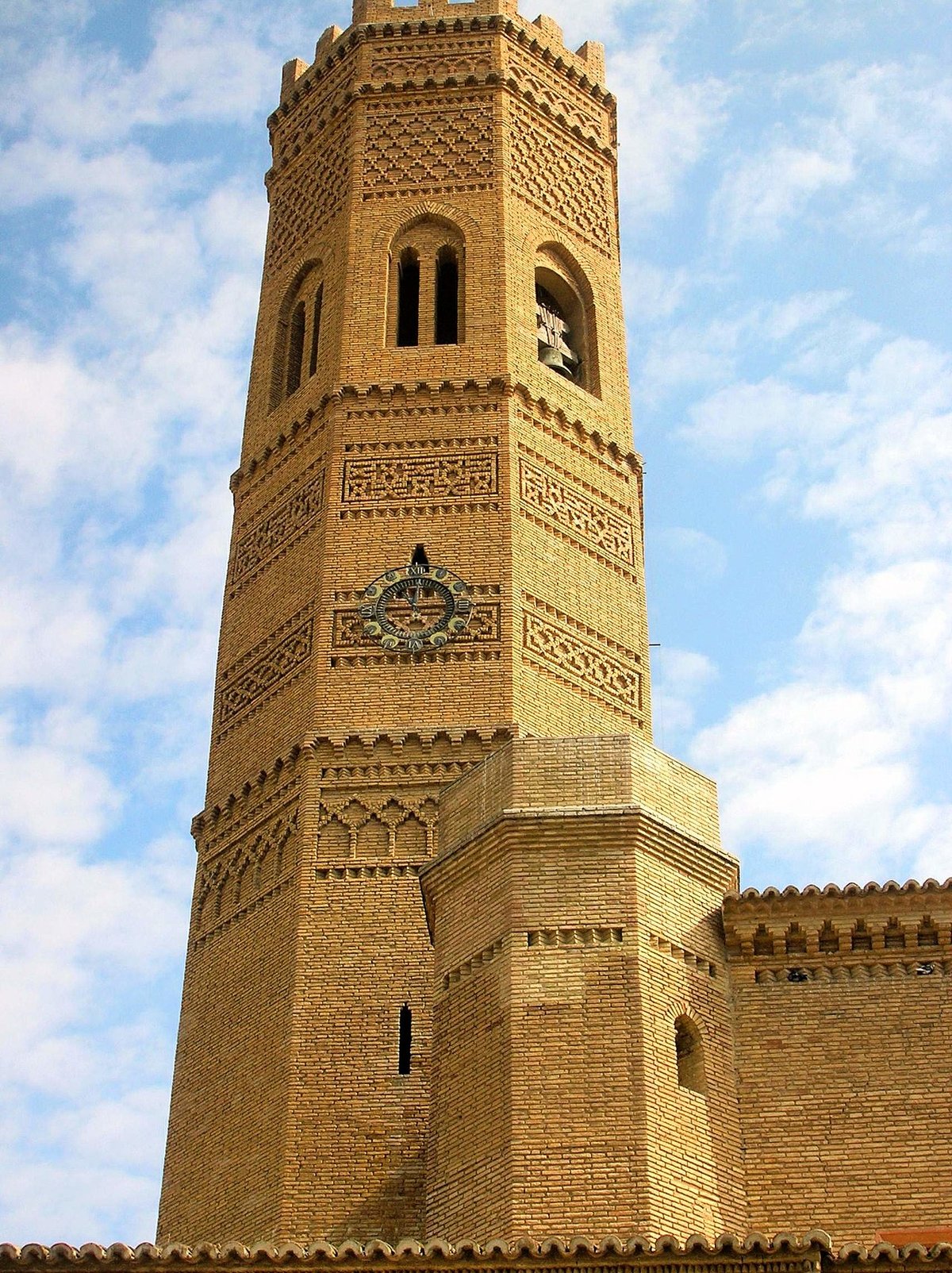
The centre of El Frago does not have major sights that draw large groups. Even so, a slow walk reveals small details. The parish church is the first point of reference as you arrive. A simple bell tower, stone without ornament, and the feeling of a building that has stood here for a long time, doing what it was built for.
Inside, it is plain. A single nave, a few well-preserved elements, little else. In villages like this, the church tends to be more a meeting point than a monument, and that impression holds here.
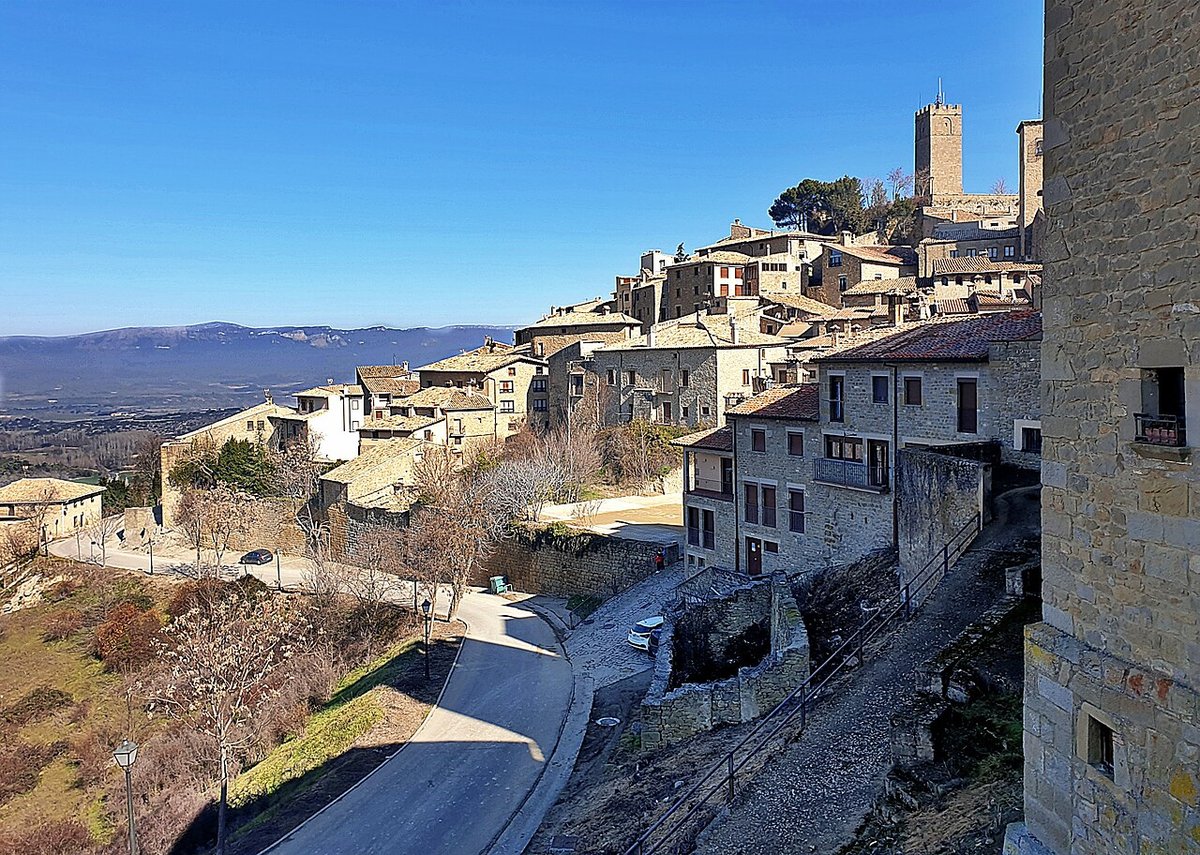
The houses follow the traditional architecture of the area. Thick stone walls, sloping roofs with curved tiles, and doorways framed by solid voussoirs that have held their shape over time. Not everything has been restored or polished, which somehow suits the place.
Streets that still show everyday life
Walking through El Frago is more about observing than ticking off sights. Old animal enclosures have been turned into small vegetable plots. Others are used for parking, tucked away from view. These are practical changes, the kind that happen when a village continues to live and adapt rather than becoming a fixed display.
A short distance beyond the houses, the landscape opens into farmland. Cereal crops, wide plots, and the occasional stone wall marking boundaries. From some of the nearby low hills, there are views over the valley of the Riguel River and much of the agricultural landscape of Cinco Villas, a historic region in the north of Zaragoza province. On clear days, other villages appear scattered across the distance.
The walk to the ermita
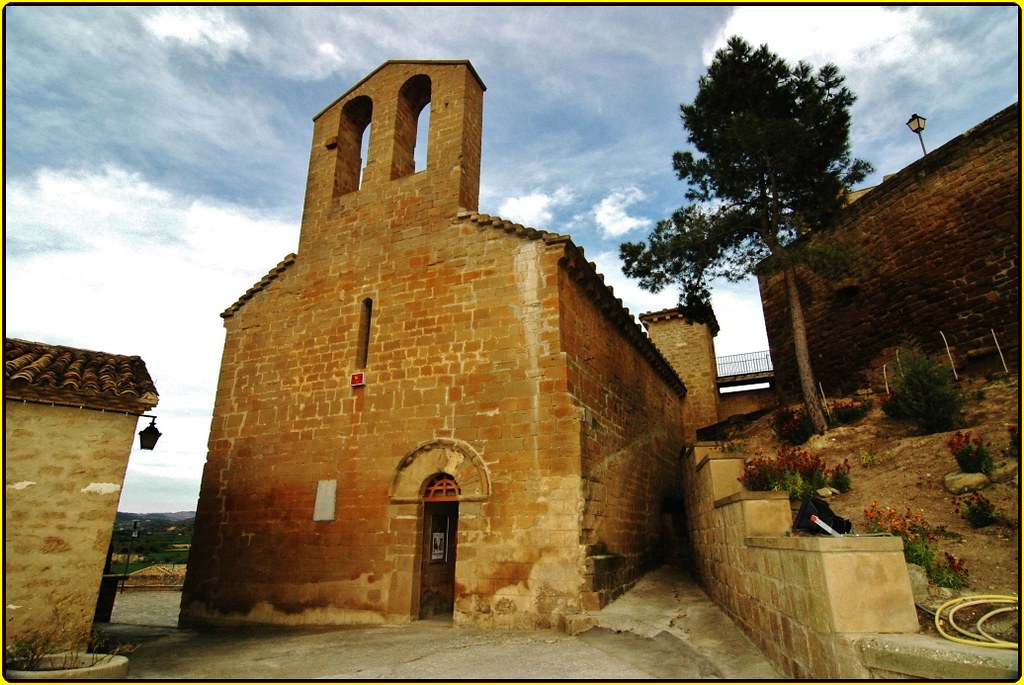
One of the routes often taken by locals is the path leading to the ermita of San Bartolomé. It is not a demanding excursion, more a walk you take without watching the clock.
The climb is gentle. The terrain alternates between dirt paths and areas of low scrub. Holm oaks, shrubs, and plenty of open sky. From higher up, the setting becomes easier to read: broad fields, few roads, and a horizon that feels far away.
Birds of prey can sometimes be seen circling above the crops, something quite typical in this part of Aragón.
After dark
At night, El Frago feels different. Not because anything particular happens, but because there is very little artificial light. When the sky is clear, the stars stand out sharply.
It is the kind of place where you end up looking upwards for a while without doing anything else. Simple, but not so easy to find if you are used to a city.
The village festivities usually revolve around San Bartolomé and other celebrations linked to the agricultural calendar. They are not large events. More like gatherings of neighbours, with the familiar atmosphere of a small community where everyone knows each other.
Getting there and when to go
El Frago lies in the comarca of Cinco Villas, in the north of Zaragoza province. Reaching it usually means leaving the main roads and following smaller regional routes through farmland. It is best approached without rushing.
There are not many services in the village itself, so visits are often combined with other places nearby. In this part of Aragón, villages sit relatively close together, making it easy to link several in a single day.
Spring and autumn are generally pleasant times to come. The countryside shifts in colour and the temperatures make walking comfortable. In summer, the sun is strong in the middle of the day, which is typical of this area.