Full Article
about Erla
Hide article Read full article
A village shaped by fields
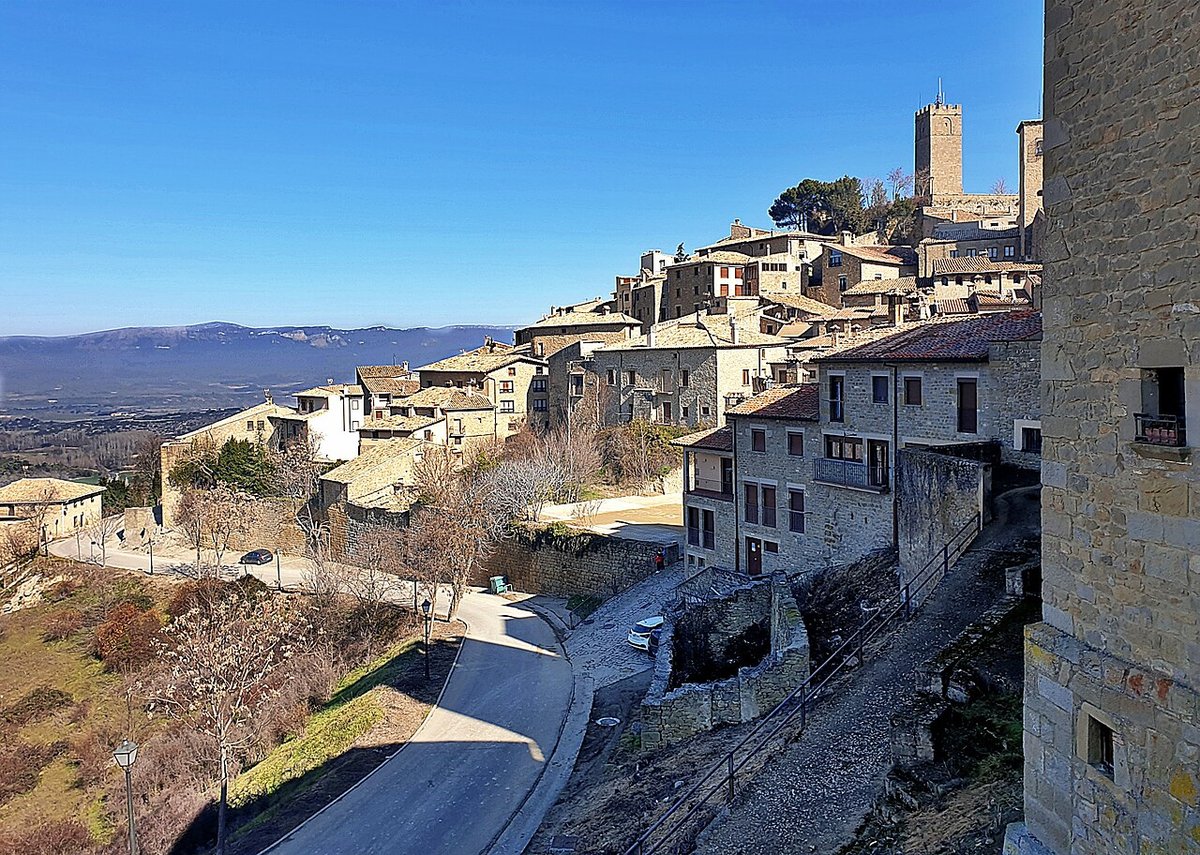
Early in the morning, when a trace of moisture still lingers in the air from nearby irrigation, silence in Erla is broken only by the sound of a garage door and a car heading out towards the fields. Houses built from a mix of stone and reddish brick gather along a handful of streets without much ceremony. There are no grand architectural statements here. The village presents itself plainly, with the calm of a place where most people know one another.
Erla sits in the comarca of Cinco Villas, in the north-west of Aragón, with a population of around 370. It lies at about 425 metres above sea level, surrounded by wide farmland where wheat and barley dominate. From the tracks that lead out of the built-up area, the landscape becomes easy to read: long plots, gently undulating, with occasional lines of trees marking irrigation channels or boundaries.
The look of the land shifts with the seasons. In autumn, after the harvest, the fields turn a pale ochre that resembles fine dust under low sunlight. In spring, the same fields take on a uniform green, standing out against the drier tones of the nearby hills.
Santiago church and the compact centre
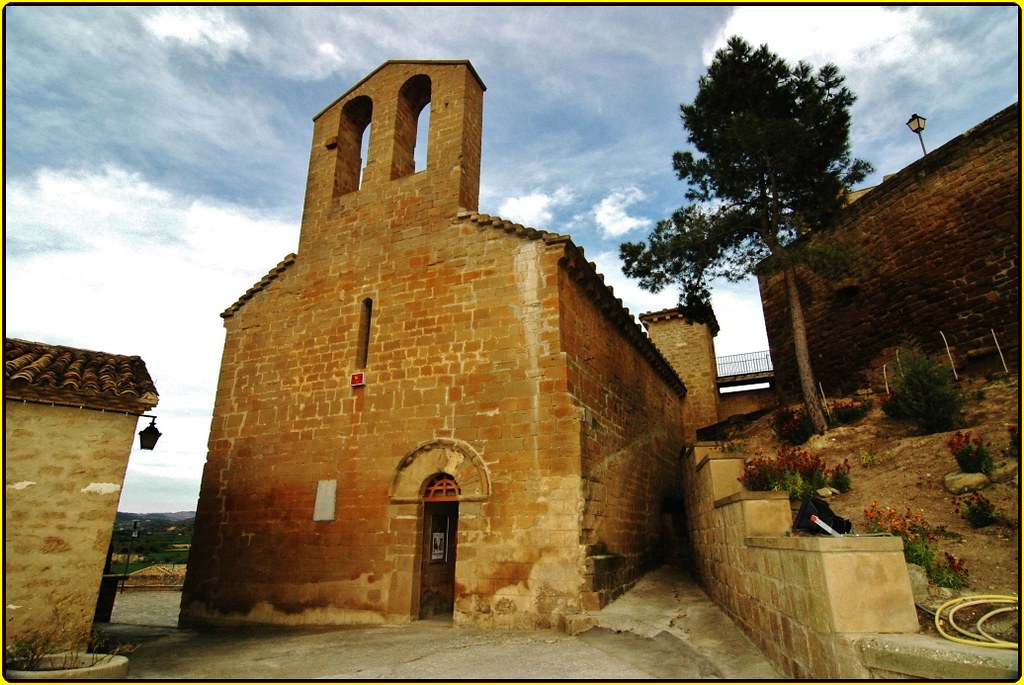
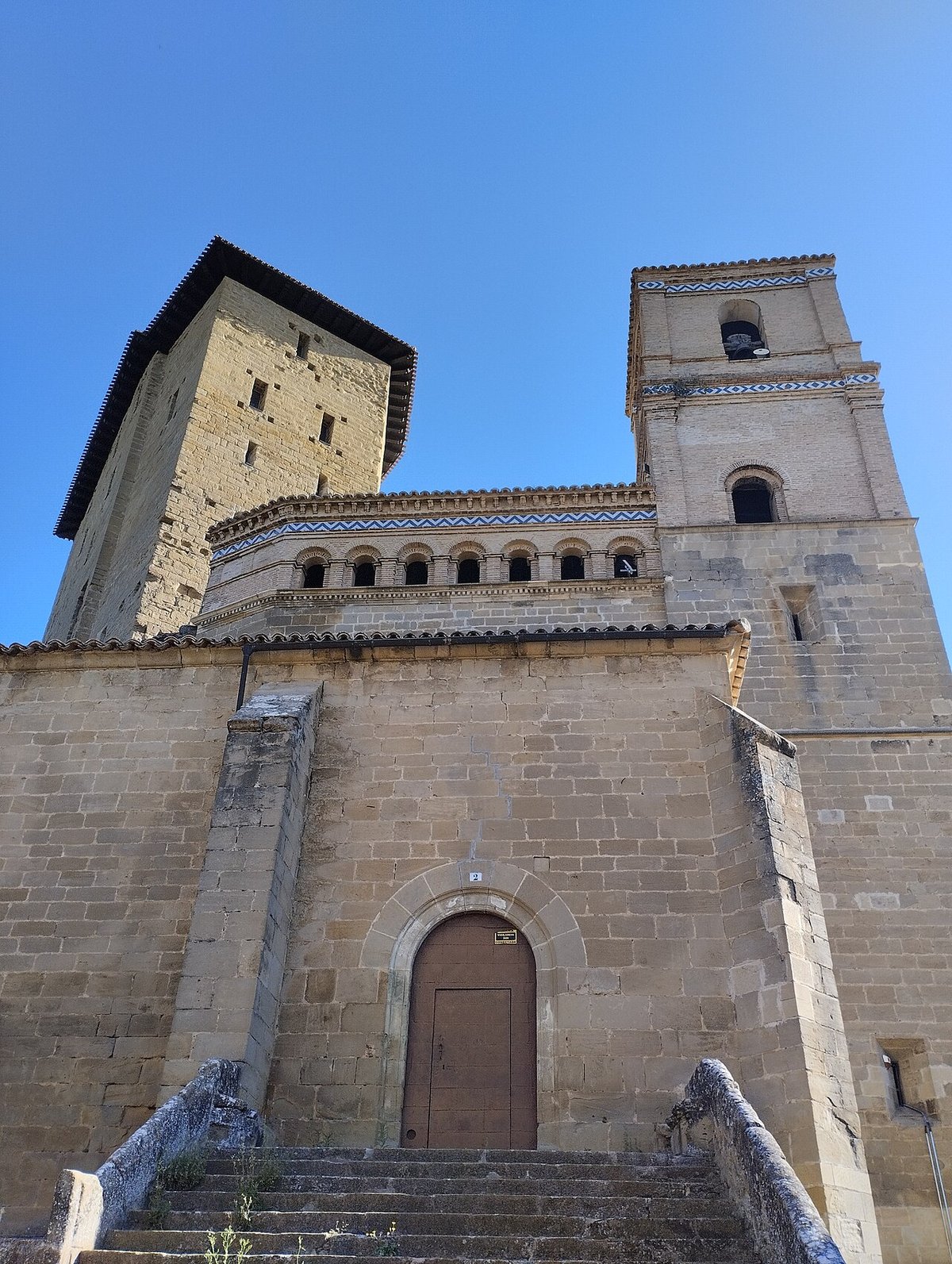
The centre is small enough to explore without a map. The main reference point is the parish church of Santiago Apóstol, built in the 16th century. Its façade is restrained and slightly uneven, with pale stone darkened over time.
Inside, traces from different periods remain. Part of the nave was altered later, yet some Gothic features survive in tall, narrow windows. The Baroque altarpiece of the main altar often sits in semi-darkness, except when light filters in from the sides during mid-morning.
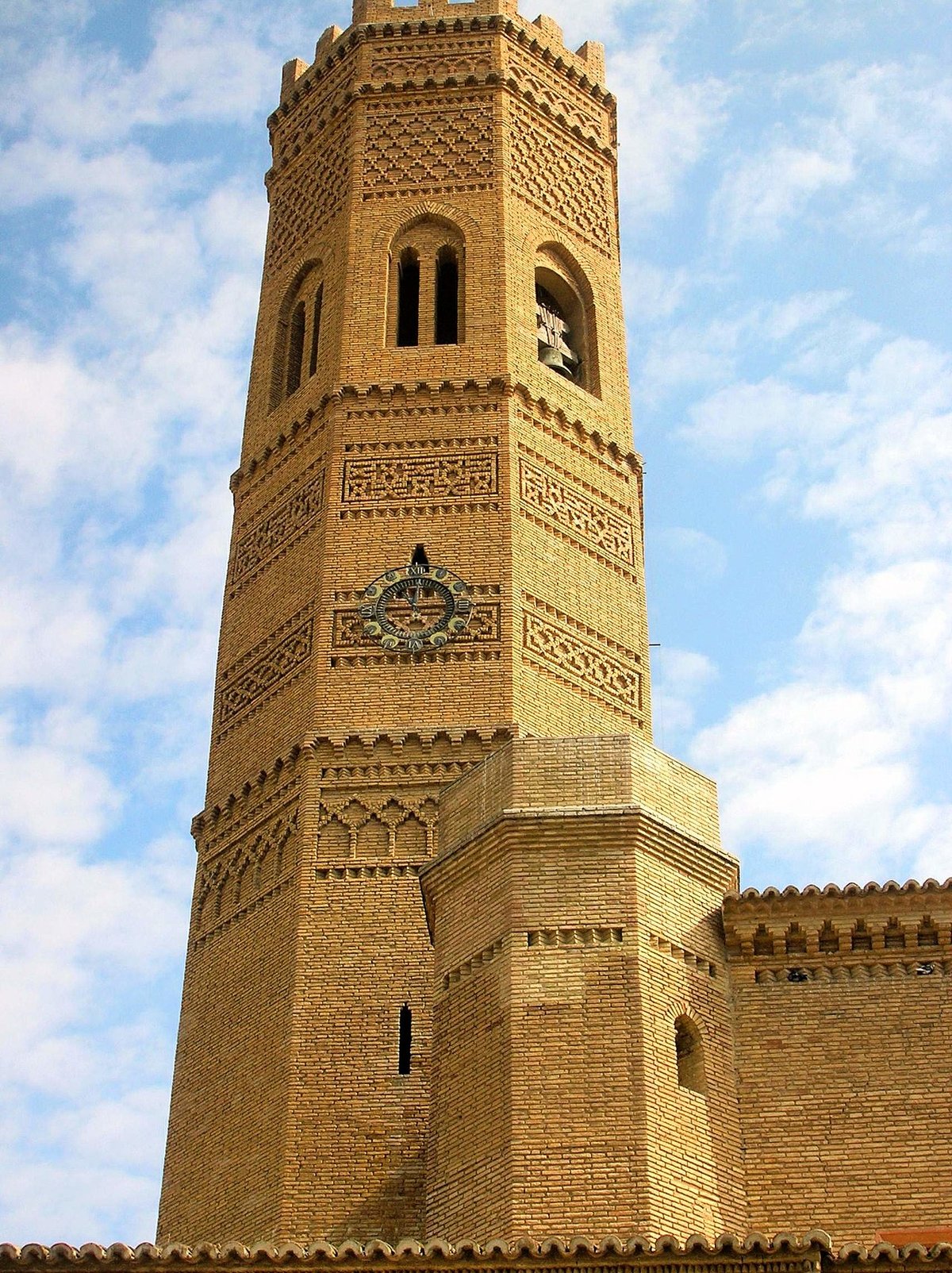
The bell tower is visible from almost anywhere in the village. Its bells still mark the hours and everyday moments, functioning as a kind of shared clock that continues to shape daily life.
Around the church, houses display details that are easy to miss at a quick pace: rounded arch doorways, heavy iron grilles, and in some cases coats of arms or dates carved into the stone.
Streets without ornament
The streets are narrow and mostly straight. Some still have uneven surfaces and walls where stone shows through layers of old limewash.
There are no large squares or monumental buildings. What stands out instead is the continuity: similar materials, comparable heights, and inner courtyards suggested behind large wooden gates. Towards evening, when the sun falls at an angle, façades take on a soft orange tone. Shadows from cables and balconies draw fine lines across the walls.
In summer, that same time between eight and nine in the evening is when the village becomes more active, with people stepping outside and gathering along the streets.
Paths through cereal fields
Just beyond the last houses, agricultural tracks begin almost immediately. Some follow older routes that once connected Erla with nearby places such as Sádaba or Uncastillo. Not all of these paths are signposted, and several split across the fields, so it helps to carry a map or a track if walking without turning back.
These routes are straightforward and largely flat. On quiet days, the main sounds are skylarks and other birds of open farmland. Birds of prey are also a common sight, gliding once the air begins to warm later in the morning.
In summer, heat settles heavily over these plains. Anyone planning to walk is better off setting out early and bringing water, as there is very little shade outside the village.
Agricultural rhythms and local gatherings
Life in Erla still follows the pace of the countryside. At the end of summer, local festivities usually take place around Santiago, the village’s patron saint. These include processions, shared meals and gatherings that fill the streets and small public spaces for several days. It is not an event designed to attract visitors. Rather, it is a time when relatives return to the village.
Afterwards comes the period of later harvests and work in nearby olive groves. In September, this activity becomes visible in the tractors moving in and out of the municipal area at dusk, raising small clouds of dust along the tracks.
Food when the temperature drops
Cooking in this part of the Cinco Villas is direct and filling. Dishes such as roast lamb, migas made from stale bread and garlic, and longaniza in different cures remain common. Stews based on products from the traditional slaughter season still appear on many tables.
Olive oil often comes from cooperatives within the comarca, and homemade preserves from vegetable plots or olives are not unusual. During the colder months, small-scale family production of cheeses and other dairy products also takes place in the surrounding area.
Getting there and moving around
From Zaragoza, the drive typically takes a little over an hour, depending on the chosen route. Most of the journey follows broad roads, followed by secondary routes that cross agricultural areas of the Cinco Villas.
Within Erla itself, parking is generally straightforward, and everything can be explored on foot.