Full Article
about Sos del Rey Católico
Hide article Read full article
An evening light over stone
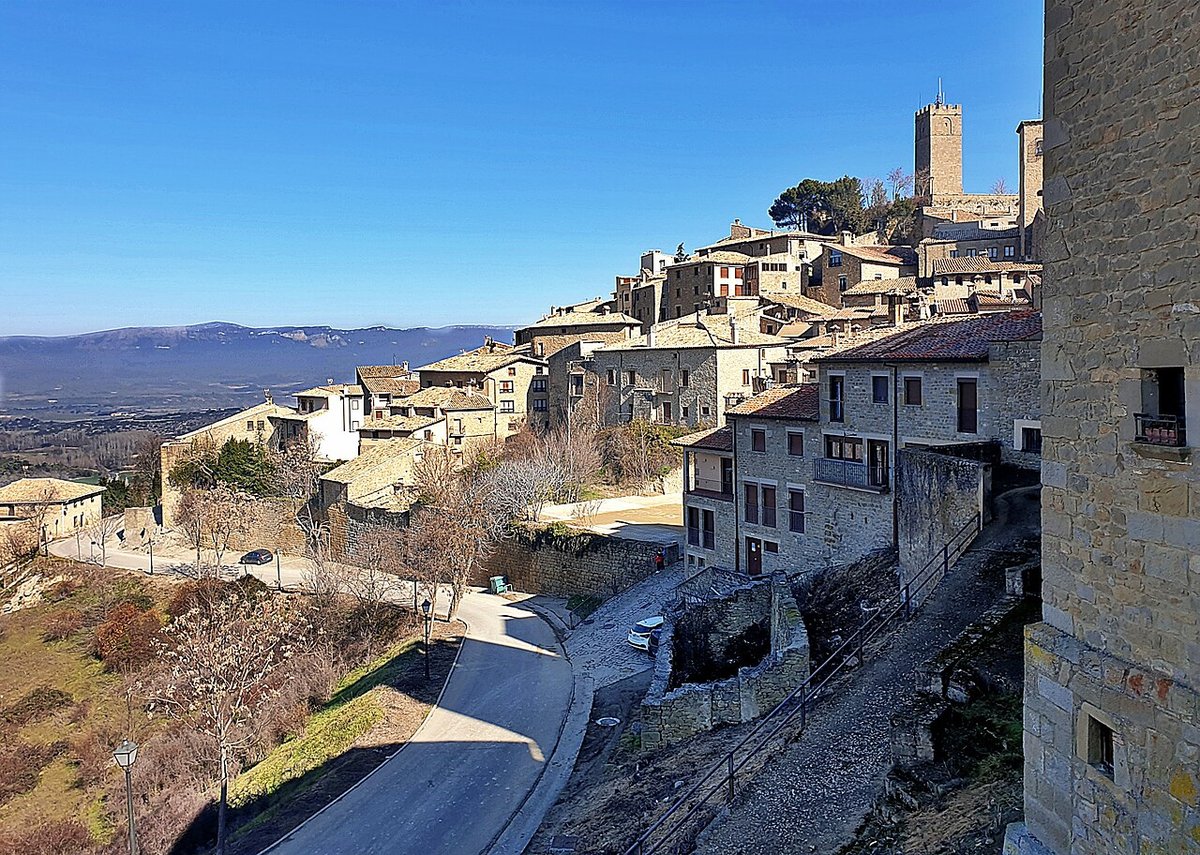
Late in the afternoon, as the sun drops towards neighbouring Navarra, the stone of Sos del Rey Católico shifts in tone. It turns paler, almost golden. The air cools quickly in the narrow streets. A window opens, a fragment of conversation echoes between walls, then fades. That is often how a walk through the upper part of the village begins.
Tourism in Sos del Rey Católico centres on this well-preserved cluster of stone buildings that sits along a ridge. The population barely reaches five hundred, and the village belongs to the Cinco Villas area in the north of Aragón. It is known as the birthplace of Fernando el Católico in the 15th century, a detail that still shapes how local history is told. The altitude is around 650 metres, which affects the climate. Even in summer, evenings cool down noticeably. In July and August it is best to walk early or later in the day, as shade is limited at midday.
Climbing into the historic centre
The approach to the old quarter follows cobbled streets that rise gradually. It is not a long walk, though it is uneven. Some sections are worn smooth, so comfortable shoes are a sensible choice. From certain bends, the view opens out over the cereal fields that surround the village, wide and mostly quiet for much of the year.
Early morning brings a different pace. A shutter lifts somewhere, and the dry scrape of a broom against stone carries through the streets.
Palacio de Sada and the story of a birth
Among the tightly packed houses stands the Palacio de Sada, a solid stone building connected to the birth of Fernando el Católico in 1452. Today it contains a space that explains that moment and the political setting of the time.
Opening times tend to change depending on the season, so it is worth checking in advance. The visit helps make sense of why such a small place appears so often in history books.
Beneath San Esteban
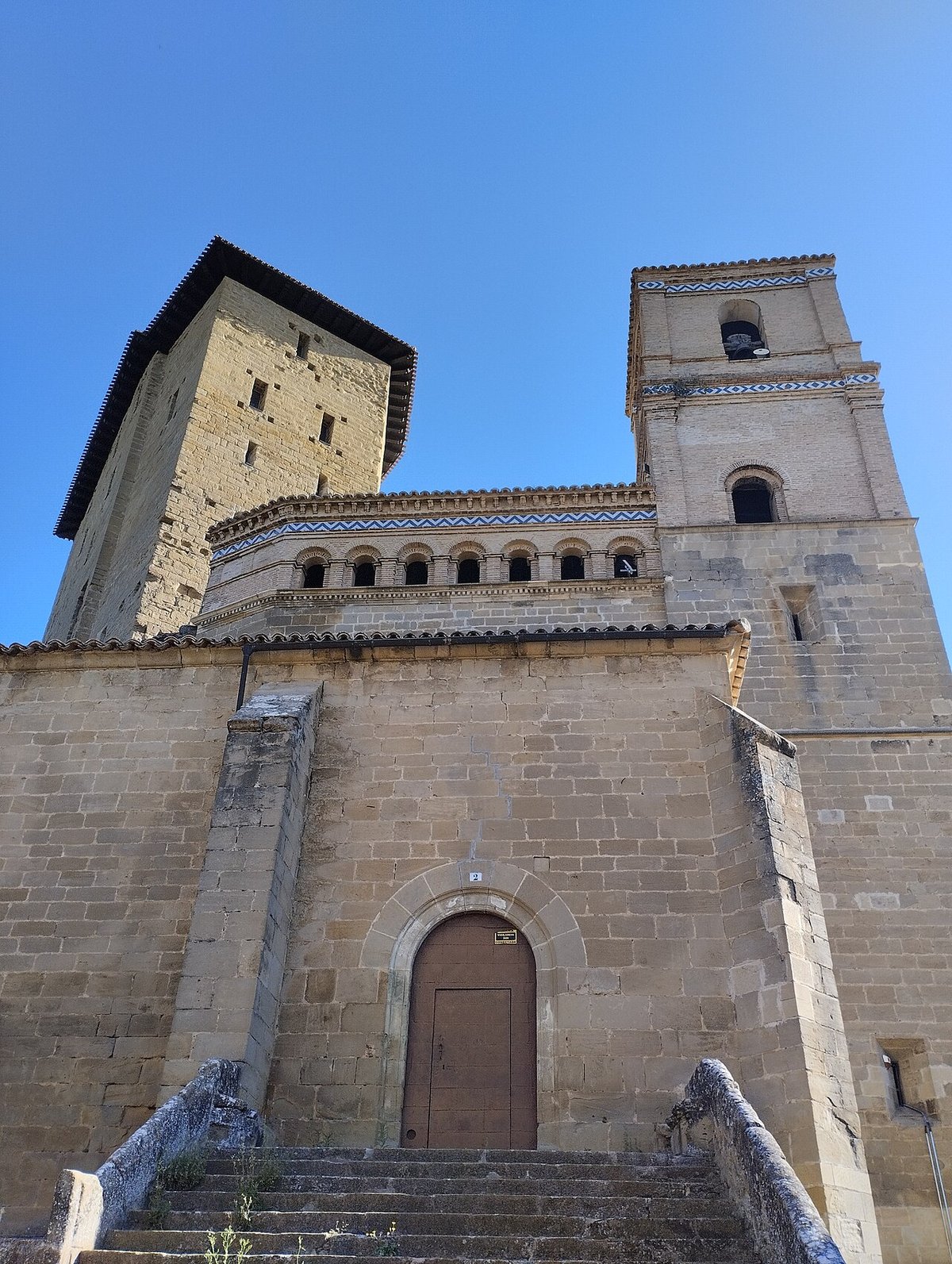
The church of San Esteban occupies the highest point of the village. Even from the outside, the mix of periods in its stonework is visible. Beneath it lies a Romanesque crypt carved into the rock, where medieval paintings and carved capitals with simple scenes have been preserved.
Access is usually organised through guided visits. It is a small, cool space, even when the heat outside is strong. The light is dim, which encourages a slower look at the details.
Along the old walls
Parts of the former defensive walls still encircle the village. From certain stretches there are views over the gentle hills of the Cinco Villas and, on clear days, towards the first mountain ranges to the north.
The Puerta de Zaragoza marks one of the historic entrances. Nearby stands the Torre del Homenaje. The paving here is irregular, so it requires careful footing, especially if the ground is damp.
In the evening, the wall casts long shadows across the fields. It is one of the quietest moments of the day.
The former Jewish quarter
In a more enclosed area of the old town lies the layout of the former Jewish quarter. The streets narrow further, and the façades sit very close to one another. Some houses still retain finely worked stone doorways.
At those times when the village feels emptier, early morning or just before nightfall, it is possible to walk here without meeting anyone. Only the echo of footsteps, and sometimes the smell of firewood when temperatures drop.
Beyond the walls: fields and paths of the Cinco Villas
Leaving the walled area, the landscape changes quickly. Open fields dominate in every direction. Several rural paths start from Sos and lead into this patchwork of cereal crops, scrubland and low hills.
In the surrounding area there are remains of older fortifications such as the castle of Roita, now in ruins. The route there is usually done on foot, and carrying water is advisable, as shade is limited along many stretches. The Tarazonica greenway also runs relatively nearby, used by cyclists and walkers along a former railway line.
Food in the village remains closely tied to the surrounding land. Dishes based on lamb, migas or hearty stews appear frequently, especially when the weather cools. On winter days, the smell from kitchens mixes with chimney smoke and lingers in the streets.
Festivities dedicated to San Esteban mark one of the liveliest times of year. Dates and programmes tend to vary, so the most reliable approach is to check locally before travelling. In a small village, daily schedules are often decided as the day unfolds.