Full Article
about Alfajarin
Hide article Read full article
Where the Ebro Slows the Day
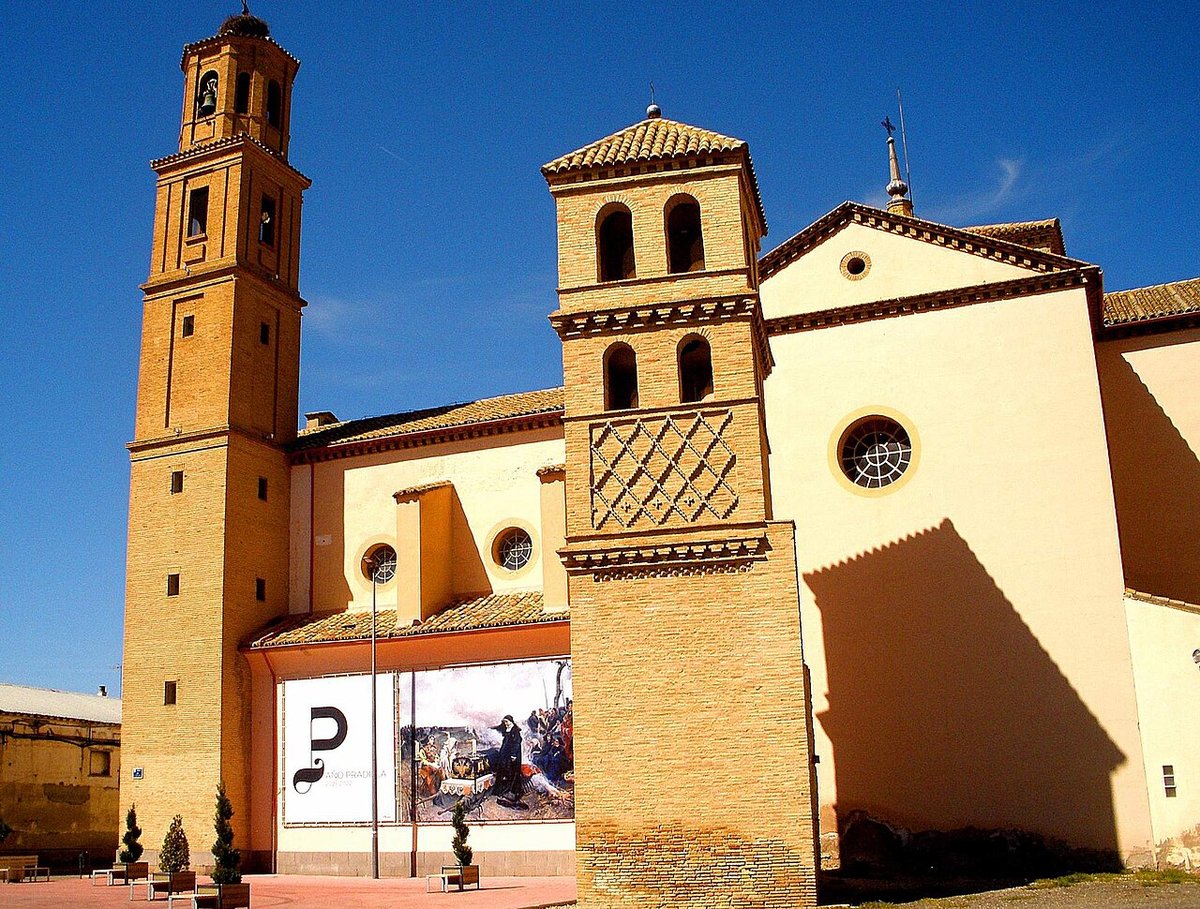
Around five in the afternoon, as the sun begins to drop, the River Ebro darkens into a deep green that at times looks almost black. The wheat fields around Alfajarín shift in the breeze, like a surface being brushed by an unseen hand. Traffic on the A-68 eases off a little, and the pace of the town follows suit. From the tower of San Miguel, visible from almost anywhere, the Ebro Valley stretches out flat towards the west, with the road cutting straight across it.
Alfajarín sits just a few kilometres from Zaragoza. It is close enough to function for many as a commuter town, yet it still holds on to the mix that defines this stretch of the riverbank: irrigated plots, dry farmland and a constant wind that shapes daily life.
Clay in the Ground
The name Alfajarín is often linked to its past as a centre for pottery. Even now, when the soil is turned in small orchards or plots near the old centre, fragments of old ceramics appear among the gravel—a piece of rim here, a shard of green glaze there.
From the medieval wall, the Portaza remains: a narrow stone arch that once marked one of the entrances to the town. In the evening it tends to draw people in. Teenagers lean against the wall, conversations stretch on while cars pass through on their way to Zaragoza. It is not set apart as a monument, but woven into everyday use.
At the southern edge stand the remains of the castle of the Cornel family. Only a few walls are still upright, yet the location makes its purpose clear. From here, kilometres of land are visible, alternating between irrigated fields near the river and drier plots further inland. At sunset, starlings gather among the stones and, on some days, take off together, forming shifting dark patterns across a sky that fades from orange to grey.
San Miguel and Layers of Time
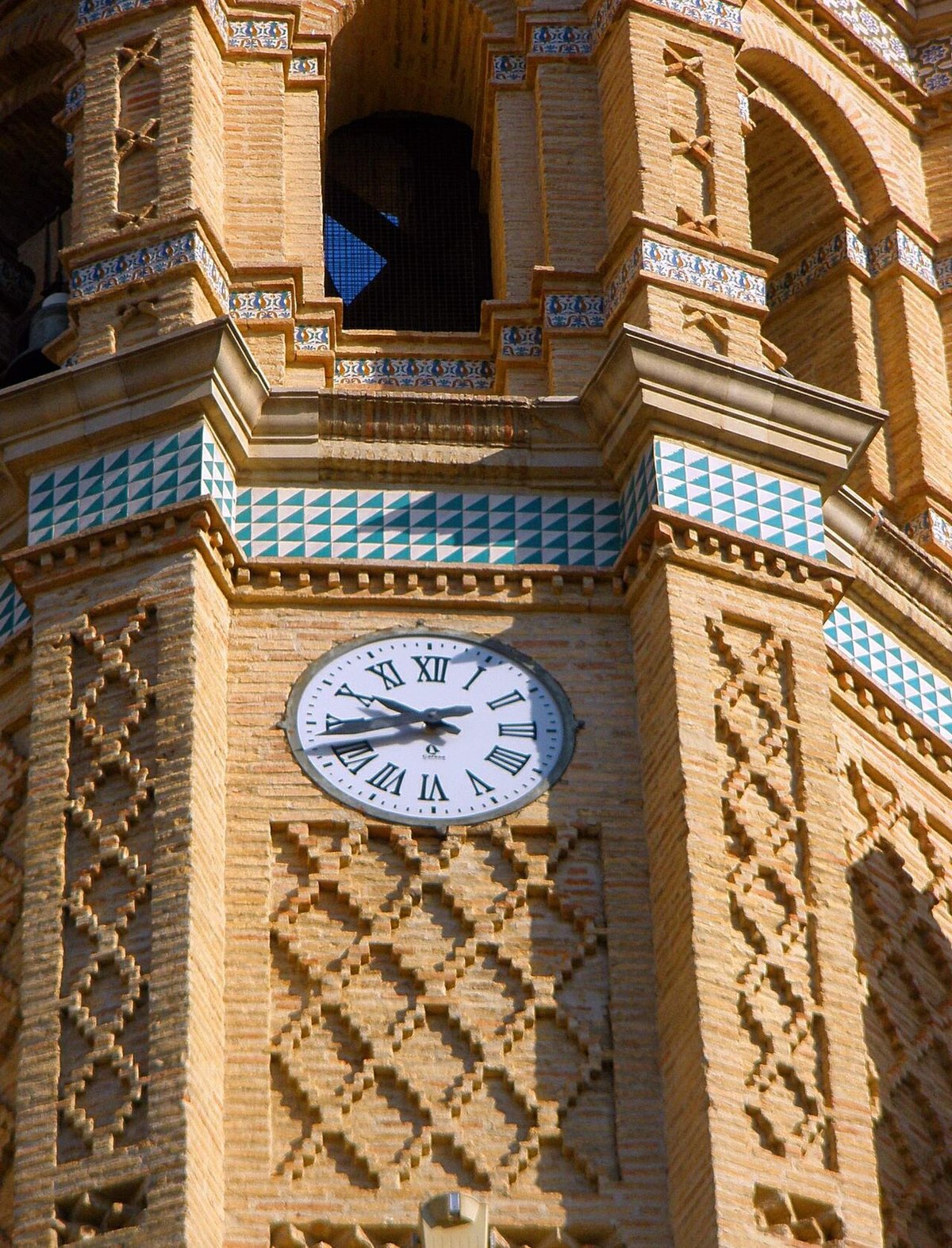
The church of San Miguel Arcángel shows its history openly. The tower is Mudejar brickwork from one century; the main doorway is Gothic stone from another. The stone around that entrance has been worn smooth by use. Many locals still pause briefly before going inside and run a hand across it, a small gesture repeated over generations.
Inside, the air often carries the scent of wax and incense. Light filters through relatively recent stained glass windows, colouring the floor in reds and blues when the sun is high. In one of the side chapels, there is a Marian image traditionally dated to the Middle Ages. The silence inside is thick and cool.
A Hermitage in the Rock
About two kilometres from the town centre, along a path that leads out towards the low hills, stands the hermitage of the Virgen de la Peña. The final stretch narrows into a rougher track—sturdy footwear helps on this loose gravel.
The building leans directly against the rock. Part of its interior appears carved or adapted from the natural stone, giving the ceiling an uneven, shadowed shape. In winter, dampness is common. Water seeps through small cracks and falls in droplets that can be clearly heard when everything else is quiet.
A traditional pilgrimage linked to the Virgen takes place in September. On that day, the path fills with people from the town and relatives returning for the festivities. For most other days of the year you’ll have it to yourself; just cyclists following nearby routes or someone out for an evening walk.
Food at Ground Level
Local cooking stays closely tied to what grows nearby. Borage, known here as borraja, appears frequently on tables in this part of Aragon. It is usually boiled with potatoes and dressed simply with oil—a modest vegetable prepared without fuss.
Migas are also common when autumn arrives and evenings turn cooler. They are made from dried bread fried with garlic and small pieces of chorizo or pancetta in a large pan meant for sharing.
Ternasco, Aragonese lamb roasted slowly until tender with crisp skin, tends to be reserved for family meals or celebrations rather than daily fare.
Seasons and Shifts in Pace
May is often a good time to come to Alfajarín. The fields are green and soft underfoot before summer hardens them; poppies line some field edges like thin red borders. September also works well when night air finally cools down enough for sleeping with open windows.
August brings more activity—families return for holidays filling streets until late—changing quieter rhythms found during rest of year entirely.
Between late June and July harvest takes over: dust from threshing hangs above fields all day long settling onto parked cars by evening; tractors move slowly along local roads after dark with amber lights blinking rhythmically into night ahead them like slow-moving fireflies made entirely out metal diesel fumes instead light itself...