Full Article
about Cadrete
Hide article Read full article
The hill that watches the valley
Cadrete is easy to recognise from a distance. A hill rises above the Huerva valley, and on its summit stands the castle. The image is not accidental. For centuries, whoever held this point could watch over the natural route between Zaragoza and the inland territories.
The site was already fortified in the Andalusí period, probably in the 10th century. Control later shifted after Alfonso I captured Zaragoza in 1118, bringing the area under Christian rule. That long history still shapes how the place looks today, with the hill acting as both landmark and reminder of its strategic past.
The castle and San Blas below
What is now called the Castillo de Cadrete is not a full medieval fortress in the usual sense. The most visible structure is a large 15th-century tower built on earlier remains. In earlier times, the Islamic fortification covered a wider area across the top of the hill. Excavations have revealed traces of a more complex enclosure, with spaces that point to both military use and religious activity.
The surviving tower has a square plan and is built in masonry. It feels closer to a fortified house than to a large defensive complex with multiple walls. Its position explains everything. From the top, the Huerva valley opens out towards Zaragoza, and movement through the area is easy to observe.
Access to the site does not always include detailed panels or explanations, so it helps to look closely at the walls themselves. In some sections, reused stone blocks and the beginnings of older structures can still be seen, offering small clues to earlier phases of construction.
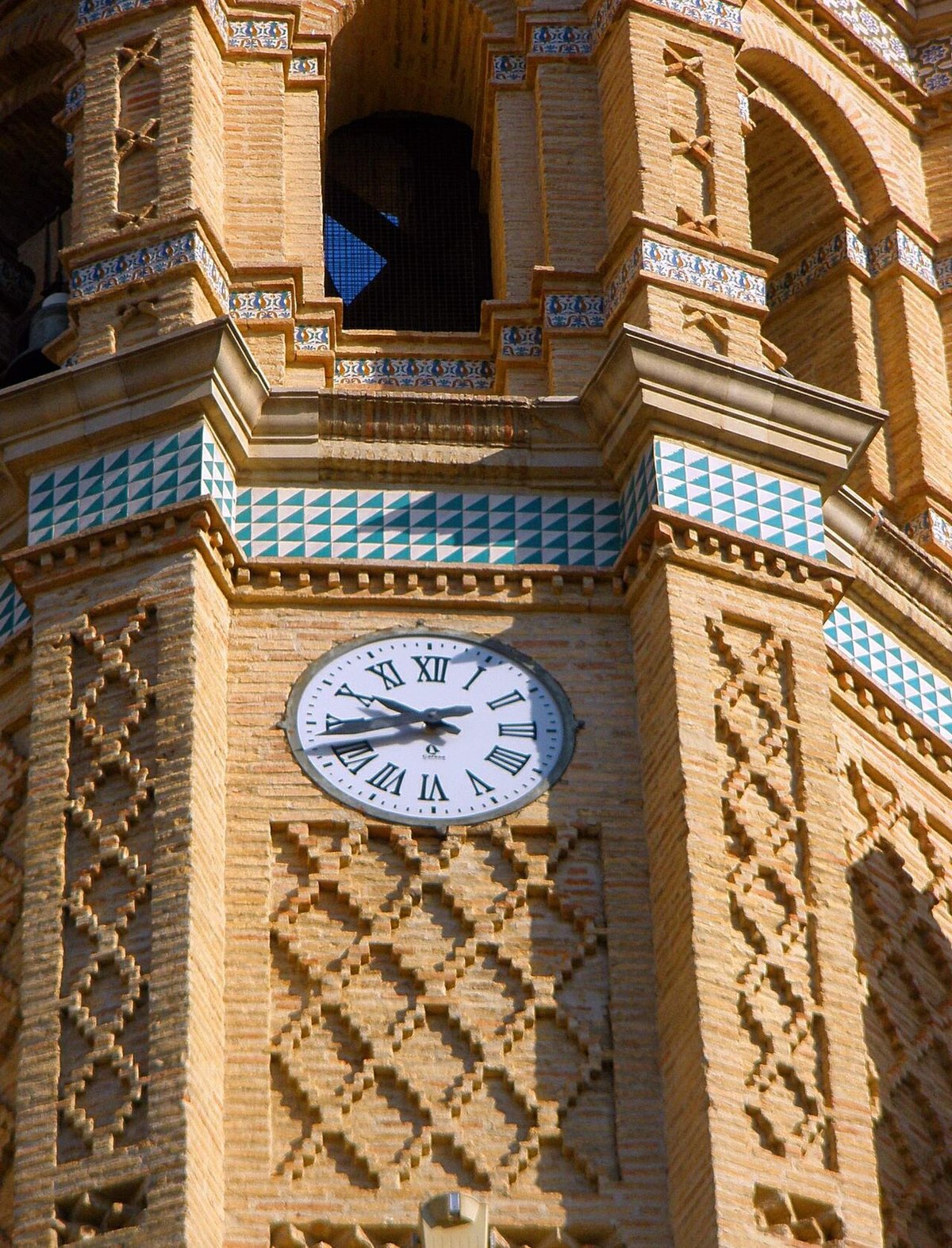
At the foot of the hill lies the San Blas neighbourhood. Its irregular layout reflects the way medieval settlements adapted to uneven ground. Streets slope down towards the valley floor, following the natural incline. Many of the houses combine brick and stone, materials commonly used across this part of the Ebro valley.
Santa Fe and its surroundings
Around three kilometres from the town centre stands the Monasterio de Santa Fe. Its origins go back to the 14th century and are linked to the Urrea family. In time, it came under the care of the Cistercian order.
The building seen today mostly reflects later changes from the early modern period. The church is simple in form, with a single nave and a straight apse. It is not a monumental complex in the grandest sense, but it offers a clear idea of how these monasteries functioned in close connection with the surrounding land.
The pine forest around the monastery is part of that story. It has traditionally been associated with plantations promoted by the monastic community, both to supply timber and to help stabilise the ground. The landscape here is not separate from the building, but tied to its daily life and economy.
Each spring, a romería takes place to this site. A romería is a traditional pilgrimage that blends religious practice with a social gathering. People walk up from the village or along nearby paths and spend much of the day there. It is less about formal ceremony and more about coming together.
A town beside Zaragoza
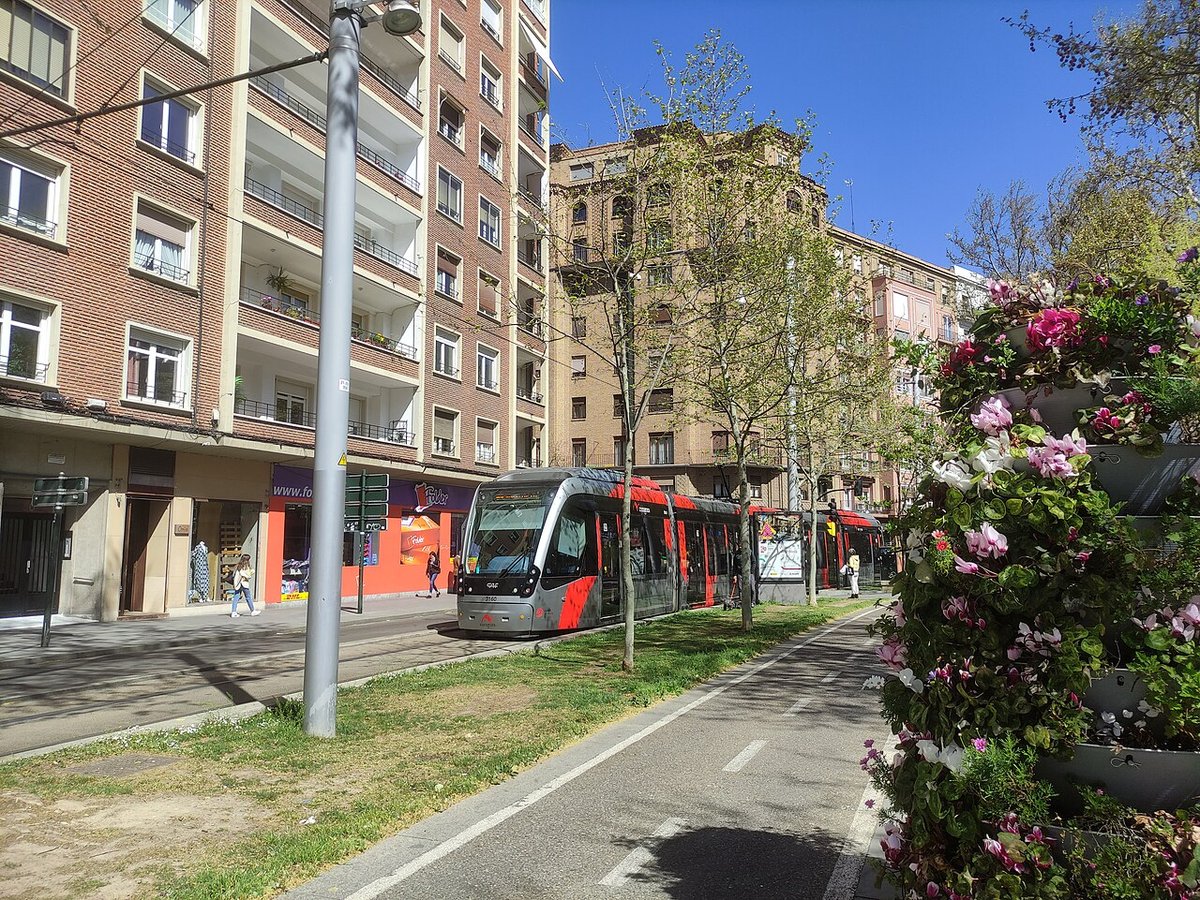
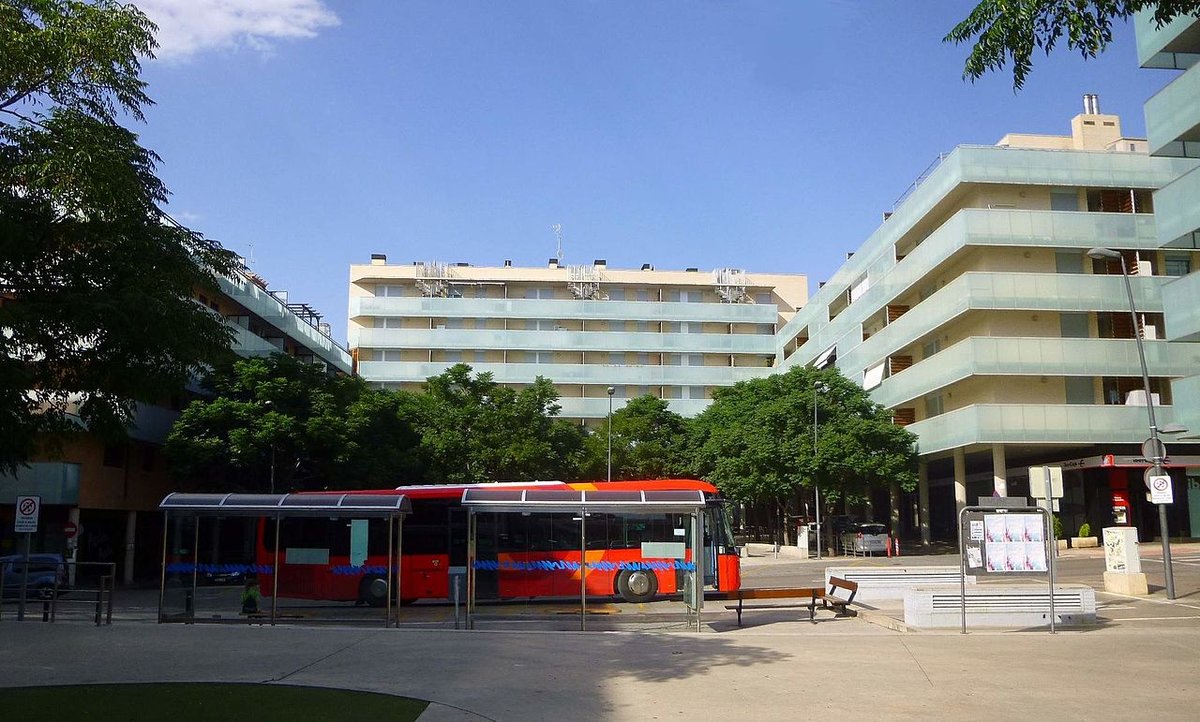
Cadrete forms part of the Comarca Central and now has a population of more than 4,600 inhabitants. That figure says a lot about its present character. Most of the growth has come in recent decades, as families have chosen to settle here while continuing to work in Zaragoza.
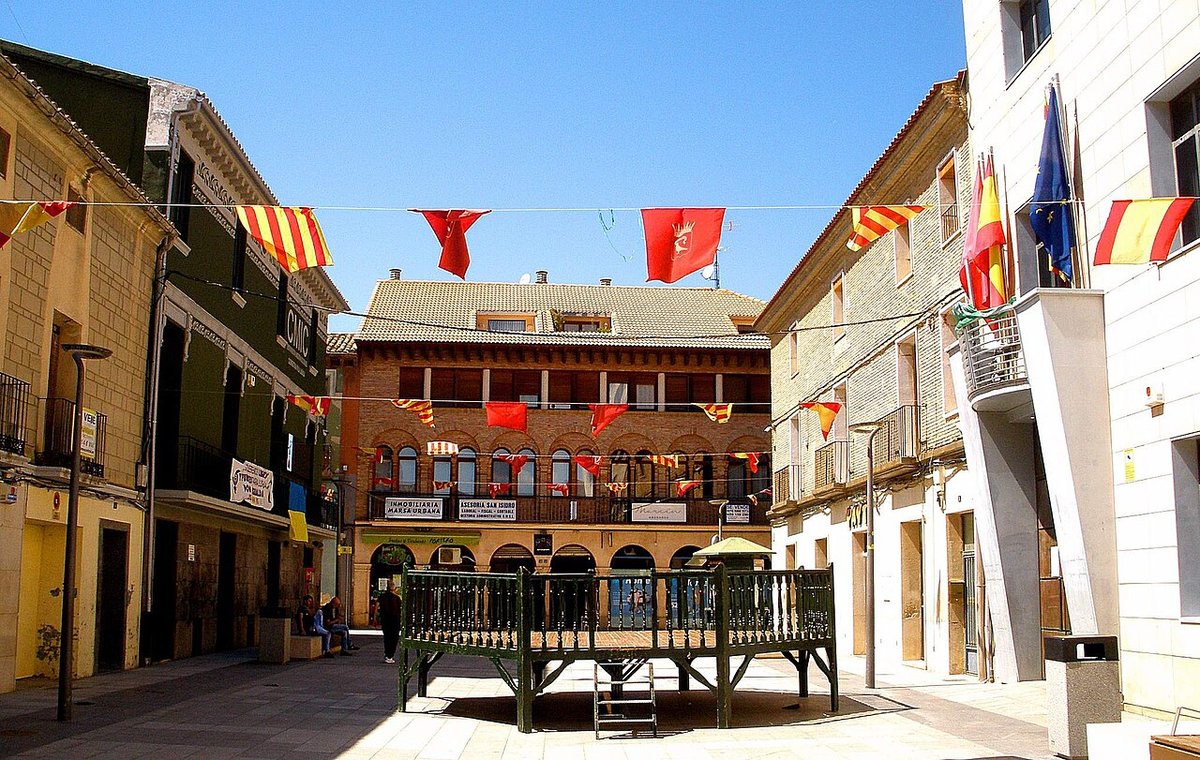
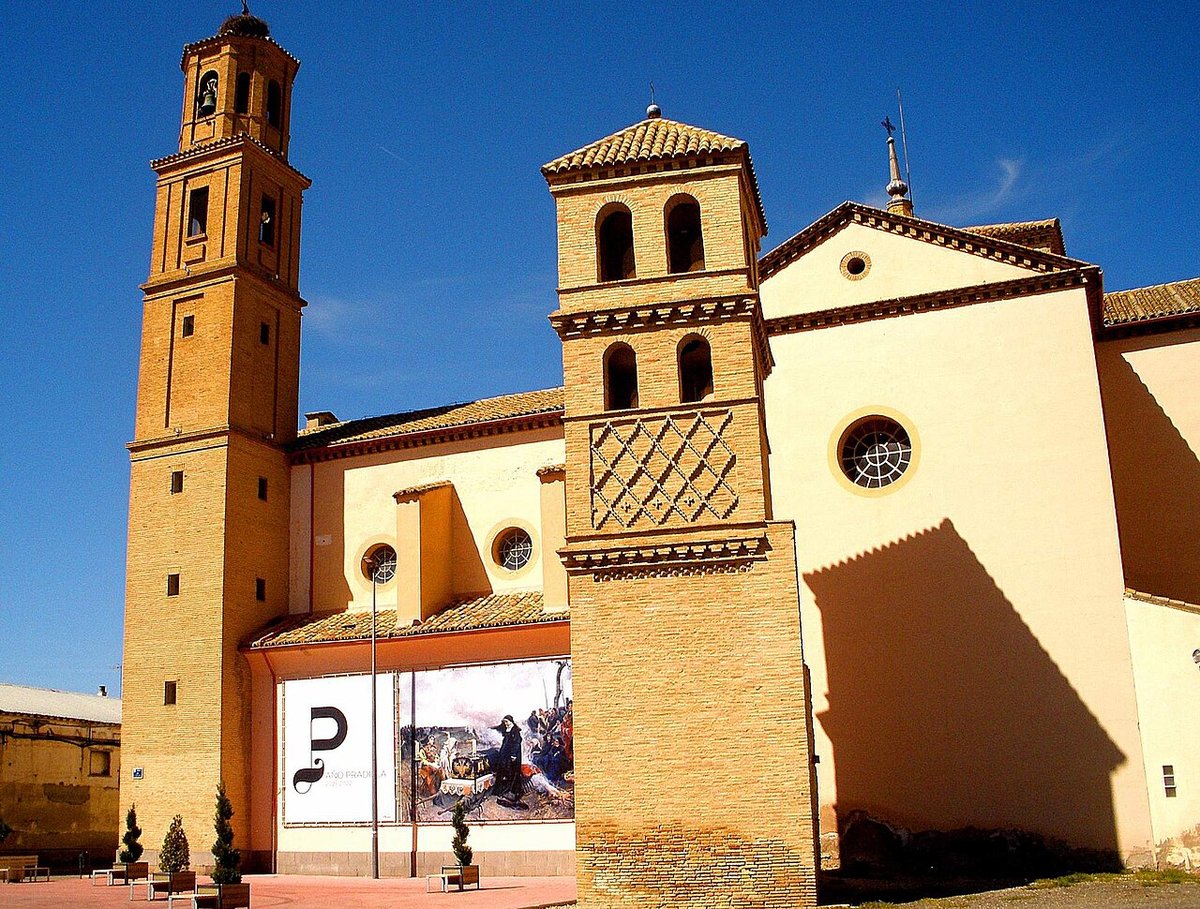
The city is very close by road, which has turned Cadrete into a residential option for those who prefer to live outside the urban centre. Even so, many elements of small-town life remain clearly visible. Social clubs known as peñas become active during local festivals, the frontón court is used regularly, and daily life often revolves around the main square.
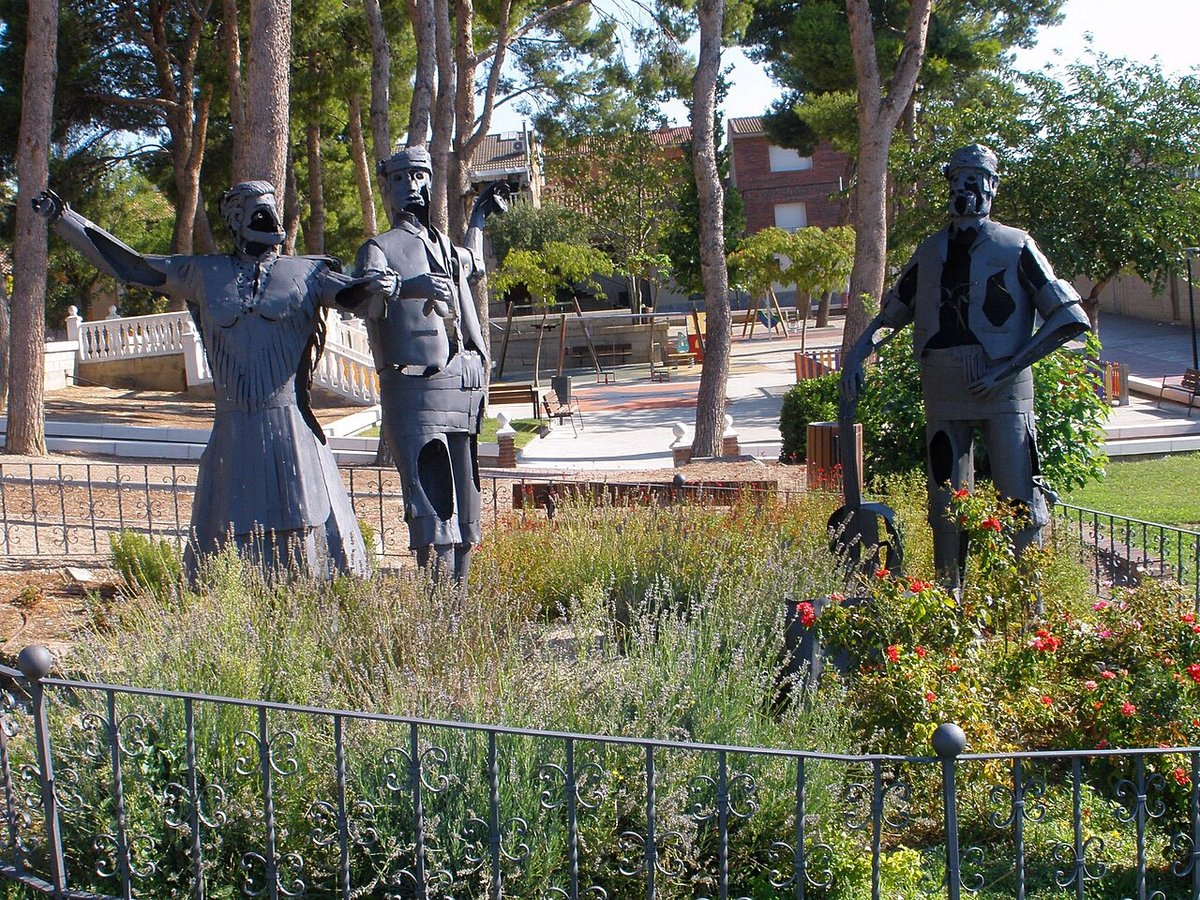
In Plaza de Aragón there was for years a bust of Abd al-Rahman III, the 10th-century caliph associated with the fortress. The sculpture sparked local debate and was removed not long ago, although the historical reference to his presence at the site was kept. The episode reflects a broader question that appears in places with an Andalusí past: how to present that heritage without turning it into a simple backdrop.
Food and shared tables
Cooking in Cadrete remains closely tied to local produce. Ternasco asado, roast lamb typical of Aragón, is a regular feature at celebrations and family meals. Vegetable dishes are also common, including borrajas cooked with potato and egg, a preparation rooted in the market gardens of the region.
In winter, traditional sweets are made at home. Among them are tortas prepared with lard and chicharrones, linked to the time of pig slaughter. These recipes belong to a domestic tradition that continues to shape the local food culture.
During festivals and moments tied to the agricultural calendar, long tables fill the square. The food is simple and shared: migas, local wine, and dishes prepared by groups of friends or neighbours. The atmosphere makes clear that Cadrete still maintains strong ties to the surrounding countryside.
Walking the Huerva valley
The hill of the castle can be reached in a few minutes from the centre. Walking up is the best way to understand how the town is arranged around the slope and how closely the settlement is tied to its terrain.
Several paths also leave from Cadrete and run through the Huerva valley. Some follow old agricultural tracks between olive groves and dry farmland, while others stay closer to the river. These routes are straightforward and widely used by local people for walking or cycling.
The most direct access from Zaragoza follows the road that runs along the Huerva valley. Once in Cadrete, it is easiest to leave the car near the centre and continue on foot. Distances are short, and the relationship between the castle, the town centre and the surrounding landscape becomes clearer when moving through it at a slower pace.