Full Article
about María de Huerva
Hide article Read full article
A town shaped in view of the road
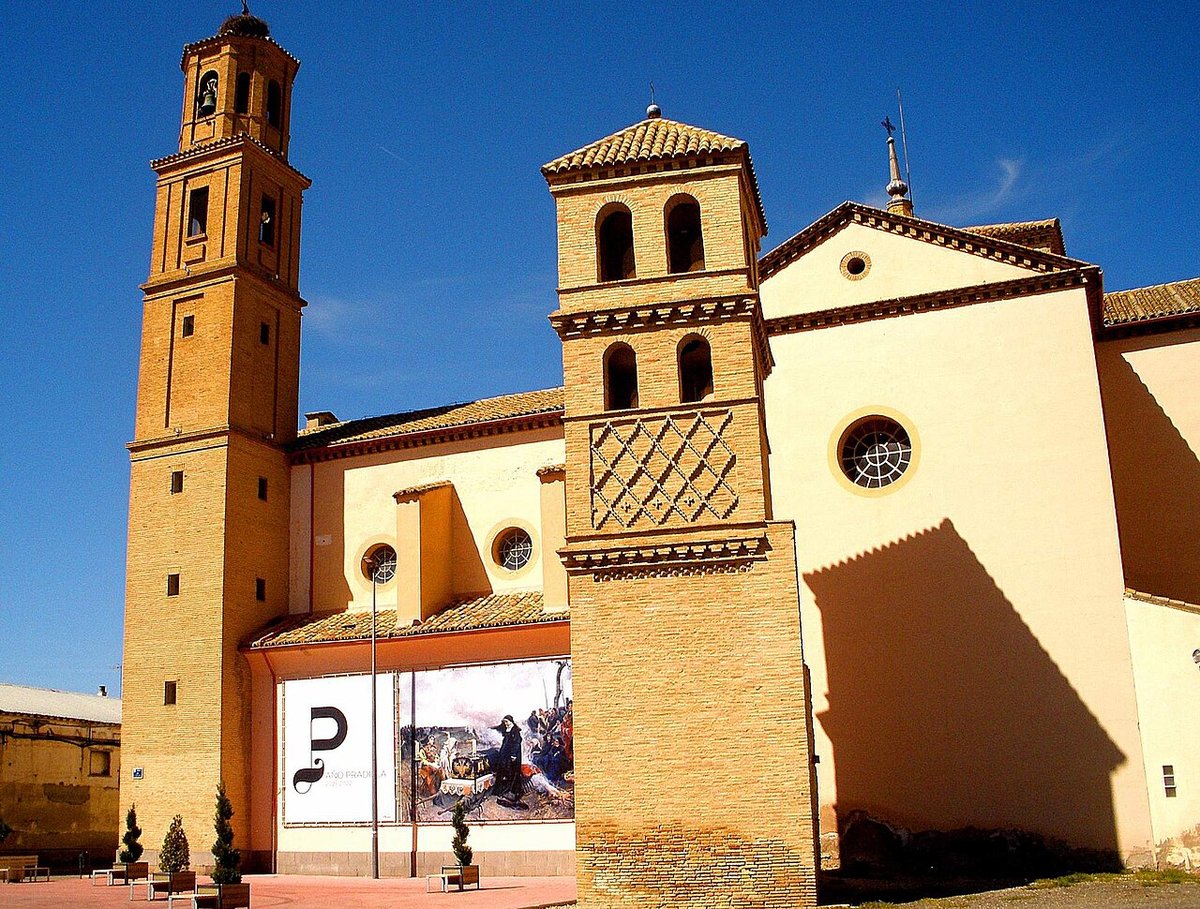
The brick Mudejar bell tower appears from the A-23, rising above the Huerva river plain. It signals the entrance to María de Huerva. Around it, irrigated fields, industrial units and houses with courtyards sit side by side. All of it fits within a small area. The landscape offers a clear reading of how this town near Zaragoza has grown.
The contrast is immediate. Productive farmland meets newer development, while older rural buildings still hold their place. María de Huerva is close enough to the city to feel its pull, yet the marks of agriculture remain visible in everyday life.
The water that changed everything
María de Huerva exists because of water. The turning point came at the start of the 16th century, when the river was channelled to irrigate the land. The engineer Jaime Vicent led the construction of the canal, and the intervention reshaped the area.
Before that, cereal steppe dominated the surroundings. Today the fields show maize, alfalfa, almond trees and olive groves. There are also vineyards linked to the Cariñena wine area. Irrigation has helped the town retain its population despite its proximity to Zaragoza. Many residents commute, but farming continues to play a role.
The Huerva river has never been entirely predictable. Parish records mention a major flood at the end of the 16th century that destroyed part of the settlement. The river gives life to the plain, but it occasionally reclaims its space. More recent floods have been a reminder of that pattern.
The church and the earlier settlement
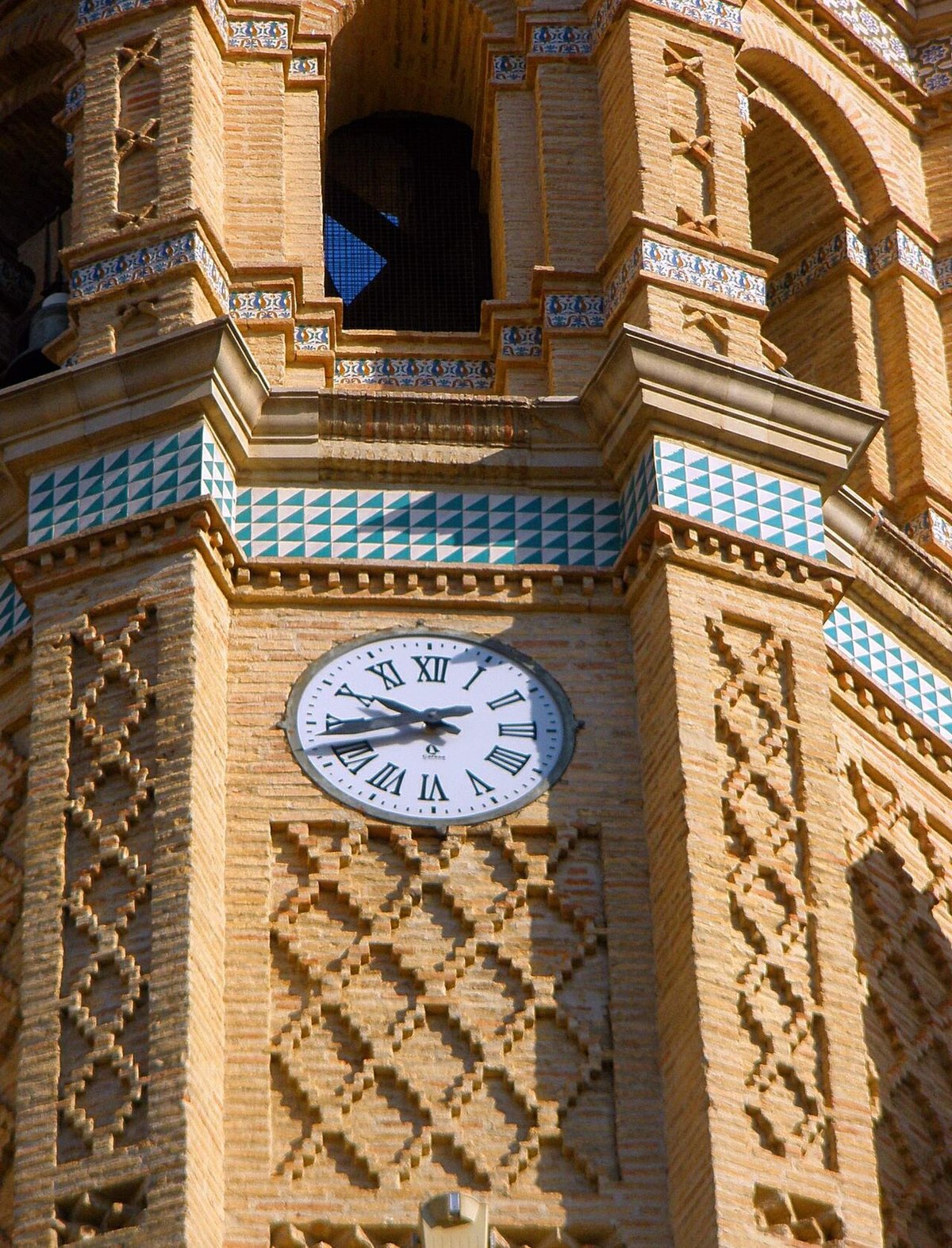
The Mudejar tower belongs to the church of Nuestra Señora de la Asunción, the most visible building in the present-day town. The church was built in the 16th century and later modified.
For a long time it was not the main religious centre. That role belonged to Santa María de Huerva. The old hermitage stands about two kilometres away and marks the site of the first stable settlement.
The shift towards the canal changed the town’s layout. The Asunción church became part of the new centre. After the Peninsular War, significant repairs were carried out, and the interior was reorganised during the 19th century.
What stands out in the building is the use of materials. Local stone forms the walls, brick shapes the tower, and plaster finishes the interior. This combination is typical of construction in the middle Ebro valley.
In the sacristy there is an 18th-century custodia, a ceremonial vessel used in Catholic processions. It is brought out for Corpus Christi and is highly valued by residents.
Between irrigated land and steppe
Heading out towards Villamayor, the landscape changes quickly. Within minutes the green of irrigated fields gives way to open steppe with cereal crops, vines and almond trees.
This boundary has influenced how María de Huerva expanded. During the 20th century, new development followed the irrigated zone. Beyond it, the land returns to dry farming.
In the river plain, small rural buildings remain visible. Field huts and barns, some possibly dating from the 19th century, still appear among the plots. Many are used during harvest periods.
The rural paths preserve older layouts. They are straight and narrow, following boundaries that were set when the land was divided centuries ago. Walking along them gives a sense of how the landscape was organised long before modern roads arrived.
A town that runs on its own rhythm
María de Huerva is not driven by tourism. It functions as part of the wider area around Zaragoza. Daily life revolves around work, agriculture and commuting to the city.
Local routines are easy to spot. Bakeries open early. The frontón, an outdoor court used for traditional ball games, fills up at weekends. In the bars, groups gather after the working day. The atmosphere reflects a town that keeps its own habits.
The main festivities take place in August, centred on the Virgen de la Asunción. In winter, San Antón holds an important place. Bonfires are lit in streets and squares, and food linked to traditional pig slaughter is cooked and shared among neighbours.
These are not events designed for visitors. They continue because they always have. Each neighbourhood knows when to light its fire, and the rhythm comes from within the community.
Getting there and moving around
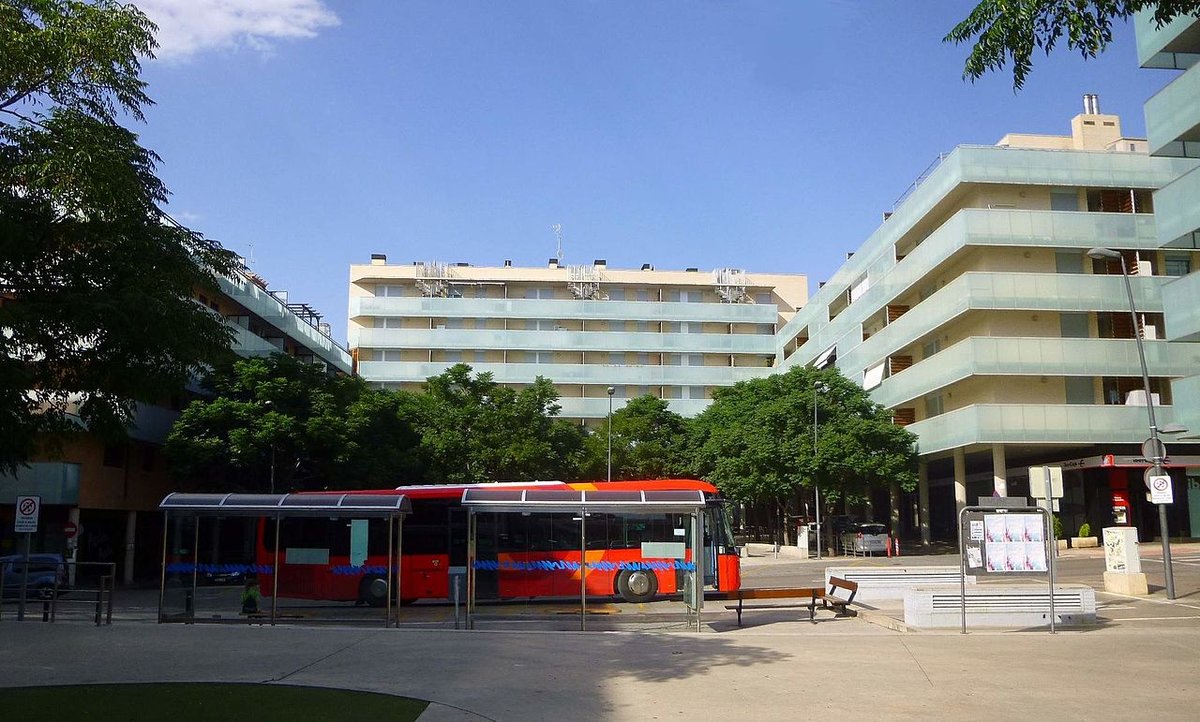
María de Huerva lies about twenty minutes from Zaragoza via the A-23. Access by car is straightforward, and there is also a frequent bus connection with the city.
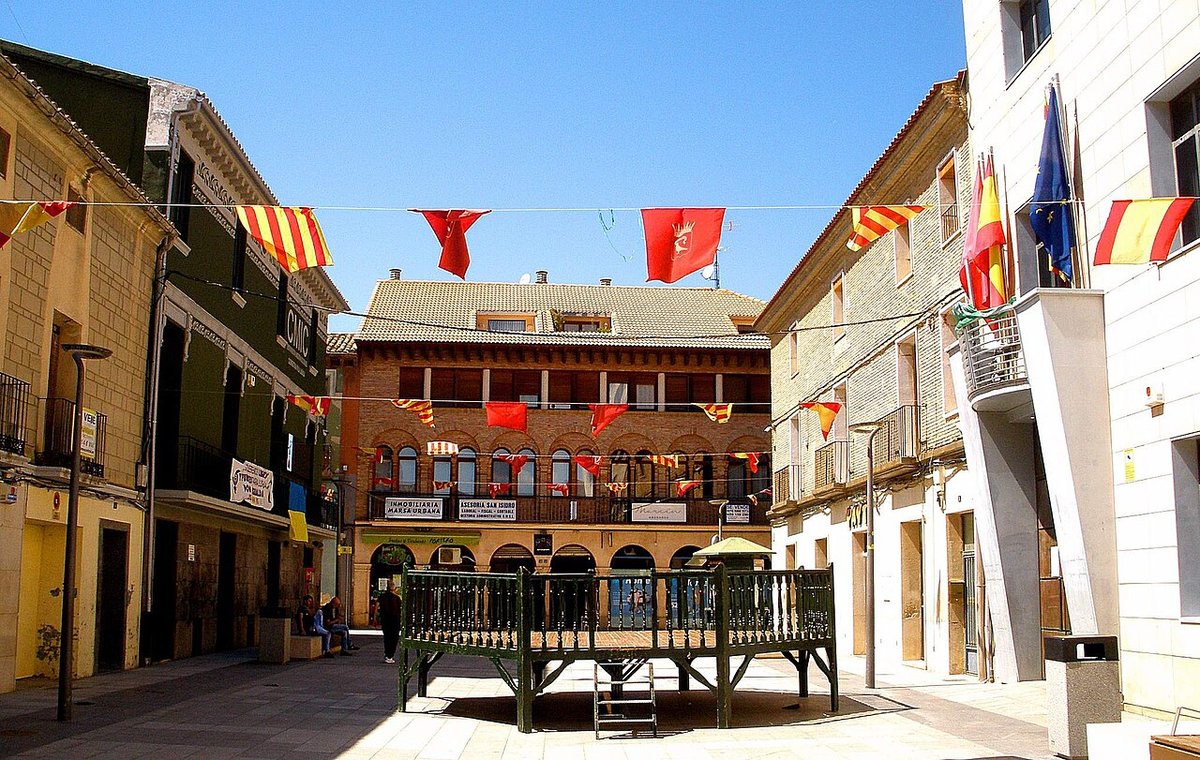
The urban area can be covered quickly. From the main square, the church and the canal are just a short walk away. Nearby streets still have houses of two or three storeys, many with stone doorways and iron balconies.
These buildings are worth a closer look for anyone interested in traditional architecture. Several date from the expansion of the 18th and 19th centuries, a period linked to the growth brought by irrigation.
The seasons alter how the place feels. In spring, the paths across the plain are often damp from watering. Summer slows during the afternoon siesta. In autumn, the scent of grape must appears during the harvest. In winter, with fog or snow, the landscape begins to resemble steppe again. It becomes easier then to understand the importance of water here.