Full Article
about Zaragoza
Hide article Read full article
A city that reveals itself slowly
Tourism in Zaragoza feels a bit like that quiet friend who rarely suggests plans, until one day they show you their neighbourhood and you end up wondering how you’d never noticed it before. The city has been there for centuries, positioned between Madrid and Barcelona, often overlooked. Spend a little time here and different layers begin to appear: Roman remains, Mudéjar towers, Baroque buildings, and 19th-century streets, all sitting one over the other like the layers of an onion from the Ebro valley.
That mix is what defines Zaragoza. It is not presented in neat sections or carefully separated districts. Instead, everything overlaps in a way that feels lived-in rather than staged.
From Caesaraugusta to Goya
Walking through Zaragoza can feel like shifting pieces in a historical puzzle. One moment you are stepping across what was once the Roman forum of Caesaraugusta, and shortly after you find yourself looking up at a Mudéjar tower that seems to belong to another world. Keep going and the Basílica del Pilar appears, vast enough to make anyone stop and look up, even those who are not particularly interested in churches.
What stands out is how naturally these elements coexist. The city does not feel like an open-air museum or a carefully preserved set. Over time, each layer has settled into place, like a house that has been renovated bit by bit until everything somehow fits together.
The Ebro river helps shape that experience. It cuts through the centre and keeps many of the main sights within a manageable distance. With a bit of planning, it is perfectly possible to see the essentials in a couple of days without rushing from place to place.
Two cathedrals facing each other
The obvious starting point is the Basílica del Pilar. It is worth seeing from the outside, where it dominates the square, and also from within.
A simple tip makes a difference: avoid the busiest entrance and use one of the side doors instead. There, it is common to come across local people stepping in briefly, pausing by the altar, then leaving again. That everyday rhythm softens the grandeur of the space and makes it feel more connected to the city.
Just a short walk away stands La Seo, often overlooked by visitors, which is a mistake. Its exterior combines several architectural styles from different periods, including Romanesque, Gothic, Mudéjar and Renaissance. In many places that kind of mix might feel disjointed, but here it works in a way that is surprisingly coherent.
Inside, the collection of historical tapestries tends to draw attention. Even visitors who arrive without particular expectations often leave talking about that room.
The unexpected Aljafería
The Palacio de la Aljafería often comes as a surprise. Many visitors arrive in Zaragoza thinking mainly of the Pilar, then come across this Islamic palace on the edge of the historic centre.
It was built when Zaragoza was the capital of a taifa kingdom, and it still preserves courtyards, arches and decorative details reminiscent of other better-known Andalusian palaces. It is not especially large, yet it invites a slower pace, with corners that reward a bit of patience.
Today, the building also houses the regional parliament. Medieval remains and present-day politics share the same space, creating a combination that might seem unusual at first but works in practice.
Eating well without overthinking it
Food in Zaragoza takes Aragonese cooking seriously, though without any sense of showiness.
Migas appear on many menus. They are more than just breadcrumbs with chorizo, often prepared with grapes, pieces of panceta, and plenty of olive oil. It is one of those dishes that seem simple until you try a well-made version.
Ternasco is another staple. This young lamb, usually roasted or grilled, is typically served with potatoes. It is filling in the way that calls for a walk afterwards rather than anything too energetic.
Then there are borrajas, a vegetable not often seen outside Aragon. It is seasonal and commonly cooked with potato and ham. It may sound modest, but when prepared properly it tends to surprise people.
When the city shifts: Fiestas del Pilar
During the Fiestas del Pilar, Zaragoza changes its rhythm completely. Streets fill with people, music spreads across the city, and groups known as peñas take part in activities throughout different areas. Even those who live here feel how everything revolves around the celebrations during those days.
The best-known moment is the offering of flowers to the Virgen del Pilar. For hours, groups dressed in traditional clothing walk through the city, and the square fills with bouquets until they form a vast floral display.
Anyone visiting at that time should expect crowds. In return, the city is seen at one of its most intense and lively moments.
The simple trick: look up
There is a small detail that changes how Zaragoza is experienced. Many buildings go unnoticed if attention stays at street level.
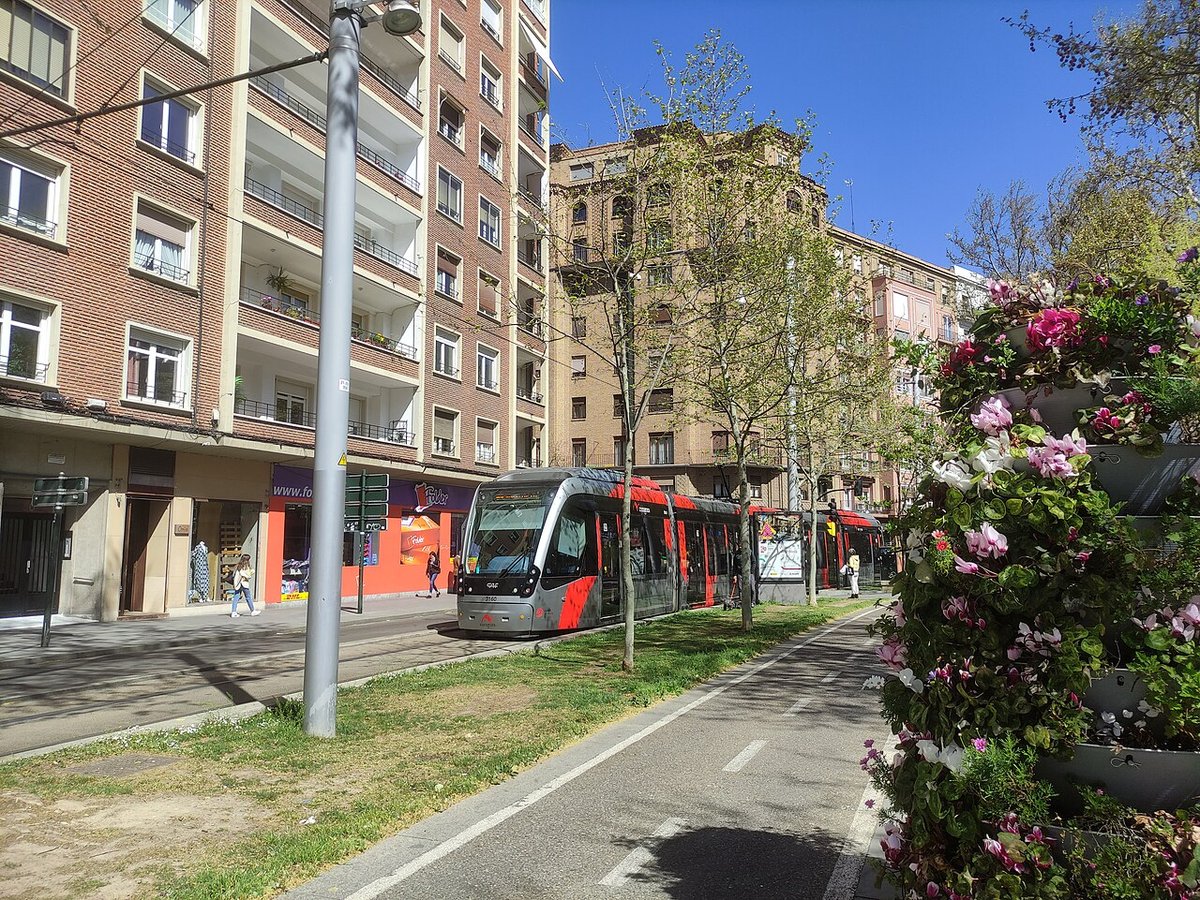
In several central streets, especially around Alfonso I or Don Jaime, looking up reveals decorative balconies, modernist façades, and architectural details that are easy to miss when walking in a hurry.
A straightforward walk might begin at the Puente de Piedra, cross towards the Plaza del Pilar, continue down Don Jaime, and end further south near broad green areas where locals tend to stroll or sit for a while.
That route captures something essential about Zaragoza. It is a city that does not try to impress at every step or demand constant attention. Yet by the time you leave, it becomes clear that within just a few streets you have moved through far more than expected.