Full Article
about Zuera
Hide article Read full article
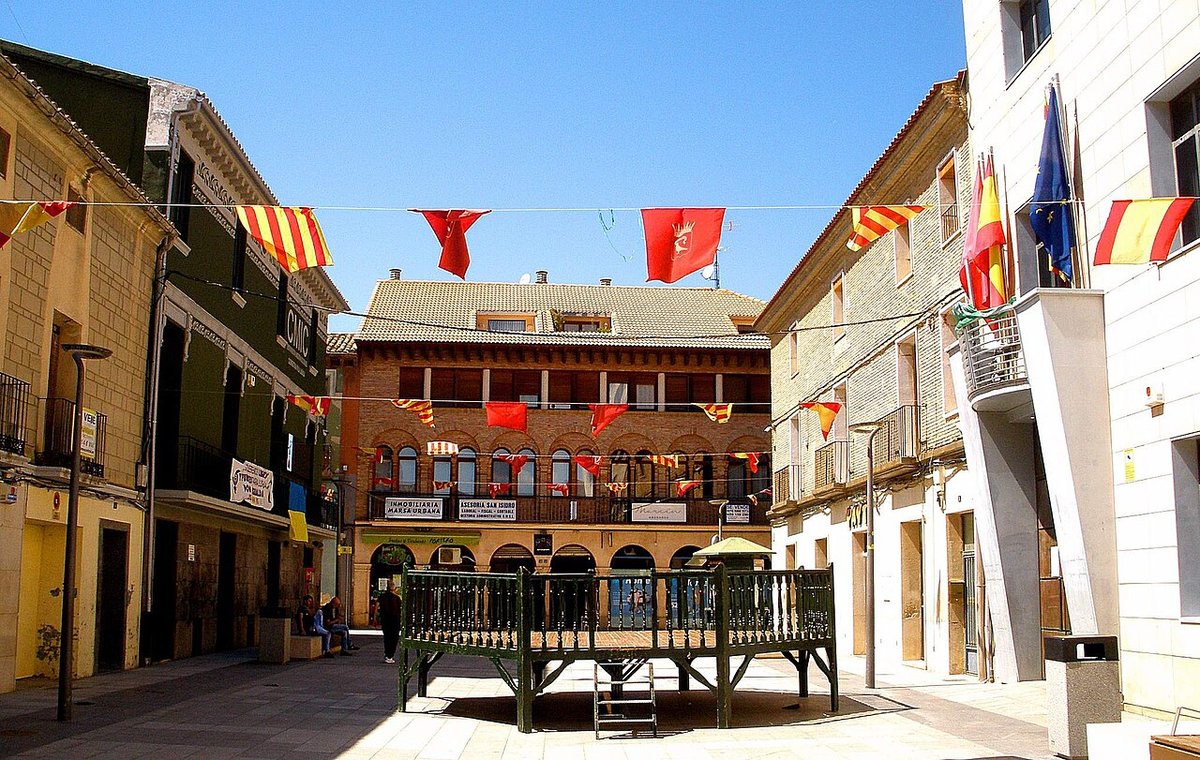
By mid-morning, when the sun is already bouncing off the brick façades, the wind from the Ebro valley slips through the streets and carries the smell of freshly baked bread. In the Plaza Mayor there is always someone crossing slowly: neighbours greeting each other, a conversation stretching out beside the town hall. Blackbirds can be heard in the ash trees, and traffic noise feels far away. Zuera does not suddenly spring to life. It eases into the day, as many towns along the Gállego corridor do, where mornings begin early.
Brick and Mudejar heritage by the Gállego
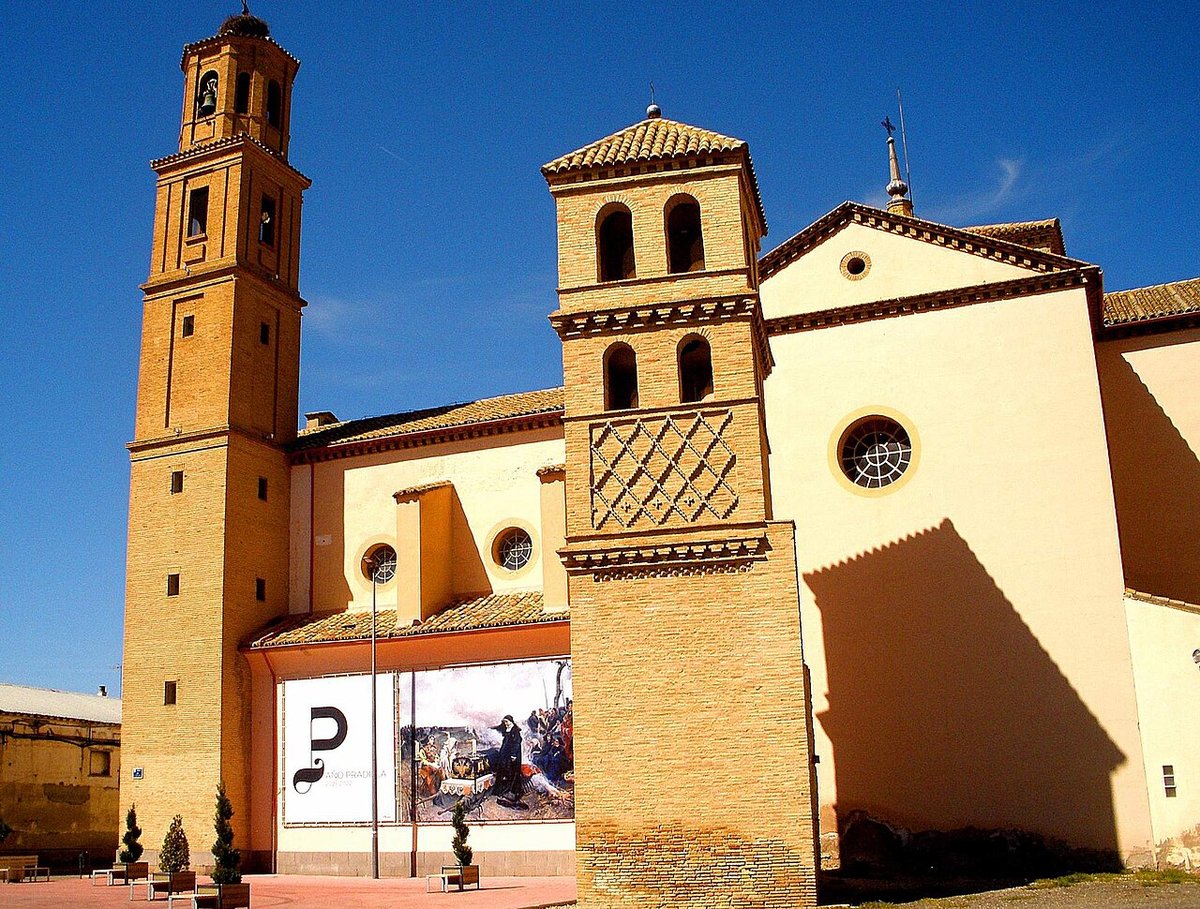
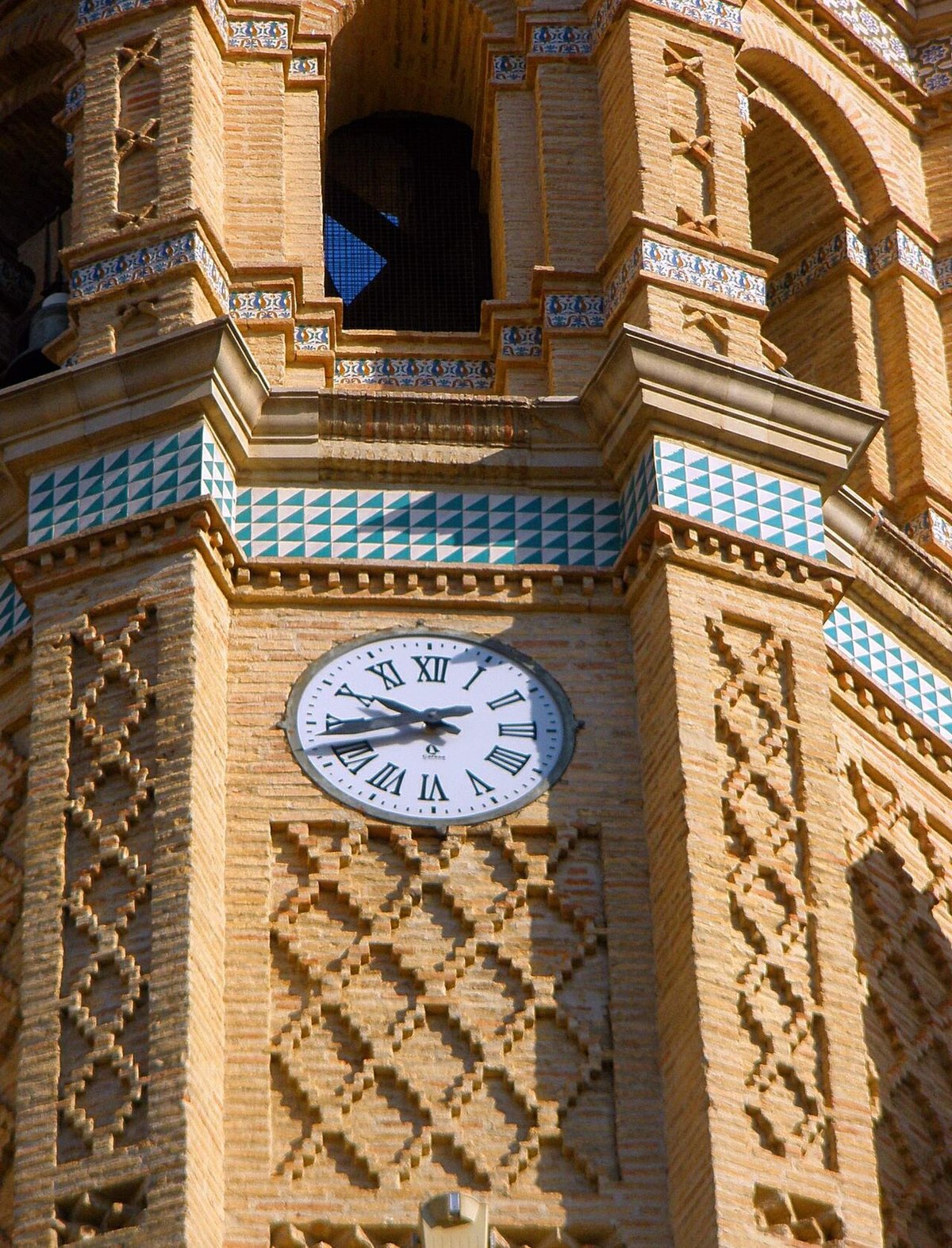
The church of San Pedro shapes the centre’s skyline. Brick dominates here: walls, buttresses, towers that shift in colour as the light changes. It belongs to the Mudejar tradition so characteristic of Aragón, where fired clay takes the role that stone might have elsewhere. From the square, the afternoon sun reveals the textures, picking out the reliefs and the darker lines between each brick.
Inside, the light filters in cautiously. There is a scent of wax and old wood, and the floor shows the wear of generations who have passed through on their way to the market or the surrounding farmland. It is not a grand or monumental church. Instead, it feels lived in, part of the everyday rhythm of the town.
In one of the cultural buildings in the centre, a set of historic grisaille paintings dedicated to San Jorge has also been preserved. They were discovered during building work some years ago and are now on display. The delicate black and white figures stand out against the atmosphere of the space, with its wood, stage curtains and the faint dust typical of a theatre.
When migas come to the table
Around midday, smells begin to drift out of kitchens: garlic, pork belly, hot oil. Migas still appear on many tables when the weather turns cooler or when people gather to eat together. The dish is made from stale bread, broken into crumbs and slowly worked in a large pan with patience.
In some of the town’s bars, they are still served this way, brought out in the pan itself. They might be accompanied by grapes, longaniza, or whatever is at hand. It is food that invites conversation, something to pick at while stories unfold about work in the fields or at the factory.
Sitting for a while in the square during summer, the shade of the trees becomes the place to be. The wind moves the leaves with a dry sound and at times lifts fine dust carried in from the agricultural tracks. In many homes, vegetables typical of the area are still cooked, such as borraja, which usually comes from the irrigated land nearby in the Ebro valley.
The hermitage of the Salz and open fields
A few kilometres from the town centre, along tracks that cut through farmland, stands the hermitage of the Virgen del Salz. The name seems to come from salex, the Latin word for willow, and local tradition says the image of the Virgin was found beside one of these trees centuries ago.
The route there is flat and crosses an open landscape: alfalfa fields, maize depending on the season, and irrigation ponds where herons sometimes stand motionless. In spring everything turns an intense green, and the song of calandrias, a type of lark, can be heard even when the wind picks up.
For those walking or cycling, it is worth carrying water. There is little shade among the fields, and the valley sun becomes strong earlier than expected. In return, there is a broad sense of quiet: sprinklers turning in steady rhythm and, far off, the constant hum of the motorway.
A quiet memorial by the cemetery
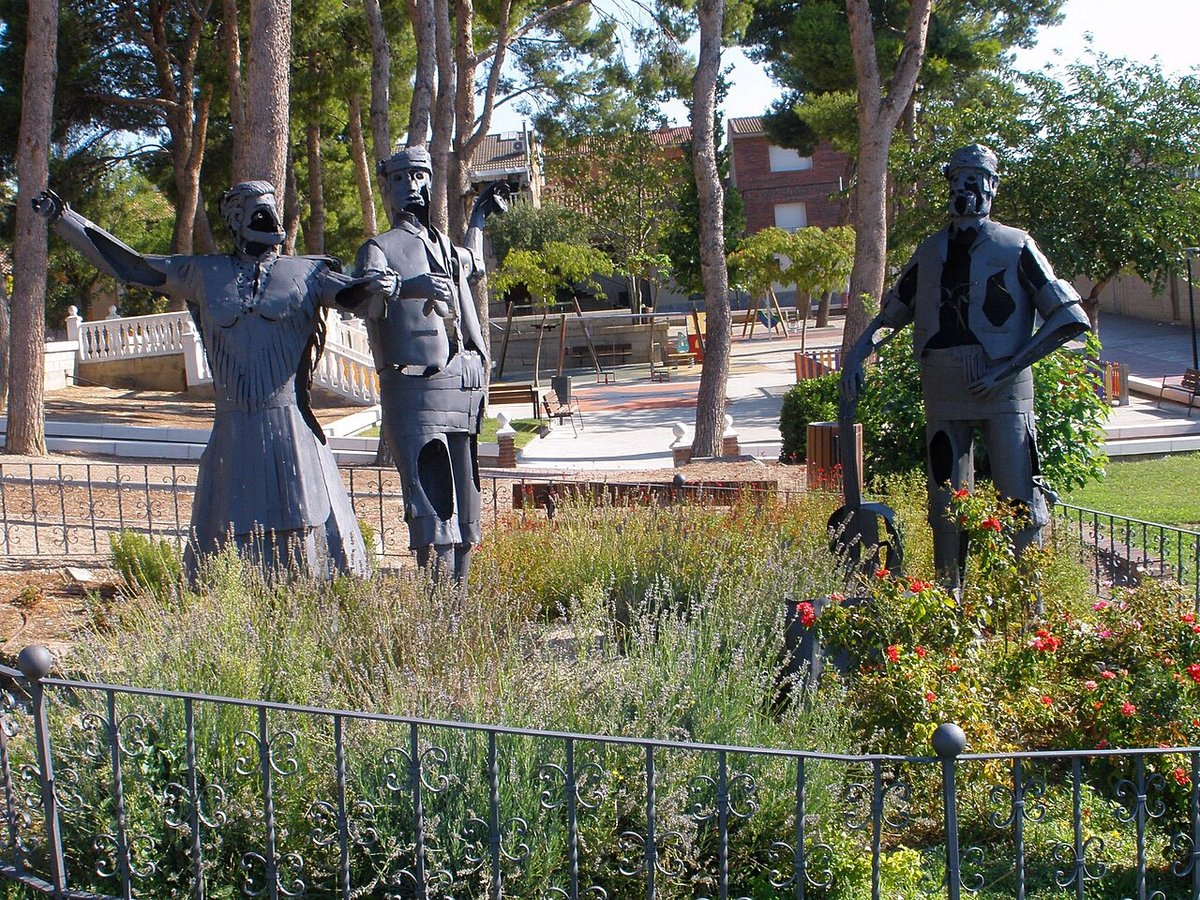
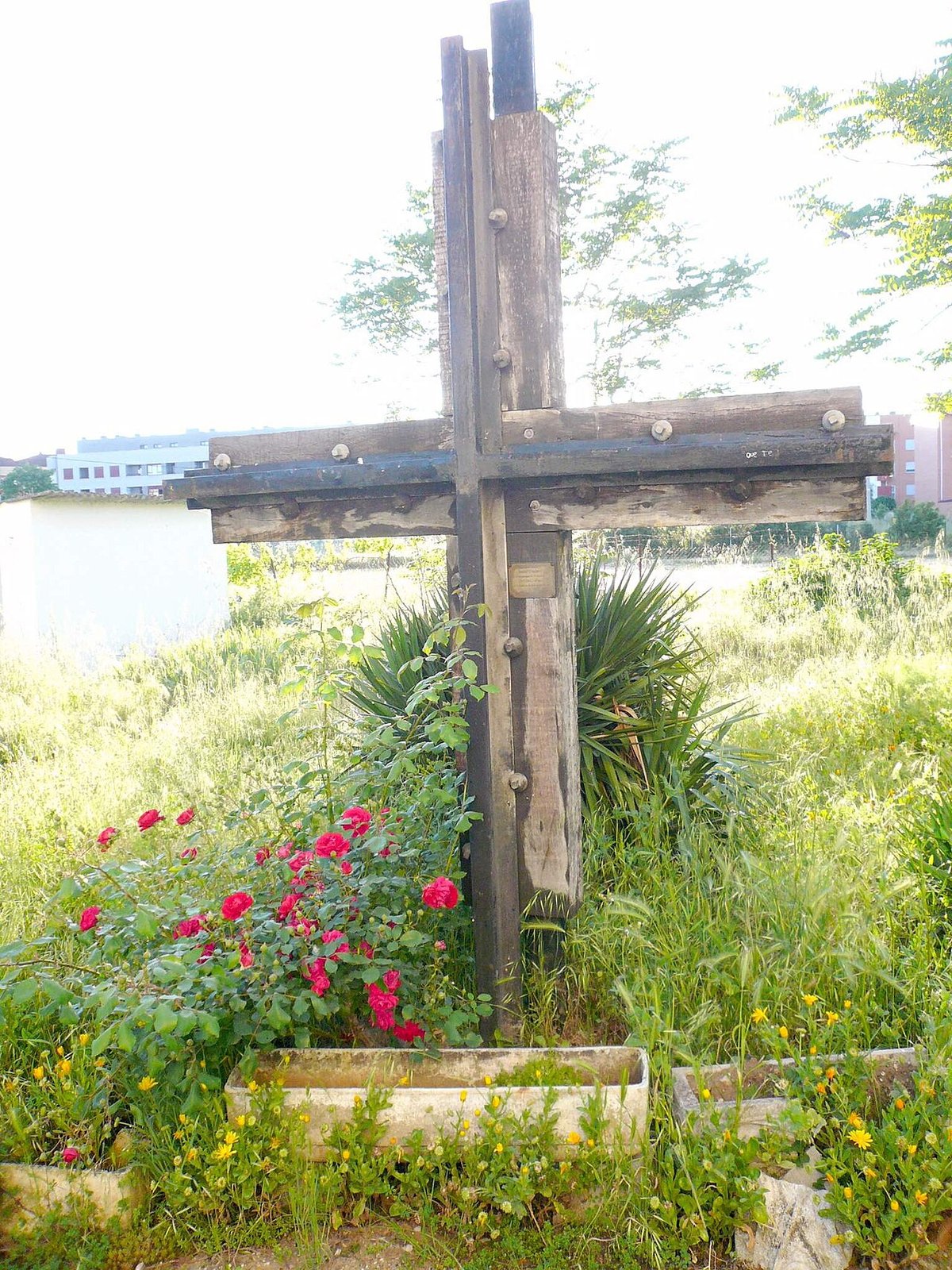
On the outskirts, near the cemetery, a steel monolith commemorates local residents who suffered repression during the Spanish Civil War. The piece is a vertical slab of dark metal engraved with several names.
It is not a heavily visited place. Occasionally someone leaves a stone on the base or pauses briefly before continuing towards the fields. The steel shifts in tone as the light changes, and the cierzo wind passes through without obstruction.
Seasons, light and daily rhythm
Spring is often a good time to walk in the surrounding countryside. Crops are growing and the valley has not yet reached the intense heat of summer. In July and August, the sun falls more harshly, and the cierzo, a strong local wind, can rise suddenly, pushing dust through the streets and rattling shutters at night.
During the week, the centre is quieter. The square can be crossed without hurry, or a bench becomes a place to sit and watch daily life move by: someone returning with shopping, a couple of teenagers cycling past, the church clock marking the hours.
As evening approaches, the brick of San Pedro deepens to a dark red, almost purple. Swallows fly low, and the air once again carries the smell of bread from the ovens. At that moment, Zuera slows down. For a few minutes, the town settles into silence before night begins.