Full Article
about Alconchel de Ariza
Hide article Read full article
A hillside village at its own pace
Early in the morning, before any cars pass through, the stone streets of Alconchel de Ariza settle into a kind of silence that belongs to very small places. Light filters slowly between reddish roof tiles and pale limestone walls. For a few minutes, the only sounds are birds and the creak of a door opening somewhere nearby.
The village sits on a slope overlooking the valley of the River Ariza, at around nine hundred metres above sea level. It is surrounded by cereal fields and scattered almond trees. In February, those trees fill with white blossom; by summer, the same landscape turns dry and golden.
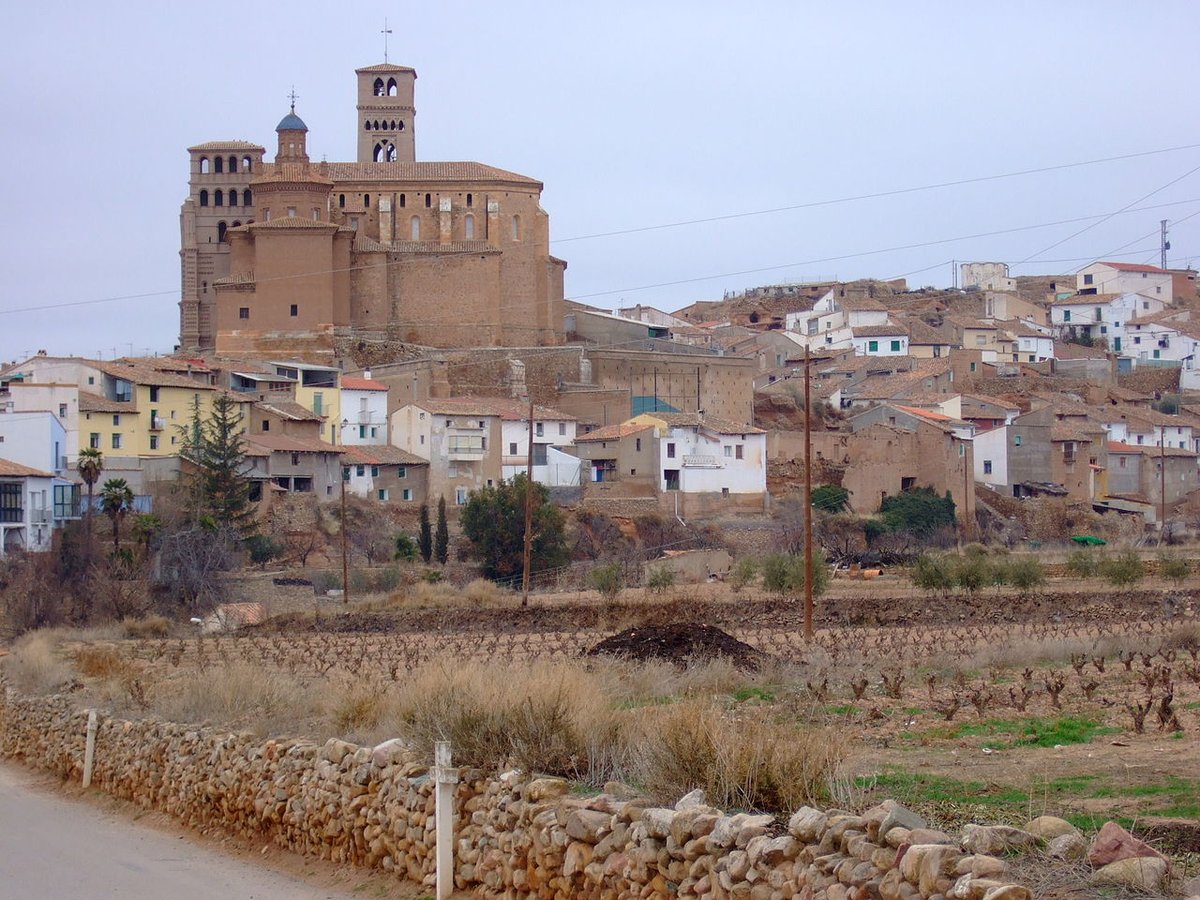
Fewer than a hundred people live here throughout the year, and that shapes everything. There is no steady traffic, no all-day bustle, no background noise. Houses cluster around the church of San Miguel Arcángel, which defines the outline of the village when approaching along the local road. The building itself shows its age in layers, with elements from different periods. Inside, it is restrained in style, much like many churches in this part of Aragón, where everyday use has left small traces on benches, floors and walls.
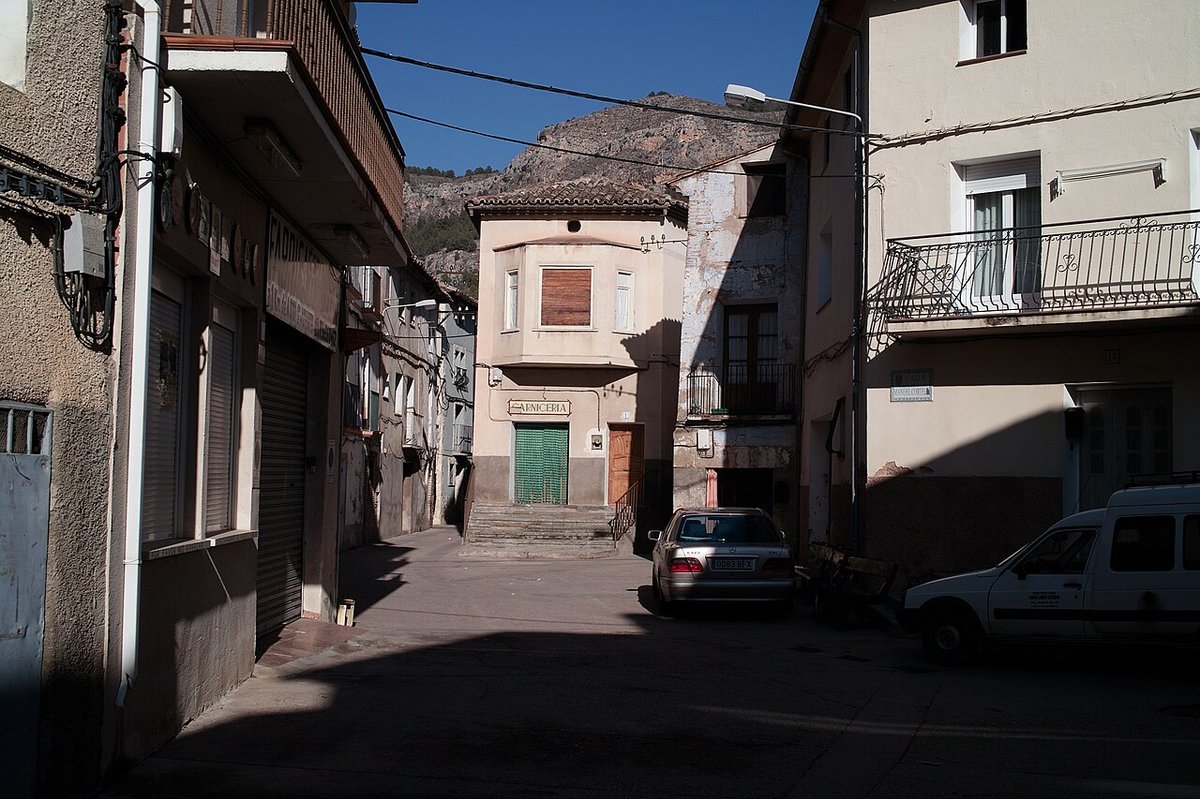
Walking through the streets is straightforward. There are short slopes, some narrow corners, and stone doorways with worn voussoirs. Many houses still have iron grilles on their windows and interior courtyards where firewood or farming tools were once kept.
Looking closely, without rushing
The village is small enough to cross in a short time, but it rewards a slower pace. The church remains the central point, its structure combining medieval sections with later alterations, a common feature in places that have adapted their buildings over centuries.
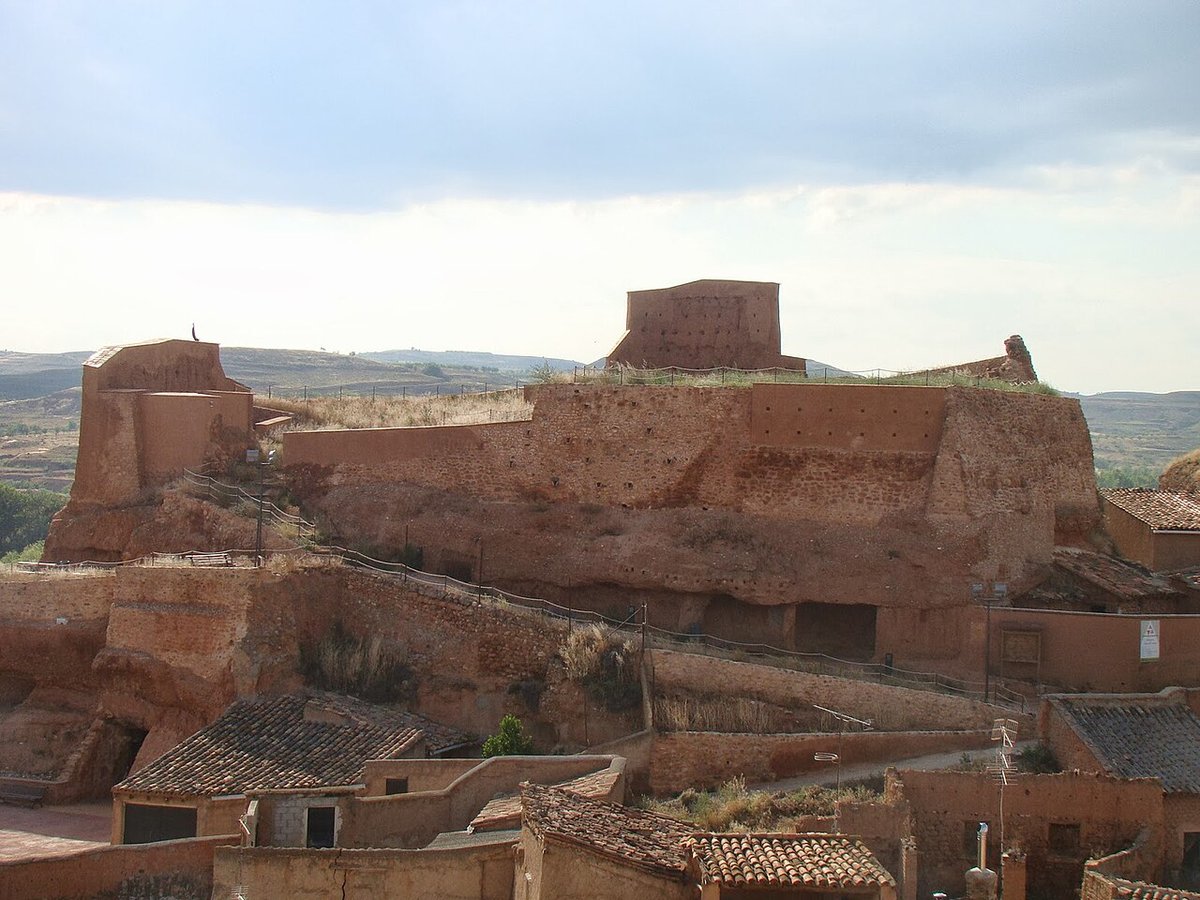
Around it, traditional houses line the streets. Their walls are made of limestone masonry, topped with curved terracotta tiles. Windows tend to be small, designed to keep out the winter cold and the strong summer sun. Some façades still have large doors that once opened onto corrals or stables.
In the quieter streets, details from another time are easy to spot. A stone bench set against a wall, a well sealed with a metal cover, a vine that spreads shade across half a façade in summer. These elements remain part of the everyday setting rather than preserved as displays.
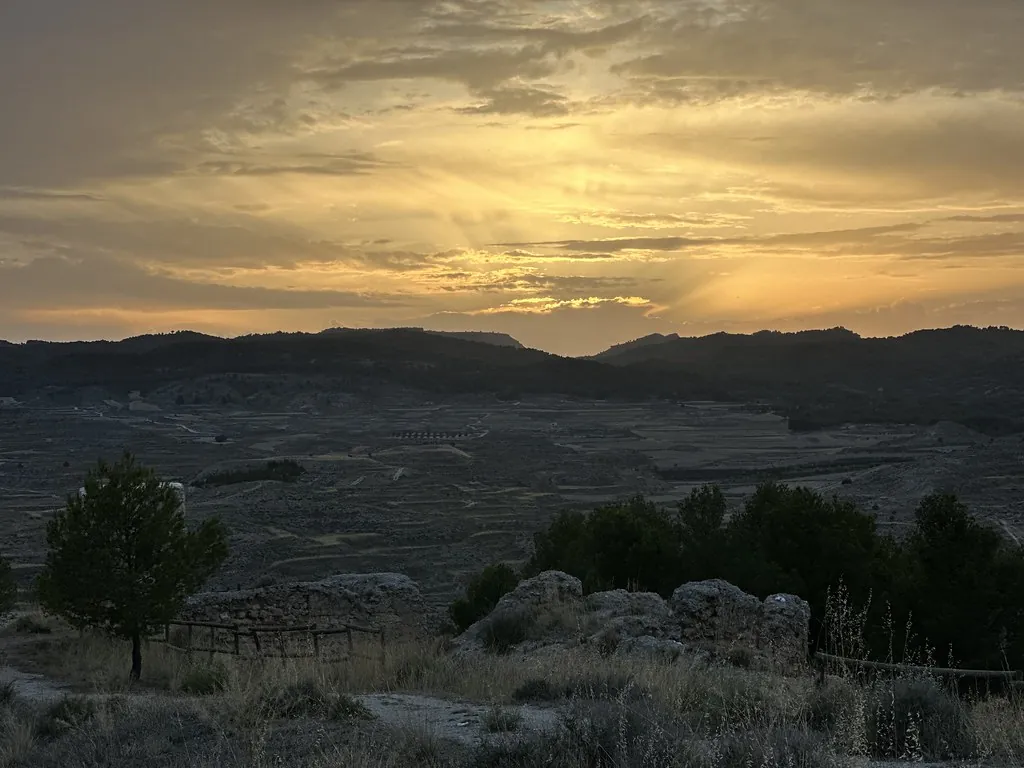
The landscape begins almost at the last house. From there, the view opens onto a patchwork of cereal fields, gentle hills and patches of pine forest stretching towards the first foothills of the Sistema Ibérico. At sunset, the colours shift quickly: ochres, muted greens and the pale grey of stone.
Paths through fields and open ground
The surroundings of Alconchel de Ariza are crossed by agricultural tracks and old livestock paths. They are not marked as tourist routes, but they have been used for generations to reach the fields. Comfortable footwear helps, as some sections have loose stones and slight inclines.
These paths run through cereal plots, a few olive groves and areas where isolated holm oaks appear. In spring, the fields turn greener than usual, and walking becomes especially pleasant. In summer, the sun is intense and shade is scarce, so earlier hours of the day are more suitable.
It is also a place where wildlife remains visible. Large birds of prey can often be seen gliding above the fields, and in milder seasons there are many smaller birds moving among field edges and almond trees.
Festive moments and everyday life
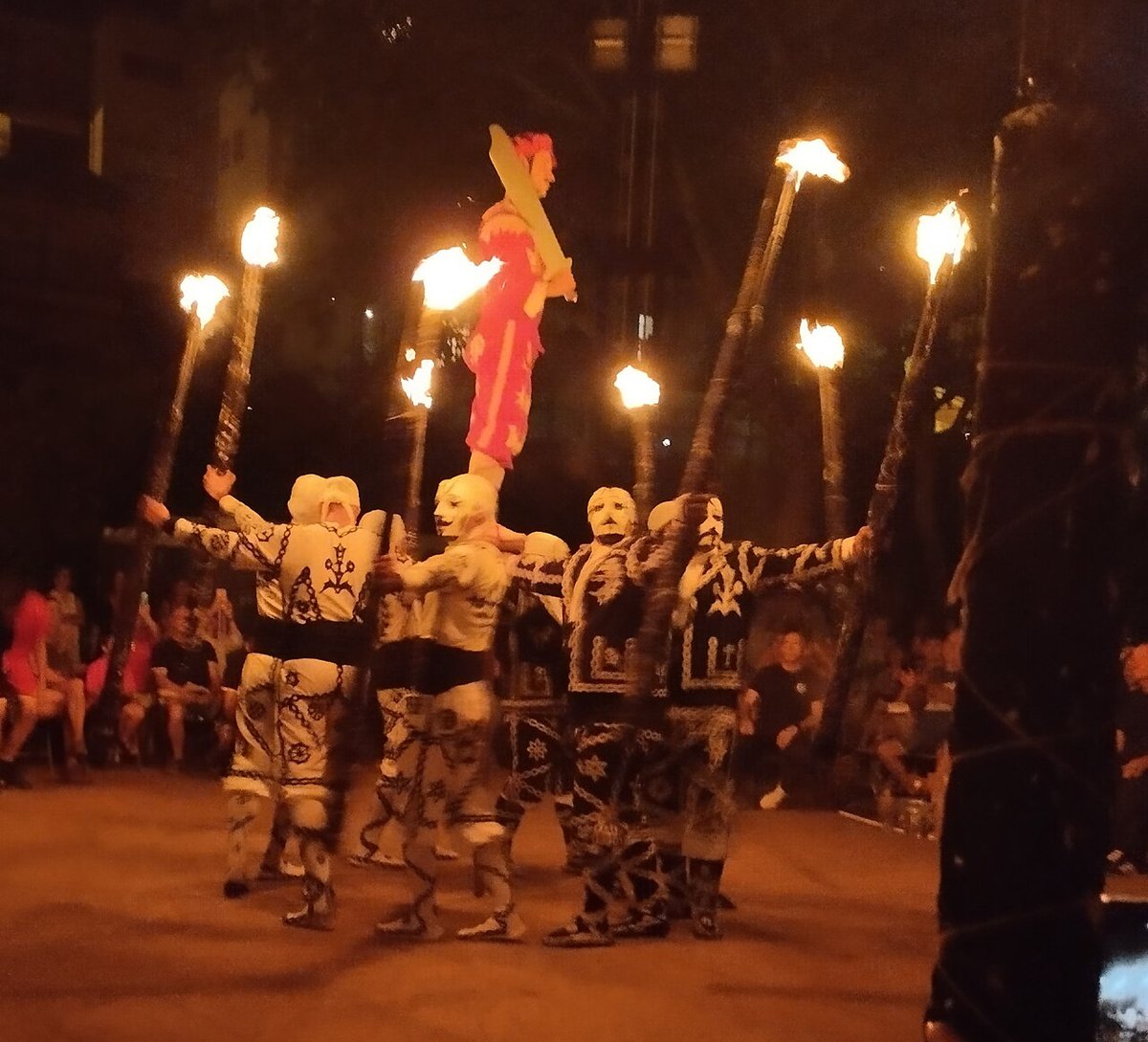
Local celebrations follow a traditional calendar. At the end of September, the feast of San Miguel, the village’s patron saint, brings one of the liveliest moments of the year. People who live elsewhere often return, and the programme usually includes a mass, a procession and gatherings that continue in the streets or inside homes.
In August, there are also summer festivities, more informal in character. With more people in the village, there are games, music and shared meals among neighbours and relatives.
For the rest of the year, life is quiet. Winter can be particularly cold, and many houses are only opened at weekends or during holiday periods.
Getting there
Alconchel de Ariza lies within the Comunidad de Calatayud, in the western part of the province of Zaragoza, close to the boundary with Soria. The usual approach is by car from the motorway linking Zaragoza and Madrid, followed by local roads that cross cereal fields and connect smaller villages.
The final stretch is calm, with little traffic. It is worth taking it slowly, especially at dusk or after dark, when encounters with wildlife or agricultural machinery are more likely. Once in the village, parking is generally easy, with space near the entrances and in a few small squares.