Full Article
about Ariza
Hide article Read full article
A village shaped by its position
To understand Ariza, look at a map of Zaragoza province. The village sits at its south-western edge, where the land begins to level out towards the Castilian meseta. This is the point where the Jalón valley opens into a wider passage, a natural corridor between the Ebro basin and the interior plateau. Ariza was built on that slope, its streets climbing away from the old road that once connected Zaragoza with Madrid.
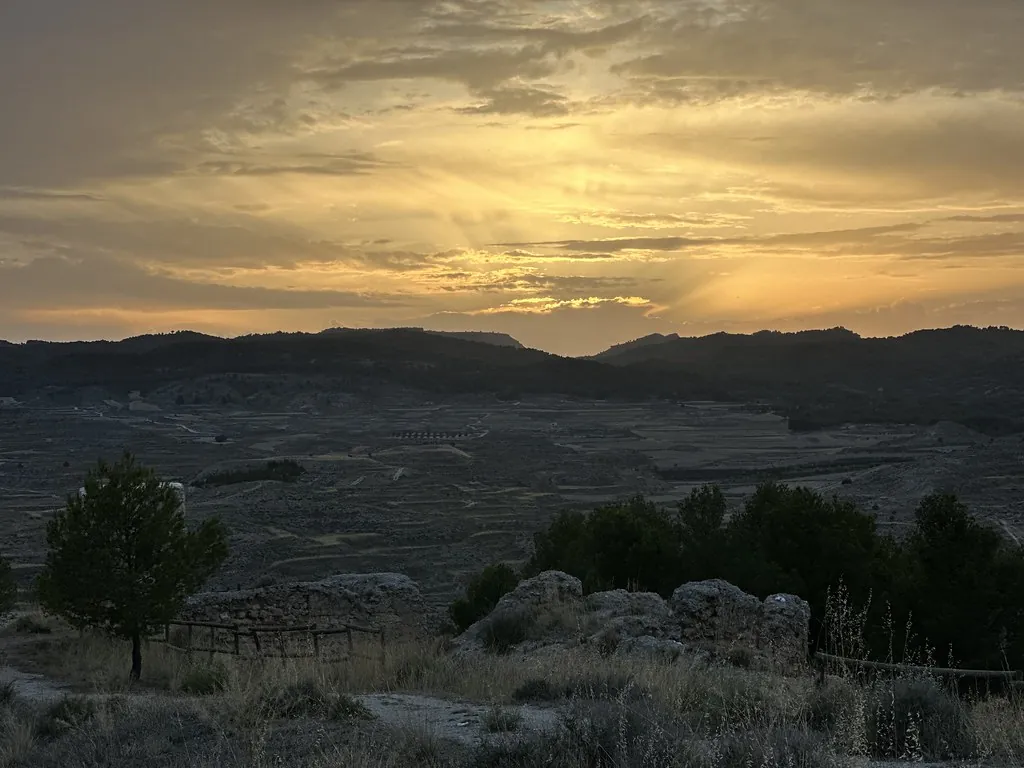
A little over a thousand people live here now. The urban layout follows the incline, with newer construction spreading onto flatter land below. Beyond the last houses, the view is one of open cereal fields, some vineyards, and patches of holm oak. The light is clear, the air dry—this is the landscape of the Comunidad de Calatayud.
A castle for watching the road
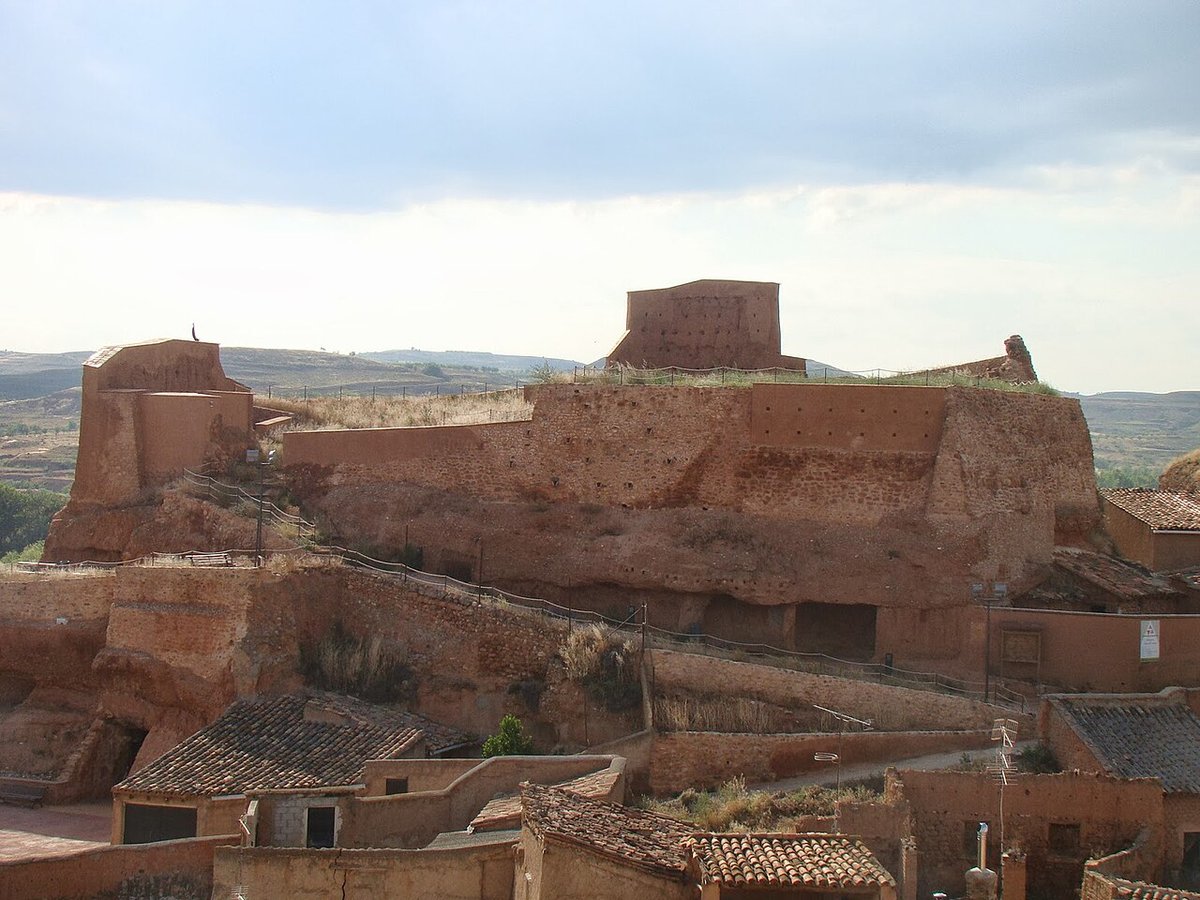
The remains of the castle occupy the highest point. Not much masonry stands today, but the purpose of the location is immediately clear. From here, you command a view of the entire valley floor and the historic route that passed through it. The climb up is short but steep, and it reorients your sense of the place: Ariza was settled here to control movement, not just to farm.
The relationship between the settlement and its land becomes obvious from this vantage point. The castle wasn't an isolated fortification; it was the apex of a community whose life was organised along the slope below, always with an eye on the traffic along the Jalón.
San Pedro: a layered history
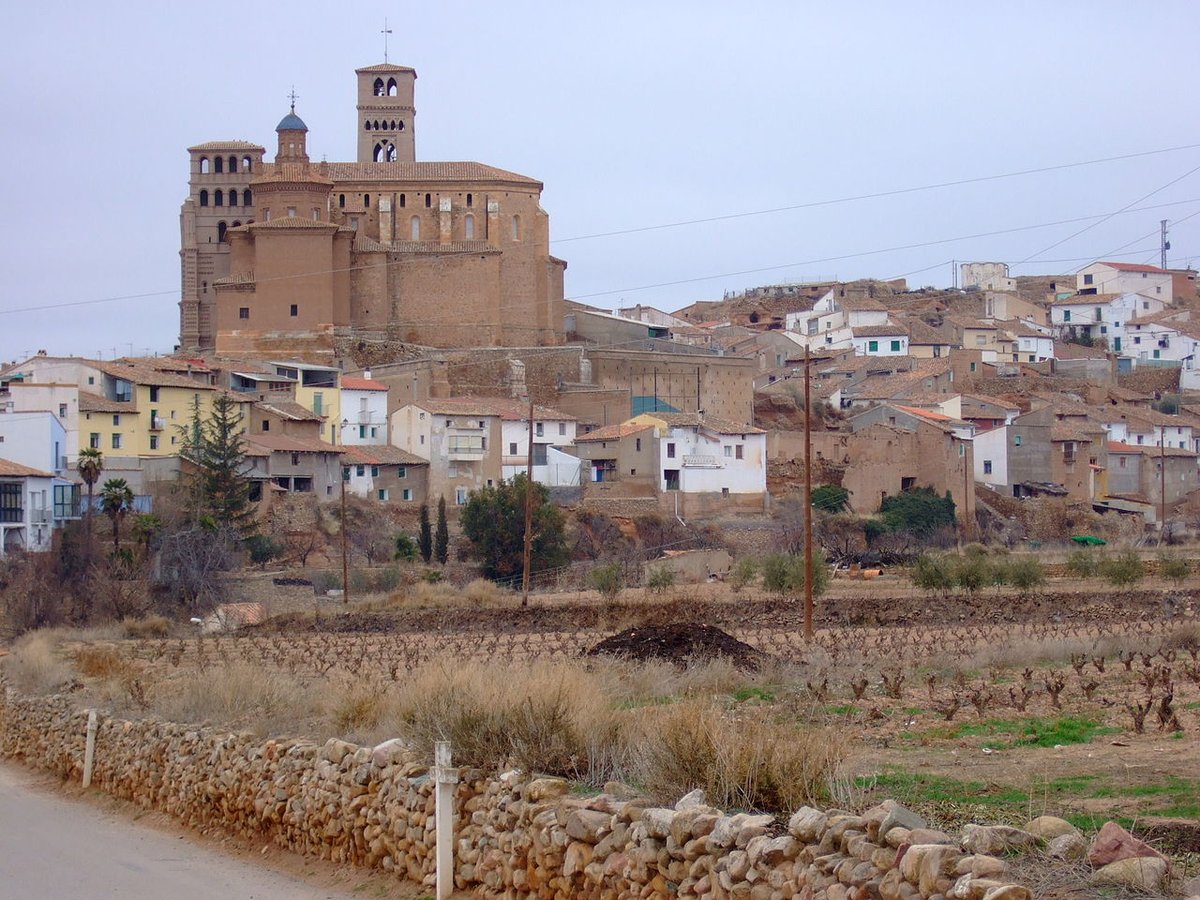
The parish church of San Pedro sits centrally in the town, its tower a useful landmark when navigating the upper streets. The building is a record of modifications. Its foundations are Romanesque, but the visible structure speaks more of Gothic interventions and later Baroque updates. These changes were practical, responding to the community's needs and means over centuries.
Inside, the preservation of certain altarpieces and objects reflects a continuity of local devotion. They are not exceptional works in an art-historical sense, but they are precisely what you would expect to find in a village that served as a stop on a long-distance route—functional, enduring, and adapted over time.
Architecture of a borderland
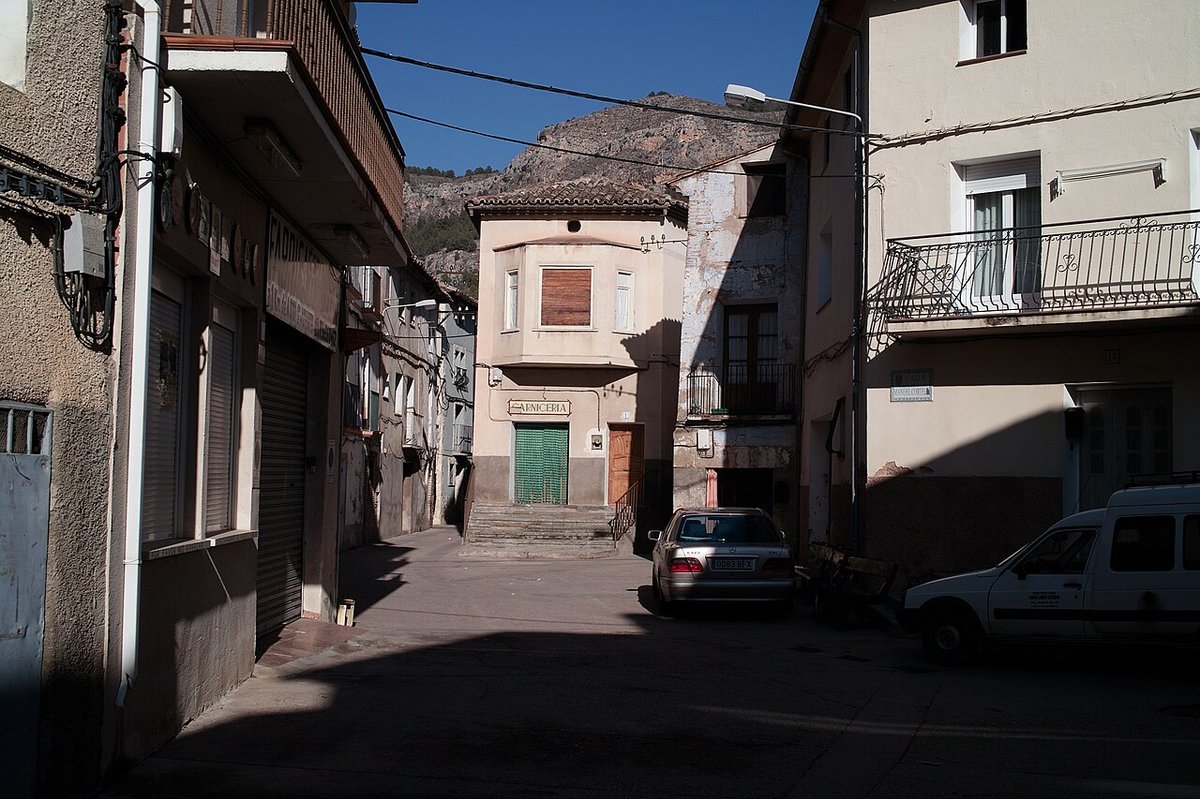
Walking the older streets, you see the architectural language of a border zone between Aragón and Castile. Stonework at the base of buildings gives way to brick above, a practical use of local materials. Some doorways are framed by carved coats of arms, marking the homes of families who held administrative or military roles linked to the castle and the road.
The Plaza Mayor, arcaded on one side, still functions as it was designed to: a sheltered public space for gathering. Its architecture is unassuming, meant for use rather than show. You can see how it would have served for market days and communal events, a role it hasn't entirely lost.
The rhythm of the fields
Behind the village, a network of agricultural tracks leads into the fields. Walking one for even twenty minutes shifts your perspective. The scale of the cereal farming becomes apparent, as does the quiet, methodical rhythm that defines life here outside the main streets. These are working paths, not scenic routes, and that is their value.
The river Jalón runs nearby, its course marked by a line of poplars and riparian vegetation. It creates a narrow band of green that contrasts sharply with the cultivated plains. It’s a good place for birdwatching; herons and kingfishers are often seen along this stretch.
Practical notes for visiting
You can walk the core of Ariza in under an hour, but take the time to climb to the castle site. The view is necessary context. The upper streets are steep in parts; wear shoes suited for cobbles and inclines.
If you plan to walk the field paths or go down to the riverbank, know that the ground can be muddy after rain. The area is best approached as a quiet stop within the broader Comarca de Calatayud, a region where the Mudéjar legacy in nearby towns like Calatayud itself or Tobed is more visually pronounced.