Full Article
about Embid de Ariza
Hide article Read full article
A village set in open land
Early in the morning, when the sun is still low, the fields around Embid de Ariza take on a pale, almost silvery tone. Dew clings to the cereal stalks and the wind moves the ears with a soft, papery sound. From afar, the church tower appears first. There are few other landmarks across the flat expanse.
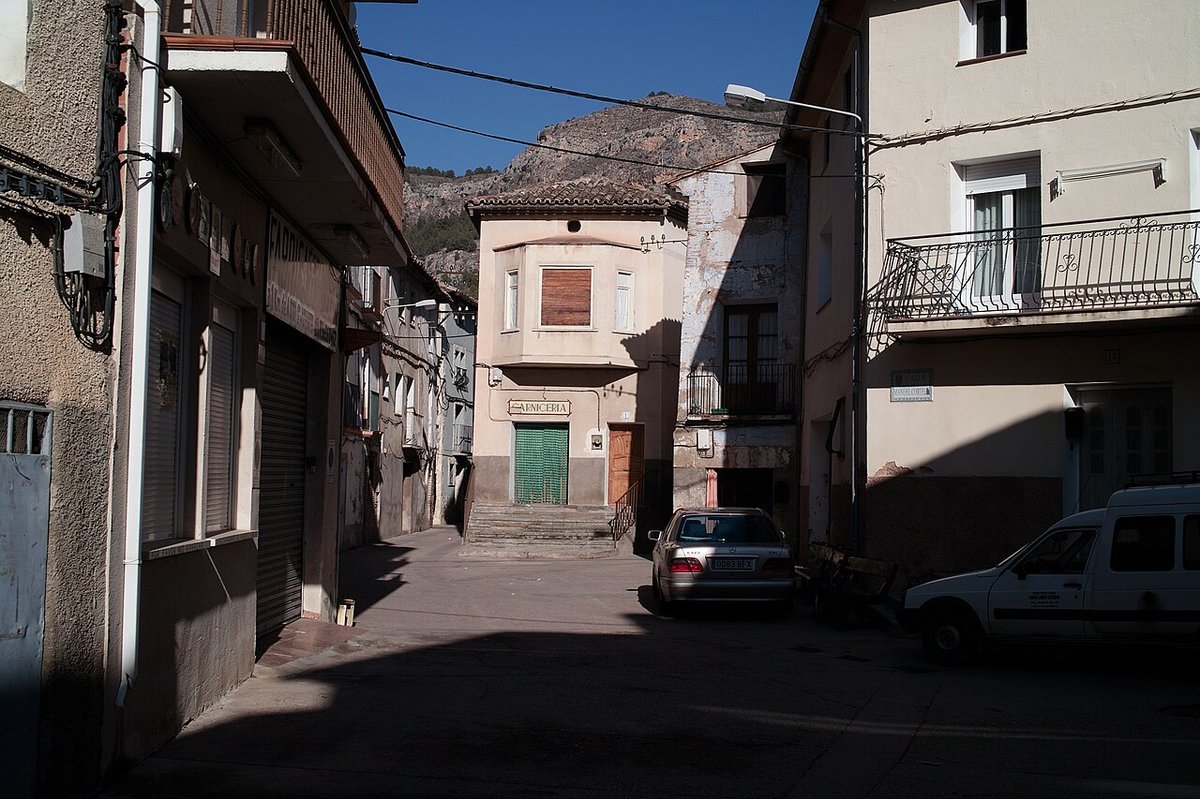
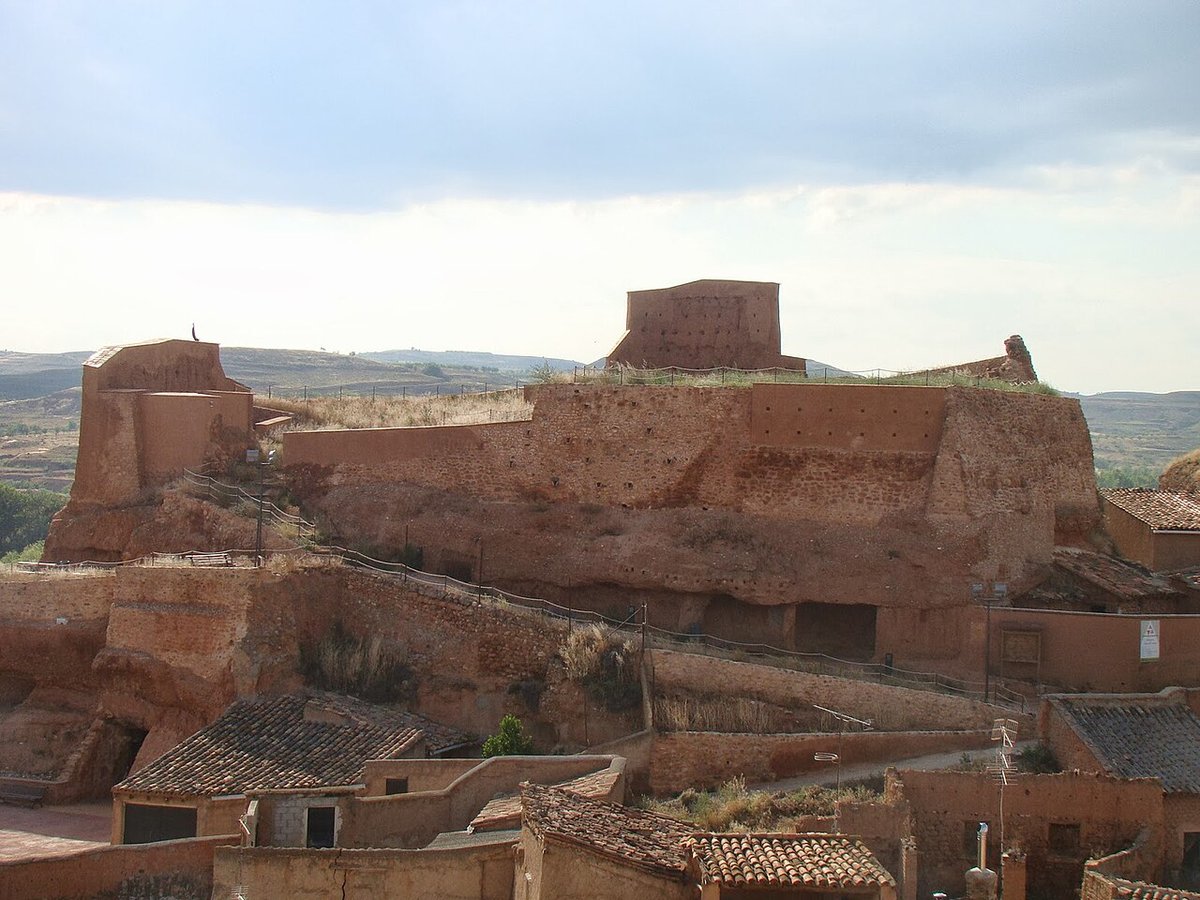
This is a village of fewer than thirty inhabitants in the Comunidad de Calatayud, in Aragón. Its layout is simple: a handful of short streets where houses lean into one another. Many still show walls made of rammed earth or irregular stone, along with heavy wooden doors darkened by time. Change has not come quickly here. Some façades have been repaired, others still carry fine cracks and old iron grilles.
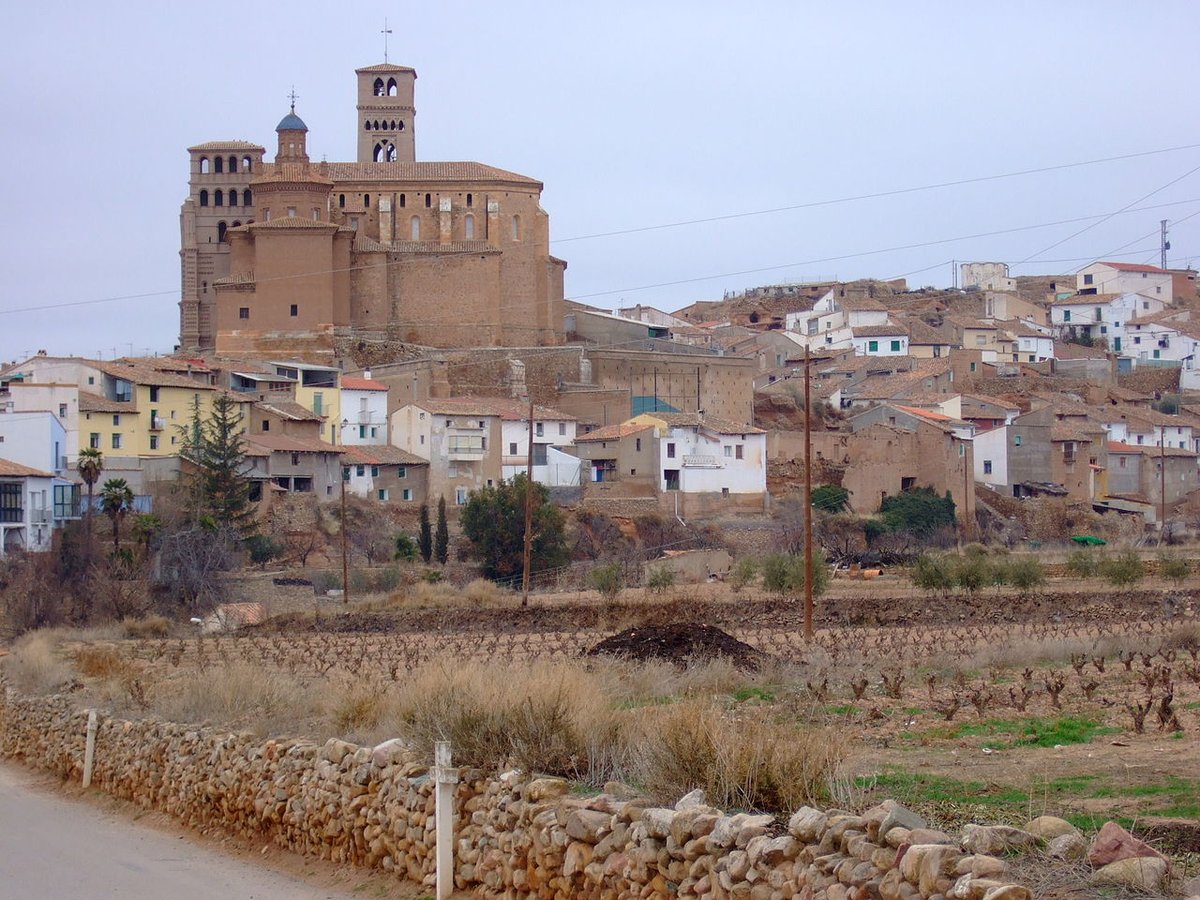
The parish church, dedicated to San Pedro and built in the 16th century, stands at the most visible point in the village. Its walls are thick and the entrance is plain. The bell tower, without much decoration, works as a reference point when arriving by road or on foot across the fields. In a place of this size, the tower also acts as a kind of clock. The bells continue to mark the passing hours.
Walking out into the fields
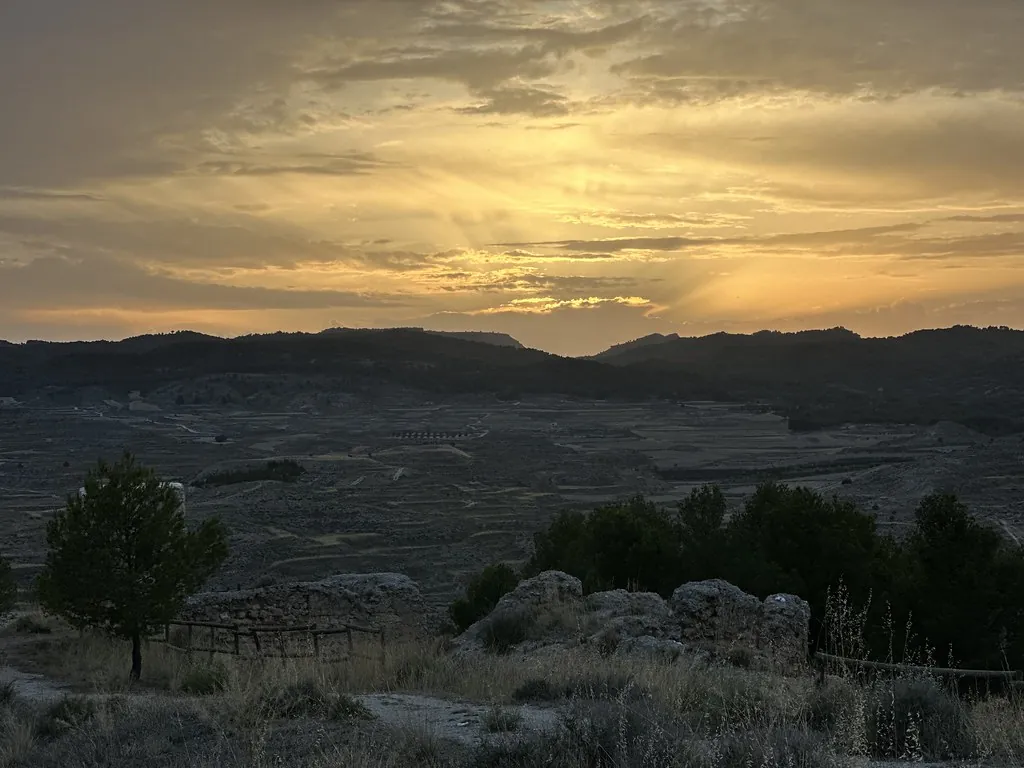
The landscape around Embid de Ariza stretches wide, with few visual barriers. Plots of wheat and barley follow one another as far as the eye can see. In spring, the colour turns a strong green. From June onwards, it shifts quickly towards gold, and the air begins to carry the dry scent of straw.
Several dirt tracks leave the village and fade into the surrounding farmland. They are not signposted as hiking routes, yet they are easy to follow because they are broad and clear. One of these paths leads to the small ermita of Santa Ana, a simple stone building located a short distance from the centre. In front of the chapel there is an open space where residents sometimes place benches or chairs to sit for a while, facing the horizon.
Evening walks bring small details into focus. Hoopoes can often be heard, and partridges may cross between the furrows. During summer, cicadas fill the quiet with their steady sound. Shade is scarce along most of these paths, so it makes sense to carry water and avoid the middle of the day when the heat is at its strongest.
Quiet roads across the Jalón valley
The secondary roads that link Embid de Ariza with other villages in the area tend to be very quiet. These are gentle stretches, without major climbs, and they are often used by cyclists who want to explore this part of the Jalón valley at an unhurried pace.
Ariza lies just a few kilometres away and works as a practical point of reference. There is more movement there, along with some basic services. From Ariza, it is possible to continue towards other villages in the surrounding area, each with its own rhythm. The landscape remains consistent: open, expansive, and shaped by agriculture across this part of Zaragoza province.
Everyday life and small-scale festivities
Daily life in Embid de Ariza is calm and fairly predictable. People walk through the streets, pause for conversation at their doorways, or head out along the local tracks. There is little else competing for attention, and that simplicity defines the place.
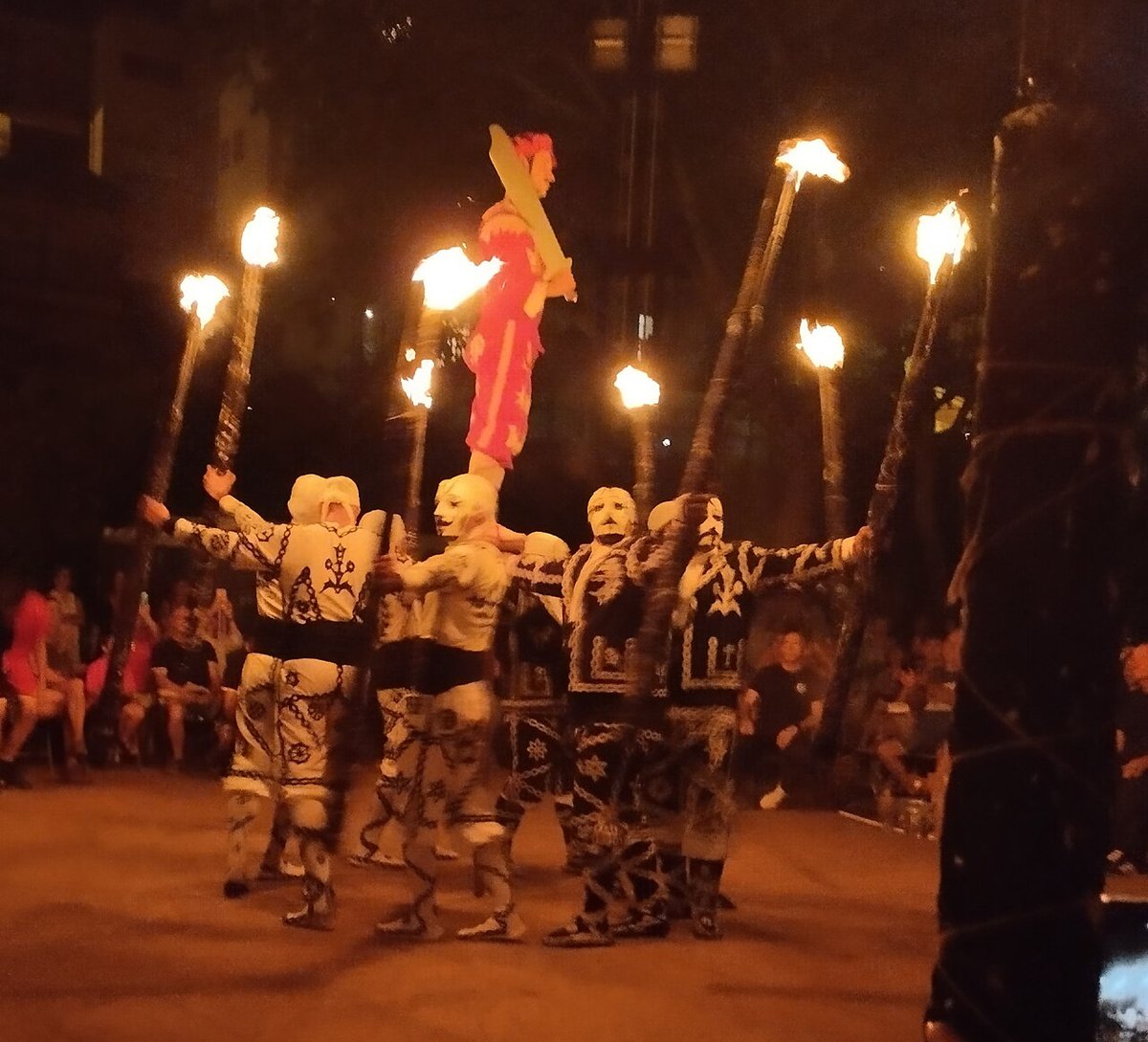
The main celebrations are the fiestas patronales in honour of San Pedro, usually held towards the end of August. The scale is modest. There is a short procession, residents who return to the village for those days, and shared meals in the square or near the church. In a village with so few inhabitants, any gathering takes on a special weight.
When to visit
For those considering tourism in Embid de Ariza, spring and autumn are generally the most pleasant seasons. Between April and June, the fields are green and the wind still carries a fresh edge. In autumn, the landscape turns more ochre and the sky is often very clear.
Summer can bring strong heat at midday. Early mornings and late afternoons offer a different atmosphere. The air moves a little more, and the village settles back into the broad silence that defines it for much of the year.
There are no major monuments or organised plans here. What remains is something simpler: the tower watching over the plain, dirt tracks that disappear into cereal fields, and the sense of being in a place where time moves more slowly than in most others. Sitting for a while near the church or walking out towards the edge of the village is often enough to take it in.