Full Article
about Fuentes de Jiloca
Hide article Read full article
A village that appears with the light
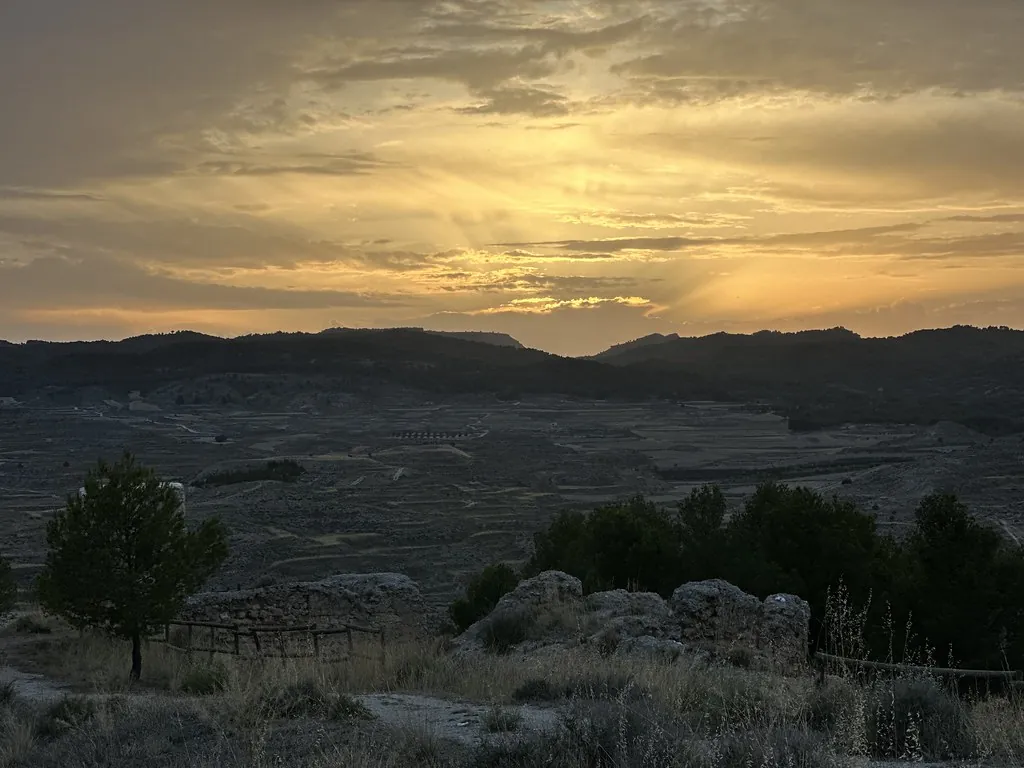
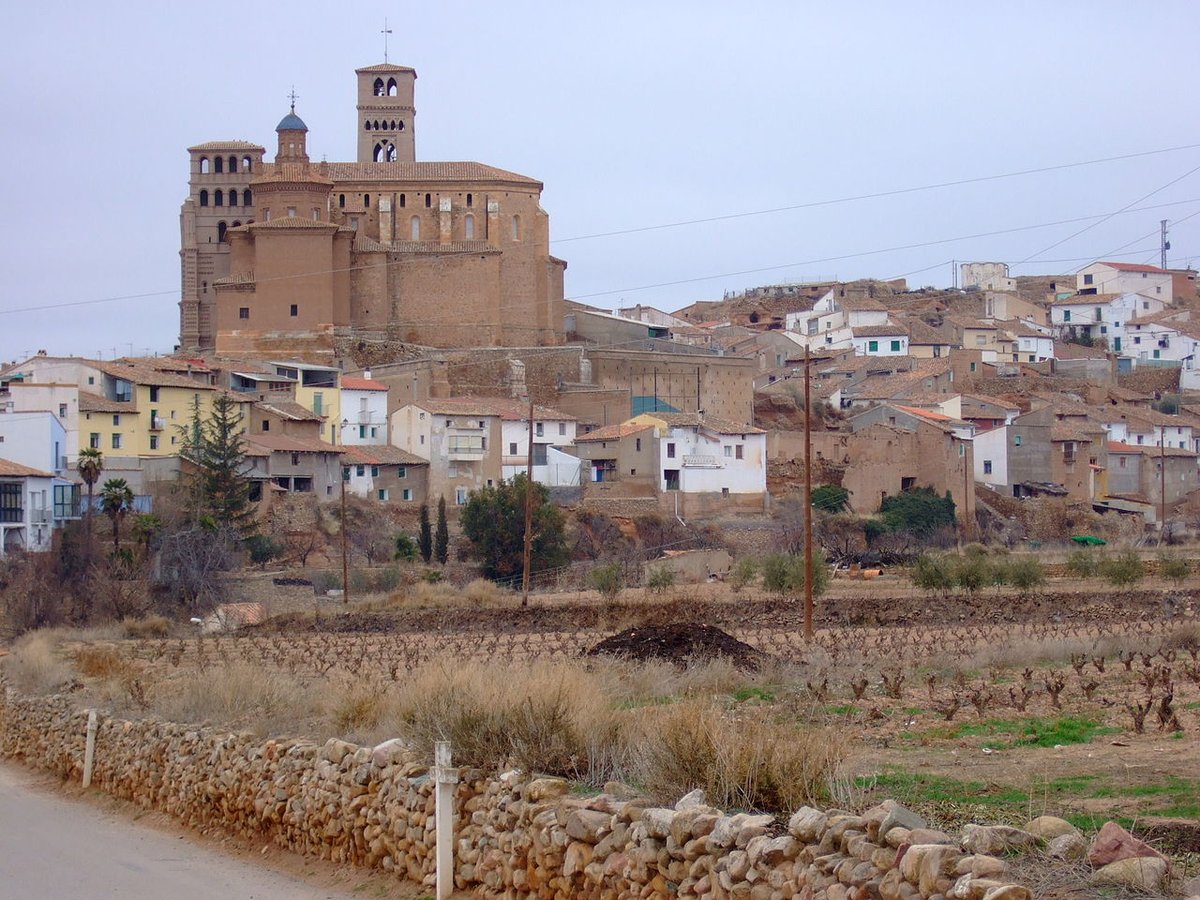
Late in the afternoon, when the sun drops low over the fields of the Jiloca valley, Fuentes de Jiloca comes into view almost without warning. A small cluster of low houses, in ochre and reddish tones, with a church tower rising above the roofs. Tourism in Fuentes de Jiloca follows that same rhythm: arriving without haste and taking time to look around, because what you find here is a lived-in landscape rather than a staged setting.
Just over two hundred people live here. The village sits at around 700 metres above sea level, surrounded by farmland that shifts in colour several times throughout the year. In spring, the green feels clean and bright. By summer, everything turns towards dry wheat and the fine dust the wind lifts from the ground.
By the Jiloca valley
From the road, the first thing you notice is the tower of the church of San Pedro. Its lines are simple, shaped by successive alterations over time. It is not a monumental building, yet it defines the village skyline, especially when the evening light reaches the stone.
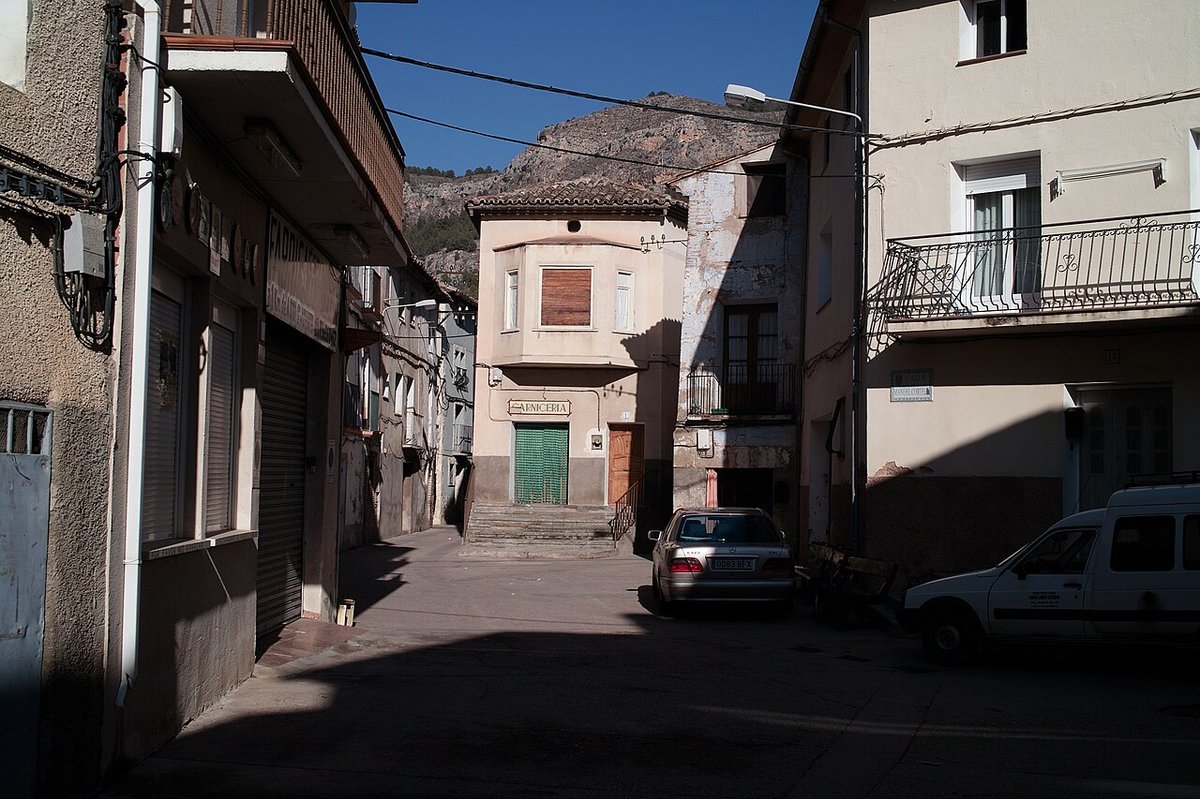
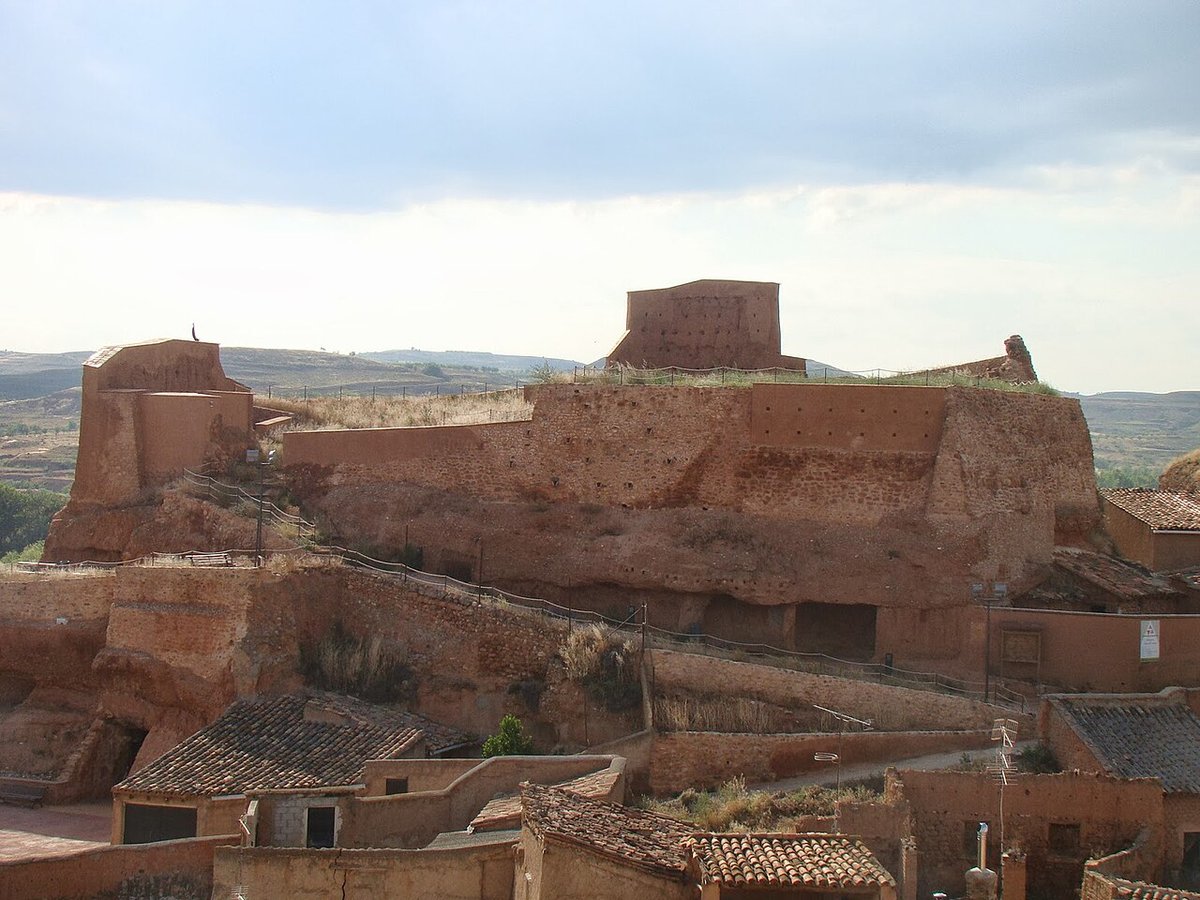
The houses follow the practical logic of agricultural settlements in the valley. Thick walls, wide doorways, and small windows designed to keep interiors cool. Some combine stone with tapial, a traditional earth-based construction technique. Others use more recent brick. There is no single perfect façade. What stands out is continuity, the sense that these buildings have been used and adapted rather than preserved for display.
The village does not present itself as a finished picture. It feels ongoing, shaped by daily life and the needs of those who live there.
Short streets and a small square
The centre can be explored in just a few minutes. Streets such as Calle Mayor or Calle Nueva run between houses pressed closely together, occasionally opening onto a stone doorway that still shows marks from old tools.
The Plaza Mayor is modest, more an opening between buildings than a formal square. At certain times of day, voices carry easily, echoing from open doors. In summer, as evening approaches and the heat begins to ease, there is usually more movement. People step outside, conversations drift across the space, and the village briefly feels fuller.
It is best to leave the car near the entrance and continue on foot. The streets are narrow, and in some stretches barely wide enough for a vehicle to pass.
Water and the meaning of “Fuentes”
The name Fuentes de Jiloca is no coincidence. In the surrounding area, there are still natural springs and small water sources that have historically supported kitchen gardens and nearby farmland.
On hot days, the difference is noticeable when approaching these points. The temperature drops slightly, and the air carries the scent of damp earth and grass. These places are not always signposted, so reaching them often involves following agricultural tracks that begin within the village itself.
Water here is not presented as an attraction. It is part of how the landscape works, and how it has been used over time.
Paths through cereal fields
Beyond the village, cereal fields dominate the view. Wide, open stretches of land, shaped by gentle rises, with the occasional old pen or barn scattered between plots.
Walking these tracks is straightforward. There are no steep gradients and no formal marked routes. It is simply a matter of following the dirt paths used by farmers. Early in the morning, the main sounds are birds and the distant hum of a tractor.
Those who bring binoculars may spot birds typical of open farmland. Thrushes and goldfinches are common. With some luck, a great bustard might be seen moving slowly across the crops.
In summer, the central hours of the day are best avoided. Shade is scarce, and the heat falls directly over the valley.
Food, seasons and the village calendar
Cooking in Fuentes de Jiloca remains closely tied to what is produced in the surrounding land: cereals, pulses, and lamb. Dishes such as migas, a traditional preparation based on breadcrumbs, or roasted meats appear on many tables during family gatherings and local celebrations.
Simple sweets are also made, often using honey or fried dough. These tend to be linked to specific dates in the calendar. Recipes are passed down within households, each with small variations depending on who prepares them.
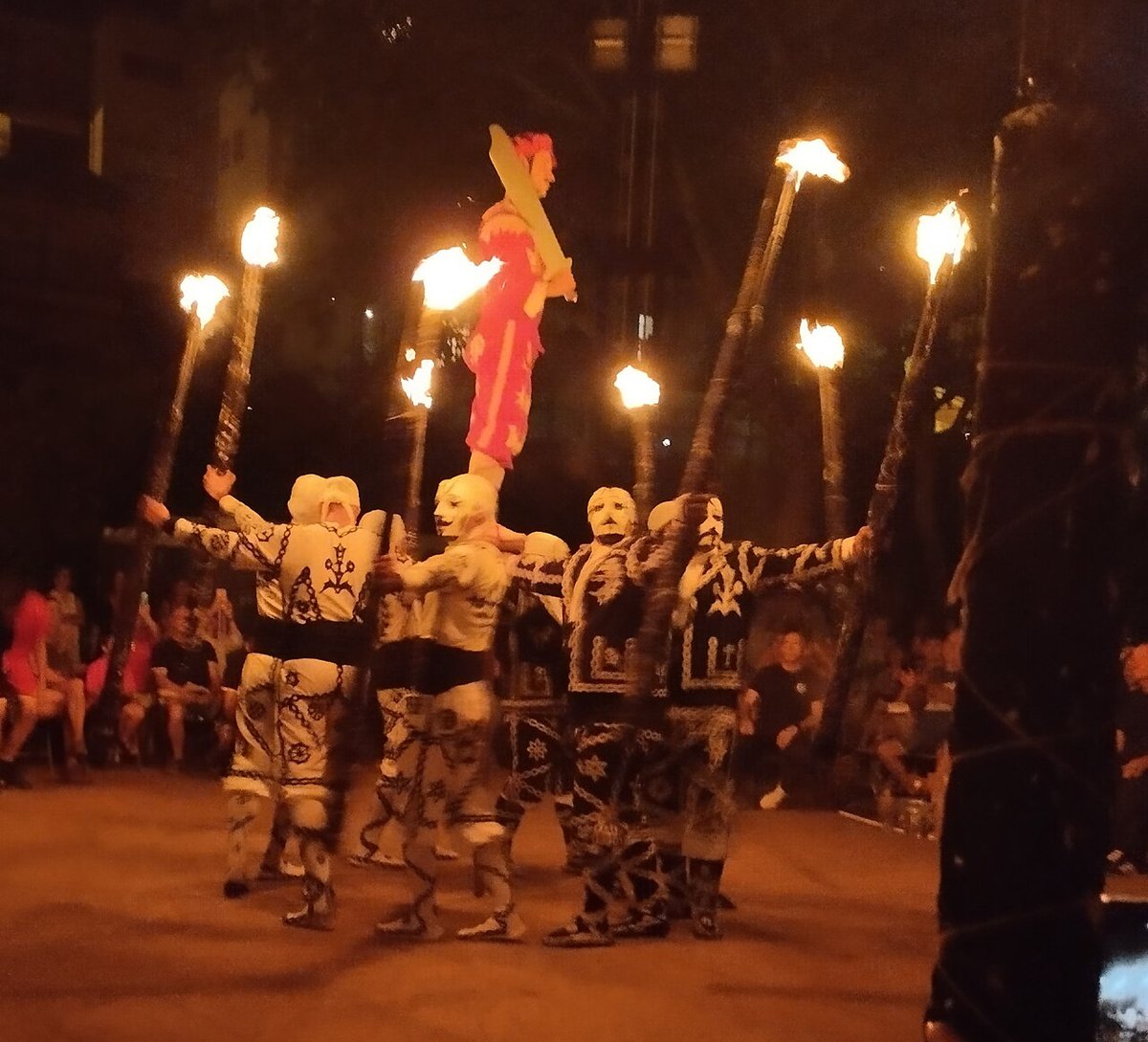
The main celebrations revolve around the patron saint, San Pedro, and the summer weeks when those who live elsewhere return. During that time, the streets fill more than usual, and the steady pace of the rest of the year shifts for a few days.
Outside those periods, Fuentes de Jiloca moves to the rhythm of a small village in the valley. Church bells sound in the distance, cars pass occasionally, and the wind moves through the cereal fields that surround it. Here, the landscape is not a backdrop. It is part of everyday life.