Full Article
about Maluenda
Hide article Read full article
A quiet start in the Jalón Valley
Early in the morning, before any cars pass along the road that skirts the village, Maluenda is reduced to footsteps and little else. A shutter lifts somewhere. From the vegetable plots comes the smell of damp earth. The sun takes its time to appear fully, and for a while the light clings to the brick façades.
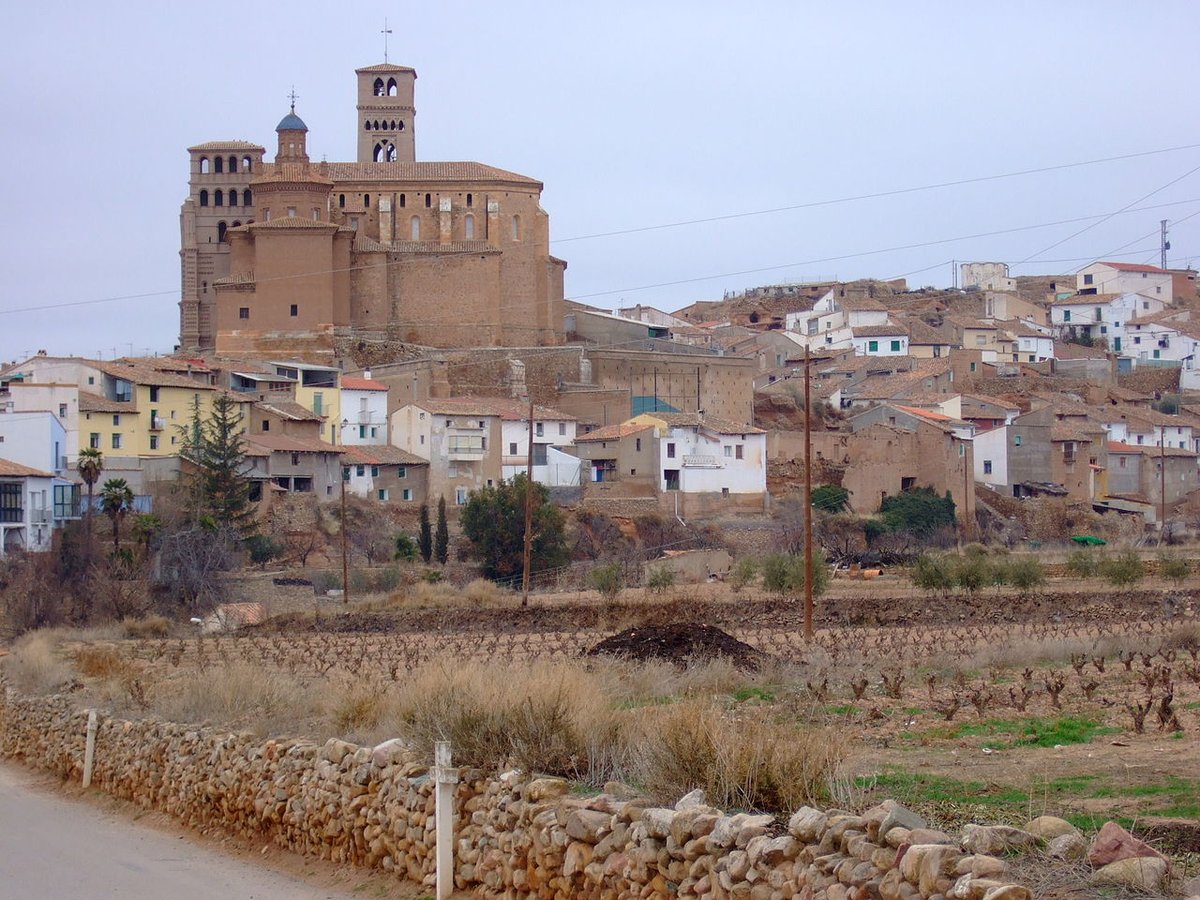
Tourism in Maluenda follows that same pace. The village has around 900 inhabitants and sits among low hills in the Jalón Valley, within the Comunidad de Calatayud in Aragón. Around it stretch vineyards, cereal fields and kitchen gardens that shift with the seasons. In winter the landscape feels drier. In autumn the vines turn red and the valley seems to deepen.
The Mudejar tower of San Miguel
The tower of the church of San Miguel Arcángel can be seen from almost every approach to the village. Built in brick, it rises tall with clean, clear lines. When the afternoon light hits it from the side, the detail of its Mudejar decoration comes into view, geometric patterns that change tone as the hours pass. Mudejar refers to a style that blends Islamic and Christian artistic traditions, common in parts of Aragón.
The church itself has medieval origins, though it has been altered over the centuries. Inside, a calm dimness tends to settle. Altarpieces, dark wood, and the smell of cool stone remain even on hot days.
Streets and hidden wine cellars
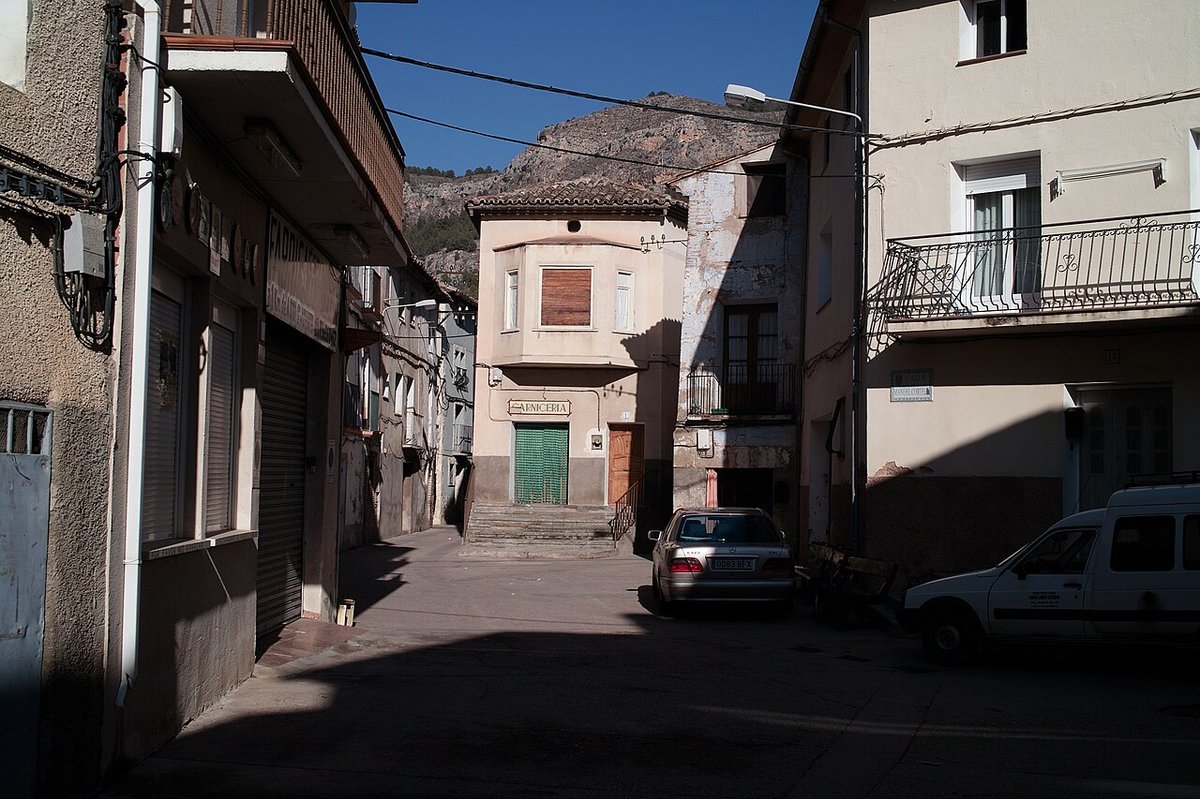
The old quarter is easy to explore without a map. Streets are narrow, some gently sloping. There are heavy wooden doors and iron balconies that creak when someone steps out to shake a rug.
In several parts of the village, wine cellars are dug into the rock or tucked beneath houses. They are not always visible at first glance. Sometimes only a low door or a small grille letting out cool air gives them away. Wine has long been part of life here and still shapes the rhythm of the surrounding fields.
The hilltop remains of the castle
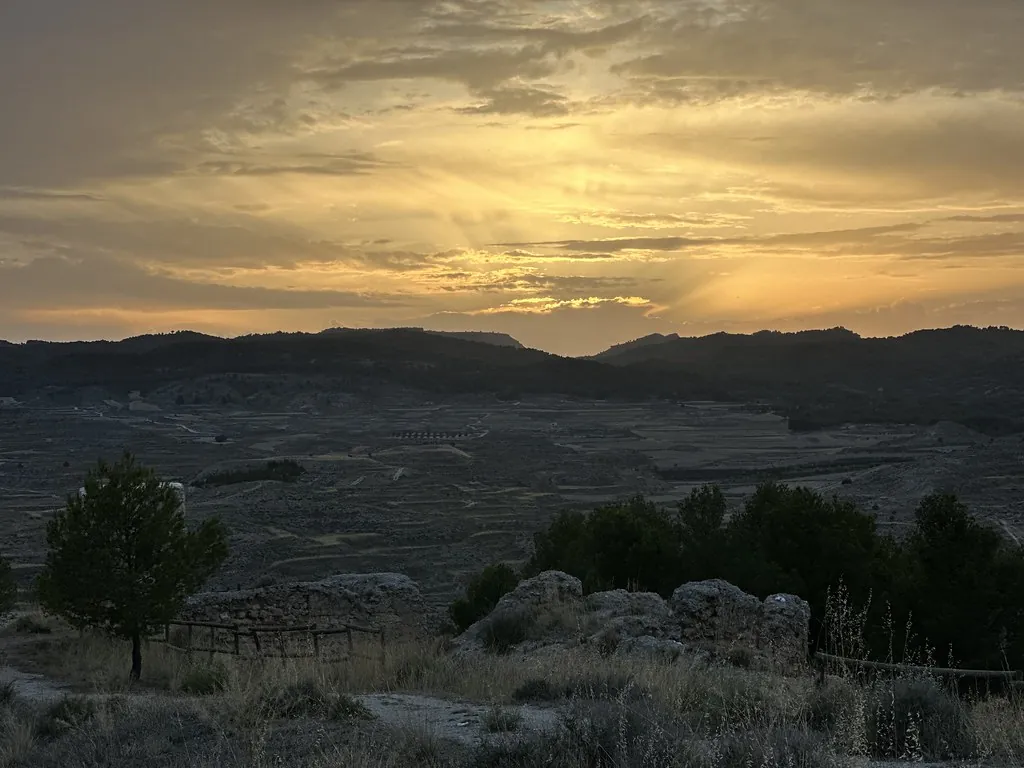
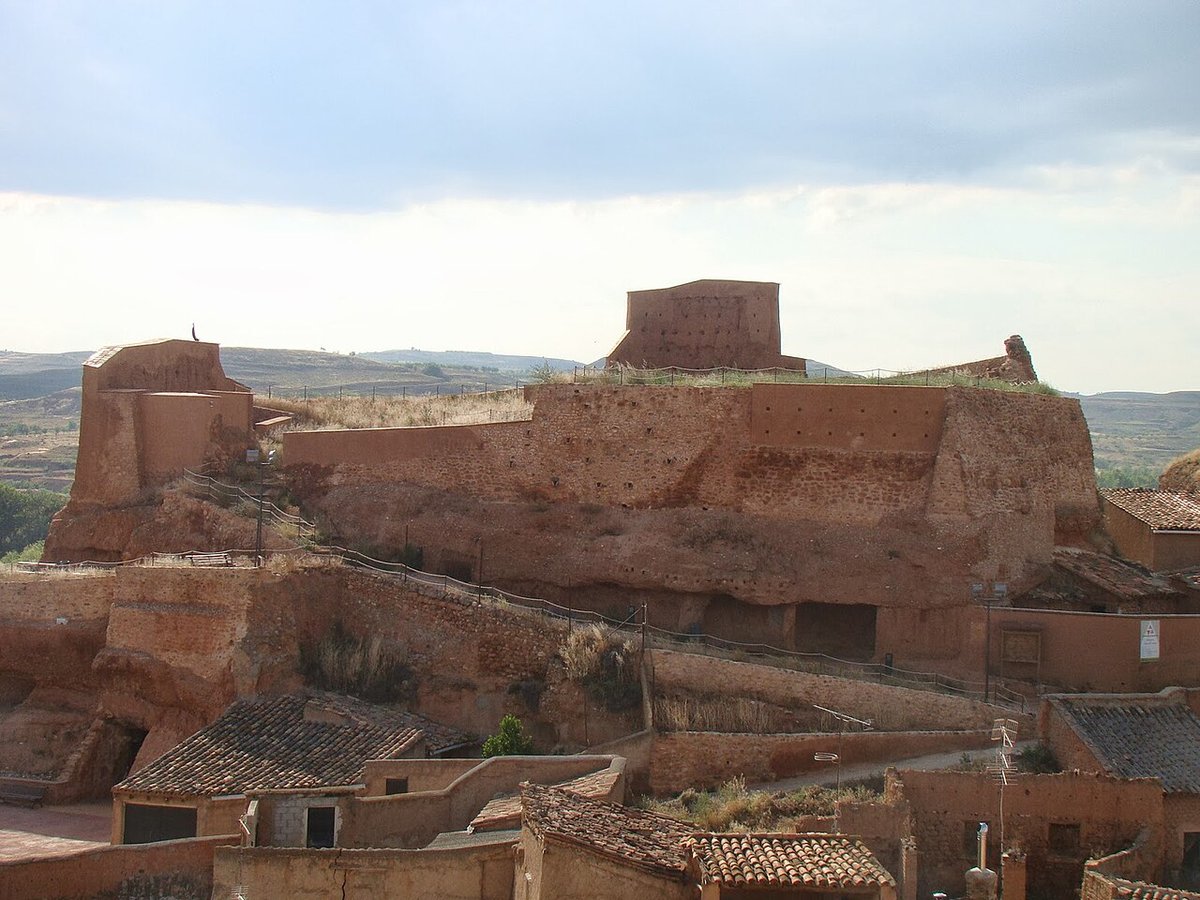
On a nearby hill stand the remains of an old castle. It is not a restored complex or arranged as a large monument. What survives are walls, fragments and stones that have held against the wind.
The path up is usually taken on foot from the village. It is not long, though comfortable footwear helps as some sections are loose underfoot. From the top, the Jalón Valley opens out: long fields, lines of vines, and in the distance the first ridges of the Sistema Ibérico.
Later in the day, the air tends to move more up there.
Vines and harvest time
The land around Maluenda is filled with plots of vines. In spring they burst into growth and the landscape turns intensely green for a few weeks. Then comes the dry summer, with dust rising from the tracks.
The liveliest moment usually arrives with the grape harvest, around the beginning of autumn. Some families still gather grapes using traditional methods. At that time the village smells of must, and of plastic crates filled with freshly cut bunches.
Garnacha is one of the most common grape varieties in this part of the valley.
Walking between villages
From Maluenda, agricultural paths lead out towards other nearby villages in the comarca. Not all of them are signposted, but many locals use them for walking or moving between plots of land.
The terrain is gentle, with soft changes in elevation. In autumn the ground is covered with dry vine leaves, and walking comes with a constant crunch underfoot.
It is best to avoid the middle of the day in high summer. The sun is strong and there are few shaded stretches.
Getting there and choosing your moment
Maluenda lies close to Calatayud and less than 90 kilometres from Zaragoza. The usual approach is by road after passing through Calatayud. Access is straightforward, and parking is generally easy in the outer streets.
Spring and autumn are often the most pleasant times to walk in the surrounding countryside. In summer, the heat builds at midday. If you arrive during the harvest, from late September to early October, the valley shifts in colour and the village takes on a busier feel than usual.