Full Article
about Olves
Hide article Read full article
A village that reveals itself slowly
Sometimes you stop in a village because you spot a handful of houses from the road and think it is worth stretching your legs for five minutes. Olvés feels a bit like that. You arrive without expecting much and then notice how the silence carries weight, especially in the heat of August.
Tourism here does not revolve around grand monuments or signposted viewpoints. The place feels more like stepping into an older relative’s house in the countryside. Everything is simple. Everything seems to have been there for decades. Nothing appears in a hurry to change.
Olvés sits in the comarca of Calatayud, surrounded by open farmland, with around a hundred residents. That is enough to keep the village alive, yet few enough that you can walk its streets without encountering many people. Time moves slowly here, and not as a figure of speech. It feels closer to a Sunday afternoon when nothing urgent remains to be done.
Walking through Olvés
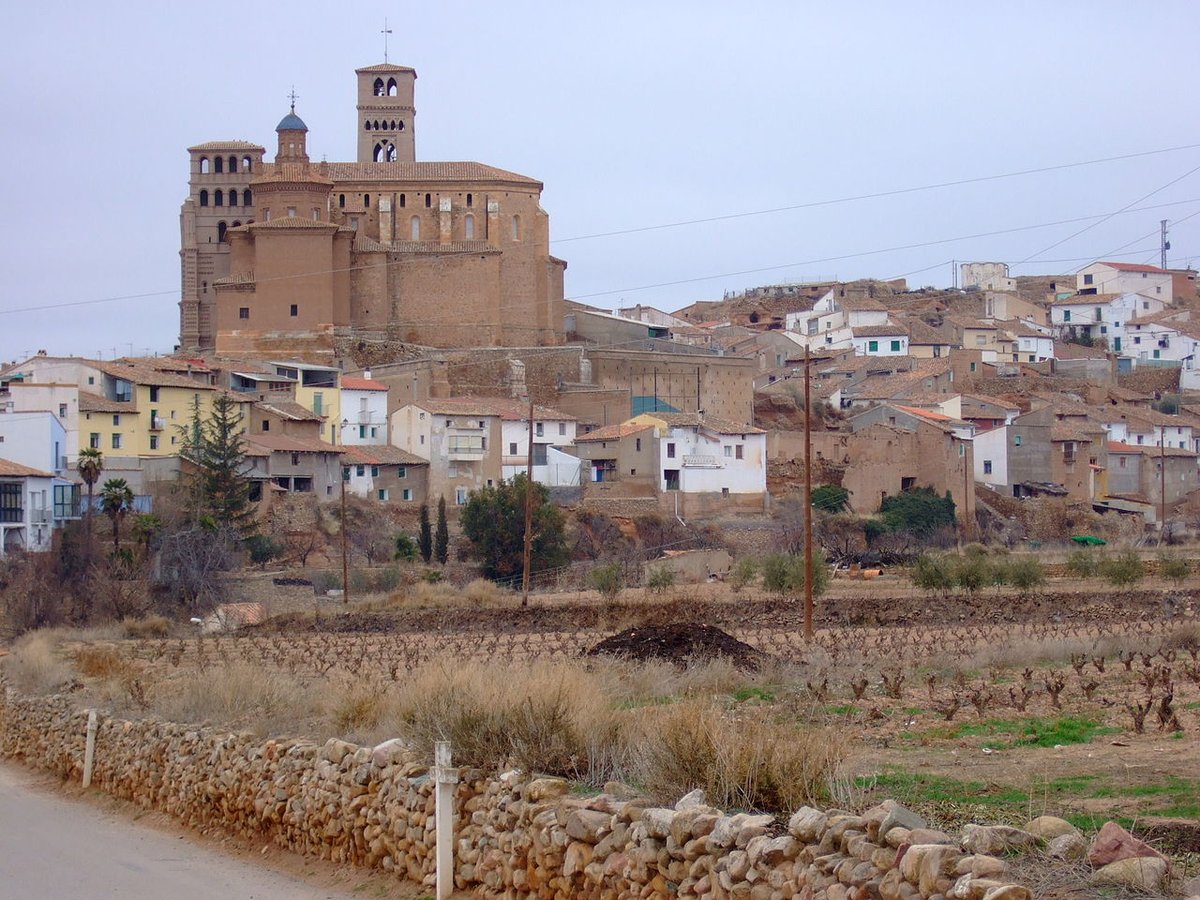
The parish church appears quickly. There is no need to search for it because its brick tower rises above the rooftops, acting as a natural reference point, like a familiar building you use to orient yourself in an unfamiliar neighbourhood.
The church itself is modest. There are no elaborate altarpieces or striking interiors. It is a village church that has been repaired when needed and when funds allowed. That gradual, practical approach gives the building a certain coherence.
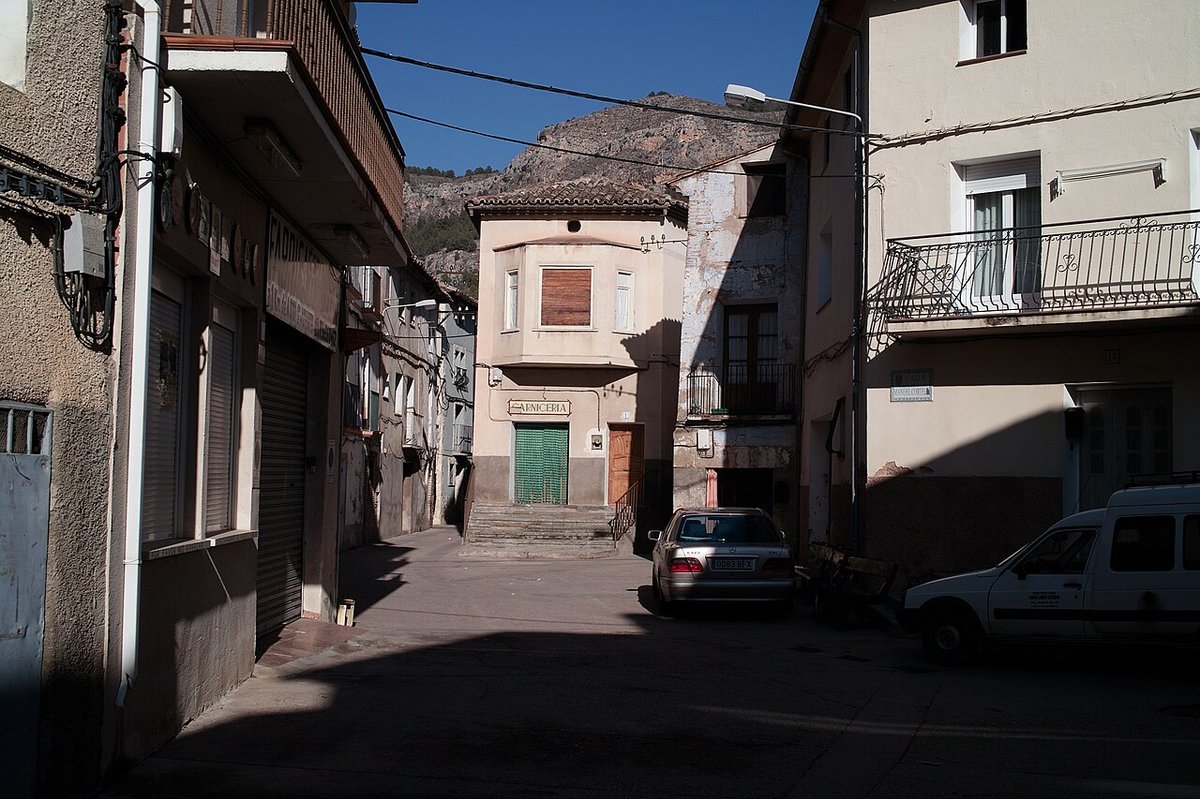
Beyond the church, the houses define much of the experience. Many still feature iron balconies, exposed beams under the eaves, and large doorways that hint at a time when homes also functioned as workplaces. Walking these streets feels a bit like leafing through an old photo album. Not everything is pristine, yet that is precisely where its appeal lies.
The streets are short, and the village can be covered quickly. Half an hour is enough to see most of it. Still, it is worth slowing down. Details tend to reveal themselves at a gentler pace: an uneven stone façade, a closed courtyard, a small corral that still carries the scent of the countryside.
The landscape: cereal fields to the horizon
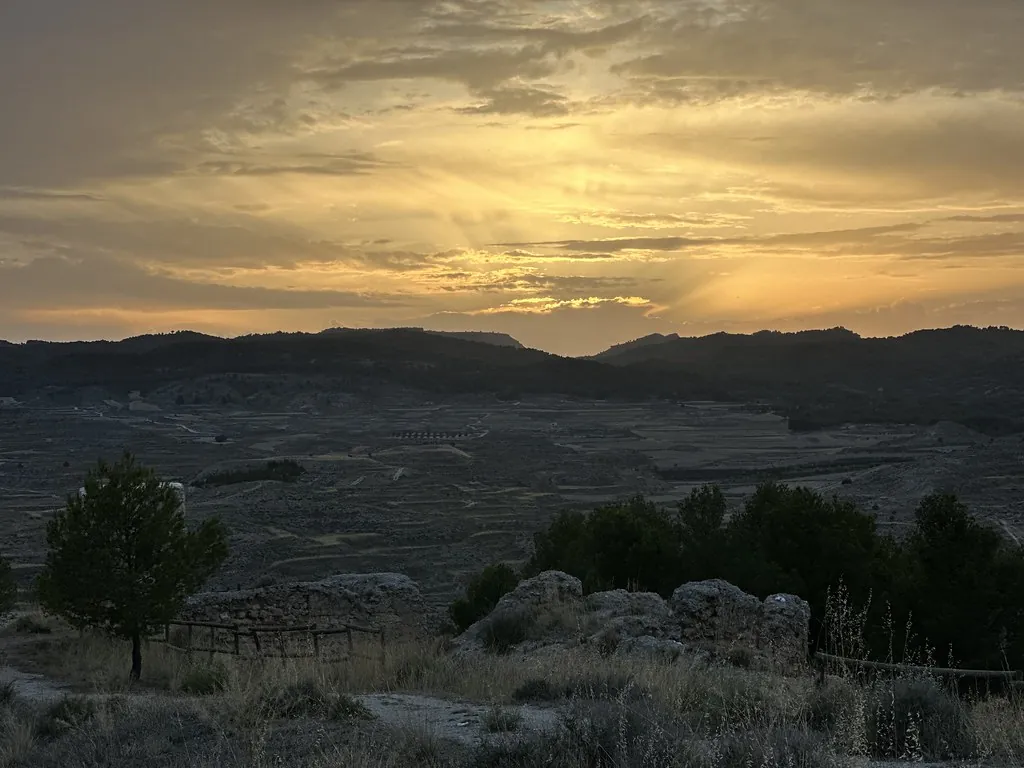
Once you leave the built-up area, the landscape typical of this part of Aragón opens up. Fields of cereal stretch out like a vast carpet. In spring, the green feels almost excessive. By summer, everything turns golden, as if the colour has been dialled down to a single tone.
There are no dramatic mountains or dense forests here. The terrain is open and very flat. It can feel a little like looking out at the sea, except this is land rather than water.
From small rises near the village, the sense of space becomes clearer. The wind moves through the cereal, and the sound can resemble waves, though what shifts here are ears of grain rather than water.
Paths through working land
One of the most pleasant things to do in Olvés is simply to walk along the agricultural tracks that surround the village. These are not marked routes or mountain trails. They are working paths, used by farmers to reach their fields.
They are easy to follow and generally calm. You can walk for a while without noticing the distance passing. At times, the sound of steppe birds carries across the fields. With some luck, it is possible to spot a great bustard in the distance, moving with the unhurried rhythm typical of large birds.
The experience recalls a familiar rural routine. It is similar to being sent out for a walk as a child when visiting family in the countryside, told to wander as far as the edge of the fields and return before nightfall. There is no particular plan, just the walk itself.
A place that continues its own rhythm
Olvés remains closely tied to the land. The agricultural calendar sets the pace of life. Depending on the time of year, tractors may come and go, or fields may appear freshly worked. At other moments, everything seems paused, as if the village is waiting for the next cycle to begin.
Local cooking follows that same logic. The dishes are filling and practical, designed for long working days outdoors. Legumes, locally produced lamb, and seasonal vegetables all have their place. The food is straightforward and direct, without unnecessary complication.
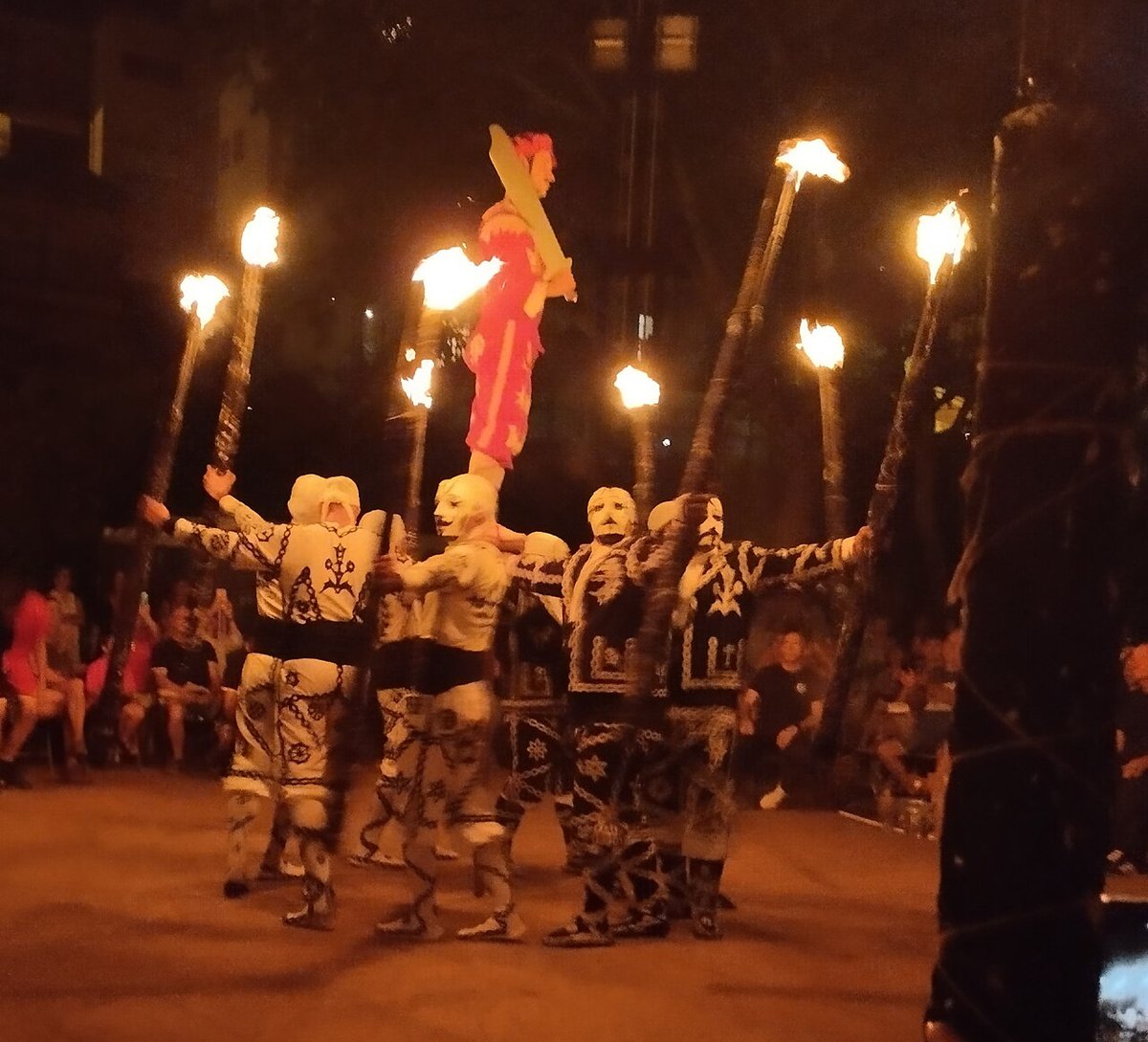
Festivities tend to gather in summer, when people with family ties to the village return. During those days, the atmosphere shifts noticeably. Quiet streets fill with familiar faces who come back year after year, much like returning to a family home for the holidays.
Once the celebrations pass, calm settles in again.
Olvés does not try to turn itself into a tourist destination, and it shows no urgency to do so. It is simply a small village in the Community of Calatayud, moving at its own pace. It resembles those old wall clocks that may not keep perfect time but have continued ticking in the same way for decades. That consistency, in itself, holds a certain value.