Full Article
about Sabinan
Hide article Read full article
A slow start in the Comunidad de Calatayud
At eight in the morning, the main square in Sabiñán is still half asleep. The smell of freshly ground coffee drifts through the air, mixed with toast from a nearby oven, while many shutters remain closed. A single neighbour crosses the street at an unhurried pace, as if the day has no need to rush. Tourism in Sabiñán, in the Comunidad de Calatayud, begins like this: quietly, without staged scenes.
Life here is shaped by what surrounds the village. Fields of cereal stretch outwards, alongside patches of vines and small vegetable plots that shift in colour with the seasons. There are no shop windows designed for visitors or streets lined with retail. What appears instead is a small settlement, home to just under seven hundred people, where daily routines still revolve around the land and the hours of daylight.
The church at the centre of everything
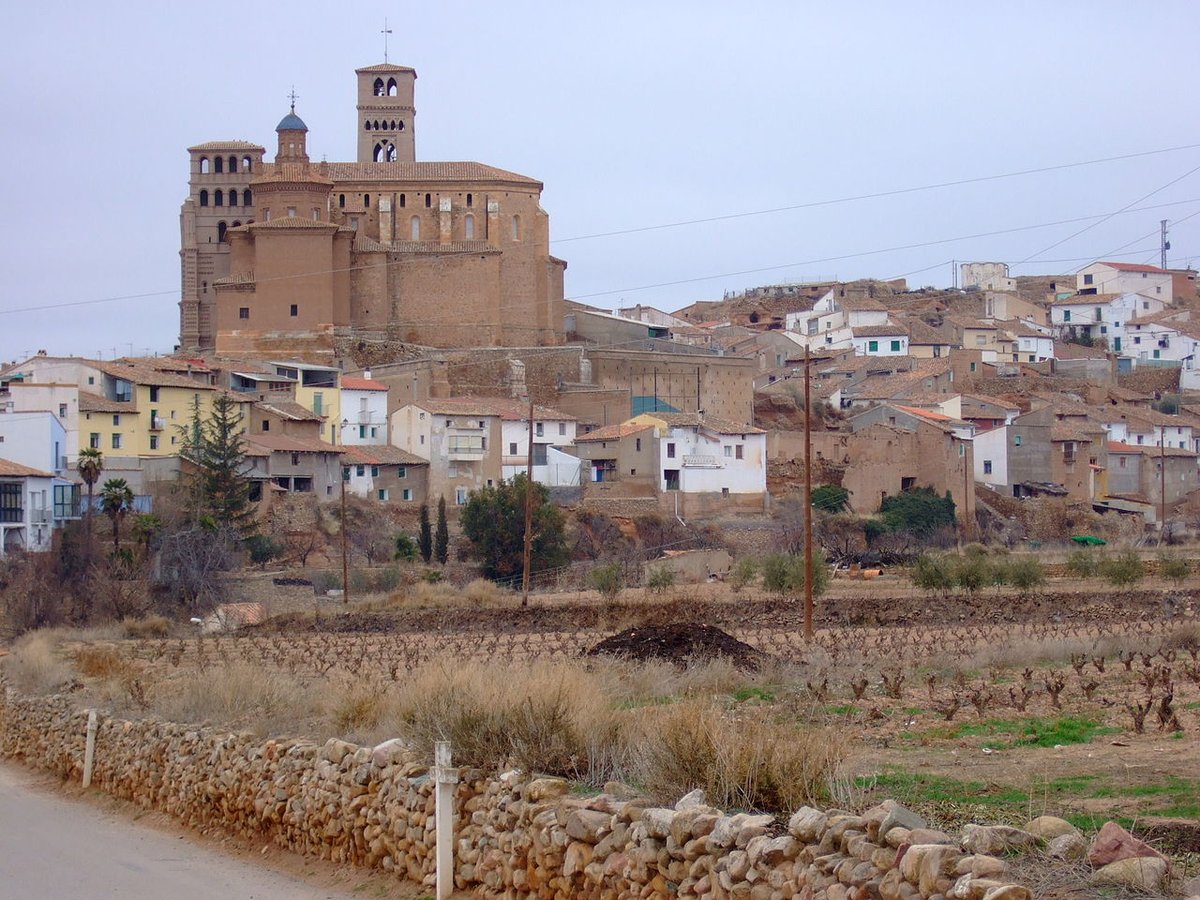
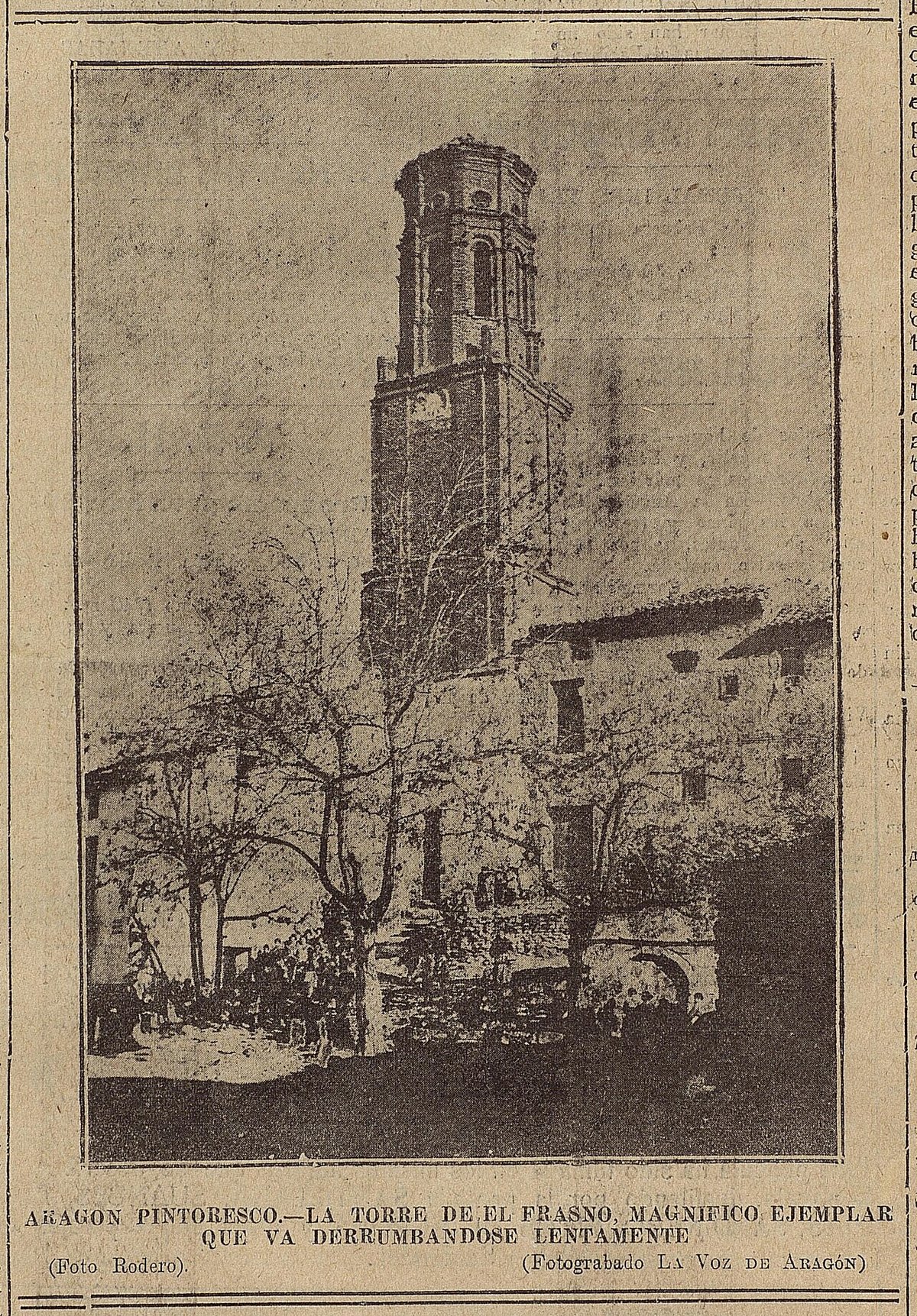
Walking through the main streets, it is easy to find your bearings by looking for the church of Santa María. Its square tower, plain in design, rises above the rooftops and remains visible both within the village and from the road as you approach.
The building combines stone and brick, a common feature in this part of the Jalón valley. Inside, the focus is less on grand collections and more on the traces of parish life. Simple altarpieces, religious images that have undergone several restorations, and the cool stillness typical of village churches in mid-morning give the space its character.
Streets that follow their own rhythm
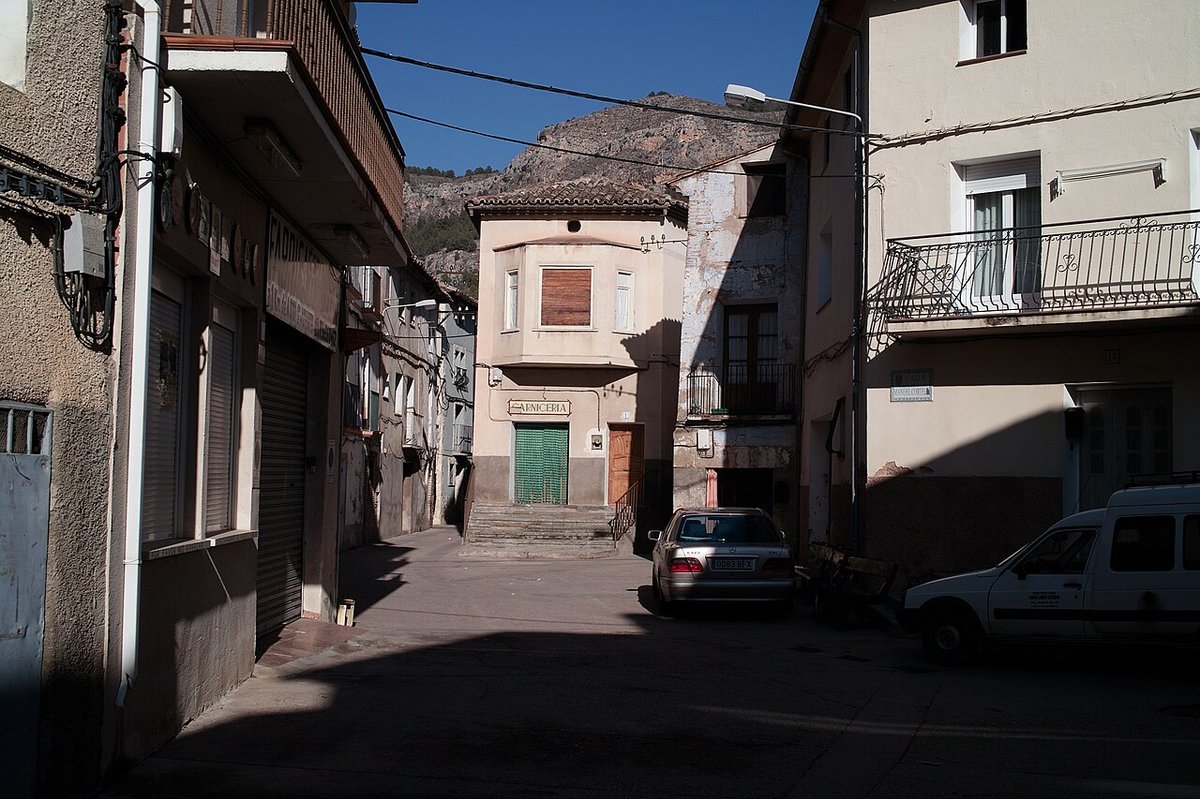
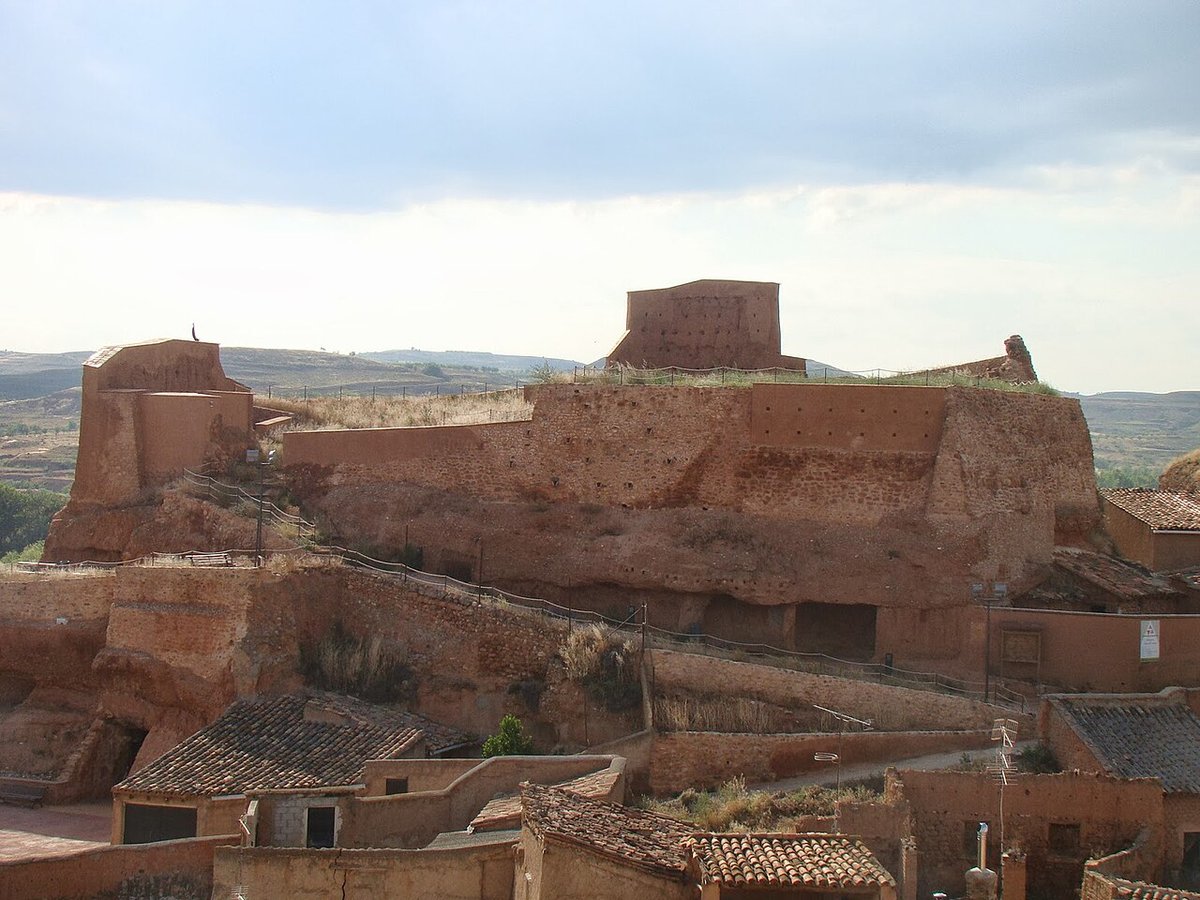
The old quarter keeps its traditional layout: short streets, some with a gentle incline, and houses with thick walls that hold the cool even in summer. Many buildings have been updated over time, yet original features remain visible. Heavy wooden doors, dark iron balconies and interior courtyards continue to define the architecture.
These courtyards often shelter fig trees, vines or even a lemon tree protected from the wind. Wandering without a fixed route, it is common to come across small animal pens or agricultural storage spaces built into the houses themselves. They offer a clear glimpse into how life was organised here across generations.
The wider landscape of the Jalón valley
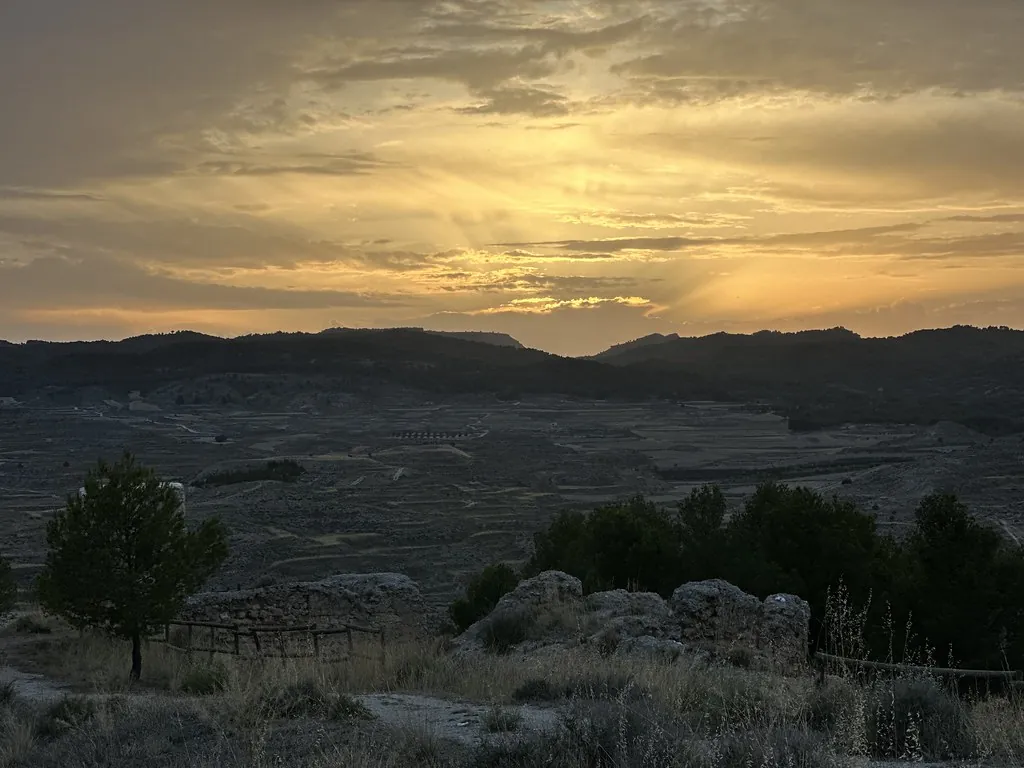
Step beyond the village and the terrain opens up quickly. Wide agricultural tracks run between plots marked by low embankments and the occasional stone wall. Cereal crops dominate much of the view, turning from green to gold within a matter of weeks as summer approaches.
Vineyards also form part of the landscape. In autumn, as the leaves begin to change, the slopes take on shades of red and ochre. From higher points along these paths, other villages in the valley come into view. Maluenda and Ateca appear in the distance, set among the fields.
These routes are easy to explore on foot or by bike. In the warmer months, early starts are advisable as there are long stretches without shade.
Food rooted in the land
Local cooking in Sabiñán remains closely tied to what the surrounding land provides. Seasonal vegetables play a central role, while more substantial dishes appear as the weather turns colder. Wine from the Calatayud designation of origin is also part of daily life, produced across many nearby villages.
In winter, small game often features on menus in the village, reflecting a broader tradition found in this part of Aragón.
Festive days and shared traditions
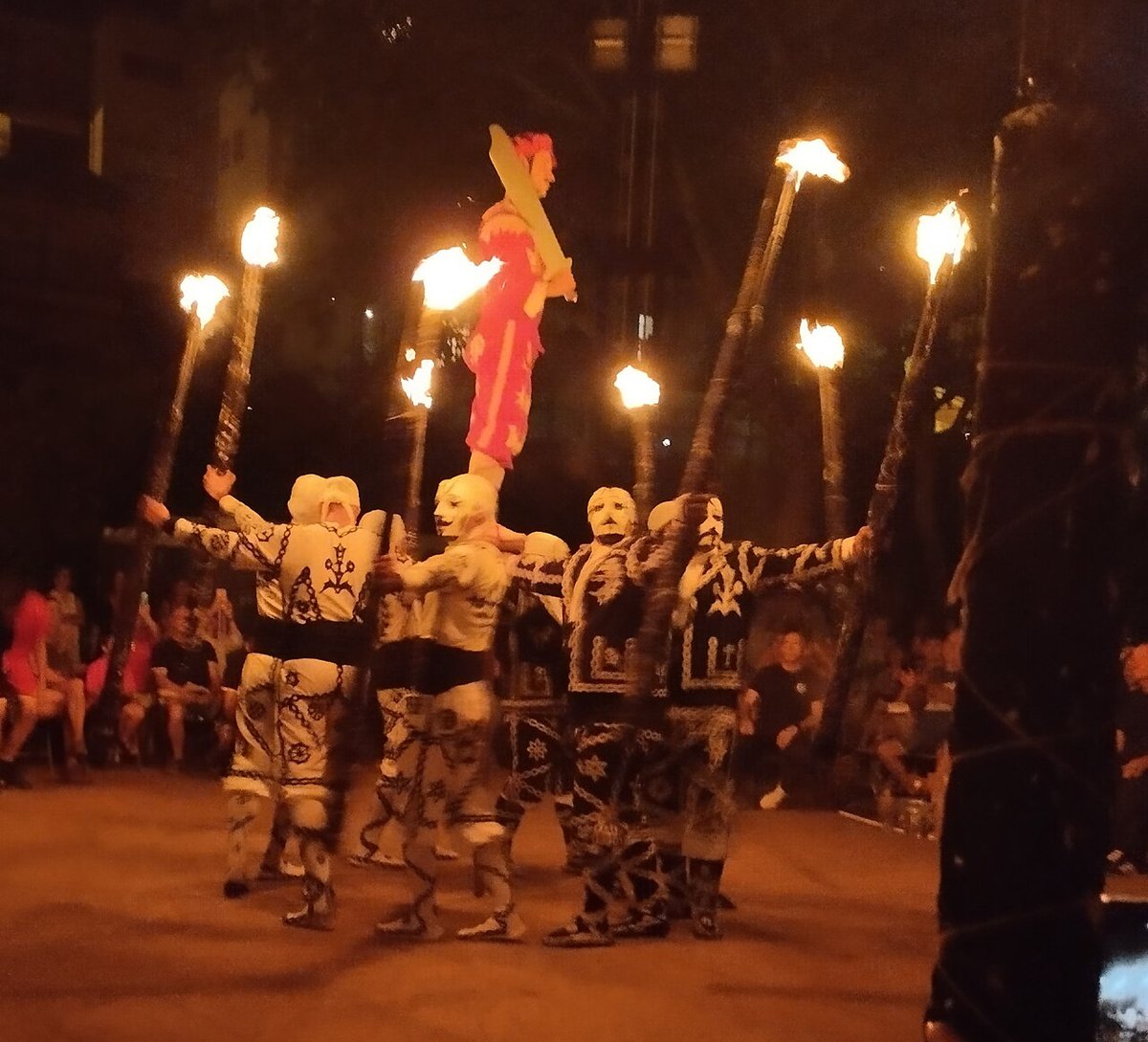
Towards the end of August, the pace of life shifts during the patron saint festivities dedicated to San Bartolomé. For several days, many former residents return, and the streets fill again in the evenings. Music, long conversations and open-air meals bring a different rhythm to the village.
Another tradition that continues is a romería, a communal pilgrimage, dedicated to the Virgen del Rosario. It usually ends with a shared meal among neighbours, reinforcing the sense of community that defines the place.
Autumn brings activity to the vineyards throughout the comarca. In some years, events linked to the grape harvest or the wine-making process take place, though they do not follow exactly the same pattern every season.
When to visit and what to expect
Spring and autumn are generally the most comfortable times to explore the agricultural tracks around Sabiñán. Summer can become very hot from midday onwards, making early mornings or evenings the better choice for walking.
The village lies a short drive from Calatayud, which makes it an easy stop when travelling through the Jalón valley by car.
Sabiñán is not a destination of large monuments or tightly scheduled plans. Its appeal is found elsewhere: in the light falling across the fields at the end of the day, in the stillness of the streets early in the morning, and in the sense that time moves here at a different pace from the nearby motorway just a few kilometres away.