Full Article
about Terrer
Hide article Read full article
The Sound of a Shutter Closing
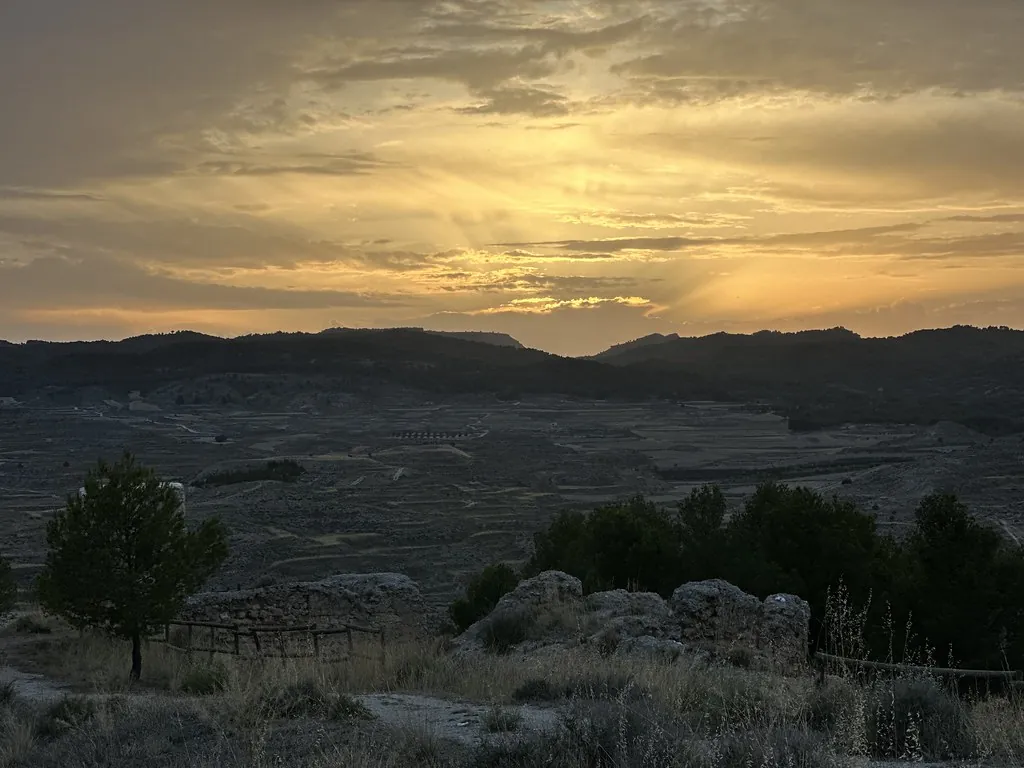
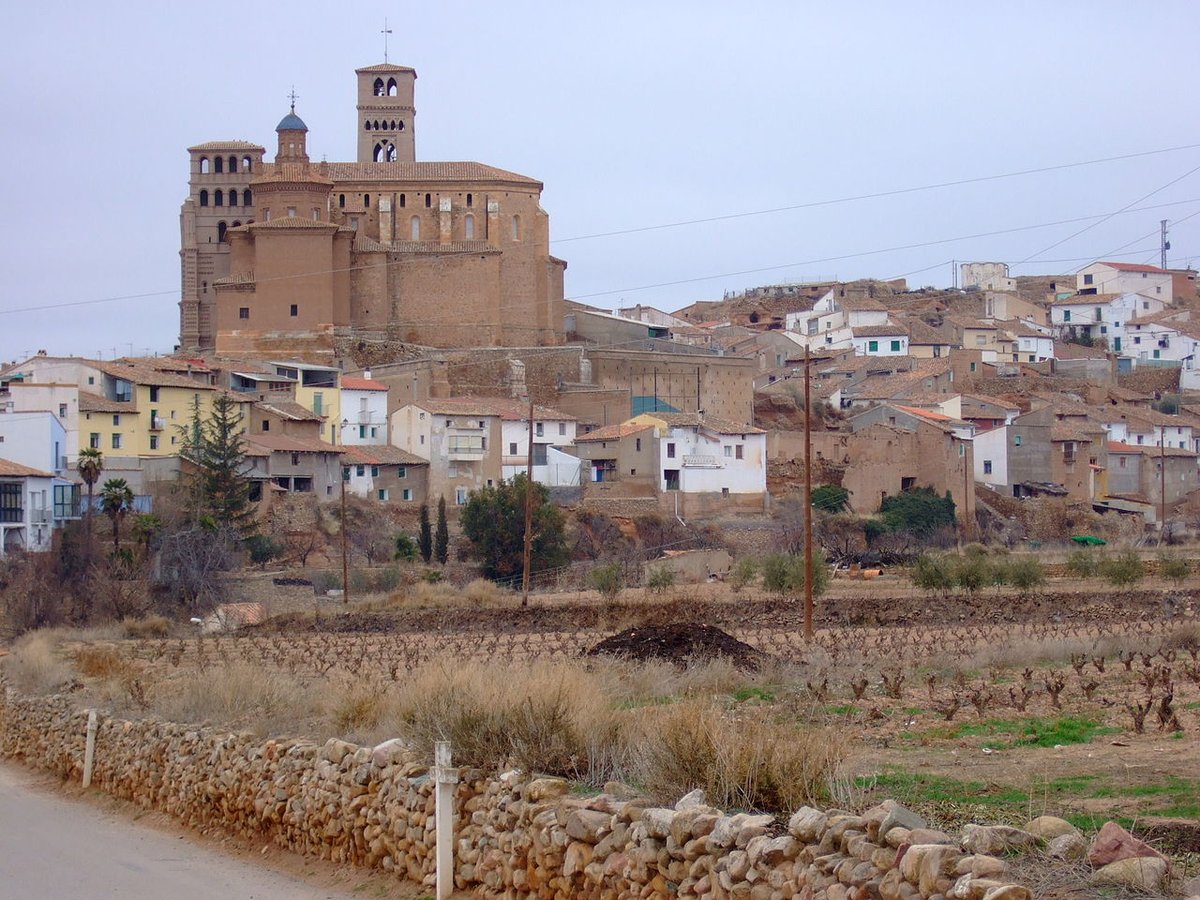
A shutter closes with a sharp thud somewhere on the street. By mid-afternoon, when the sun drops low across the Jalón Valley, Terrer falls almost completely silent. A car might pass, slowly. At that hour, the village is less about doing and more about noticing. The yellow fields, the fine dust on the tracks, the calm outline of the church above the rooftops.
Terrer sits within the open landscape of the Aragonese plateau, in the comarca known as the Comunidad de Calatayud. Life here follows a rhythm tied to the seasons. Around 580 people live here, just over five hundred metres above sea level. The agricultural calendar shapes the year, quietly but firmly.
Streets, Stone and the Parish Church
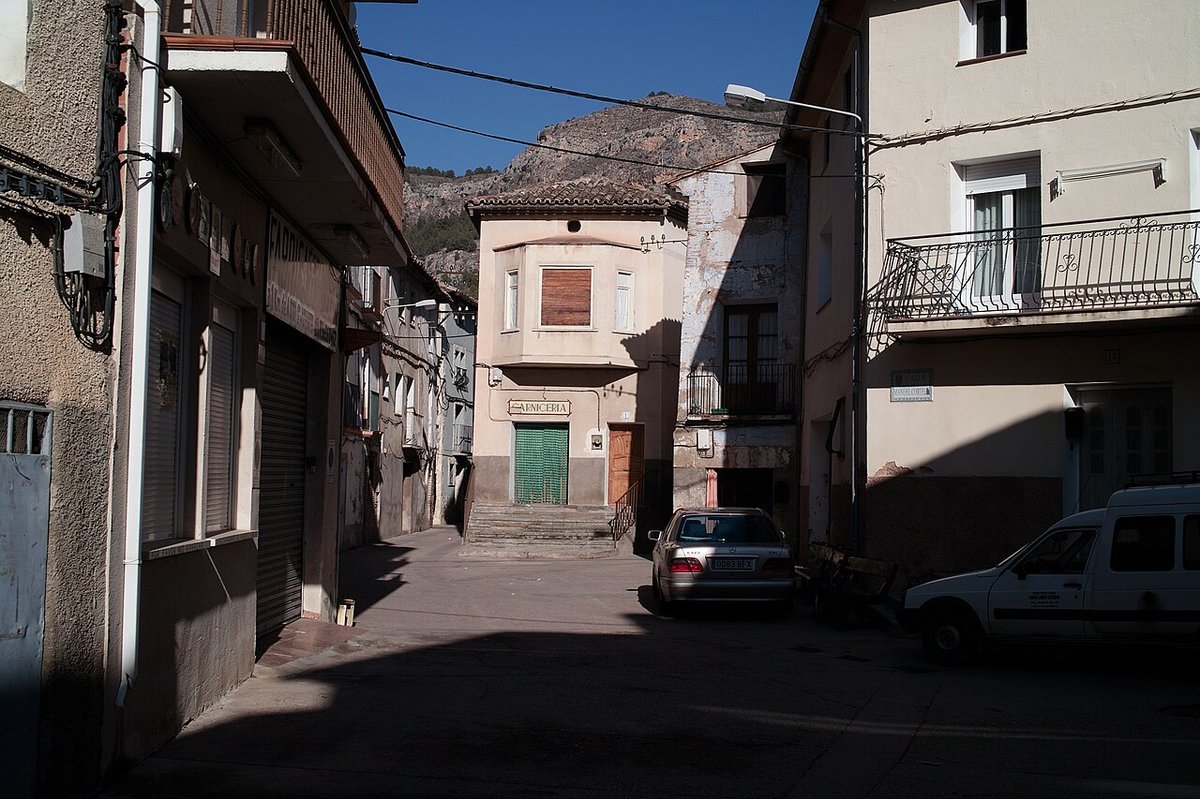
Terrer is not a place for ticking off major sights. Its layout encourages wandering without a plan. One street leads to another, and almost without noticing, you arrive at the main square. You will usually find some shade there, and a stone fountain that gives the space its centre.
The parish church of San Juan Bautista rises above the surrounding houses. Its structure shows different construction phases if you look closely. The façade is restrained, almost plain at first glance. Step nearer and details appear around the entrance and windows—signs of later alterations layered onto the original building.
At certain times of day, especially towards evening, the sound of the bells carries further than expected. It fills the streets and lingers briefly over the rooftops.
Old Houses and Rural Traces
Parts of the old town preserve architectural features from earlier periods. Some upper floors display small arcaded galleries: rows of arches built from brick. They are not common, but when they appear they stand out against walls of masonry.
Stone coats of arms can also be seen on façades that otherwise look like ordinary homes today. These details suggest a different past.
Many doorways still have thick wooden doors. The paint is often worn, marked by years of sun and winter cold. A few retain metal knockers that are rarely used anymore.
The proximity of the river Jalón shaped this place for centuries. Market gardens and small mills once depended on its water. Remains of these uses still exist near the river—scattered and partial. Some plots continue to be cultivated, with seasonal vegetables growing in small, worked fields.
Paths Along the Jalón
Leave the built-up area and agricultural tracks begin almost immediately. These are wide dirt paths, pale in colour, stretching between cereal fields and occasional patches of vineyard. The landscape changes with the seasons. In spring, green spreads across most of the valley. By summer, tones shift to gold and the air carries the scent of cut straw.
No formal viewpoints are set up for visitors. A walk of ten or fifteen minutes is enough for the village to fall behind and the horizon to open out. The land moves in gentle undulations; the sky takes up most of the view.
As evening approaches and the heat eases, shadows lengthen across the ground. The colours of the valley shift gradually, changing every few minutes as the light softens.
Close to Calatayud
A short distance from Terrer lies Calatayud. The journey by road is brief—a regular route for local residents needing services or a change of scene.
Calatayud’s historic centre contains several Mudéjar towers, a style born where Islamic and Christian influences met in Spain. These towers are visible from afar and act as landmarks when approaching the town. Walking its streets reveals churches, old courtyards and civil buildings where layers of different periods can still be recognised.
Many who visit Calatayud continue on to nearby villages in the valley, including Terrer, only a few minutes away.
Light, Wind and When to Walk
The climate here makes itself felt throughout the year. The cierzo, a strong wind typical of this region, can arrive even on clear days and sweep dust along the tracks. In winter, the cold sharpens when that wind blows.
Spring and early autumn are usually comfortable for walking in the surrounding countryside. Summer brings intense heat in the middle of the day; earlier mornings or late afternoons tend to be more manageable.
Access is straightforward via the motorway through the Jalón Valley. From Calatayud, only a few kilometres remain along a secondary road.
Terrer does not call for detailed plans. Sit for a while in the square. Listen to the wind move through the streets and watch light shift over fields that do not try to impress anyone. The landscape simply carries on at its own pace—and that defines it completely