Full Article
about Aguatón
Hide article Read full article
A Village Defined by Its Setting
Tourism in Aguatón begins with its location. This small municipality in the province of Teruel sits at around 1,250 metres above sea level, in an open stretch of the Sistema Ibérico, a mountain system that crosses much of eastern Spain. Here the landscape turns stark and the pattern of settlement is widely spread. Fewer than twenty people live in the village today. Like many places in this part of the province, the population has fallen sharply over recent decades, although Aguatón remains inhabited and continues to rely on agriculture and livestock.
The surrounding environment reflects the character of inland Teruel. Winters are long, dry and marked by frequent frosts. Summers are shorter but can be intense. Around the village, cereal fields dominate, broken up by areas of low scrub and patches of juniper and holm oak that persist on less cultivated slopes.
The Shape of the Village
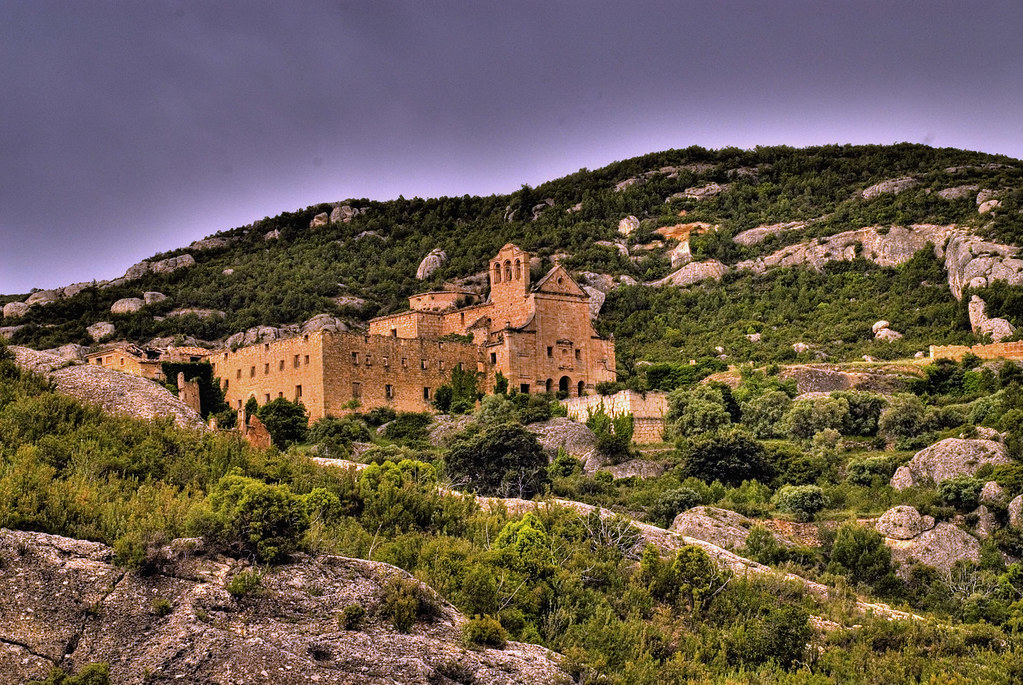
The main building in Aguatón is the parish church of San Bartolomé. Its origins date back to the 16th century, though its current appearance is partly the result of later alterations. It is a simple structure, with a single nave and masonry walls, similar to many churches built in small villages across the province during the early modern period.
Inside, there is a later wooden altarpiece, probably from the 18th century, decorated with religious figures in a popular style. It is not a grand church, but it gives a clear sense of the scale of the community that built it and the resources available at the time.
The village itself is very small and arranged around a single main street, which also carries the local road. The houses follow the typical patterns of rural architecture in Teruel: thick stone walls, roofs covered with curved terracotta tiles, and few openings to the outside in order to keep out the cold. Some façades still show large doorways that once led to stables or small enclosures for animals, a reminder of how closely daily life was tied to farming.
An Open and Exposed Landscape
What stands out most about Aguatón lies beyond the buildings. The surrounding land stretches out into a gently undulating plateau, from which low ridges of the Sistema Ibérico can be seen in the distance. The terrain is not especially steep, but it is exposed to wind and weather.
Tracks used for agriculture lead out from the village in several directions, making it easy to walk through the surrounding countryside without any technical difficulty. These are simple routes, still in use by farmers and livestock keepers, that cross cereal fields and areas of scrubland. It is worth carrying water and judging distances carefully. The sense of openness can make everything appear closer than it is.
The wide skies above Aguatón are often filled with birds of prey. Buzzards and similar species can be seen gliding on thermal currents that rise from the fields, taking advantage of the conditions created by the terrain and climate.
Daily Life with Few Neighbours
With such a small population, life in Aguatón is quiet and closely tied to the agricultural calendar. Those who live here year-round are usually involved in farming or livestock activities in the surrounding area. The pace is steady and shaped by the seasons rather than by external demands.
The main moment of gathering comes in August, during the patron saint festivities dedicated to San Bartolomé. At that time, former residents and families return for a few days, bringing a temporary increase in activity. Events are simple and tend to centre on the church and the small square, reflecting the scale of the village itself.
For the rest of the year, Aguatón returns to its usual rhythm. Only a handful of houses are occupied, and silence is a constant presence. The connection between the people and the land is direct and visible in everyday routines.
Reaching Aguatón and Practical Notes
Aguatón lies about 30 kilometres from the city of Teruel. Access is via regional roads that pass through agricultural areas and other small settlements typical of this part of Aragón.
The village can be explored in a short time. Visitors usually come to see this quieter side of the province or to walk along the rural tracks in the surrounding landscape. It is advisable to arrive prepared, as there are generally no services or shops within the village itself.
Seasonal conditions shape any visit. In winter, the cold can be severe, especially with the altitude and exposure. In summer, the sun is strong during the middle of the day, and the open terrain offers little shade.