Full Article
about Alfambra
Hide article Read full article
The brick tower of Santa María catches the first light, casting a long shadow across the empty plaza. At that hour, the only sound is the scrape of a chair being set out by the bar. Alfambra, in Teruel, is a village built from the earth around it: red brick, stone, and clay tile. The 16th-century church tower is your constant landmark, visible from almost every street in the old quarter.
The plaza Mayor is functional. Its stone benches and trees are for the people who live here, a fact clear by mid-afternoon when neighbours gather in its shade. The surrounding houses have wooden doors, some wide enough for a cart, and wrought iron grilles on the windows. Calle Mayor slopes gently through the centre, past courtyards where the air smells of damp soil and stored firewood.
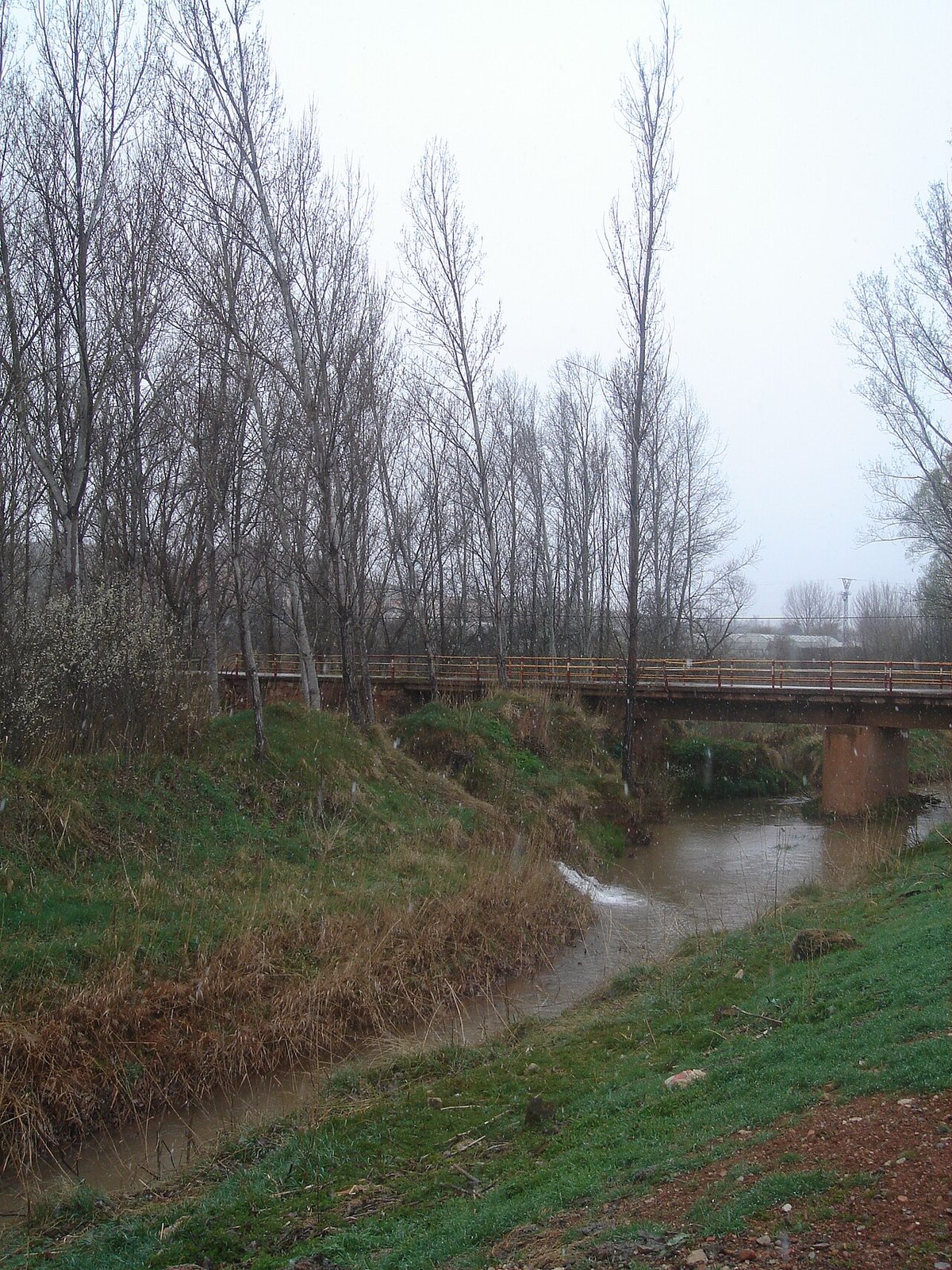
Walk to the edge of town and the horizon opens. The landscape is one of cereal fields, a vast expanse of green in spring that bleaches to straw-yellow by August. The río Alfambra cuts a line through it. The water level is often low, but its course is marked by a stubborn ribbon of poplars and willows.
Walking the agricultural tracks
The paths start where the pavement ends. You can follow farm tracks west towards the muela de Tiznao. The climb is steady, not steep, but wear shoes that can handle loose stones. Up there, the view explains the village’s place in the valley.
Old dry-stone terraces stitch the hillsides. Most are abandoned now, but their lines show how every slope was once used. It’s a landscape read through absence.
Down by the river, the sound changes. In the evening, you hear water moving over rocks and the call of birds from the tree line. Birds of prey circle the thermal currents above the fields. This is the quiet drama here: the shift from open plain to sheltered riverbank.
A kitchen shaped by seasons
Food here follows what’s nearby. Lamb is for celebrations. Everyday meals are things like potaje or potatoes slowly cooked with garlic. These are dishes born of necessity, not menus.
In autumn, if the rains come, people go to the pinewoods. They return with baskets of níscalos, saffron milk caps, which often end up fried with garlic that same night. Some households still cure their own sausages in winter, using small sheds or neveras where the cold air does its work. The process is unhurried, tied to the weather.
Marking time
The festival calendar is agricultural. In mid-January, for San Antón, people bring their animals to the plaza for a blessing. You’ll see dogs, maybe a horse, and mostly neighbours catching up in the winter sun.
Summer fiestas fill the village with returned families and a louder hum. There might be horse races on a dirt track at the edge of town, or communal meals under canvas awnings. It feels participatory, not performed.
Getting there and getting around
Alfambra is about twenty-five minutes by car from Teruel, along roads that cross empty fields. In winter, check the forecast; these plains get cold and ice forms quickly.
Parking is easy near the plaza. You explore on foot. In summer, avoid walking in the midday heat—the air gets dry and still. Go early or wait until late afternoon, when the light turns the brick façades a deep orange and the temperature drops.
This isn’t a place of checklisted sights. It’s in the texture of a brick wall warmed by sun, the smell of thyme after rain on the path, or watching swallows dart around the tower at dusk. You understand Alfambra by slowing down to its pace.