Full Article
about Perales del Alfambra
Hide article Read full article
A morning that sets the pace
By mid-morning in Perales del Alfambra, the square by the church still carries a faint smell of flour and kitchen smoke. Light falls at an angle, picking out the texture of the dark stone façades. A few shutters remain half closed, and from the edge of the village comes the muted sound of animals in nearby farms. Tourism here begins in a very specific way: footsteps on concrete, a blackbird hidden in ivy, the brief echo of a door closing.
Perales del Alfambra sits at around 1,165 metres above sea level, in the comarca of Comunidad de Teruel. Fewer than 300 people live here. The village keeps a clear agricultural logic that reveals itself quickly in its layout: straight streets, solid masonry houses, and slightly uneven roofs of traditional curved tiles.
At the centre of the old quarter stands the parish church of the Natividad de Nuestra Señora. From the outside, it appears restrained, almost severe. A simple bell tower rises above it, topped with a weather vane that turns often in this open landscape. Inside, gilded altarpieces contrast with the austere exterior. Access is not guaranteed, as the door is usually closed outside specific services or events.
Stone streets and everyday details
A walk through Perales del Alfambra is less about ticking off sights and more about noticing what is already there. The walls carry marks of time. Some stones darken at the corners, wooden window grilles show their age, and wide entrances hint at earlier use for carts or sheltering livestock.
Several lintels display inscriptions or family crests. There are no signs or explanations attached to them. They simply exist as part of the village’s domestic landscape. The overall impression is one of order and everyday care, without conspicuous restoration or polished presentation.
The pace remains steady and unhurried. Nothing demands attention, yet small details continue to appear. A doorway sits slightly recessed into thick stone, a stretch of wall changes tone where repairs were once made, and a quiet sense of continuity runs through it all.
Fields shaped by the Alfambra
Just beyond the built-up area, the land opens out into wide cereal fields. In spring, vivid greens dominate the view. As summer progresses, those colours shift towards gold and straw tones. Between plots, low stone walls and farm tracks connect scattered masías, traditional rural buildings linked to agricultural life.
Some of these masías are still inhabited or used from time to time. Others sit in an in-between state, part ruin and part occasional shelter, with open pens or fences beginning to collapse. Each of them reflects accumulated work over generations.
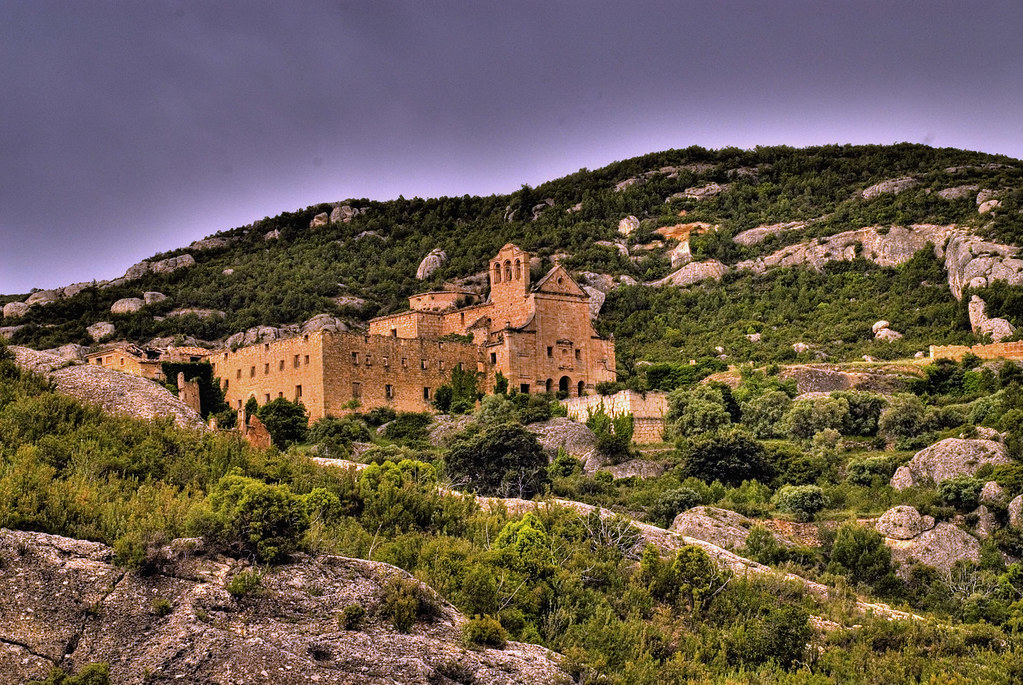
On clear days, the horizon stretches far. Gentle hills define the distance, broken by patches of low woodland. Holm oaks appear here and there among the crops, and occasional pines interrupt the otherwise even terrain.
The landscape does not rely on dramatic contrasts. Instead, it offers a steady variation shaped by season, light, and use of the land. Everything points back to long-term cultivation and a close relationship between people and their surroundings.
Paths across the low hills
Tracks leading out of the village are mostly agricultural routes or footpaths used by locals moving between fields. Signage is limited, and there are few panels or marked trails. Orientation requires a bit of patience, especially for those unfamiliar with the area, and it is sensible not to stray too far without a clear sense of direction.
Some of the lower hills provide a good vantage point over the Alfambra valley. From there, the layout of fields and scattered buildings becomes more apparent. Early in the day or towards evening, the area fills with sound. Skylarks and thrushes can often be heard, and birds of prey such as kestrels or buzzards sometimes glide over the open land.
Summer brings strong midday heat. Anyone heading out on foot is better off setting out early and carrying water. It is common to walk several kilometres without encountering a fountain or a place to refill.
The experience of walking here remains simple. There are no dramatic routes or heavily promoted viewpoints. The interest lies in the gradual unfolding of the landscape and the sense of space.
Food shaped by season and need
Local cooking centres on straightforward, substantial ingredients. Lamb and pork feature prominently, alongside slow-cooked pulses and dishes such as migas, a preparation based on breadcrumbs that continues to appear on many tables in rural settings.
When temperatures drop, the cuisine shifts towards thicker stews, gachas and other warming dishes designed to get through long winters in this part of Teruel. The food reflects practical needs as much as tradition, with recipes adapted to climate and available produce.
There is no sense of display in this cooking. It belongs to daily life, shaped by habit and necessity rather than presentation.
The village calendar
At the beginning of September, Perales del Alfambra usually celebrates its patronal festivities in honour of the Natividad. During those days, the rhythm of the village changes. Relatives who live elsewhere return, activities take place in the streets, and the square regains movement that lasts into the evening.
In January, around the feast of San Antón, the blessing of domestic animals is still observed. This tradition continues to hold meaning in a place where ties to farming and livestock remain part of everyday life.
These moments do not transform the village into something different. They simply intensify what is already there: a small community shaped by shared routines and seasonal cycles.
A place defined by small things
Perales del Alfambra does not revolve around major monuments or clearly defined routes. What emerges instead are fragments: a broken roof tile covered in moss, a threshing floor beside a path, late afternoon light entering beneath a doorway.
Daily life continues among these details, following its own rhythm. Nothing here asks to be rushed or interpreted too quickly. The village reveals itself through observation, through repetition, and through the quiet persistence of its landscape and its routines.